The physical landscape of the United States contains deep, indelible connections to the American Revolutionary War. From historic paths and preserved battlefields to towering stone columns, these landmarks serve as enduring testaments to the birth of a democratic nation. For modern travelers and history enthusiasts, visiting these Revolutionary War memorials offers a profound, tangible bridge to the struggles, sacrifices, and triumphs of the late 18th century. This transformative era fundamentally reshaped the trajectory of the 13 colonies, turning a collection of distant British territories into a unified republic. In this guide, we explore eight essential monuments that capture the complex spirit of the American Revolution, shedding light on the artistic endeavors, untold stories, and deep cultural impacts behind their creation.
Historical Background: The Spark of Revolution (1775–1783)
The American Revolutionary War was not a sudden, isolated outbreak of violence; rather, it was the explosive culmination of decades of growing friction between Great Britain and its North American territories. Key underlying causes included severe economic policies, such as “taxation without representation,” the Quartering Acts, and the aggressive enforcement of the Coercive Acts, which systematically dismantled colonial self-governance. Understanding this tense sociopolitical climate is key to appreciating why these monuments exist. For those seeking to explore this foundation further, discovering historical facts about the 13 colonies can provide essential context on how these disparate regions unified under a shared banner of liberty.
Key Events and Timeline of the Revolution
To fully appreciate the significance of each memorial, it is helpful to place them within the chronological timeline of the war’s major milestones:
- April 19, 1775: The Battles of Lexington and Concord mark the official outbreak of armed conflict.
- December 31, 1775: Major General Richard Montgomery is killed at the Battle of Quebec during a daring but unsuccessful American assault.
- January 3, 1777: George Washington secures a crucial victory at the Battle of Princeton, revitalizing the colonial war effort.
- August 16, 1777: General John Stark defeats British forces at the Battle of Bennington, protecting vital colonial supplies.
- October 7, 1777: Benedict Arnold leads a decisive charge at the Second Battle of Saratoga, suffering a severe leg wound but securing a massive victory.
- Winter 1777–1778: The Continental Army endures brutal conditions and undergoes transformation under Baron von Steuben at Valley Forge.
- February 1779: Lieutenant Colonel George Rogers Clark captures Fort Sackville, securing the Northwest Territory for the United States.
- October 19, 1781: British General Lord Cornwallis surrenders at Yorktown, effectively ending major combat operations in North America.
The 8 Essential Revolutionary War Memorials
Across the eastern half of the United States, markers of the Revolutionary War are abundant. However, some stand out for their exceptional architectural beauty, historical depth, or the unique stories they highlight. Here are eight must-see memorials that belong on every history buff’s itinerary:
1. The Montgomery Monument (New York City, New York)
Authorized by the Continental Congress in 1776, this was the very first monument commissioned to honor a hero of the Revolution. It was dedicated to Major General Richard Montgomery, an Irish-born officer who died leading the assault on Quebec in late 1775. Benjamin Franklin personally lobbied the renowned French sculptor Jean-Jacques Caffieri to design the marble memorial. After sitting unassembled in North Carolina for years due to naval blockades, the monument was finally installed in 1788 outside the east window of St. Paul’s Chapel in Manhattan. Today, Montgomery’s remains rest directly beneath this beautiful piece of classical art.
2. The Minute Man Statue (Concord, Massachusetts)
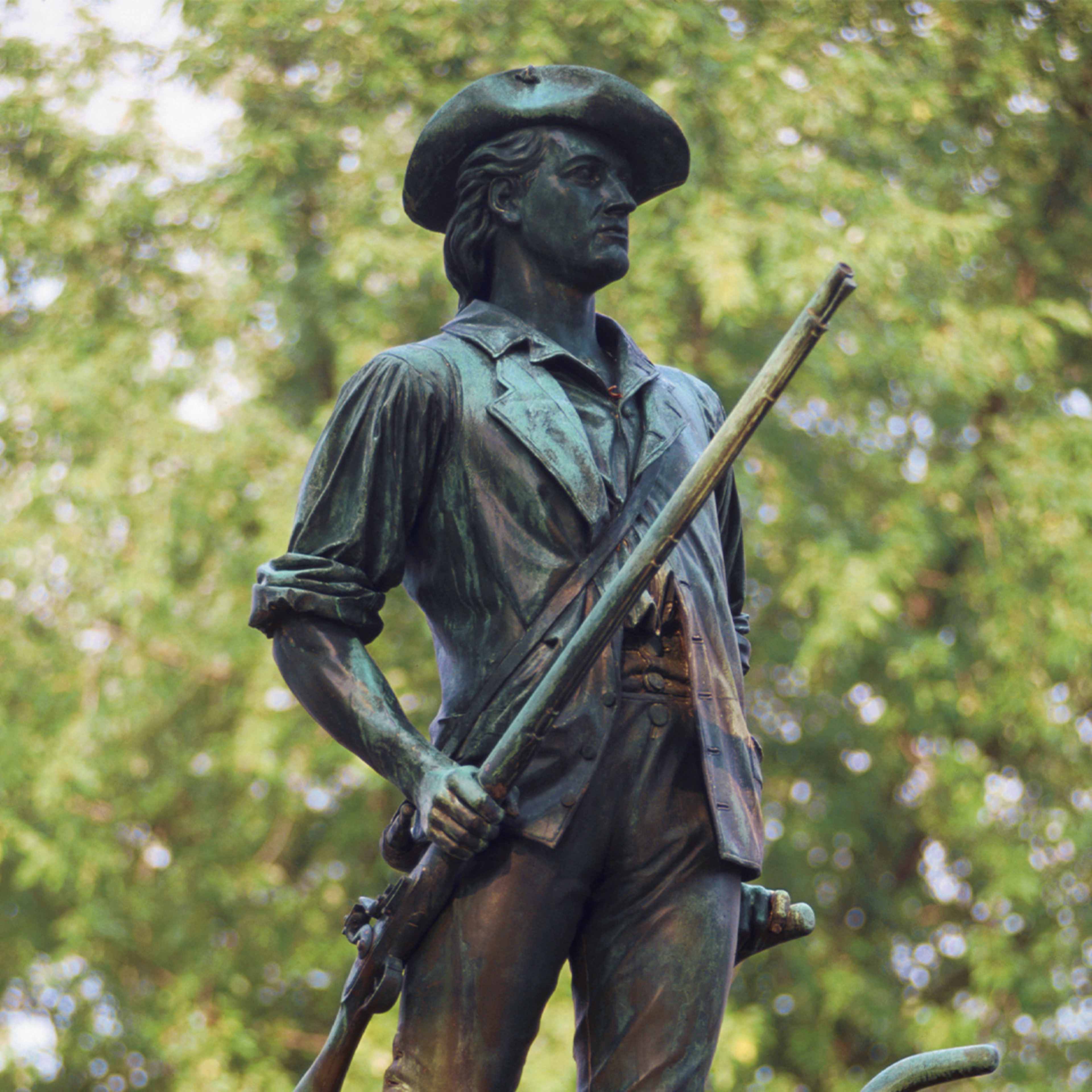
In 1873, a young and then-unknown artist named Daniel Chester French was commissioned to create a statue celebrating the centennial of the Battle of Concord. French modeled the posture of a yeoman farmer setting aside his plow to pick up a rifle after the ancient classical sculpture Apollo Belvedere. Cast in bronze melted down from actual Civil War cannons, “The Minute Man” became an instant cultural phenomenon. It established French’s legendary reputation—he would later sculpt the seated Abraham Lincoln for the Lincoln Memorial—and served as an iconic symbol of American resilience during both World Wars.
3. Princeton Battle Monument (Princeton, New Jersey)
Incorporated in 1887 to fill a visible gap in the memorialization of New Jersey’s wartime legacy, this massive limestone monument took decades of fundraising to realize. The Princeton Battle Monument Association hired Frederick William MacMonnies, a French-trained sculptor, who took creative inspiration from Eugène Delacroix’s iconic painting “Liberty Leading the People” and the Arc de Triomphe in Paris. The result is a stunning 50-foot-tall bas-relief depicting George Washington on horseback, surrounded by struggling soldiers and allegorical figures. Though some have criticized its colossal scale relative to the quiet town of Princeton, its dramatic artistry remains undeniable.
4. Yorktown Victory Monument (Yorktown, Virginia)
Ten days after the decisive Franco-American victory at Yorktown in October 1781, Congress directed the construction of a monument to commemorate the British surrender. Due to financial struggles, the cornerstone was not laid until a century later in 1881. Designed by architects Richard Morris Hunt and Henry Van Brunt alongside sculptor John Quincy Adams Ward, the monument features a tall column ringed by 13 female figures representing the original colonies, topped by a personification of Liberty. After the original Liberty figure was struck by lightning in 1942, sculptor Oskar J.W. Hansen created the current, grander statue that stands today.
5. National Memorial Arch (Valley Forge, Pennsylvania)
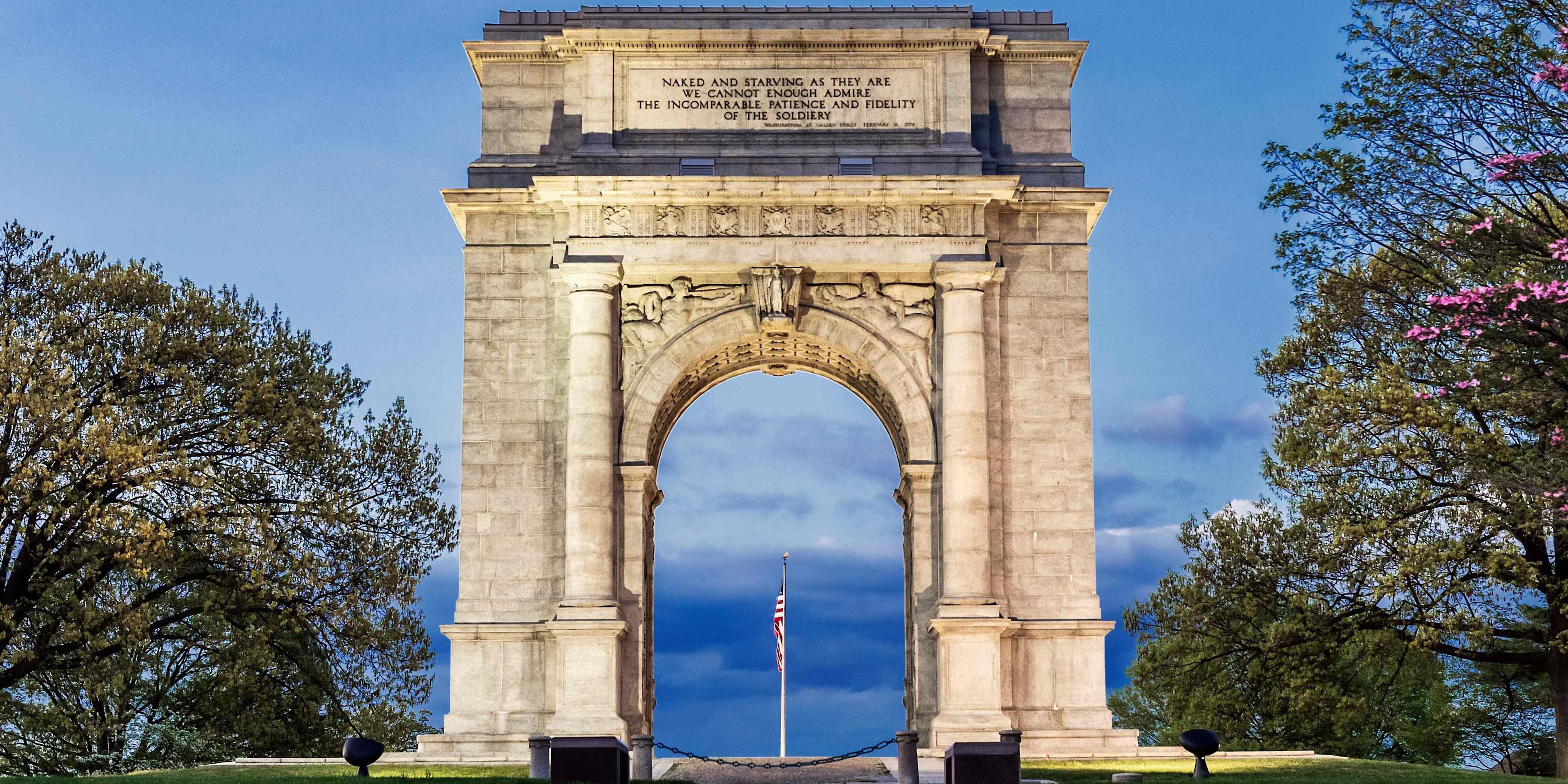
The winter of 1777–1778 at Valley Forge is legendary for the immense hardships endured by General Washington’s soldiers. To honor their resilience, French-born architect Paul Philippe Cret designed a single, grand triumphal arch, modeling it after the ancient Roman Arch of Titus. Dedicated in June 1917, the 60-foot-tall granite arch is a striking feature of Valley Forge National Historical Park. It stands as a solemn tribute to the endurance and ultimate professionalization of the Continental Army under difficult conditions.
6. Bennington Battle Monument (Bennington, Vermont)
Erected to celebrate General John Stark’s crucial victory over British forces in August 1777, this monument is a towering masterpiece. Local leaders, led by Governor Hiland Hall, pushed for an exceptionally grand design, rejecting smaller proposals. Designed by J. Phillip Rinn and completed in 1891, the magnesian limestone obelisk stands at an impressive 306 feet and 4.5 inches. This makes it the second tallest unreinforced masonry structure in the United States, surpassed only by the Washington Monument in Washington, D.C.
7. The Boot Monument (Saratoga, New York)
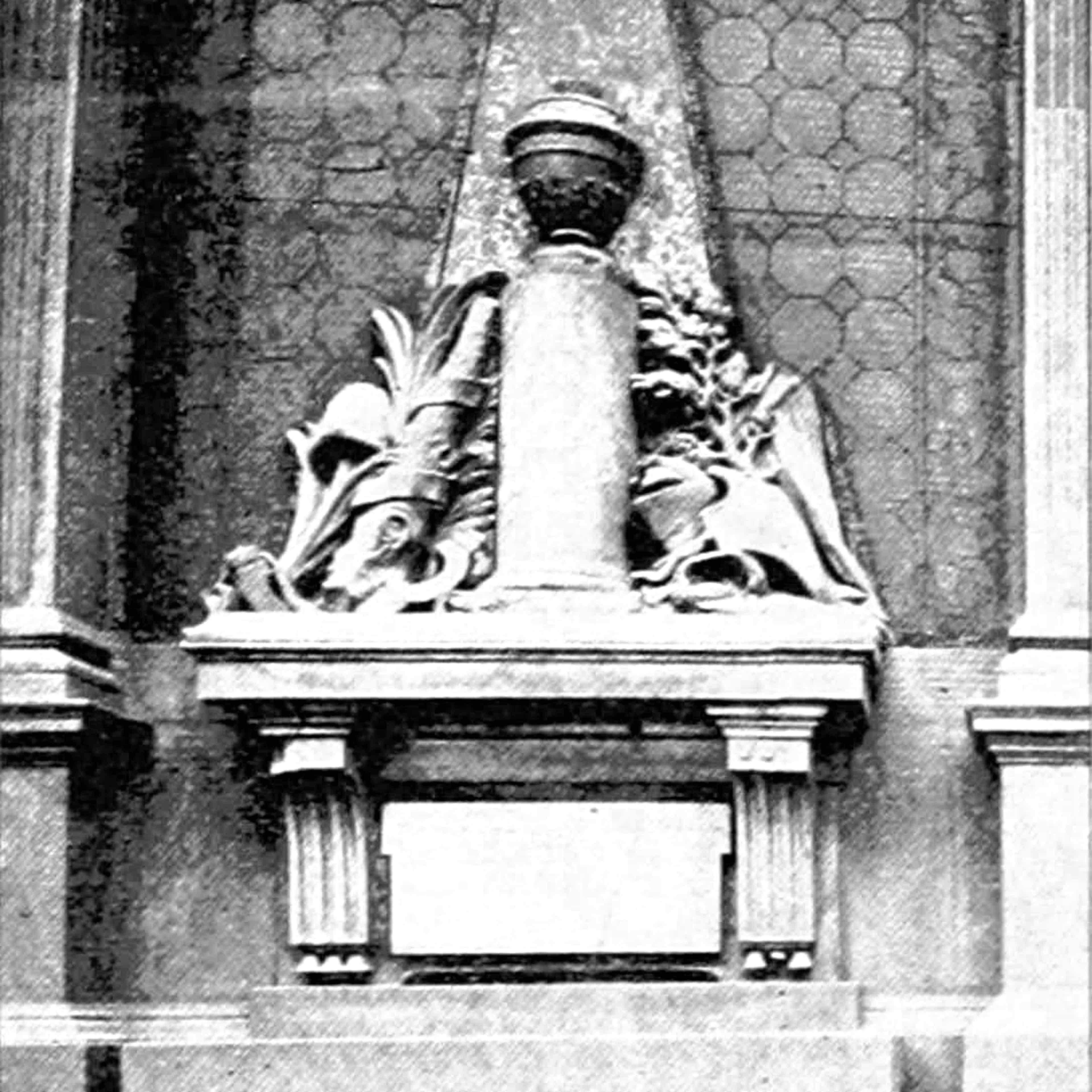
Perhaps the most unusual monument of the Revolutionary War, the Boot Monument honors a brilliant military feat while conspicuously omitting the hero’s name. Before he famously committed treason, Benedict Arnold was a highly decorated Major General who led a daring charge at the Second Battle of Saratoga, where his left leg was shattered. In the 1880s, John Watts de Peyster commissioned this unique 4-foot marble monument featuring a boot, epaulets, and a howitzer barrel. The inscription praises the brave soldier who was wounded on the spot, but deliberately leaves Arnold’s name out, reflecting the complex historical duality of his legacy.
8. George Rogers Clark Memorial (Vincennes, Indiana)
A crucial reminder that the Revolutionary War was fought far beyond the eastern seaboard, this memorial commemorates Lieutenant Colonel George Rogers Clark’s grueling winter march in 1779 to capture Fort Sackville from the British. Dedicated by President Franklin D. Roosevelt in June 1936, this impressive Greek Revival circular structure stands over 80 feet tall. The interior features a bronze statue of Clark surrounded by vivid murals depicting his campaigns, highlighting how the western theater secured the territory that would later pave the way for America’s westward expansion.
Deep Sociopolitical Context and Turning Points
The monuments we see today commemorate key turning points that altered the course of human history. The victory at Saratoga, for instance, was the primary catalyst that convinced the French Empire to formally ally with the American colonies, transforming a domestic rebellion into a global war. Similarly, the endurance at Valley Forge allowed a disorganized militia to emerge as a highly trained, standardized standing army capable of going toe-to-toe with the British regulars.
Crucially, these campaigns also heavily impacted Indigenous nations. While the colonies celebrated victories like George Rogers Clark’s western campaigns, these advancements catalyzed the displacement of Native American tribes who had inhabited the Ohio River Valley for generations. Recognizing this dual legacy is essential to understanding the full historical scope of the American founding.
Lesser-Known Facts About Revolutionary War Monuments
- The Meltdown of Civil War Cannons: The bronze used to cast the famous Concord Minute Man statue was sourced entirely from melted-down cannons used during the American Civil War, symbolically linking the preservation of the Union with the fight for its birth.
- A Monument Lost in Port Purgatory: The Montgomery Monument, commissioned in France, was shipped back during the height of the war. Due to British naval blockades, it sat unassembled in a North Carolina port for several years before finally reaching its destination in New York.
- The Anonymous Tribute: The Boot Monument at Saratoga remains the only war memorial in the United States dedicated to a specific soldier’s leg, and it represents a rare, delicate attempt to separate Benedict Arnold’s battlefield heroism from his subsequent betrayal.
Why Revolutionary War Memorials Still Matter Today
Today, these monuments are far more than stone and bronze; they are physical touchstones of public memory and national identity. They prompt modern citizens to reflect on the core principles of democracy, liberty, and the ongoing, complex struggle to form a “more perfect union.” By preserving these sites, we ensure that the complex histories of the diverse individuals who built, fought for, and were impacted by the creation of the United States are never forgotten.
People Also Ask (FAQ)
Why is Benedict Arnold’s name not on the Boot Monument?
Benedict Arnold’s name was deliberately left off the monument because of his subsequent treason. While the monument honors his heroic actions and severe leg wound sustained at the Battle of Saratoga, his name was stripped from public honor to condemn his later decision to betray the American cause to the British.
What is the tallest Revolutionary War monument in the United States?
The Bennington Battle Monument in Vermont is the tallest Revolutionary War monument in the United States. Standing at over 306 feet tall, this massive magnesian limestone obelisk is also the second tallest unreinforced masonry structure in the country.
Who sculpted the famous Minute Man statue in Concord, Massachusetts?
The Minute Man statue was sculpted by Daniel Chester French when he was a young, relatively unknown artist. The immense success of this project launched his career, leading him to eventually sculpt the famous seated Abraham Lincoln inside the Lincoln Memorial in Washington, D.C.
Conclusion
From the bustling streets of Manhattan to the quiet fields of Vincennes, Indiana, these eight Revolutionary War memorials offer an incredible journey into the heart of early American history. Whether you are captivated by the intricate marble carvings of the Montgomery Monument or the towering height of the Bennington obelisk, each site tells a vital piece of the American story—one marked by bravery, hardship, and the complex birth of a new nation.


