In the crucible of the American Revolution, as colonists clamored for liberty from British oppression, a parallel and even more profound struggle for human dignity was unfolding. Among the most remarkable figures of this era was Elizabeth Freeman, a courageous enslaved woman originally known as “Bett” or “Mum Bett.” In 1780, while residing in the small town of Sheffield, Massachusetts, she overheard a public reading of the newly ratified Massachusetts State Constitution, which declared that “all men are born free and equal.” Recognizing the glaring hypocrisy of a nation fighting for independence while keeping thousands in chains, Freeman took a stand that would make history. She did not run away; instead, she chose to fight her oppressors using the very laws they had written, launching a landmark legal battle that would dismantle the institution of slavery in Massachusetts nearly eighty years before the infamous Dred Scott decision. Her courage, sharp intellect, and unwavering resolve established her as a foundational figure in the American struggle for civil rights.
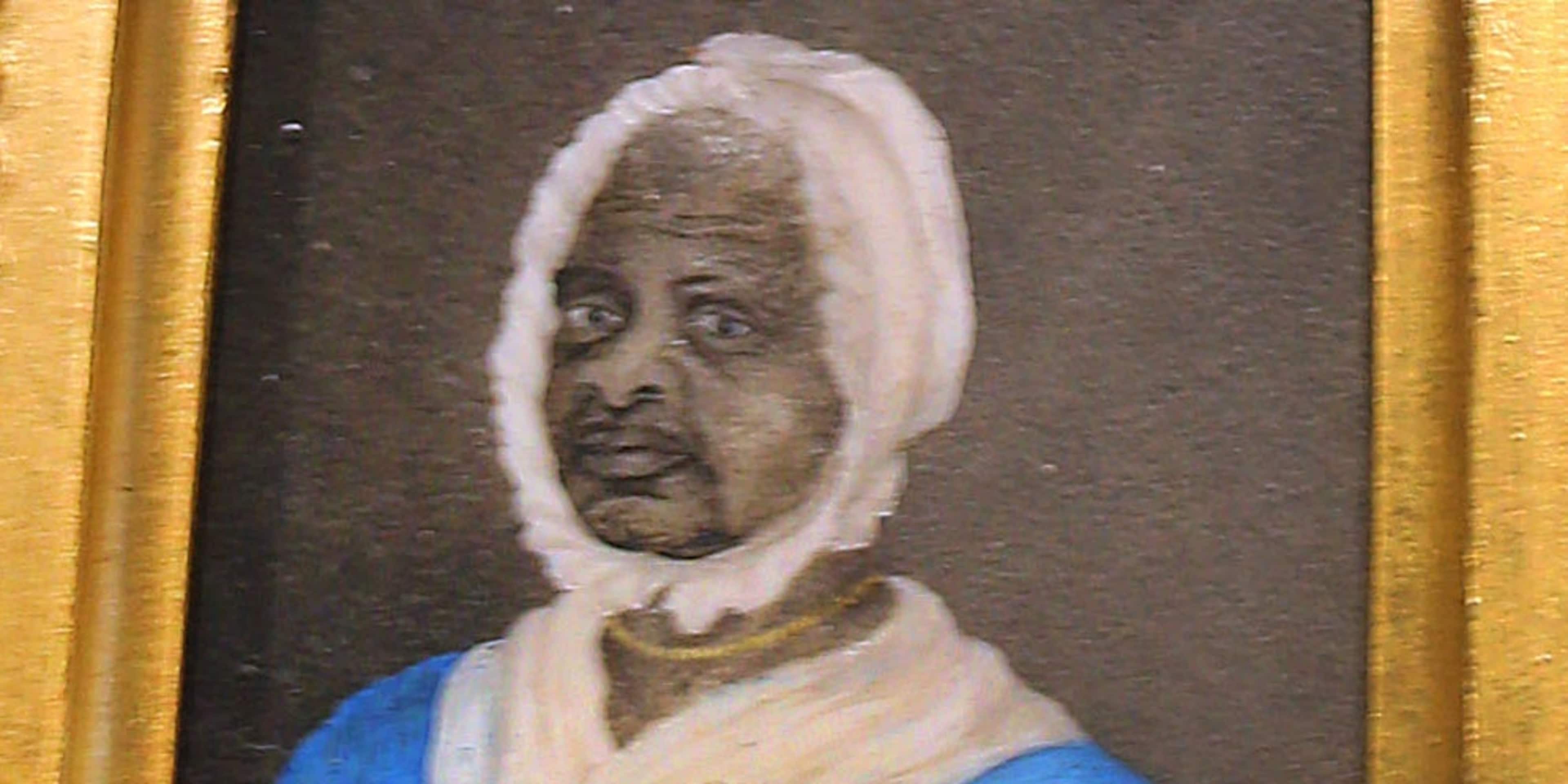
To understand the magnitude of Elizabeth Freeman’s legal triumph, one must look at the unique socio-political climate of New England during the late 18th century. Unlike the plantation-heavy economies of the Southern colonies, the original thirteen colonies in the North had smaller, more domestic forms of slavery. However, Massachusetts held a complex place in this history. It was the first colony to officially sanction slavery in its 1641 Body of Liberties, and its merchant class profited heavily from the transatlantic slave trade. Yet, Massachusetts law possessed a unique contradiction: it recognized enslaved individuals both as property and as persons. This legal dualism meant that enslaved people could technically sue in court and prosecute their owners, provided they could prove their enslavement was legally invalid due to broken promises of freedom or technical errors in transfer of ownership. By the time Freeman took her stand, several dozen freedom suits had been filed, but almost all relied on narrow legal loopholes rather than a direct assault on the morality of slavery itself.
The Catalyst: Life in the Ashley Household and the Sheffield Declaration
For decades, Elizabeth Freeman was enslaved in the household of Colonel John Ashley, a powerful judge, businessman, and civic leader in Sheffield, Massachusetts. Enslaved women in New England faced immense hardships, often isolated within households where they performed grueling domestic labor. The historical struggles of enslaved women in colonial Massachusetts highlighted the deeply precarious nature of their existence, where they were entirely at the mercy of their owners’ temperaments. In the Ashley home, this precarity manifested in the volatile temper of John Ashley’s wife, Hannah. According to historical accounts, Hannah Ashley once flew into a rage and attempted to strike a young enslaved girl—believed to be Elizabeth’s sister or daughter, Lizzie—with a red-hot iron shovel. Elizabeth threw herself in front of the child, absorbing the blow. The shovel sliced deep into her arm, leaving a scar she would carry for the rest of her life as a visible symbol of her resistance.
Living in the Ashley home also gave Elizabeth a front-row seat to the intellectual foundations of the American Revolution. In January 1773, a group of prominent local men, including John Ashley and a talented young lawyer named Theodore Sedgwick, gathered in Ashley’s study to draft the Sheffield Declaration. This document, which protested British tyranny, declared that “mankind in a state of nature are equal, free, and independent.” As Elizabeth served refreshments to these men, she listened intently, recognizing the profound contradiction between their lofty rhetoric and her lived reality. When the Massachusetts Constitution was ratified in 1780, carrying the phrase “all men are born free and equal,” Elizabeth knew she had the legal ammunition she needed.
The Landmark Case: Brom and Bett v. Ashley (1781)
In early 1781, Elizabeth walked to the home of Theodore Sedgwick and demanded that he represent her in a lawsuit against John Ashley. Sedgwick, despite owning enslaved workers himself, was deeply concerned about how the division over slavery might weaken the colonies’ fight for independence. He agreed to take the case, joining forces with another prominent attorney, Tapping Reeve. Rather than seeking a loophole, Sedgwick and Reeve decided on a revolutionary tactic: they would argue that the new Massachusetts Constitution rendered slavery entirely illegal. To strengthen the case and protect Elizabeth from immediate retaliation, they added an enslaved man named Brom to the suit and filed a writ of replevin, a legal action used to recover unlawfully held property.
Key Chronological Timeline:
- 1746: Elizabeth Freeman is purchased by Colonel John Ashley.
- January 1773: The Sheffield Declaration is drafted in the Ashley home, asserting natural human rights.
- 1780: The Massachusetts State Constitution is ratified, declaring all men free and equal.
- Early 1781: Elizabeth is physically assaulted by Hannah Ashley and seeks the counsel of Theodore Sedgwick.
- May 1781: Sedgwick secures a writ of replevin demanding John Ashley release Elizabeth and Brom. Ashley refuses, setting the stage for a trial.
- August 21, 1781: The Court of Common Pleas in Great Barrington hears the case of Brom and Bett v. Ashley.
- August 22, 1781: The jury rules in favor of Elizabeth and Brom, granting them their freedom and awarding damages.
- 1783: The Massachusetts Supreme Judicial Court upholds similar principles in the Quock Walker cases, effectively ending slavery in the state.
- 1829: Elizabeth Freeman passes away as a respected, land-owning free woman.
The Verdict and Its Profound Turning Point
On August 21, 1781, the case went to trial before the County Court of Common Pleas in Great Barrington. The jury, composed of twelve white male farmers, listened as Sedgwick argued that under the state constitution, no person could legally hold another in slavery. The defense argued that the constitution had not been intended to free enslaved people. In a stunning verdict, the jury ruled in favor of Elizabeth and Brom. They declared that they were indeed free and ordered John Ashley to pay them thirty shillings in damages plus court costs. Following the verdict, Elizabeth immediately shed her slave name, choosing to be known forevermore as Elizabeth Freeman.
This case represented a massive turning point in the complex history of the 13 colonies. While previous freedom suits had only freed individuals on technicalities, Freeman’s case successfully challenged the constitutionality of the institution itself. Combined with the subsequent Quock Walker cases of 1783, where the Massachusetts Supreme Judicial Court ruled that slavery was incompatible with the state constitution, the judicial branch effectively abolished slavery in Massachusetts. By the time the first federal census was taken in 1790, Massachusetts was the only state in the Union to record zero enslaved people.
The Legacy of a Self-Made Free Woman
Following her victory, Elizabeth declined an offer from John Ashley to return to his home as a paid servant. Instead, she chose to work for the family of her lawyer, Theodore Sedgwick, where she was treated with immense respect. She became a highly successful Governess, midwife, and healer, renowned throughout Berkshire County for her skill and compassion. Through her hard work, she accomplished what was nearly impossible for a Black woman of her era: she bought her own home and accumulated over twenty acres of land. When she passed away in 1829, she was buried in the inner circle of the Sedgwick family plot, the only non-family member to be accorded this honor. Her gravestone stands as a testament to her extraordinary life, reading in part: “She was born a slave and remained a slave for nearly thirty years. She could neither read nor write, yet in her own sphere she had no superior nor equal.”
Lesser-Known Historical Facts
- The Scar of Honor: Elizabeth intentionally refused to cover the scar left on her arm by Hannah Ashley’s heated shovel. When asked about it, she would proudly display it, stating that it was the physical proof of her trial and the catalyst that drove her to seek her natural rights.
- A Hidden Intellectual: Although she could neither read nor write, Elizabeth possessed an extraordinary auditory memory. She was able to memorize complex legal arguments and philosophical declarations simply by listening to the conversations of the revolutionary figures visiting the Ashley home.
- The “Sedgwick Pie” Burials: The Sedgwick family cemetery in Stockbridge is arranged in concentric circles, known as the “Sedgwick Pie,” so that when the family rises on Judgment Day, they will only see each other. Elizabeth Freeman was placed in the innermost circle, directly alongside the family’s most prominent members, reflecting the profound esteem in which she was held.
Why Elizabeth Freeman’s Story Matters Today
Elizabeth Freeman’s story remains deeply relevant today because it challenges the traditional narrative of how civil rights were won in America. It demonstrates that the fight for abolition was not solely led by wealthy white politicians, but was ignited by the brave actions of marginalized individuals who refused to accept systematic oppression. Freeman’s reliance on the state constitution to secure her rights laid a vital blueprint for future civil rights litigation, illustrating how the founding principles of the United States can be used to hold the nation accountable to its own promises of equality. Her legacy continues to inspire modern legal battles for justice, human rights, and constitutional equality.
People Also Ask
Who was Elizabeth Freeman?
Elizabeth Freeman, also known as Mum Bett, was an enslaved woman in Massachusetts who made history in 1781 by becoming the first enslaved person to successfully sue for her freedom under the newly ratified Massachusetts State Constitution.
How did Elizabeth Freeman win her freedom?
With the help of lawyer Theodore Sedgwick, Elizabeth Freeman filed a lawsuit (Brom and Bett v. Ashley) arguing that the state constitution’s declaration that “all men are born free and equal” made slavery unconstitutional. A jury ruled in her favor in August 1781.
What is the difference between Elizabeth Freeman’s case and the Dred Scott decision?
While the 1857 Dred Scott decision ruled that Black people could not be citizens and had no rights under the U.S. Constitution, Elizabeth Freeman’s 1781 case successfully utilized a state constitution to dismantle slavery at the state level, serving as a powerful counter-narrative to later federal rulings.
Conclusion
Elizabeth Freeman’s remarkable journey from an enslaved domestic worker to a land-owning, respected free woman is one of the most inspiring chapters in early American history. By daring to demand that the words of the Massachusetts Constitution apply to her, she exposed the hypocrisy of the Revolutionary era and paved the way for the complete eradication of slavery in her state. Her legacy endures as a powerful reminder that the fight for freedom and equality is often won not on battlefields, but in classrooms, communities, and courts of law, guided by the quiet courage of individuals who refuse to be silent.


