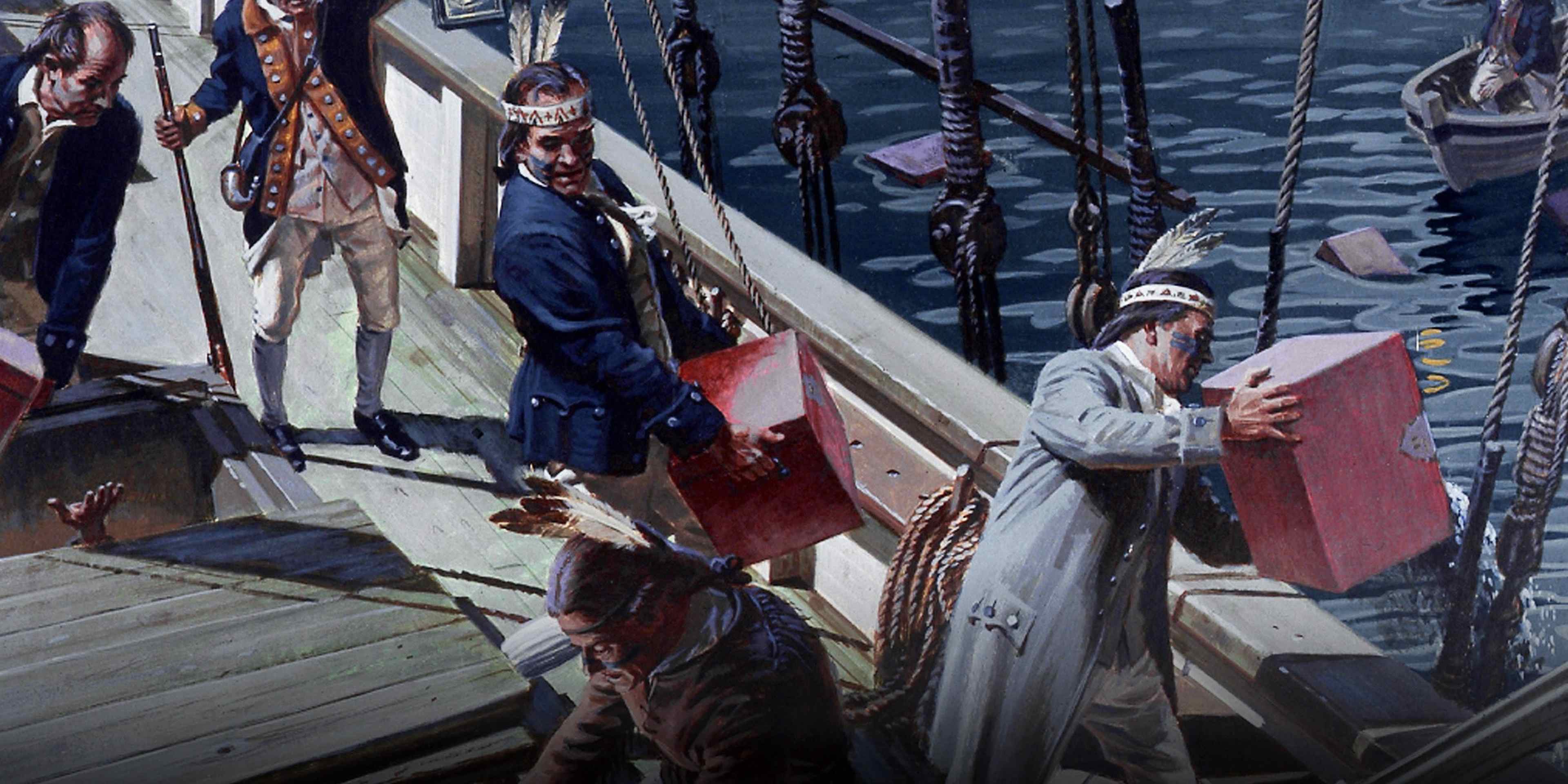
On the cold night of December 16, 1773, a group of determined colonists marched onto three ships docked at Griffin’s Wharf in Boston and dumped 342 chests of tea into the harbor. This iconic act of defiance is universally remembered as the spark that ignited the American Revolution, forever altering the geopolitical landscape of the New World. While textbook history often frames this event as a straightforward protest against high taxes, the reality of the Boston Tea Party is vastly more complex, deeply nuanced, and surprisingly misunderstood. From the economic struggles of the British Empire to the strategic political maneuvers of the Sons of Liberty, the event was not merely a reaction to a tax hike but a calculated constitutional stand. Understanding this pivotal moment is essential for grasping how the diverse protests across the 13 colonies eventually coalesced into a unified struggle for self-governance and liberty.
The Historical Background and Sociopolitical Causes
To understand the catalysts of the Boston Tea Party, we must look back to the aftermath of the Seven Years’ War, known in America as the French and Indian War (1754–1763). Although the British Empire emerged victorious, it was left with a staggering national debt. To alleviate this burden, the British Parliament asserted its right to tax the American colonies directly, leading to a series of controversial legislative acts. The Townshend Revenue Act of 1767 placed import duties on essential commodities like paper, paint, glass, lead, and, most notably, tea. Following intense colonial resistance and successful merchant boycotts, Parliament repealed all the Townshend duties in 1770, except for the tax on tea. This remaining duty was kept intentionally to serve as a pointed reminder of the Crown’s absolute authority to tax its subjects across the Atlantic.
By 1773, a new economic crisis forced Parliament’s hand. The British East India Company, a massive joint-stock company of immense strategic importance to the British economy, was on the verge of bankruptcy. It sat on an enormous surplus of 17 million pounds of unsold tea in its London warehouses. To save the company, Parliament passed the Tea Act of 1773 on May 10. Rather than raising taxes, the Tea Act granted the East India Company a monopoly on the colonial tea trade and allowed it to bypass traditional English auction taxes, exporting tea directly to America at bargain prices. While this made legal British tea cheaper than smuggled Dutch tea, the Sons of Liberty recognized it as a political maneuver designed to seduce colonists into paying the Townshend tea tax, thereby establishing a dangerous precedent of parliamentary taxation without representation.
A Chronological Timeline of the Tea Crisis
The escalation of events leading to the fateful night of December 16, 1773, unfolded systematically over several months:
- May 10, 1773: Parliament passes the Tea Act, igniting immediate alarm among colonial merchants and political activists who feared corporate monopoly and taxation principles.
- September–October 1773: Seven ships carrying East India Company tea are dispatched to the colonies, destined for Boston, New York, Philadelphia, and Charleston.
- November 28, 1773: The merchant ship Dartmouth arrives in Boston Harbor with 114 chests of tea. Colonists, led by the Sons of Liberty, demand the ship return to England without paying the import duty.
- December 2–7, 1773: Two more tea ships, the Eleanor and the Beaver, arrive in Boston. Royal Governor Thomas Hutchinson orders the harbor blocked, refusing to allow the ships to depart without paying the customs duties.
- December 16, 1773: The twenty-day legal deadline for the Dartmouth to unload and pay duties expires. A massive crowd of over 5,000 citizens gathers at the Old South Meeting House. When Governor Hutchinson’s final refusal to let the ships depart is announced, Samuel Adams gives a signal, and the Sons of Liberty proceed to Griffin’s Wharf, dumping 342 chests of tea into the harbor over the course of three hours.
- June 1774: In response to the destruction, the British government passes the Coercive Acts, effectively closing Boston Harbor and placing Massachusetts under military rule.
Key Historical Figures and Their Roles
Several prominent individuals played defining roles in the unfolding drama of the Boston tea crisis, each leaving a lasting impact on American history:
- Samuel Adams: A highly influential political organizer and leader of the Boston Sons of Liberty, Adams was instrumental in mobilizing public sentiment and coordinating the mass meetings that preceded the tea destruction.
- John Hancock: One of the wealthiest merchants in Boston, Hancock used his considerable fortune and political influence to support the patriot cause, opposing British trade monopolies that threatened American merchant systems.
- Governor Thomas Hutchinson: The Royal Governor of Massachusetts, Hutchinson took a hardline stance against the colonists, insisting that royal law be maintained and refusing to permit the tea ships to leave, which directly triggered the final confrontation.
- George Washington: The future general and president held a complex view of the event. Washington, who was deeply committed to the rule of law and the preservation of private property, initially found the lawlessness of the Tea Party distressing. For readers curious about the military leadership of this era, exploring who commanded the Continental Army before George Washington sheds light on how colonial military structures evolved. Washington, along with other prominent elites like Benjamin Franklin, strongly condemned the destruction of private property and argued that the East India Company should be reimbursed.
Myth vs. Reality: 7 Surprising Facts About the Boston Tea Party
To fully appreciate the historical significance of the event, it is vital to separate popular folklore from the documented historical facts:
1. The protest was not against a tax increase. As detailed above, the Tea Act of 1773 actually lowered the price of tea in the colonies. The protest was aimed at the underlying principle of Parliament’s right to tax colonists without their consent, as well as the corporate monopoly granted to the East India Company, which threatened local merchants.
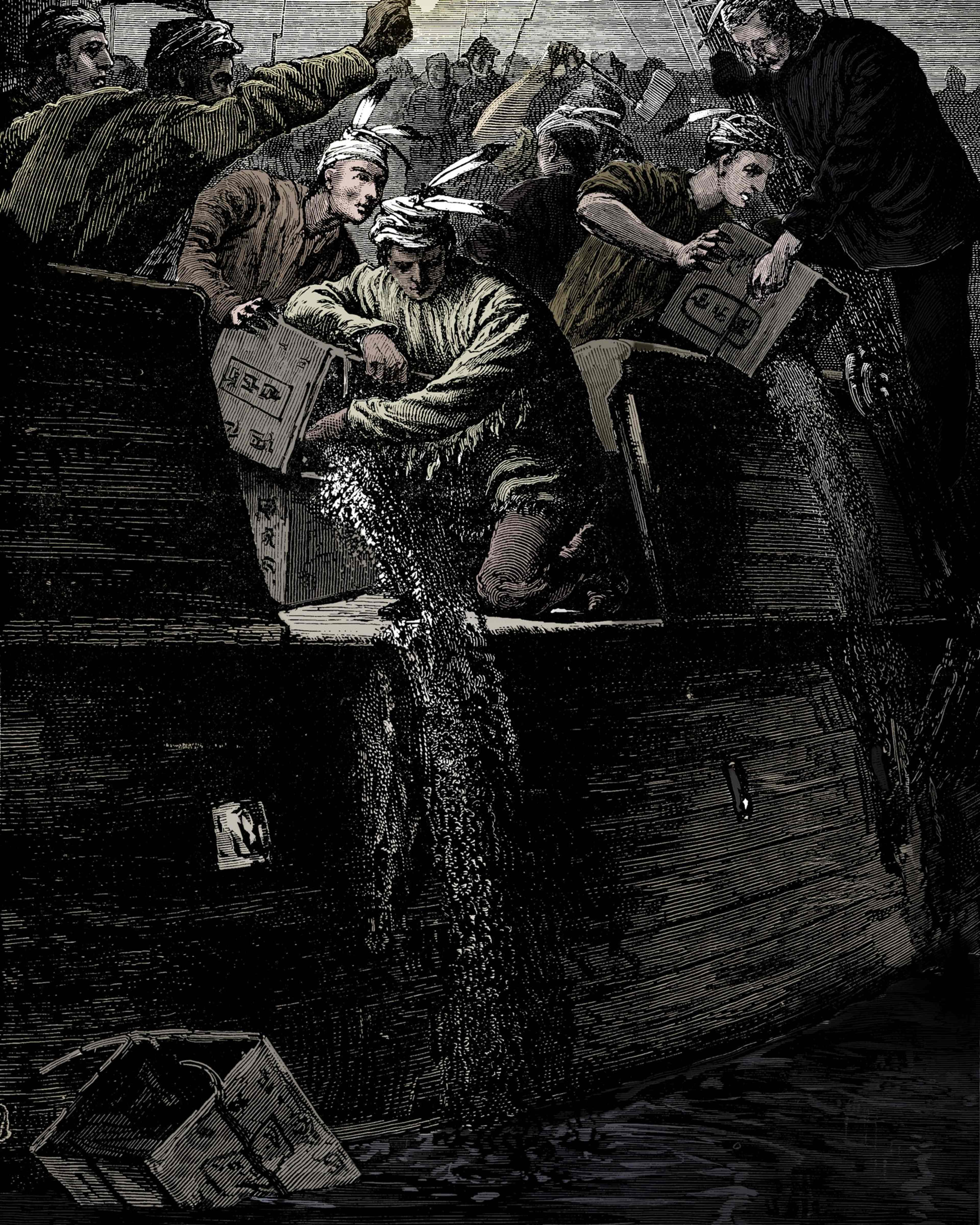
2. The targeted ships and cargo were not British government property. The three ships boarded—the Dartmouth, the Eleanor, and the Beaver—were American-built and American-owned, primarily used for whaling. The tea itself was private property belonging to the East India Company, transported on privately contracted vessels. The destruction of the 342 chests was a massive loss of private enterprise, totaling over 9,000 pounds sterling, or nearly $2 million in modern value.
3. The tea was entirely of Chinese origin. Although the East India Company is famously associated with India, its tea plantations there were not established until the 1830s. In 1773, the company sourced its tea from Canton, China, making the destroyed cargo purely Chinese in origin.
4. A significant portion of the destroyed tea was green tea. Historical records show that 22 percent of the tea dumped into the harbor was green tea, specifically the Singlo and Hyson varieties. Hyson was a particular favorite of both Thomas Jefferson and George Washington.
5. The Mohawk disguise was symbolic, not an attempt to frame Native Americans. The Sons of Liberty who participated wore Native American-inspired clothing, carried tomahawks, and blackened their faces with coal soot. This was not a serious attempt to deceive authorities into blaming local indigenous tribes. Instead, it aligned with the 18th-century European protest tradition of “misrule,” where adopting an alter ego allowed participants to challenge authority. Culturally, the image of the Native American represented an independent, untamable spirit—the epitome of anti-colonialism. While practicing this symbolic protest, the colonists sought to project their identity as distinct, free Americans who belonged to the land, while also practically shielding their faces from criminal prosecution.
6. The name “Boston Tea Party” was coined decades later. At the time of the event and for decades afterward, it was soberly referred to as “the destruction of the tea in Boston Harbor.” The phrase “Boston Tea Party” did not appear in print until 1825, and in its early context, “party” referred to the group of men who executed the raid, rather than a celebratory social gathering.
7. It inspired numerous other “tea parties” along the Atlantic coast. Boston was not the only city to reject the East India Company’s tea. Just nine days later, Philadelphia citizens threatened to tar and feather a tea ship captain, forcing him to sail back to England. In Charleston, South Carolina, tea was confiscated and locked in damp cellars, where it was later sold to help finance the revolutionary war effort. Similar protests occurred in New York, Annapolis, and Greenwich, New Jersey.
The Critical Turning Point: Parliamentary Backlash
The Boston Tea Party did not immediately unify all colonists; indeed, many moderate patriots were shocked by the wanton destruction of private property. However, the British Parliament’s severe response quickly galvanized colonial opposition. In 1774, Parliament passed the Coercive Acts (known in America as the Intolerable Acts). These punitive measures closed the Port of Boston, dissolved the Massachusetts colonial assembly, forced the quartering of troops in private homes, and appointed General Thomas Gage as military governor. This harsh authoritarian backlash deeply alarmed the other colonies, proving that if the Crown could strip Massachusetts of its charter and rights, no colony was safe. The outrage united the colonies, leading directly to the assembly of the First Continental Congress in Philadelphia in September 1774. This intense regional protest eventually snowballed into a global conflict, highlighting the strategic importance of other regions, such as the role the Caribbean played in the Revolutionary War, which strained British military resources worldwide.
Long-Term Impact and Why It Matters Today
The legacy of the Boston Tea Party continues to shape modern American political philosophy and democratic action. It established a powerful precedent for civil disobedience and grassroots activism, demonstrating that citizens have a right and duty to challenge policies they deem unjust. The fundamental question of the event—how to balance property rights with the struggle for representation and liberty—remains highly relevant in contemporary civil rights discussions. Today, the rallying cry of “no taxation without representation” still echoes in modern debates, reminding us that democratic governance relies on the consent of the governed.
People Also Ask
Why did the colonists dress up as Mohawk Indians?
The colonists dressed as Mohawks to adopt a symbol of American independence, representing a spirit that was native to the land and entirely separate from European rule. It was also part of an 18th-century protest tradition of using disguises to perform illicit acts, which served the practical purpose of protecting the participants from identification and prosecution.
How much did the destroyed tea cost in modern money?
The 342 chests of tea destroyed on December 16, 1773, were valued at roughly 9,659 pounds sterling at the time. In today’s economy, the value of the ruined private property is estimated to be nearly $2 million.
Did the Boston Tea Party directly cause the American Revolutionary War?
While the event itself did not start the war, the British Parliament’s punitive response—the Coercive Acts—united the previously divided colonies in opposition to the Crown. This backlash led to the First Continental Congress and the first military clashes at Lexington and Concord in 1775, making the Boston Tea Party a critical catalyst for the Revolutionary War.
Conclusion
The Boston Tea Party remains one of the most brilliant and misunderstood acts of political protest in human history. By looking past the simplified myths, we uncover a rich narrative of economic struggle, constitutional principles, and strategic resistance. This historic night demonstrated that the fight for liberty is rarely simple, but its enduring legacy continues to serve as a beacon for democratic representation and citizen engagement across the globe.


