The American Revolution was not born of quick, effortless triumphs; it was forged in the crucible of grueling, bloody standoffs. No engagement in the early days of the conflict epitomizes this raw struggle more than the Battle of Bunker Hill. Fought on June 17, 1775, this legendary clash served as the first major battle of the Revolutionary War. While technically a British tactical victory, it delivered profound psychological shockwaves across the Atlantic, proving that a ragtag coalition of colonial farmers and merchants could stand toe-to-toe with the world’s most formidable military empire. This pivotal encounter irrevocably altered the trajectory of American history, shifting the conflict from a localized colonial insurrection to an all-out war for national independence.
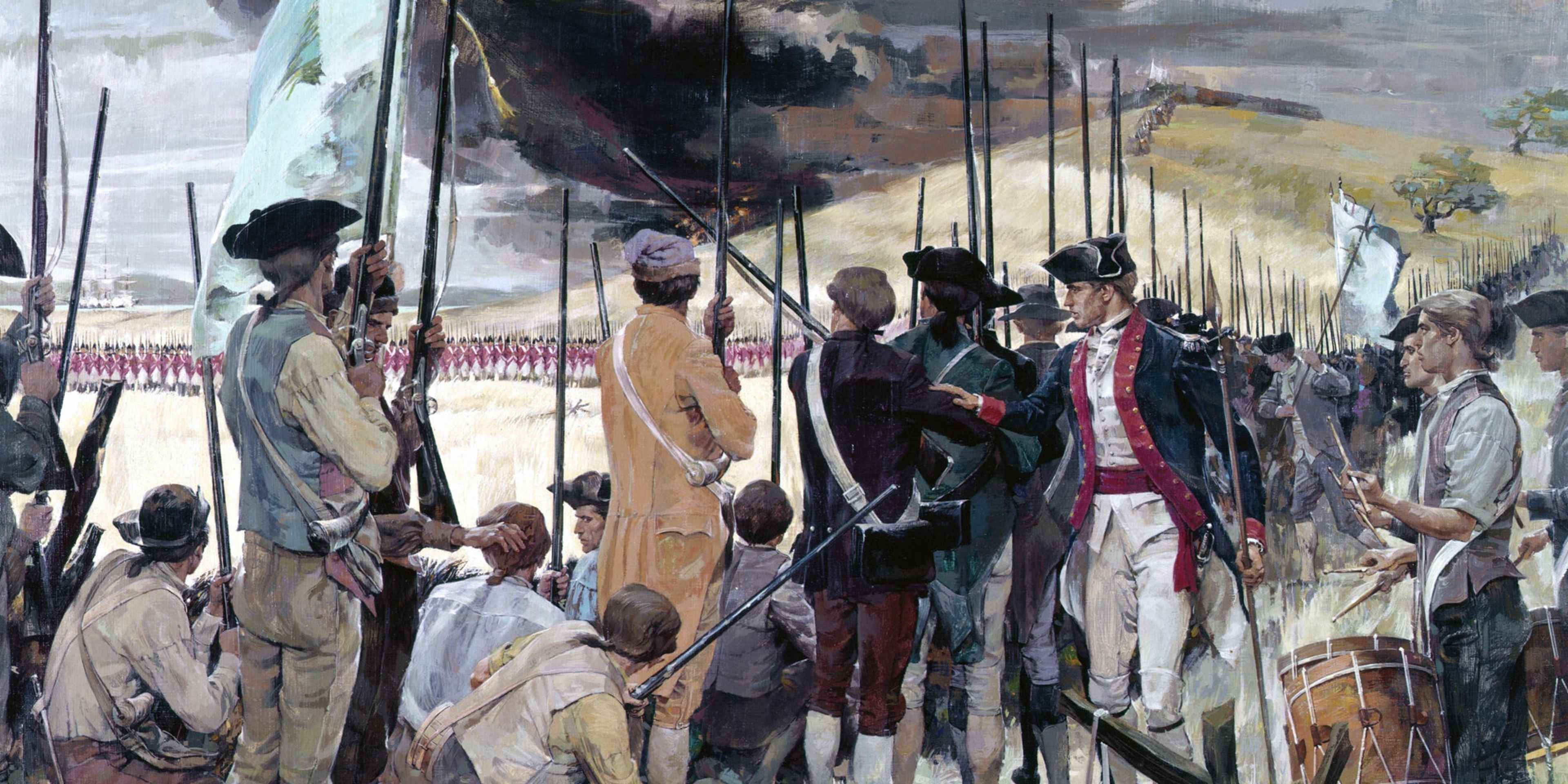
To understand the sheer gravity of this battle, one must look at the geopolitics of Massachusetts in early 1775. Following the opening skirmishes at Lexington and Concord in April, provincial militia forces converged on Boston, trapping the British army under General Thomas Gage inside the city. This became known as the Siege of Boston. The British, realizing they were bottled up, formulated a plan to seize the high ground surrounding the harbor to break the stalemate. Their primary targets were Dorchester Heights to the south and the Charlestown peninsula to the north. When patriot intelligence caught wind of this imminent offensive, colonial leaders realized they had to act fast to defend their territory.
The Geographical Mix-up: Bunker Hill vs. Breed’s Hill
On the night of June 16, 1775, Colonel William Prescott was tasked with leading approximately 1,000 colonial militiamen onto the Charlestown peninsula to construct an earthen fort atop the 110-foot-high Bunker Hill. However, in the darkness, Prescott made a fateful and provocative decision. Instead of fortifying Bunker Hill, he directed his men to build the redoubt on neighboring Breed’s Hill. Breed’s Hill was lower—standing at just 75 feet—but it was positioned much closer to Boston Harbor and within clear cannon shot of the British forces. Whether Prescott acted out of tactical genius, a misunderstanding of local geography, or sheer defiance remains a matter of historical debate. Regardless, the resulting battle took the name of the original destination, even though nearly all the intense hand-to-hand fighting occurred on Breed’s Hill.
Timeline of the Battle: June 16–17, 1775
- June 16, 1775 (10:00 PM): Colonel William Prescott and his men silently march onto the Charlestown peninsula and begin digging the earthen redoubt on Breed’s Hill.
- June 17, 1775 (4:00 AM): At dawn, British sentries aboard the HMS Lively spot the newly constructed fortification and open fire, awakening the city of Boston.
- June 17, 1775 (Midday): British Major General William Howe lands with an amphibious force of over 2,000 Redcoats at Morton’s Point, preparing to sweep the provincial forces away.
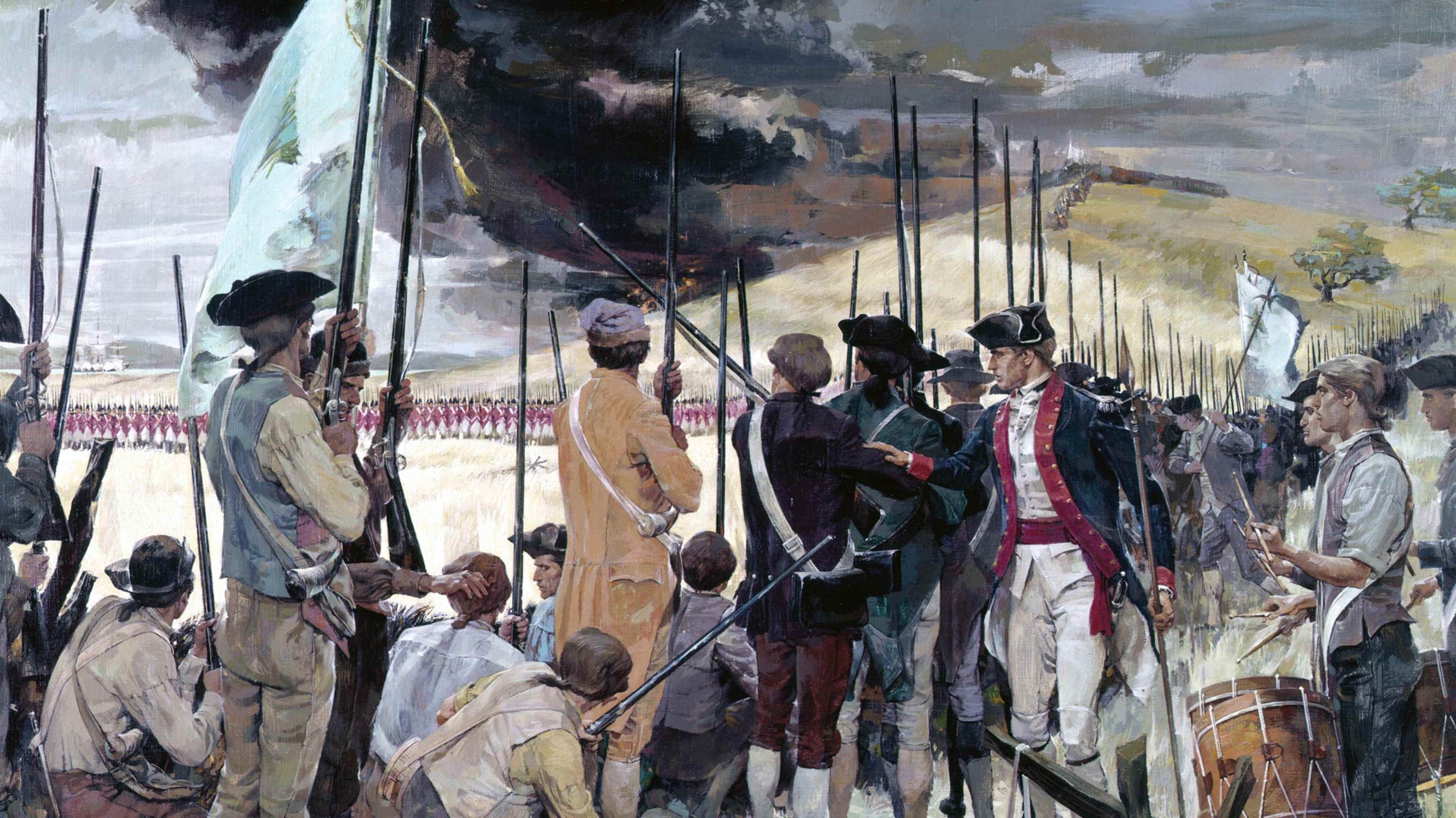
- June 17, 1775 (3:00 PM): The first British assault begins. Colonists hold their fire until the last possible second, decimating the advancing Redcoat columns and forcing a retreat.
- June 17, 1775 (3:30 PM): A second British charge is launched with similar disastrous results; colonial marksmanship leaves the slopes of Breed’s Hill covered in red coats.
- June 17, 1775 (4:00 PM): Having received reinforcements, Howe orders a third assault. The colonists, virtually out of gunpowder, are forced to abandon the redoubt, retreating across Charlestown Neck.
Key Figures and Their Legacy
Several individuals carved their names into the annals of history during those fateful hours. Colonel William Prescott is remembered as the steady leader who commanded the redoubt. Legend attributes the famous command, “Don’t fire until you see the whites of their eyes,” to either Prescott or General Israel Putnam, a directive born out of the desperate need to conserve precious gunpowder. On the British side, Major General William Howe displayed immense personal bravery but made the costly mistake of underestimating his opponents, relying on a direct frontal assault that cost the lives of hundreds of his elite soldiers. This conflict relied heavily on regional mobilization, highlighting how local communities across the 13 colonies map rallied together to resist imperial overreach.
Perhaps the most tragic loss for the American cause was Dr. Joseph Warren. A highly influential political leader, president of the Massachusetts Provincial Congress, and a founder of the Sons of Liberty, Warren had recently been commissioned as a major general. Despite his high rank, he chose to fight as a private soldier in the dirt of the redoubt, declaring he would rather die than see his countrymen retreat. True to his word, he was killed during the final British breakthrough, becoming the first great martyr of the American Revolution. His death galvanized the colonies, showcasing the ultimate price of liberty. This resistance was born out of decades of growing tension, which you can read about in these 13 facts about the 13 colonies.
The Untold Secrets of the Battle
While the broader strokes of the battle are well-known, several fascinating details are often left out of standard history books:
1. The First Forensic Dental Identification
After Dr. Joseph Warren was killed, the British stripped his body and buried him in a shallow, unmarked grave. Ten months later, after the British evacuated Boston, Warren’s family sought to give him a proper burial. His remains were badly decomposed, making identification nearly impossible. However, amateur dentist and famous patriot Paul Revere was able to positively identify Warren’s skull by recognizing a false tooth made of ivory and silver wire that he had personally crafted for the doctor. This is widely considered the first recorded instance of forensic dentistry in North America.
2. Salem Poor’s Heroism and the Mystery of Pitcairn’s Death
African-American soldiers played an indispensable role at Bunker Hill. Among them was Salem Poor, a former enslaved man who purchased his freedom in 1769. Poor fought with such extraordinary bravery that fourteen colonial officers later petitioned the Massachusetts General Court to officially recognize his valor, stating he behaved “like an experienced officer.” Many historians believe Poor fired the shot that mortally wounded British Major John Pitcairn—the very officer who had commanded the troops at Lexington Common. Others attribute this feat to another prominent Black soldier, Peter Salem, highlighting the overlooked contributions of minority patriots who fought for a freedom they themselves had to fight to acquire.
3. The Wrong Corpse Sent to London
Following Major John Pitcairn’s death, he was buried in the crypt of Christ Church (now known as the Old North Church) in Boston. Pitcairn’s widow later petitioned to have his remains exhumed and returned to Westminster in London. However, due to a mix-up in the dimly lit crypt, the wrong body was shipped across the Atlantic. Today, the legendary British officer still rests alongside nearly 1,000 other souls beneath the floorboards of the Old North Church.
4. Future Presidents Watching from Afar
The sounds of the battle echoed far beyond Charlestown. Ten miles south, seven-year-old John Quincy Adams, who would become the sixth U.S. President, stood on a hill next to his mother, Abigail Adams. Together, they wept as they heard the thunderous roar of the cannons and watched the smoke rise over Boston. Meanwhile, Benjamin Pierce, the father of the 14th President, Franklin Pierce, was actually on the field of battle, actively fighting the Redcoats.
The Long-Term Impact on America
The Battle of Bunker Hill was a classic Pyrrhic victory for Great Britain. While they successfully took the peninsula, they suffered over 1,000 casualties—nearly half of their attacking force—including an alarming number of officers. The colonists suffered around 450 casualties. British General Henry Clinton remarked that another such victory would “have ruined us.” Financially and politically, the battle signaled a point of no return. King George III, upon receiving news of the heavy losses, rejected the colonists’ Olive Branch Petition and officially issued the Proclamation of Rebellion, declaring the American colonies in a state of open revolt. It was a crucial turning point that unified the colonies and set them on an irreversible path toward the Declaration of Independence in 1776.
Understanding where these early clashes occurred helps us appreciate how how 3 colonial towns shaped the course of US history. Boston and its surrounding communities became the ideological and physical epicenter of the early rebellion, showing that local resistance could ignite a global movement.
Why the Battle of Bunker Hill Matters Today
The Battle of Bunker Hill remains a powerful symbol of American resolve and strategic ingenuity. It teaches us that a technical defeat can still serve as a profound psychological and strategic victory. The Bunker Hill Monument, a towering 221-foot granite obelisk that stands atop Breed’s Hill today, serves as a testament to this spirit. Interestingly, the monument’s completion in 1843 was only made possible through a massive grassroots fundraising effort led by Sarah Josepha Hale, the editor of Godey’s Lady’s Book, who organized a nationwide ladies’ craft and bake sale when government funding dried up. Today, the monument reminds us that the preservation of American history is a collective responsibility, built on the sacrifices of everyday citizens.
People Also Ask
Who actually won the Battle of Bunker Hill?
The British won the military battle because they successfully captured the peninsula after the colonists ran out of ammunition. However, the battle is widely considered a psychological victory for the colonists, as they proved they could inflict devastating casualties on the elite British Army.
Why was it called the Battle of Bunker Hill if it was fought on Breed’s Hill?
The original orders given to Colonel William Prescott were to fortify Bunker Hill. However, Prescott chose to fortify the lower but more strategically positioned Breed’s Hill instead. The name “Bunker Hill” had already been used in early dispatch reports, and the name stuck historically.
Did George Washington fight in the Battle of Bunker Hill?
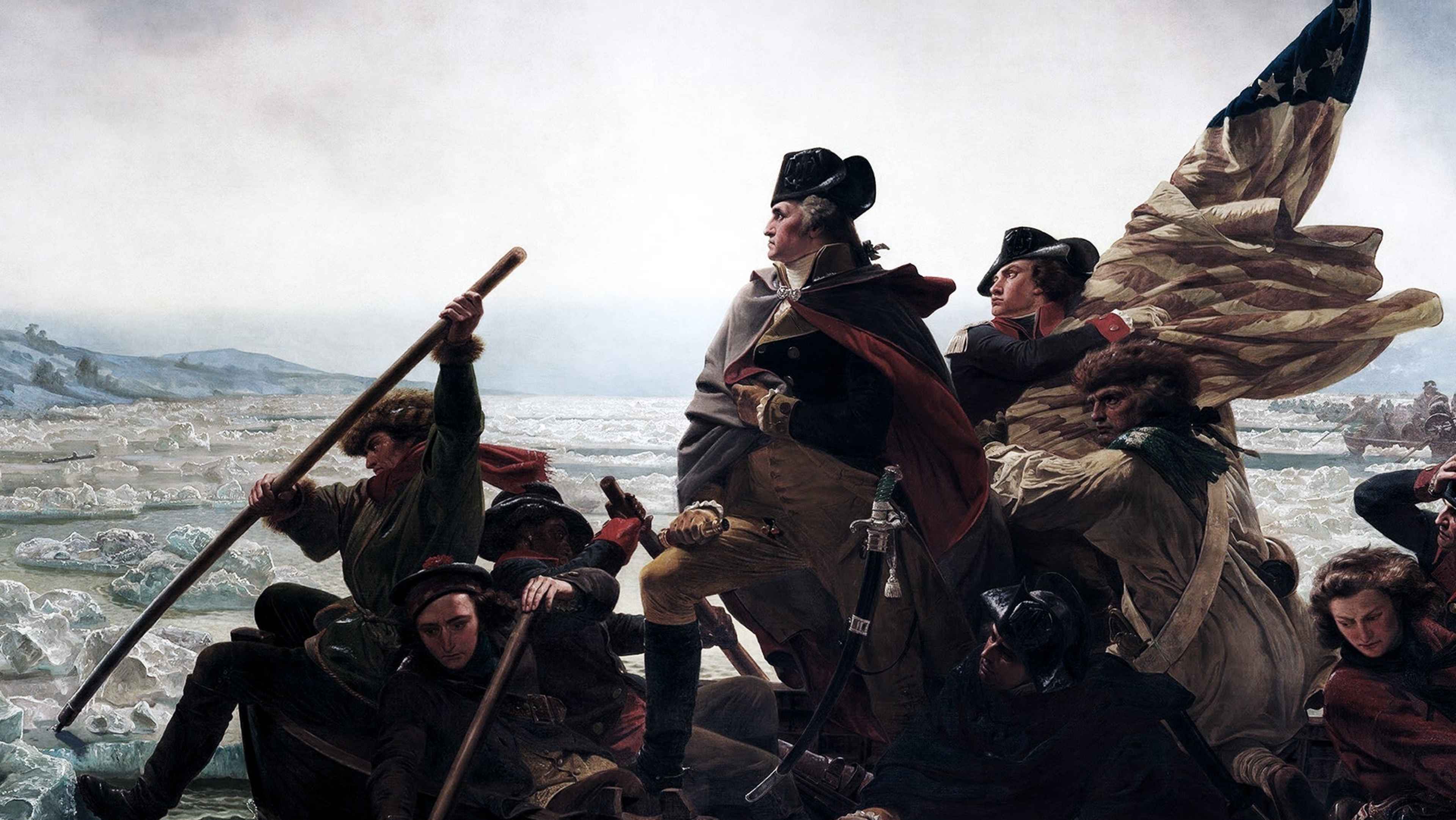
No, George Washington did not fight in the battle. He had recently been appointed Commander-in-Chief of the Continental Army by the Second Continental Congress, but he was still traveling to Boston to take command of the forces when the battle occurred.
Conclusion
Ultimately, the Battle of Bunker Hill was much more than a chaotic clash on a dusty Massachusetts hill. It was the moment the American colonies proved they possessed the grit, discipline, and passion required to challenge the most powerful empire in the world. From the tragic sacrifice of Dr. Joseph Warren to the unsung heroism of Salem Poor, the legacy of Bunker Hill continues to inspire generations of Americans to stand firm in the defense of liberty and self-determination.


