On March 23, 1775, inside the modest wooden walls of St. John’s Church in Richmond, Virginia, a fiery attorney named Patrick Henry stood before the Second Virginia Convention and delivered a speech that would alter the course of human history. At a time when many American colonists remained hesitant to sever ties with the British Crown, Henry’s electrifying call to arms shattered any lingering illusions of a peaceful compromise. His dramatic declaration—“Give me liberty, or give me death!”—became the ultimate battle cry of the American Revolution, encapsulating the raw, uncompromising desire for self-determination. This single, pivotal moment established Henry as the voice of a burgeoning nation, propelling his fellow patriots toward armed resistance and laying the foundation for a republic built on the principles of personal freedom and limited government.
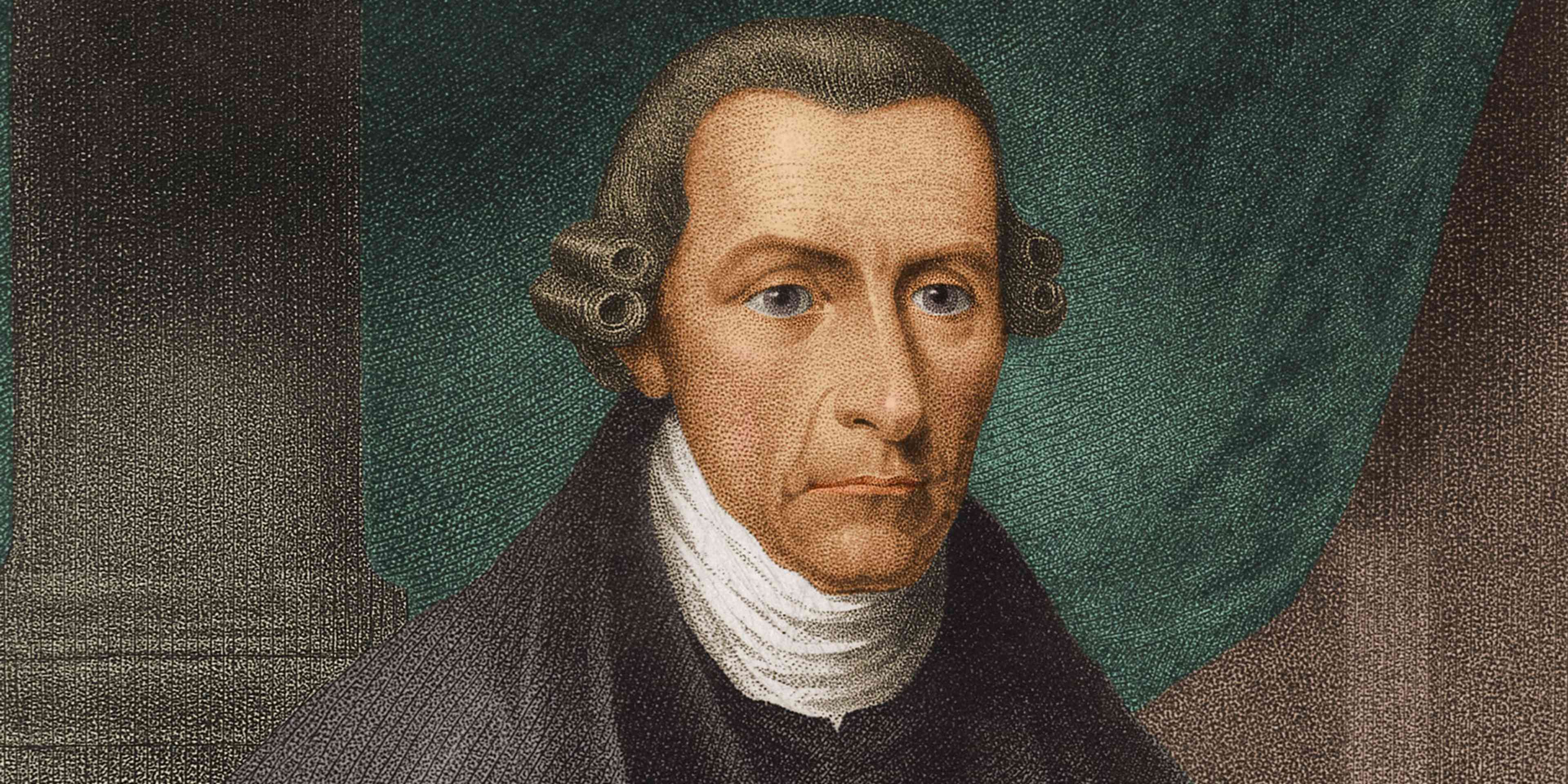
Historical Background: From Struggling Merchant to Master Orator
Born on May 29, 1736, in Hanover County, Virginia, Patrick Henry was the son of John Henry, a well-educated Scottish immigrant, and Sarah Winston Henry. Unlike many of his contemporaries among the Founding Fathers, Henry did not enjoy an elite upbringing or a formal collegiate education. Instead, he was educated primarily at home by his father. As a young man, Henry struggled to find his footing, failing repeatedly as a storekeeper and a planter. He eventually found his true calling in the law, teaching himself the profession while working at his father-in-law’s tavern. He was admitted to the Virginia bar in 1760, and his raw, natural talent for public speaking quickly set him apart.
Henry’s rhetorical style was deeply influenced by the evangelical preachers of the Great Awakening, a major religious revival that swept through the colonies during his youth. Rather than relying on dry, analytical legal arguments, Henry appealed directly to the emotions, passions, and moral convictions of his audience. This dramatic, colloquial, and highly persuasive style of speaking made him a formidable advocate in the courtroom and, eventually, a dominant force in colonial politics.
The Catalysts of Rebellion: The Parson’s Cause and the Stamp Act
Patrick Henry first entered the political spotlight during a 1763 legal dispute known as the Parson’s Cause. This case centered on the salaries of Anglican ministers in Virginia, which were traditionally paid in tobacco. Following a severe drought that drove tobacco prices skyward, the colonial legislature passed the Two-Penny Act to cap the ministers’ pay. When King George III vetoed the colonial law, a local minister sued for back pay. Henry defended the taxpayers, delivering a scathing defense of colonial self-governance. He boldly argued that a king who annulls salutary local laws behaves like a tyrant and forfeits all rights to his subjects’ obedience—a shocking and treasonous assertion for the era.
Two years later, Henry was elected to the Virginia House of Burgesses. He arrived just as the British Parliament enacted the hated Stamp Act of 1765, which taxed everyday paper goods in the colonies. Henry immediately took the lead in opposing the tax, introducing a series of radical resolutions known as the Stamp Act Resolves. He argued that only the colonists’ elected representatives had the right to tax them, solidifying the rallying cry of “no taxation without representation.” During his speech, Henry famously flirted with treason once more, suggesting that King George III might suffer the same fate as Julius Caesar if he continued his oppressive policies.
The Turning Point: The Richmond Speech of 1775
By early 1775, tensions between Great Britain and the colonies had reached a boiling point. The Second Virginia Convention convened in Richmond to discuss how the colony should respond to the growing military presence of British troops. On March 23, Patrick Henry rose to address the assembly, which included illustrious figures such as George Washington and Thomas Jefferson.
Henry argued passionately that peace was no longer an option. His words were not preserved in a transcript, as he spoke entirely without notes. The version of the speech we know today was reconstructed in 1817 by biographer William Wirt, who interviewed attendees decades after the event. According to Wirt’s account, Henry concluded his brilliant address with these immortal words:
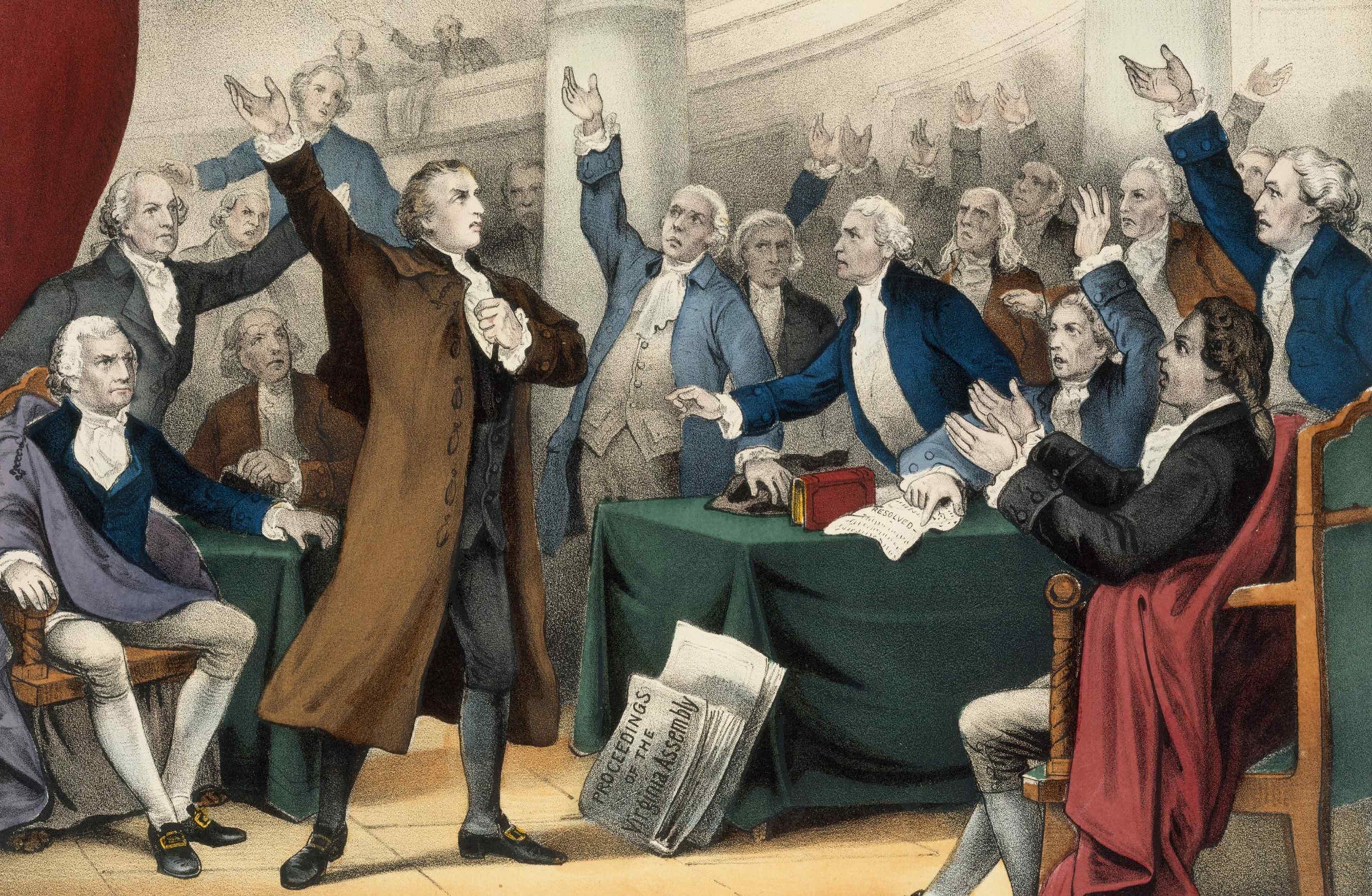
“Is life so dear, or peace so sweet, as to be purchased at the price of chains and slavery? Forbid it, Almighty God! I know not what course others may take; but as for me, give me liberty, or give me death!”
The impact of the speech was immediate and profound. It galvanized the delegates, convincing them to organize and arm the Virginia militia. Just weeks later, the Battles of Lexington and Concord would mark the official outbreak of the Revolutionary War.
A Crucial Chronological Timeline
- 1736: Patrick Henry is born on his family’s farm in Hanover County, Virginia.
- 1760: After teaching himself law, Henry is admitted to the Virginia bar.
- 1763: Henry argues the Parson’s Cause, establishing himself as a champion of colonial rights against royal overreach.
- 1765: Elected to the Virginia House of Burgesses, Henry introduces the Stamp Act Resolves.
- March 23, 1775: Henry delivers his famous “Give Me Liberty or Give Me Death” speech in Richmond.
- 1776–1779: Henry serves as the first Governor of the independent Commonwealth of Virginia.
- 1787–1788: Henry emerges as a leading Anti-Federalist, fiercely opposing the ratification of the U.S. Constitution.
- 1791: The Bill of Rights is ratified, largely due to pressure from Henry and other Anti-Federalists.
- June 6, 1799: Patrick Henry dies of stomach cancer at his Red Hill plantation at the age of 63.
The Clash Over the Constitution and the Bill of Rights
After the American Revolution, Patrick Henry’s role shifted from a revolutionary spark plug to a guardian of local sovereignty. When the Constitutional Convention drafted the U.S. Constitution in 1787, Henry was deeply alarmed. He became an outspoken leader of the Anti-Federalists, a group that opposed the creation of a strong, centralized federal government.
Henry feared that a powerful federal government, complete with a national army and a presidency with unchecked powers, would inevitably degenerate into a monarchy similar to the one they had just overthrown. He engaged in fierce debates regarding how the Founding Fathers divided power between states and federal governments. Though Henry and his allies were unable to stop the ratification of the Constitution, their stubborn resistance forced a crucial compromise: the creation of the Bill of Rights. These first ten amendments to the Constitution guaranteed individual liberties and limited federal power, cementing Henry’s lasting impact on American jurisprudence.
The Paradox of Liberty and Slavery
Like many of his fellow southern delegates, including Thomas Jefferson and George Washington, Patrick Henry lived a life defined by a profound and troubling contradiction. While he championed the absolute value of human liberty on the public stage, he was also a slaveholder. Over his lifetime, Henry owned dozens of enslaved individuals who worked his tobacco fields at his Red Hill plantation.
Henry was consciously aware of this moral failing, once writing that slavery was a “lamentable evil” and an institution totally inconsistent with the Christian religion and the struggle for freedom. Yet, he admitted that he could not bring himself to free his enslaved laborers, citing the practical difficulties of living without them. This stark hypocrisy highlights the deep-seated conflicts that characterized the early republic and the grievances of the American colonists, who demanded freedom from British tyranny while maintaining a system of chattel slavery at home.
Lesser-Known Facts About Patrick Henry
- The Speech Might Have Been Enhanced: Because Henry spoke without notes, some historians suspect that William Wirt heavily embellished or even fabricated parts of the “Give me liberty, or give me death” quote in his 1817 biography to boost book sales.
- He Declined Prestigious Federal Offices: Distrustful of the federal government, Henry repeatedly turned down offers from George Washington and John Adams to serve as Secretary of State, Minister to Spain, Minister to France, and Chief Justice of the Supreme Court.
- A Massive Family: Henry had a total of 17 children across his two marriages—six with his first wife, Sarah Shelton, and eleven with his second wife, Dorothea Dandridge.
Why Patrick Henry Still Matters Today
Patrick Henry’s legacy remains highly relevant in contemporary discussions about the role of government, individual rights, and state sovereignty. His skepticism of centralized authority prefigured centuries of political debate in the United States over federalism, state rights, and executive overreach. The Bill of Rights, which stands as a shield protecting the personal freedoms of everyday Americans, exists in large part because of Henry’s relentless refusal to compromise. In an era where the balance between national security and individual liberty is constantly questioned, Patrick Henry’s warnings remind us of the eternal vigilance required to keep a republic free.
People Also Ask (FAQ)
Did Patrick Henry actually say “Give me liberty, or give me death”?
While the sentiment and general message of the speech are widely verified by eyewitnesses, the exact wording of the famous phrase was reconstructed by biographer William Wirt in 1817. Because no written transcript was made during the speech, historians still debate how much of the phrasing belongs to Henry and how much was polished by Wirt.
Why did Patrick Henry oppose the U.S. Constitution?
As a leading Anti-Federalist, Henry feared that the Constitution created a federal government that was too centralized and powerful. He believed that local state governments were the best guardians of individual liberty, and he worried that a strong national executive could easily turn into a king-like tyrant.
What was Patrick Henry’s connection to the Bill of Rights?
Although Henry opposed the ratification of the Constitution, his vocal protests—alongside other Anti-Federalists—convinced federalist leaders like James Madison that a bill of rights was necessary to appease the public. This directly led to the drafting and ratification of the first ten amendments in 1791.
Conclusion
Patrick Henry was a complex, brilliant, and deeply passionate figure whose words ignited the flame of the American Revolution. From his early victories in the Parson’s Cause to his legendary stance at St. John’s Church, Henry championed the idea that liberty is a fundamental human right worth fighting and dying for. Though his personal legacy is complicated by his participation in the institution of slavery, his political contributions—most notably his role in securing the Bill of Rights—continue to shape the democratic fabric of the United States. He remains an enduring symbol of American defiance, eloquence, and an unwavering belief in the power of the individual voice.


