The history of early America is often told through a purely Anglo-Saxon lens, focusing on the Pilgrims of New England or the tobacco planters of Virginia. Yet, one of the most transformative chapters in the creation of the modern United States unfolded not under an English banner, but under the Dutch tricolor. The story of the Dutch surrender of New Netherland in September 1664 is a pivotal geopolitical turning point that fundamentally reshaped the Eastern Seaboard. What began as a scattered network of fur-trading outposts quickly evolved into a bustling, multilingual colony that laid the unique cultural, commercial, and pluralistic foundations of what would eventually become New York. By exploring how this relatively small colonial experiment fell into English hands without a single drop of blood being shed, we gain a deeper appreciation for the complex interactions between European empires and the indigenous nations who first inhabited these lands.
Historical Background: Henry Hudson and the Birth of New Netherland
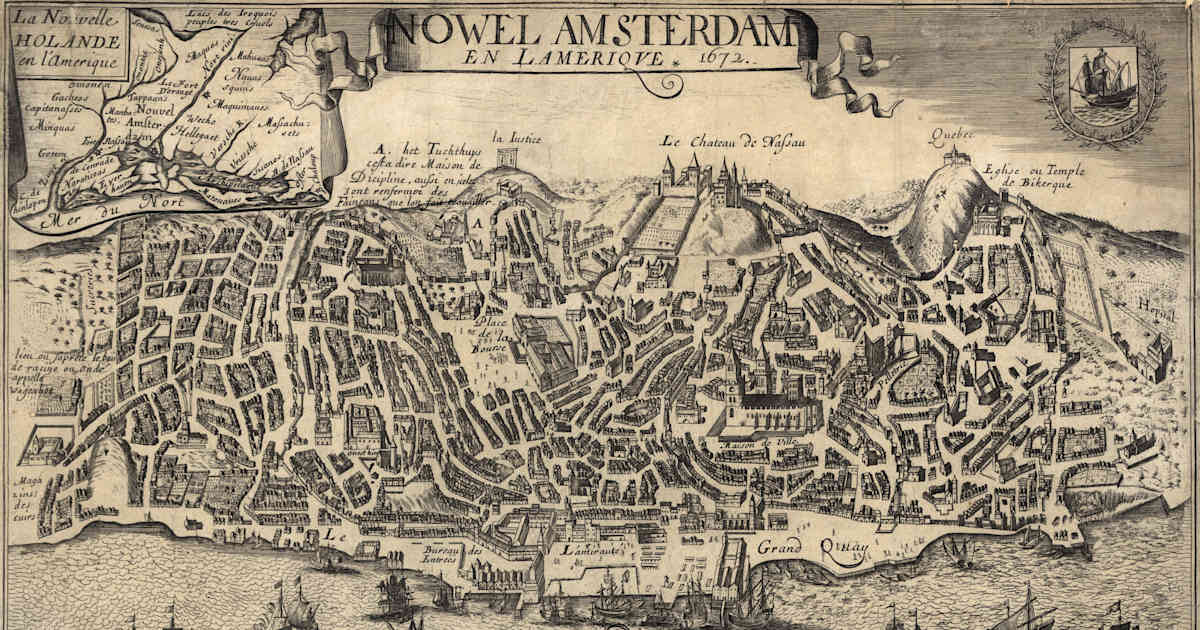
In the spring of 1609, the English explorer Henry Hudson, sailing under the flag of the state-sponsored Dutch East India Company (VOC) aboard the Halve Maen (Half Moon), was searching for the elusive Northwest Passage to Asia. When thick sheets of sea ice blocked his path in the Arctic, Hudson made a daring decision: rather than return to Europe empty-handed, he turned his ship westward across the Atlantic Ocean. He eventually made landfall in Nova Scotia, followed the coast south to North Carolina, and then reversed course to explore a wide, deep river that would later bear his name.
While Hudson quickly realized this waterway was not the passage to Asia, his voyage proved immensely valuable. He returned with reports of a land rich in natural resources, especially timber and fur-bearing animals. Based on these findings, the Dutch Republic laid claim to a vast territory spanning modern-day New York, New Jersey, Pennsylvania, Connecticut, Maryland, and Delaware. To exploit these resources, the Dutch West India Company (WIC) was chartered in 1621, taking control of the newly named colony of New Netherland. Unlike English colonial efforts, which were often fueled by religious groups seeking permanent relocation, the early Dutch presence was strictly mercantile. This commerce-first approach meant that the colony grew slowly compared to neighboring regions, mirroring some of the unsuccessful colonization efforts in North America where lack of population density threatened long-term survival.
Key Events Timeline: From Trading Outpost to English Province
The timeline of New Netherland is a dynamic story of swift economic development, cultural adaptation, and political friction. Below is a chronological breakdown of the most critical dates that shaped the colony’s history:
- 1609: Henry Hudson explores the Hudson River aboard the Halve Maen, laying the groundwork for Dutch claims.
- 1614: Dutch fur traders establish Fort Nassau near present-day Albany to trade with local Native American tribes.
- 1621: The Dutch West India Company (WIC) is officially chartered to oversee and commercialize the colony.
- 1624: The first major group of permanent settlers—30 French-speaking Protestant Walloon families—arrives in New Netherland.
- 1626: Peter Minuit “purchases” Manhattan Island, and construction begins on Fort Amsterdam, establishing the capital of New Amsterdam.
- 1643–1645: Kieft’s War ravages the colony, highlighting the devastating consequences of colonial expansion on indigenous populations.
- 1647: Peter Stuyvesant is appointed Director-General, implementing strict reforms to bring stability and order.
- 1664: Four English warships arrive in New Amsterdam harbor, forcing the bloodless surrender of the colony on September 8.
- 1673: The Dutch briefly reconquer New York during the Third Anglo-Dutch War, renaming the city New Orange.
- 1674: The Treaty of Westminster permanently returns the colony to English rule, solidifying British hegemony along the Atlantic coast.
The Myth and Reality of the $24 Manhattan Purchase
One of the most persistent myths in American history is that the Dutch “bought” Manhattan Island from local Native Americans for beads and trinkets valued at 60 guilders, which 19th-century historians popularized as equivalent to twenty-four dollars. While this narrative has been passed down for generations, modern historians and anthropologists reject it as historically inaccurate and culturally tone-deaf.
First, the trade goods exchanged—including iron kettles, metal axes, brass keys, and woven woolen blankets—were of immense practical value to the indigenous populations. These items, particularly metal tools, were highly coveted because they drastically reduced the labor required for daily survival, and the Native Americans did not possess the technology to manufacture them. Second, and more importantly, the Lenape (Munsee) and other local tribes did not share the European concept of absolute, permanent land ownership. In their cultural worldview, land was a communal resource that belonged to the Earth; it could not be sold or permanently alienated. To the indigenous leaders, the transaction was almost certainly viewed as a diplomatic treaty granting the Dutch temporary permission to live on, hunt, and share the land in exchange for a mutual alliance and material tribute. The failure of both parties to comprehend this fundamental cultural disconnect eventually laid the groundwork for tragic conflicts like Kieft’s War in the 1640s, during which hundreds of Native Americans were killed in brutal, state-sanctioned raids.
Peter Stuyvesant and the Paradox of Dutch New Amsterdam
By 1647, New Netherland was in a state of deep decline, suffering from the aftermath of wars with Native Americans and financial mismanagement. In response, the WIC dispatched Peter Stuyvesant, a battle-hardened military veteran who had lost his right leg in a battle against the Portuguese, to govern the colony. Stuyvesant was a strict, highly religious, and iron-fisted administrator who successfully transformed New Amsterdam from a lawless frontier outpost into a thriving, highly structured municipal capital.
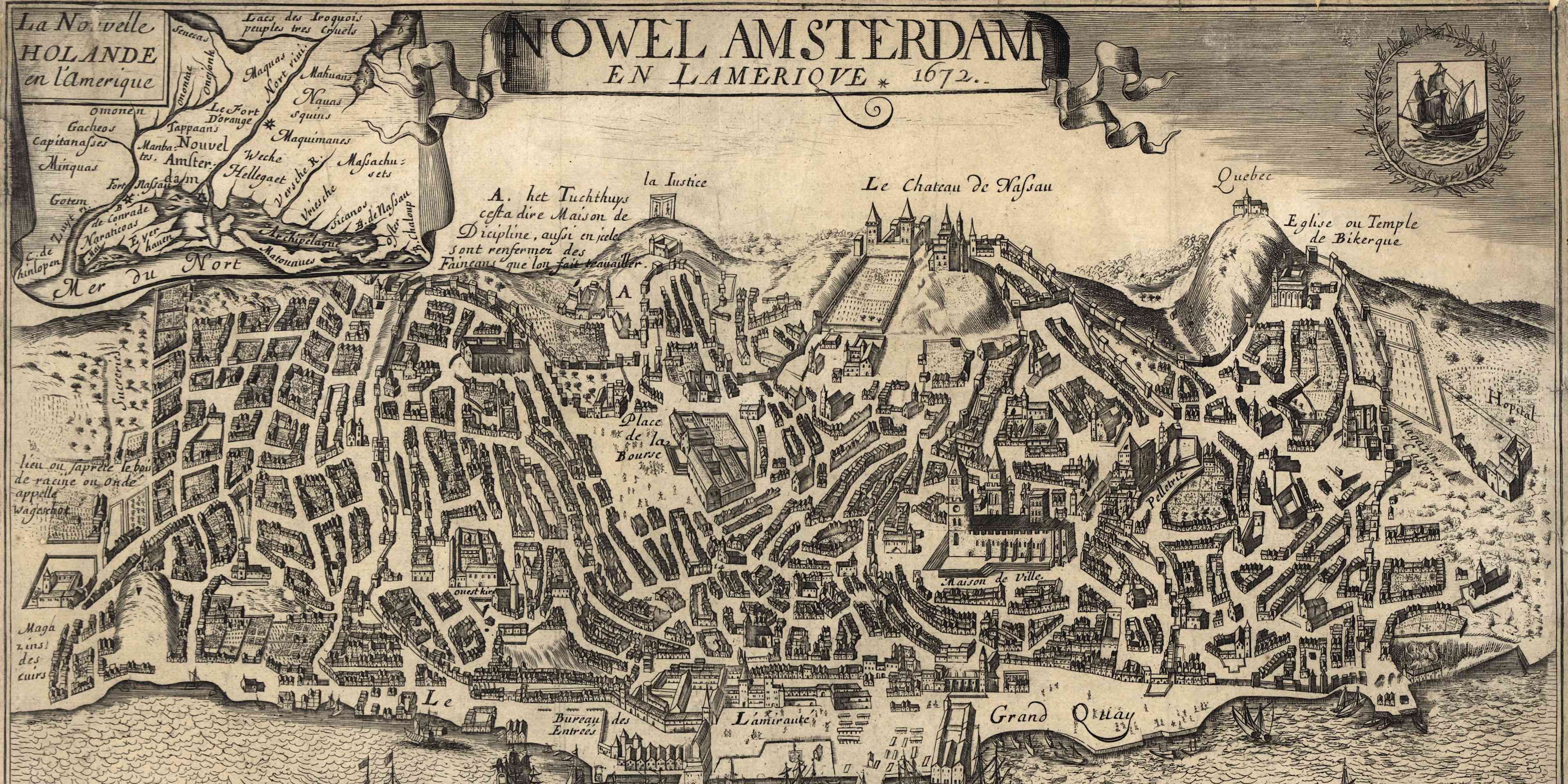
However, Stuyvesant’s rule was marked by a fascinating paradox. While the Dutch Republic in Europe was celebrated as a beacon of intellectual freedom and relative religious tolerance, Stuyvesant himself was fiercely intolerant of religious diversity. He actively attempted to bar Jewish refugees fleeing the Inquisition in Brazil, calling them “very repugnant,” and sought to banish Quakers and Lutherans. Despite his authoritarian efforts, the governing directors of the WIC in Amsterdam consistently overruled his discriminatory decrees. They understood that in a global trading hub, pragmatism and commerce must take precedence over religious dogmatism. Consequently, New Amsterdam flourished as a remarkably diverse colony. As early as 1643, a Jesuit missionary noted that eighteen different languages were spoken in the streets of the settlement. This unique environment laid the foundation for the unprecedented religious diversity of early America, cultivating a distinct social pluralism that would set the Middle Colonies apart from the strict puritanical conformity of New England.
The Turning Point: The Surrender of 1664
Despite its commercial success, New Netherland was highly vulnerable. At its peak, the colony’s population stood at only around 9,000 residents, vastly outnumbered by the surrounding English colonists who numbered over 100,000. To the English Crown, the Dutch colony was an unacceptable geopolitical wedge that split their New England colonies from those in Virginia and Maryland. In March 1664, King Charles II boldly granted the entire territory of New Netherland to his brother, James, the Duke of York, despite the two nations technically being at peace.
In August 1664, four heavily armed English warships carrying hundreds of soldiers under Colonel Richard Nicolls anchored in New Amsterdam harbor. Nicolls issued a stern ultimatum: surrender the colony immediately, or face military invasion. Peter Stuyvesant, ever the stubborn soldier, wanted to reject the terms and fight to the bitter end. However, the prominent citizens of New Amsterdam, recognizing they were hopelessly outmatched and that the WIC would not send military assistance, petitioned Stuyvesant to capitulate. They preferred to protect their families, properties, and livelihoods under English rule rather than watch their city be destroyed. Yielding to his citizens’ pleas, a deeply bitter Stuyvesant signed the articles of capitulation on September 8, 1664. The surrender of New Netherland was completely bloodless, and the colony was promptly renamed New York in honor of the Duke of York.
Long-Term Impact on America
The peaceful nature of the English takeover meant that the Dutch population was not expelled, nor was their property confiscated. As a result, the Dutch retained an incredibly strong cultural, linguistic, and political footprint that helped shape the emerging identity of the thirteen colonies. In taking over New Netherland, the English laid the groundwork for New York City to become the primary commercial hub of the Atlantic world.
The cultural legacy of the Dutch is woven into the very fabric of modern American life. Common everyday words like “cookie” (from koekje), “boss” (from baas), “coleslaw” (from koolsla), and “snoop” (from snoepen) were integrated into the American vernacular. Geographically, New York City is a living testament to its Dutch origins; names like Brooklyn (Breuckelen), Harlem (Haarlem), Coney Island (Conyne Eylandt), and Broadway (Breede Wegh) remain direct links to the 17th-century colony. Furthermore, many historians argue that the Dutch Republic’s political legacy, specifically its decentralized federal structure and its historic Act of Abjuration, profoundly influenced the drafting of the Declaration of Independence and the Bill of Rights, introducing key concepts of individual liberty and self-governance to the American founders.
Lesser-Known Facts About New Netherland
- The Brief Dutch Comeback: The surrender in 1664 was not the final word. During the Third Anglo-Dutch War in 1673, a formidable Dutch fleet of 21 ships sailed into New York Harbor and successfully forced the English to surrender, temporarily reclaiming the city and renaming it “New Orange.” However, this restoration was short-lived. Under the Treaty of Westminster in 1674, the Dutch traded the colony back to the English in exchange for Suriname, a highly lucrative sugar-producing colony in South America. At the time, Dutch officials genuinely believed they had secured the better end of the bargain.
- The Origins of Wall Street: The world-renowned financial center of Wall Street derives its name from a physical, twelve-foot-high wooden wall erected by the Dutch in 1653. Director-General Peter Stuyvesant ordered the wall built across the northern boundary of New Amsterdam to defend the settlement from potential land attacks by English colonists and neighboring Native American tribes.
- The Oldest Standing Dutch Structure: Although Manhattan’s early wooden structures have long since disappeared, physical remnants of the Dutch era still survive in neighboring boroughs. Built around 1652, the Wyckoff House in Flatlands, Brooklyn, remains the oldest surviving building in New York State, offering a rare, tangible window into the domestic life of early Dutch-American colonists.
Why the History of New Netherland Matters Today
The legacy of New Netherland is critical to understanding why New York City developed a culture so distinctly different from other early American cities. While Boston was founded as a strict, homogeneous religious commonwealth and Philadelphia as a Quaker sanctuary, New York was born as a commercial, multi-ethnic, and pragmatic trading hub. This early commitment to commerce, pluralism, and diversity created a resilient metropolitan blueprint. It demonstrated that a highly diverse population could successfully live and work together by prioritizing economic cooperation over ideological conformity—a core characteristic that remains central to the identity of modern America as a global melting pot.

People Also Ask
Why did the Dutch surrender New Netherland?
The Dutch surrendered New Netherland primarily because they were vastly outnumbered by the English and lacked adequate military support from the Dutch West India Company. When English warships arrived in 1664, local citizens petitioned Director-General Peter Stuyvesant to surrender peacefully rather than face total destruction, prioritizing the preservation of their homes and commercial assets.
Did the English expel the Dutch after the takeover?
No, the English did not expel the Dutch or confiscate their property. Under the terms of the capitulation, Dutch citizens were allowed to keep their land, practice their religion freely, and maintain their local customs and legal traditions, leading to a smooth integration into the British Empire.
What did the Dutch receive in exchange for New York?
Under the Treaty of Westminster in 1674, the Dutch officially ceded their claim to New York (then briefly reclaimed as New Orange) to the English in exchange for control over Suriname in South America, which was a highly valuable sugar colony at the time.
Who was the last Dutch governor of New Netherland?
The last Dutch Director-General of New Netherland was Peter Stuyvesant, who governed the colony from 1647 until its surrender to the English in 1664.
Conclusion: The Enduring Legacy of a Forgotten Colony
The Dutch surrender of New Netherland in 1664 was far more than a simple colonial transfer of power; it was a defining moment that shaped the cultural and economic future of the United States. Though the colony of New Netherland existed for only four decades, its foundational values of trade, pluralism, and resilience survived long after the Dutch flag was lowered. By blending Dutch mercantile pragmatism with English colonial administration, New York emerged as the vibrant heart of the New World, embodying the very ideals of diversity and commercial ambition that would eventually define the American dream.


