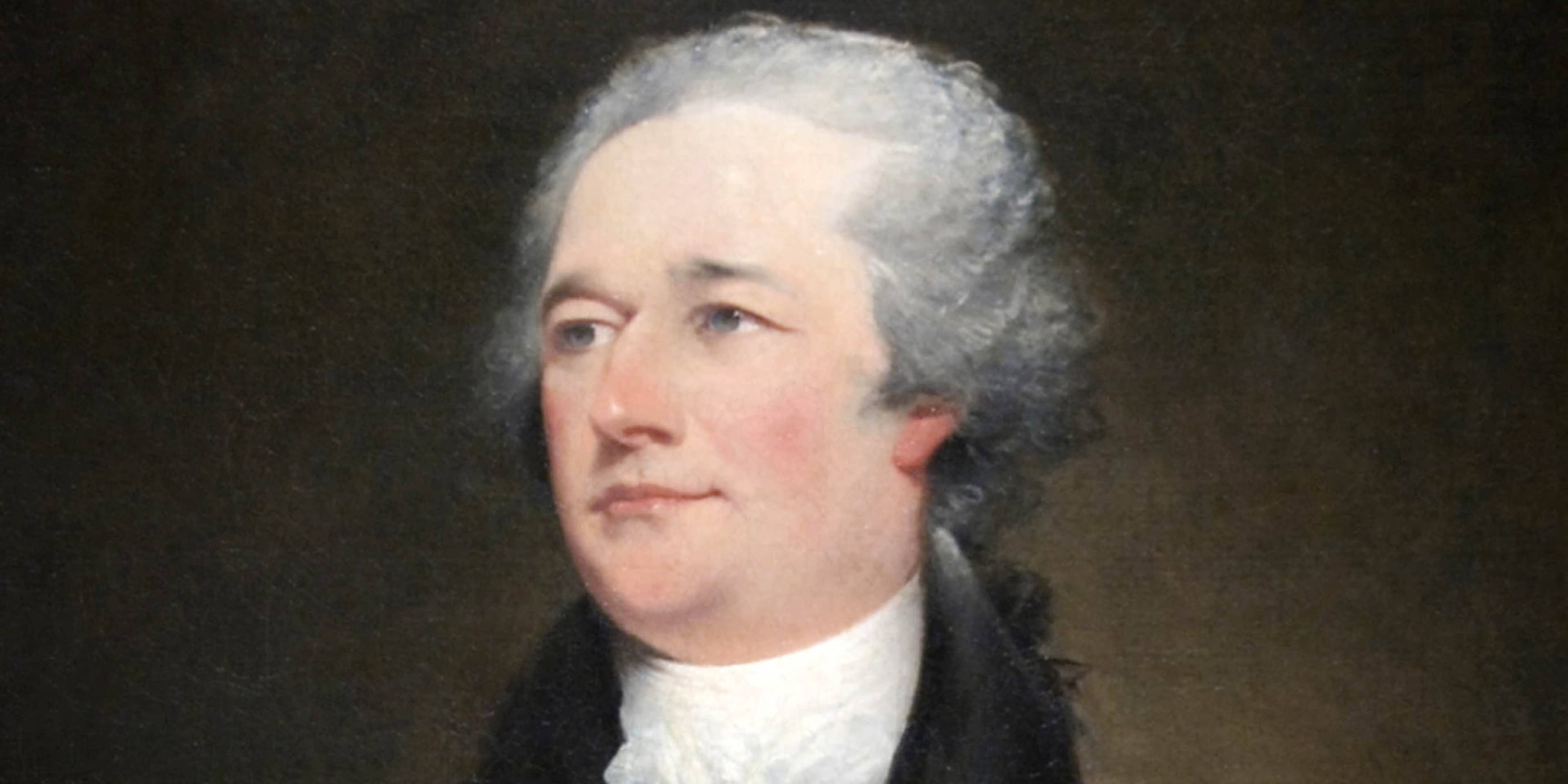
Few figures in American history boast a story as dramatic, polarizing, and deeply influential as Alexander Hamilton. Emerging from the bleakest poverty in the Caribbean, he rose to become an indispensable architect of the United States. His intellect and relentless drive shaped the financial foundations of the nation, propelled the ratification of the U.S. Constitution, and helped draft the very blueprint of modern American governance. Yet, his life was also defined by fierce personal rivalries, devastating scandals, and a fatal duel that cut his brilliant career short. Understanding Hamilton is essential to understanding the core tensions of the American experiment—the balance between federal authority and individual liberties, and the endless pursuit of national progress.
Historical Background: From West Indian Obscurity to American Revolution
Alexander Hamilton’s journey began in Charlestown, Nevis, where he was born out of wedlock to Rachel Faucette and James Hamilton in either 1755 or 1757. This illegitimacy carried a heavy social stigma in the 18th century. His childhood was marked by rapid loss: his father abandoned the family in 1766, and his mother died of yellow fever just two years later, leaving young Hamilton virtually penniless. Armed only with his formidable intellect, Hamilton found employment as a clerk for Beekman and Cruger, an import-export firm on St. Croix. This early experience in shipping logistics, currency exchange, and global trade provided him with an unconventional but masterful education in finance.
In 1772, a devastating hurricane tore through the West Indies. Hamilton wrote an incredibly vivid and dramatic description of the disaster in a letter to his father, which was subsequently published in the Royal Danish-American Gazette. Local readers were so astonished by the teenager’s eloquent writing that they established a subscription fund to send him to the North American colonies for a formal education. Hamilton arrived in New York in late 1772, enrolling in King’s College (now Columbia University) just as the geopolitical tension within the 13 colonies was reaching a boiling point with Great Britain.
Chronology of a Founding Father: Key Events Timeline
- 1755/1757: Born on the Caribbean island of Nevis.
- 1772: Relocates to New York following the publication of his hurricane letter.
- 1775: Joins a volunteer militia company called the Hearts of Oak as the Revolutionary War begins.
- 1777: Appointed as General George Washington’s aide-de-camp with the rank of lieutenant colonel.
- 1780: Marries Elizabeth Schuyler, securing his place in New York high society.
- 1781: Leads the heroic, silent bayonet assault on Redoubt 10 at the decisive Battle of Yorktown.
- 1787: Serves as a New York delegate to the Constitutional Convention in Philadelphia.
- 1787-1788: Co-authors the Federalist Papers alongside James Madison and John Jay.
- 1789: Appointed by President Washington as the first Secretary of the Treasury of the United States.
- 1791: Successfully charters the First Bank of the United States.
- 1797: Publishes the infamous Reynolds Pamphlet to clear his name of financial corruption charges.
- 1801: Suffers the tragic loss of his eldest son, Philip, in a duel; founds the New York Evening Post.
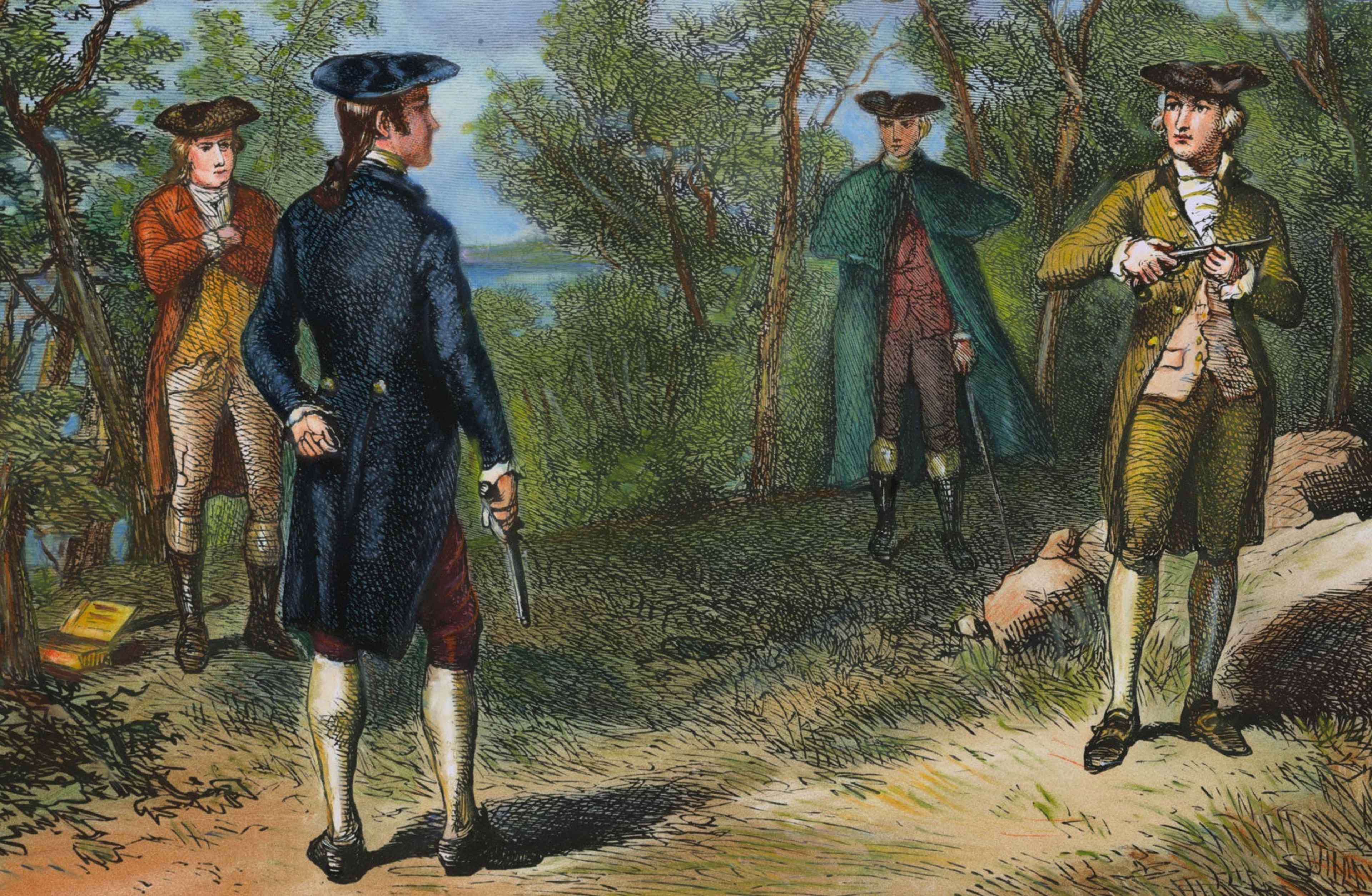
- 1804: Mortally wounded in a duel with Vice President Aaron Burr in Weehawken, New Jersey, dying the next day.
Important Figures and Their Lasting Impact
George Washington: The Commander and Patron
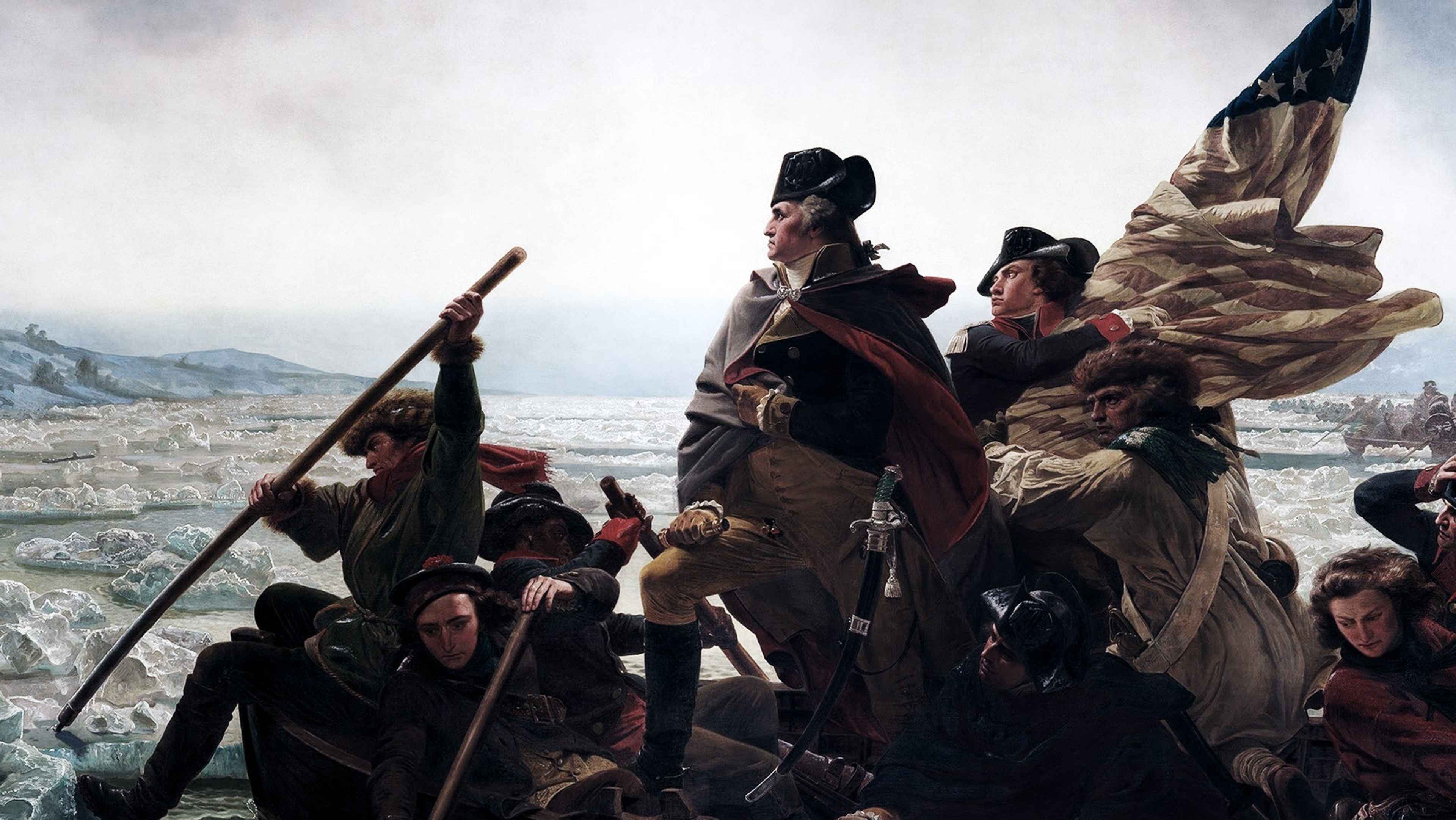
General George Washington recognized Hamilton’s administrative brilliance early in the Revolutionary War. As Washington’s aide-de-camp, Hamilton drafted critical correspondence, managed military logistics, and became a trusted political advisor. Their partnership extended into the executive branch, where Washington consistently backed Hamilton’s controversial financial reforms, shielding him from partisan onslaughts.
Elizabeth Schuyler Hamilton: The Pillar of Strength
In 1780, Hamilton married Elizabeth Schuyler, daughter of the wealthy and politically powerful General Philip Schuyler. “Eliza” brought Hamilton the social prestige and familial stability he had lacked his entire life. Together they had eight children. Following his death, Eliza spent her fifty-year widowhood preserving his legacy, raising money for orphanages, and collecting his extensive writings for future generations.
Thomas Jefferson: The Ideological Archrival
As the first Secretary of State, Thomas Jefferson envisioned an agrarian republic of independent farmers and feared that Hamilton’s economic policies would centralize excessive power in the federal government. Their relentless debates over the National Bank and the interpretation of the Constitution directly birthed the nation’s first political parties: the Hamilton-led Federalists and the Jefferson-led Democratic-Republicans. These clashes highlight how early governance differed from local elections in early America, which were often highly localized and boisterous affairs.
Aaron Burr: The Fatal Adversary
Aaron Burr was a brilliant lawyer and politician whose career frequently intersected with Hamilton’s in New York. Though they occasionally collaborated professionally, Hamilton deeply distrusted Burr’s political opportunism. Hamilton’s backroom political maneuvers repeatedly thwarted Burr’s ambitions, culminating in the historic tie-breaker of the 1800 presidential election, where Hamilton threw his support to his long-time rival Jefferson over Burr.
Key Turning Points that Altered History
The Assault on Redoubt 10 at Yorktown
Despite his elite administrative role, Hamilton yearned for battlefield glory. In 1781, Washington finally granted him a field command. During the Siege of Yorktown, Hamilton’s battalion was tasked with capturing Redoubt 10. To guarantee absolute stealth, Hamilton ordered his men to advance in complete silence with unloaded muskets, relying solely on bayonets. The successful capture of the redoubt took less than ten minutes and forced British General Cornwallis to surrender, effectively securing American independence.
The Compromise of 1790 (The Dinner Table Bargain)
Faced with massive national debt after the war, Hamilton proposed that the federal government assume state debts and establish a national bank. Southern states, which had largely paid off their debts, fiercely objected. To break the deadlock, Hamilton, Jefferson, and Madison met for a private dinner. They struck a historic bargain: Hamilton secured the votes needed for his financial system, while the South secured the permanent relocation of the national capital to the Potomac River (modern Washington, D.C.).
Long-Term Impact on America’s Structure
Hamilton’s vision transformed a bankrupt loose confederation into a cohesive economic superpower. By establishing the U.S. Mint, the national debt system, and the First Bank of the United States, he created a stable national currency and robust credit system. Furthermore, his arguments for the “necessary and proper” clause of the Constitution established the doctrine of implied powers, allowing the federal government to adapt to the complexities of an evolving nation. His contributions to the Federalist Papers remain foundational to the evolution of the American legal system and are still cited by the Supreme Court today.
Lesser-Known Facts About Alexander Hamilton
- The Father of the Coast Guard: In 1790, Hamilton established the Revenue Marine (later the Revenue Cutter Service) to combat maritime smuggling and enforce tariff laws, making him the founder of what would become the United States Coast Guard.
- A Tragic Legacy of Duels: In a devastating twist of fate, both Hamilton and his eldest son, Philip, died in duels at the exact same location in Weehawken, New Jersey, using the very same set of pistols owned by John Barker Church.
- Founding the New York Post: Seeking a platform to promote Federalist policies and challenge his political rivals, Hamilton established the New York Evening Post in 1801. Today, it remains one of the oldest continuously published newspapers in the United States.
Why Alexander Hamilton Still Matters Today
The philosophical divide between Alexander Hamilton and Thomas Jefferson remains the defining struggle of modern American politics. Debates over the size of the federal government, the regulation of financial institutions, and foreign intervention are fundamentally Hamiltonian versus Jeffersonian arguments. Additionally, the global success of Lin-Manuel Miranda’s 2015 Broadway musical Hamilton introduced his story to a new generation, framing his life as the ultimate immigrant narrative and cementing his legacy as a timeless symbol of ambition and systemic innovation.
People Also Ask
Why did Aaron Burr challenge Alexander Hamilton to a duel?
Burr challenged Hamilton after years of political frustration. Following his loss in the 1804 New York gubernatorial election, Burr blamed Hamilton’s persistent backroom opposition. He fixated on a published letter claiming Hamilton had expressed a “despicable opinion” of him at a dinner party, and when Hamilton refused to apologize, Burr demanded satisfaction on the dueling grounds.
What is the Reynolds Pamphlet?
The Reynolds Pamphlet, published by Hamilton in 1797, was America’s first major political sex scandal. In it, Hamilton confessed to an extramarital affair with Maria Reynolds. He went public with the sordid details to prove that the payments he made to her husband, James Reynolds, were blackmail rather than illegal financial speculation of government funds.
Was Alexander Hamilton ever President of the United States?
No, Hamilton was never president. While he met the constitutional citizenship requirements, his polarizing political style, the public humiliation of the Reynolds Pamphlet, and his early death in 1804 prevented him from ever mounting a successful campaign for the nation’s highest office.
Conclusion
Alexander Hamilton’s life was an extraordinary arc of triumph and tragedy. From an orphaned youth in the West Indies to the vanguard of the American Revolution, his relentless ambition and financial genius constructed the modern American state. Though his combative nature and personal indiscretions ultimately led to his premature death, the institutions he built continue to dictate the economic and political pulse of the United States. Hamilton did not merely witness the birth of America; he engineered its future.


