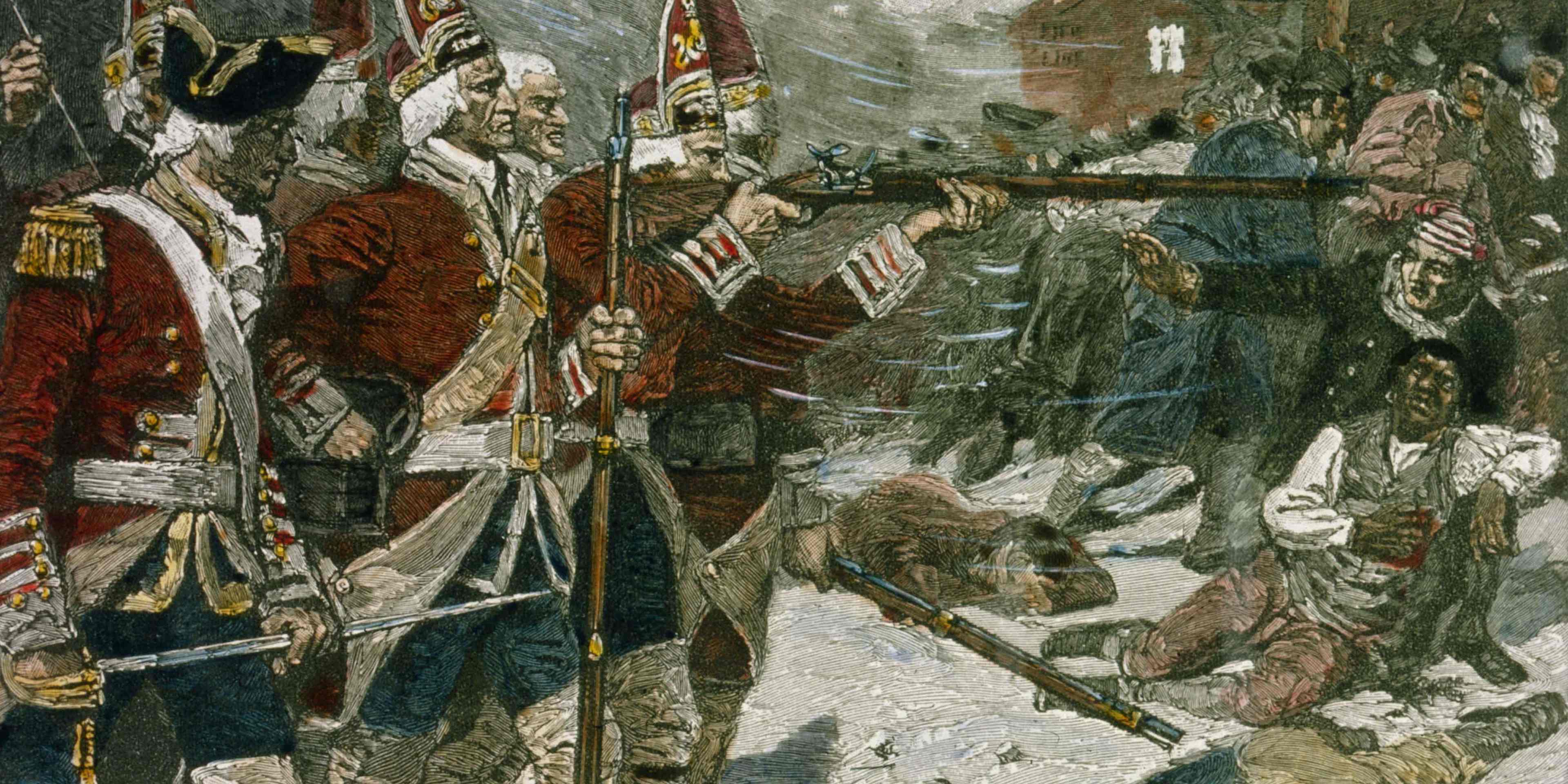
On a freezing night in March 1770, a seemingly trivial confrontation on the icy streets of Boston quickly devolved into a deadly clash. Decades later, a fascinating question persists among students of history: Did a snowball fight start the American Revolution? While the immediate catalyst of the infamous Boston Massacre involved a mob of angry colonists pelting a lone British sentry with packed snow, ice, and debris, this fateful encounter was actually the boiling point of years of simmering geopolitical frustration. Understanding this critical event requires looking beyond the snowballs to the deep-seated constitutional disputes, heavy-handed taxation, and growing military occupation that characterized colonial New England. The tragedy that unfolded on King Street did not merely end five civilian lives; it fundamentally altered the course of human history by turning a localized grievance into an inevitable war for independence.
The Deep-Seated Roots of Colonial Discontent
To view the events of March 5, 1770, as a simple dispute over snowball throwing is to ignore years of systemic political and economic oppression. Following the end of the Seven Years’ War (known in North America as the French and Indian War) in 1763, Great Britain found itself burdened with astronomical national debt. To replenish its treasury, the British Parliament passed a series of legislative acts aimed at extracting revenue from the American colonies. These included the Sugar Act of 1764, the highly contentious Stamp Act of 1765, and the Townshend Acts of 1767.
The colonists, who had enjoyed a long period of “salutary neglect,” were outraged. They argued that because they had no elected representatives in the British Parliament, any taxes levied upon them violated their fundamental rights as Englishmen. The rallying cry of “No Taxation Without Representation” echoed throughout the Eastern Seaboard. To understand the broader friction between the British Crown and its American territories, it is helpful to look back at the development and governance of the 13 colonies.
In response to widespread protests, boycotts, and civil disobedience led by groups like the Sons of Liberty, the British government dispatched thousands of regular soldiers (often called “redcoats”) to occupy Boston in 1768. For a city of just 16,000 residents, the sudden influx of 4,000 armed soldiers was an unbearable provocation. Tensions rose daily as off-duty British soldiers competed with local working-class Bostonians for scarce maritime jobs, and the enforcement of strict customs duties stifled local merchants.
The Timeline of a Snowy Night: March 5, 1770
The powder keg finally exploded on the night of March 5, 1770. The ground was coated with a thick layer of snow and ice, and the air was bitter. Here is how the fateful evening unfolded:
- 8:00 PM: A young wigmaker’s apprentice named Edward Garrick publicly insulted a British officer, Captain-Lieutenant John Goldfinch, claiming the officer had not paid his bill. British Private Hugh White, standing guard outside the Custom House on King Street, defended his officer and struck Garrick on the side of the head with his musket.
- 8:30 PM: A crowd of angry colonists gathered around White, shouting insults and pelting him with snowballs packed with ice, rocks, coal, and oyster shells. Church bells rang throughout the town—a signal typically reserved for fires—drawing hundreds of confused and agitated citizens into the streets.
- 9:00 PM: As the mob grew increasingly aggressive, Private White retreated to the steps of the Custom House. Fearing for his life, he called for reinforcements. Captain Thomas Preston arrived on the scene with seven additional soldiers from the 29th Regiment of Foot to secure the area.
- 9:15 PM: The crowd, now numbering in the hundreds, dared the soldiers to fire, chanting “Fire and be damned!” A colonist struck Private Hugh Montgomery with a wooden club, knocking him to the ground. Upon recovering, Montgomery discharged his musket into the crowd. Shortly after, the other soldiers opened fire in a chaotic volley.
- 9:30 PM: When the smoke cleared, three colonists lay dead, and two more would later succumb to their wounds. Eleven men in total were struck by British bullets.
During this period of military occupation, British soldiers were frequently quartered in local establishments, inns, and private residences. If you have ever wondered what it was like to stay in a colonial-era inn, you can imagine the sheer frustration of local patrons having to share tight quarters and drink alongside armed, occupying soldiers who were widely viewed as hostile foreign agents.
Key Figures of the Boston Massacre
The tragedy on King Street brought several historical figures into sharp focus, each playing a vital role in how the event was perceived, prosecuted, and memorialized:
Crispus Attucks
An American stevedore and sailor of African and Native American descent, Crispus Attucks is widely regarded as the first casualty of the American Revolution. His presence at the front of the crowd and subsequent death elevated him to a powerful symbol of early American patriotism and, later, a foundational icon for the 19th-century abolitionist movement.
Captain Thomas Preston
The British officer in charge on that fateful night, Captain Thomas Preston, faced murder charges alongside his men. Preston maintained that he never ordered his soldiers to fire and that the shooting was a tragic result of mass panic and physical assault by the mob.
Samuel Adams and Paul Revere
These two leaders of the Sons of Liberty understood the power of public perception. Samuel Adams immediately branded the incident as the “Boston Massacre,” utilizing it as a political weapon. Paul Revere produced a highly sensationalized, inaccurate engraving of the event that depicted the British soldiers standing in an organized line firing willfully upon an unarmed, peaceful crowd. This propaganda piece circulated widely, inflaming anti-British sentiment across all thirteen colonies.
John Adams
In a surprising twist of history, John Adams, a staunch patriot and future second President of the United States, stepped forward to defend Captain Preston and the British soldiers in court. Believing deeply in the right to a fair trial and the rule of law, Adams successfully argued that the soldiers were reacting to a dangerous mob. Most of the soldiers were acquitted, while two were convicted of manslaughter and branded on their thumbs.
Major Turning Points and the Long-Term Impact
The Boston Massacre acted as a massive accelerant on the road to independence. While it did not immediately result in open warfare, it broke the psychological barrier between the colonists and the mother country. For the first time, British soldiers had shed American blood on American soil.
Following the massacre, the Royal Governor was forced to withdraw British troops from Boston to Castle William in the harbor, offering a temporary reprieve but proving that colonial resistance could force imperial concessions. Massachusetts sat at the absolute epicenter of this colonial defiance, though similar sparks of rebellion were simmering all across the 13 colonies map.
The event also led to the establishment of the Committees of Correspondence, an inter-colonial communications network designed to share news of British abuses. This network laid the structural and logistical foundation for the First Continental Congress, turning isolated regional protests into a unified, continental movement.
Lesser-Known Facts About the Boston Massacre
While the general outline of the Boston Massacre is taught in schools, several fascinating details are often left out of standard history textbooks:
- The “Snowballs” Were Deadly Weapons: The projectiles thrown by the crowd were not the soft, fluffy snowballs of children’s games. They were tightly packed chunks of river ice, large oyster shells, coal, and heavy wooden clubs. The soldiers were facing genuine physical danger before they fired.
- The Branding of the Convicted Soldiers: The two soldiers found guilty of manslaughter, Matthew Kilroy and Hugh Montgomery, escaped the death penalty by pleading “benefit of clergy”—a medieval legal loophole that allowed literate men to avoid execution. Instead, they were branded on their thumbs with the letter “M” for murder to prevent them from using the loophole again.
- The Court Trial Was Delayed on Purpose: The trial of Captain Preston and his soldiers was intentionally delayed for several months by local authorities to allow the immense public anger in Boston to cool, ensuring a more objective and fair trial.
Why It Still Matters Today
The legacy of March 5, 1770, extends far beyond the founding of the United States. It remains a stark, highly relevant case study in how public opinion can be manipulated through media, how quickly peaceful civil protests can escalate into fatal violence, and the critical importance of maintaining the rule of law even during times of extreme national crisis. John Adams’ courageous defense of the British soldiers stands as a timeless reminder that justice must rise above political bias and public hysteria.
People Also Ask (FAQ)
Who fired the first shot in the Boston Massacre?
Historical evidence indicates that Private Hugh Montgomery fired the first shot. He was struck by a wooden club thrown by a colonist, fell to the ground, dropped his musket, and upon standing back up, discharged his weapon into the crowd.
Why did John Adams defend the British soldiers?
John Adams defended the soldiers because he believed that every individual, regardless of their nationality or political alignment, deserved a fair trial. He wanted to demonstrate to Great Britain and the world that the American colonies valued the rule of law and intellectual integrity over mob rule.
Did the Boston Massacre lead directly to the Revolutionary War?
While it did not immediately start the Revolutionary War (which officially began five years later in 1775 at Lexington and Concord), the Boston Massacre was a critical turning point that convinced many colonists that peaceful reconciliation with the British Crown was impossible.
Conclusion
So, did a snowball fight start the American Revolution? While a physical altercation involving snow and ice triggered the actual musketry on that cold March evening, the true cause of the revolution lay in years of economic subjugation, political disenfranchisement, and ideological divergence. The Boston Massacre transformed a localized dispute into an enduring struggle for liberty, demonstrating that the pursuit of self-governance, when met with armed oppression, will inevitably spark the flames of revolution.


