The Siege of Boston, lasting from April 19, 1775, to March 17, 1776, represents the dramatic opening chapter of the American Revolutionary War. This eleven-month confrontation transformed a disorganized, passionate group of local New England militiamen into a unified military force capable of defying the world’s most formidable empire. Occurring primarily in and around the strategic peninsula of Boston, Massachusetts, the siege began immediately following the bloody skirmishes at Lexington and Concord. It was a period defined by extraordinary tension, tactical standoffs, and logistical miracles that ultimately forced the British Army to evacuate the city. Understanding the Siege of Boston is critical to American history because it proved that the colonies could not only resist British oppression but also successfully coordinate a multi-colony military campaign, laying the vital foundation for the eventual birth of a new nation.
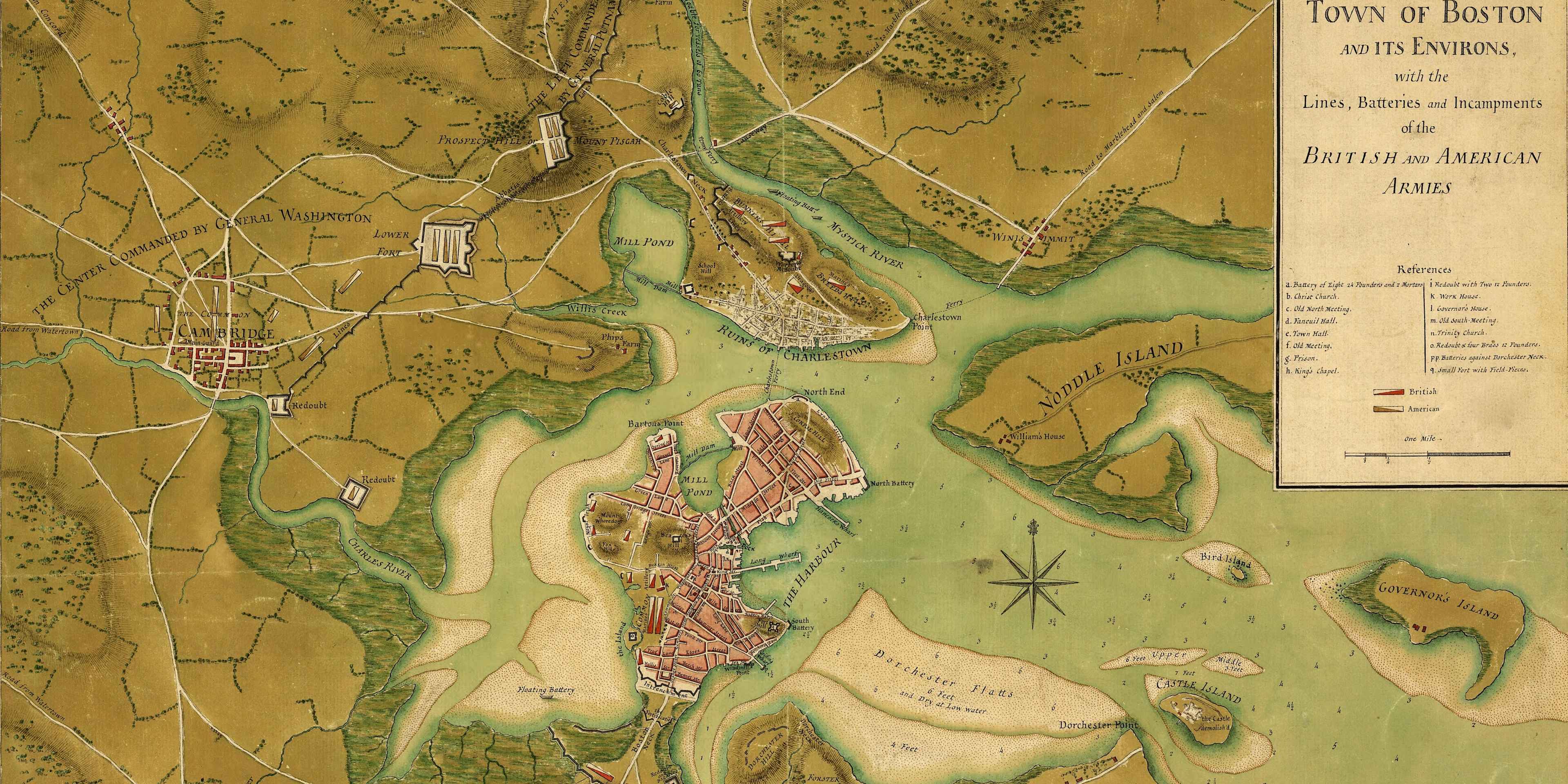
Historical Background: A Powder Keg in New England
The roots of the Siege of Boston lie in the escalating political and economic tensions between Great Britain and the original 13 colonies. Following the French and Indian War, the British Parliament sought to recoup its massive war debts by imposing a series of unpopular taxes and regulatory acts upon the colonists. Because the colonists had no voice in the British legislature, the rallying cry of “no taxation without representation” echoed from New Hampshire to Georgia. Boston, a bustling merchant port, quickly became the primary center of radical resistance.
Boston was not merely a geographic location; it was the epicenter of radical political thought. Examining how early colonial towns shaped the future of America reveals why Boston became the primary target of British military occupation. Events such as the 1770 Boston Massacre, where British soldiers fired into an angry civilian crowd, and the 1773 Boston Tea Party, where the Sons of Liberty dumped millions of dollars’ worth of East India Company tea into the harbor, pushed relations past the point of reconciliation. In response to the tea protest, Parliament passed the Coercive Acts (coined the “Intolerable Acts” by colonists), which closed Boston Harbor, suspended local self-governance, and placed Massachusetts under direct military rule led by General Thomas Gage.
When British troops marched toward Concord on April 18, 1775, to seize colonial weapon caches, local militia networks sprang into action. The resulting Battles of Lexington and Concord on April 19, 1775, culminated in a disastrous British retreat back to Boston. As the bloodied Redcoats barricaded themselves inside the city, thousands of local militiamen from all over New England flooded the surrounding hills, effectively trapping the British Army inside the Boston peninsula and launching the historic siege.
Chronological Timeline of the Siege (1775–1776)
To understand the progression of the eleven-month standoff, it is helpful to look at the chronological sequence of events:
- April 19, 1775: The Battles of Lexington and Concord trigger the immediate encirclement of Boston by local militiamen.
- May 10, 1775: Ethan Allen and Benedict Arnold capture Fort Ticonderoga in New York, securing heavy artillery that would later prove decisive.
- June 17, 1775: The bloody Battle of Bunker Hill (fought primarily on Breed’s Hill) ends in a British tactical victory but results in catastrophic Redcoat casualties.
- July 3, 1775: General George Washington formally takes command of the newly formed Continental Army in Cambridge, Massachusetts.
- November 1775 – January 1776: Colonel Henry Knox leads the “Noble Train of Artillery,” transporting 59 cannons over 300 miles of snow and ice from Fort Ticonderoga to Boston.
- March 2–4, 1776: American forces begin heavy bombardment of Boston to distract the British command.
- March 4–5, 1776: Under the cover of darkness, Washington’s troops fortify Dorchester Heights, placing the heavy Ticonderoga cannons overlooking Boston Harbor.
- March 17, 1776: Realizing their fleet and garrison are indefensible, British General William Howe evacuates his troops and over a thousand Loyalists, sailing to Nova Scotia.
Key Figures of the Conflict
The success of the Siege of Boston relied on the extraordinary leadership, endurance, and ingenuity of several historical figures:
General George Washington
Appointed by the Second Continental Congress, Washington arrived in Cambridge in July 1775. He faced the monumental task of turning a rowdy, undisciplined “mob” of farmers and tradesmen into a professional army. Washington’s organizational skill, strict discipline, and brilliant use of psychological warfare kept the British contained despite severe shortages of gunpowder and supplies.
Colonel Henry Knox
Before the war, Knox was a 25-year-old Boston bookseller with a passion for military engineering and artillery. Recognizing the need for heavy weaponry to break the stalemate, Knox proposed a daring plan to haul heavy siege guns from captured Fort Ticonderoga. His successful execution of this logistical nightmare remains one of the greatest military transport feats in history.
General Artemas Ward
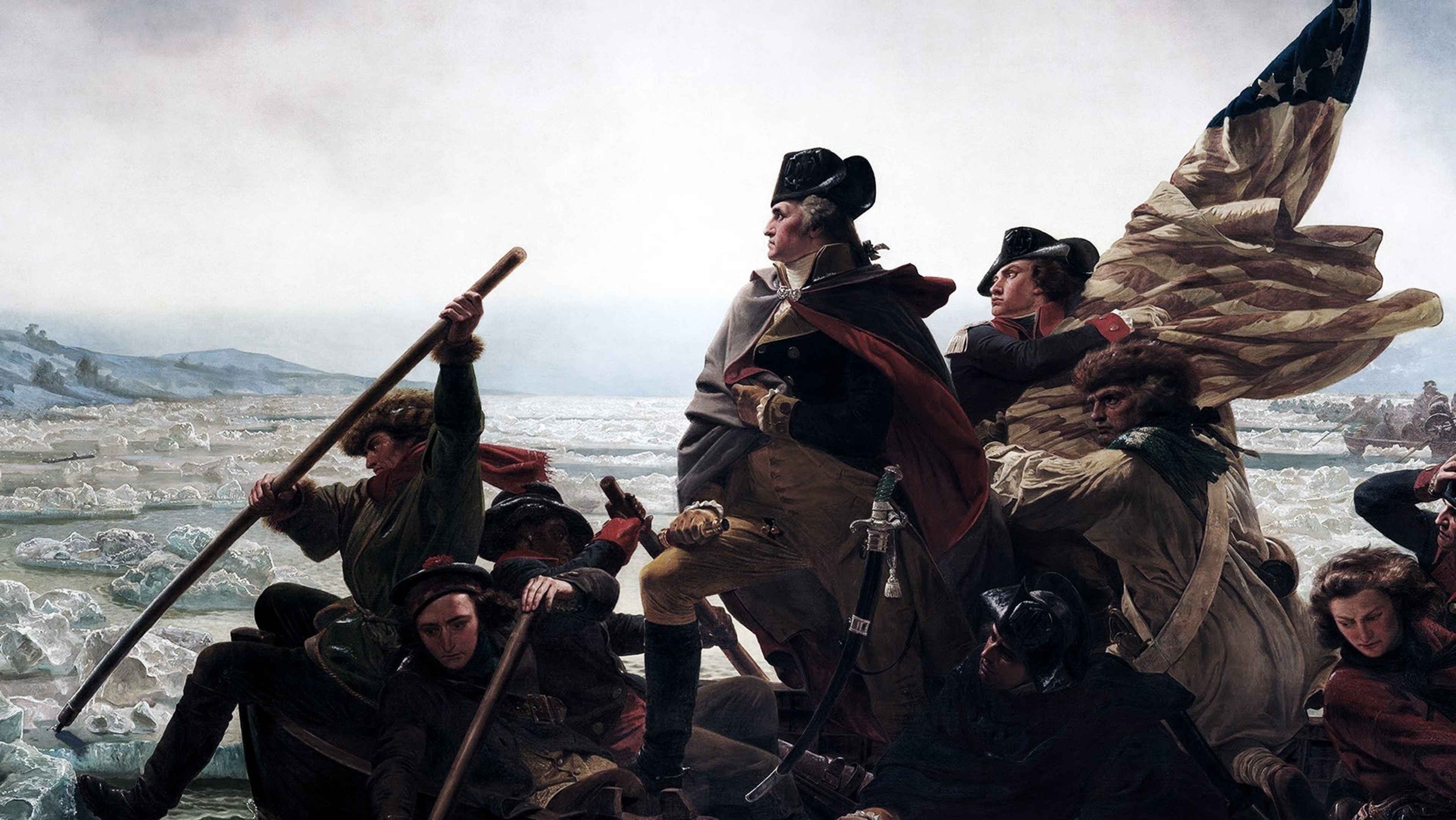
Before George Washington formally took command of the siege on July 3, 1775, the forces surrounding Boston were a loosely organized conglomeration of New England militias. To understand this transition, it is helpful to look at who commanded the Continental Army before Washington took the reins. General Artemas Ward had been holding the fragile lines together, maintaining order among thousands of passionate but undisciplined men. Though plagued by poor health, Ward’s early leadership laid the vital foundations of the siege lines before handing over command to Washington.
General William Howe
Succeeding General Thomas Gage as the commander-in-chief of British forces in North America, Howe was deeply scarred by the massive loss of life at Bunker Hill. His cautious approach and reluctance to launch another direct assault on fortified American positions ultimately allowed Washington the time he needed to fortify Dorchester Heights and secure a bloodless victory.
Major Turning Points of the Siege
The stalemate in Boston was broken by three critical turning points, each shaping the outcome of the campaign:
1. The Bloody Crucible of Bunker Hill
In mid-June 1775, hearing rumors that the British planned to occupy the high ground around Boston, colonial troops preemptively fortified Breed’s Hill on the Charlestown Peninsula. On June 17, British forces launched three frontal assaults against the entrenched Americans. Although the Patriots eventually retreated due to a fatal lack of ammunition, they inflicted over 1,000 casualties on the British—more than double their own losses. Bunker Hill proved that raw, inexperienced colonial soldiers could stand toe-to-toe with elite British regulars.
2. The Noble Train of Artillery
For months, the siege remained a quiet, frustrating deadlock. Washington knew he could not drive the British out without heavy siege guns. Enter Henry Knox. Throughout the freezing winter of 1775-1776, Knox and his men used oxen, horses, and custom-built sleds to drag 60 tons of brass and iron cannons, howitzers, and mortars across frozen rivers and snow-packed mountains. Arriving in late January 1776, this “noble train” completely changed the strategic landscape.
3. The Masterstroke at Dorchester Heights
On the night of March 4, 1776, Washington executed a brilliant, stealthy maneuver. While American artillery bombarded Boston from other positions to mask the noise, thousands of soldiers quietly moved the Ticonderoga cannons to the top of Dorchester Heights, which overlooked the city and the British fleet in the harbor. Using pre-fabricated wooden fortifications (fascines and chandeleurs) because the ground was too frozen to dig, the Americans constructed a formidable fortress overnight. When General Howe woke up the next morning, he reportedly remarked, “The rebels have done more in one night than my whole army would have done in a month.”
Long-Term Impact on the American Revolution
The successful conclusion of the Siege of Boston on March 17, 1776, had profound consequences for the trajectory of the American Revolutionary War. First and foremost, it was a massive psychological boost for the Patriot cause. Defeating the world’s premier military power and forcing them to flee by sea validated the colonial rebellion and gave legitimacy to the Continental Army.
Geographically, the victory permanently cleared British forces out of Massachusetts, allowing the state to become a major manufacturing and political hub for the remainder of the war. After the evacuation, the theater of conflict shifted southward to New York and the Mid-Atlantic, where the British attempted to split the colonies. Furthermore, the victory convinced European powers—most notably France—that the American colonists were a serious fighting force capable of winning, paving the way for the crucial Franco-American alliance of 1778.
Lesser-Known Facts about the Siege of Boston
History books often gloss over the fascinating, boots-on-the-ground details of this eleven-month confrontation. Here are some of the most surprising anecdotes from the siege:
- Washington’s Great Gunpowder Bluff: In the summer of 1775, Washington discovered a horrifying truth: his army had only enough gunpowder to issue nine rounds per soldier. Had the British attacked, the Americans would have been defenseless. To prevent panic and keep British spies in the dark, Washington ordered barrels filled with sand to be labeled “King’s Powder” and stored in the magazines, successfully bluffing the British into thinking he possessed ample ammunition.
- The Devastating Smallpox Epidemic: While the armies faced off, a silent killer ravaged Boston. Smallpox spread rapidly through the crowded, unsanitary city. Washington, who was immune due to a childhood case of the disease, took extreme precautions. He barred any soldiers showing symptoms from entering camp, and when the British finally evacuated, Washington only sent in troops who had already survived smallpox to occupy the city.
- A Double Celebration (Evacuation Day): Since 1901, March 17 has been officially celebrated in Boston and Suffolk County as “Evacuation Day.” While it coincidentally falls on St. Patrick’s Day—a major celebration for Boston’s massive Irish-American population—the holiday officially commemorates the day the British fleet sailed out of Boston Harbor, marking the city’s liberation.
Why the Siege of Boston Still Matters Today
More than two centuries later, the Siege of Boston remains a masterclass in leadership, civilian resilience, and creative logistics. It serves as a reminder that wars are not won solely by sheer firepower or numbers, but through strategic patience, organizational discipline, and the ability to leverage geographic advantages. The civilian population of Boston endured months of food shortages, disease, and cold, showcasing the immense sacrifices that laid the groundwork for American democracy. Today, the monument at Dorchester Heights and the Freedom Trail stand as enduring symbols of this triumph, inspiring modern discussions on liberty, civic duty, and the power of unity in the face of overwhelming odds.
People Also Ask
Who won the Siege of Boston?
The American colonists (the Continental Army and New England militias) won the Siege of Boston. Under the command of General George Washington, they successfully forced the British Army, led by General William Howe, to evacuate the city on March 17, 1776.
How did George Washington end the Siege of Boston?
Washington ended the siege by fortifying Dorchester Heights overnight on March 4–5, 1776. By placing heavy cannons transported from Fort Ticonderoga on this elevated position, he gained a tactical advantage that allowed him to shell the British fleet in the harbor and the garrison in the town, making the British position completely indefensible.
What was the significance of the Battle of Bunker Hill in the siege?
The Battle of Bunker Hill (June 17, 1775) was a key early engagement of the siege. While the British technically captured the hills, they suffered over 1,000 casualties. This heavy loss made the British high command highly cautious about launching further direct assaults, creating a long stalemate that gave Washington time to organize his army.
Why did the British evacuate Boston?
The British evacuated because the fortification of Dorchester Heights by the Continental Army made it impossible for British ships to remain safely in the harbor or for British troops to defend the town. Faced with the threat of devastating artillery fire, General William Howe chose to withdraw his forces to Nova Scotia.
Conclusion
The Siege of Boston was the crucible in which the American spirit was forged. Through eleven grueling months of isolation, sickness, and cold, the Patriots transformed from a collection of provincial militias into a formidable, unified military force under the steady leadership of George Washington. Bolstered by the heroic logistics of Henry Knox and the stubborn bravery of ordinary citizens, this early campaign demonstrated that the quest for self-determination could triumph over imperial dominance. The legacy of the siege endures not only in the monuments of Boston but in the very fabric of the American democratic experiment, proving that unity and determination can reshape the course of history.


