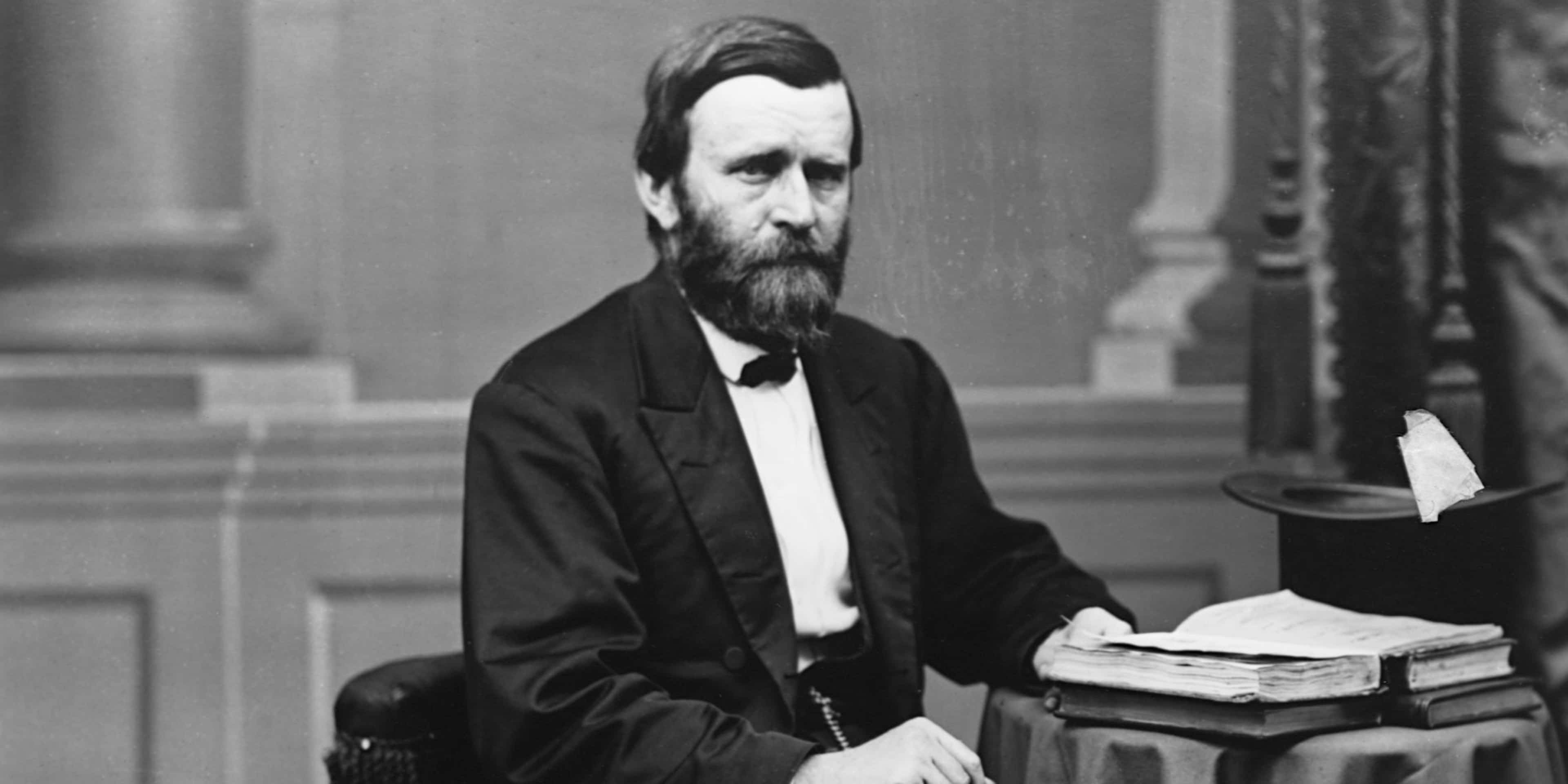
Ulysses S. Grant is primarily remembered by many as the triumphant Union general who accepted Robert E. Lee’s surrender at Appomattox, ending the American Civil War [1]. However, his tenure as the 18th President of the United States—spanning two tumultuous terms from 1869 to 1877—remains one of the most fiercely debated eras in American political history [1]. Long dismissed by 20th-century historians as a corrupt and incompetent administrator whose White House was overrun by greedy opportunists, modern scholarship has initiated a dramatic reevaluation of the Ulysses S. Grant presidency [1]. Far from being a mere bystander to history, Grant was a resolute champion of civil rights, a pioneer of early environmental conservation, and a leader who navigated the fragile, post-war Reconstruction era with remarkable moral courage [1]. By exploring both his administration’s deeply entrenched scandals and his monumental achievements, we gain a nuanced appreciation of a leader who fought tirelessly to secure the fruits of Union victory for all Americans [1].
Historical Background: Reconstruction and a Fractured Nation
When Grant took the oath of office on March 4, 1869, he inherited a nation still bleeding from the deep wounds of the Civil War [1]. His predecessor, Andrew Johnson, had narrowly escaped conviction after being impeached by a Radical Republican Congress [1]. Johnson’s administration had actively resisted Reconstruction efforts, turning a blind eye to the rising tide of white supremacist violence in the South and obstructing federal efforts to protect newly emancipated African Americans [1]. The South was in a state of near-anarchy, with paramilitary groups like the Ku Klux Klan waging a campaign of terror to subvert the 13th and 14th Amendments [1]. In this volatile atmosphere, Grant stepped into the political arena with no prior elected experience but with an overriding mission: to preserve the Union, enforce the peace, and secure basic constitutional rights for all citizens [1].
A Chronological Timeline of the Ulysses S. Grant Presidency
- 1868: Ulysses S. Grant is elected 18th President of the United States, running on the campaign slogan, “Let us have peace.”
- 1869: Grant introduces his “Peace Policy” toward Native Americans and appoints Ely S. Parker as Commissioner of Indian Affairs [1]. In September, the “Black Friday” financial panic occurs when speculators attempt to corner the gold market [1].
- 1870: The 15th Amendment is ratified, securing voting rights for African American men [1]. Grant signs legislation creating the U.S. Department of Justice to enforce federal civil rights laws [1].
- 1871: Grant signs the Civil Service Reform Act, creating the nation’s first Civil Service Commission [1]. He also signs the Ku Klux Klan Act, authorizing federal intervention against white supremacist terrorist groups in the South [1].
- 1872: Grant signs the Yellowstone National Park Protection Act, establishing the world’s first national park [1]. He also signs the Amnesty Act, restoring political rights to thousands of former Confederates [1]. Later that year, Grant is reelected in a landslide.
- 1873: The Panic of 1873 begins, triggering a devastating multi-year economic depression.
- 1875: The Whiskey Ring scandal is exposed, implicating Grant’s personal secretary in tax fraud [1]. Grant signs the Civil Rights Act of 1875.
- 1876: The Battle of the Little Bighorn occurs in Montana. A highly contested presidential election between Rutherford B. Hayes and Samuel J. Tilden plunges the nation into a constitutional crisis, resolved by the Compromise of 1877.
- 1877: Grant steps down from the presidency, paving the way for the end of Reconstruction.
Key Figures of the Grant Administration
Several key individuals played major roles in shaping the policies and reputation of the Grant administration:
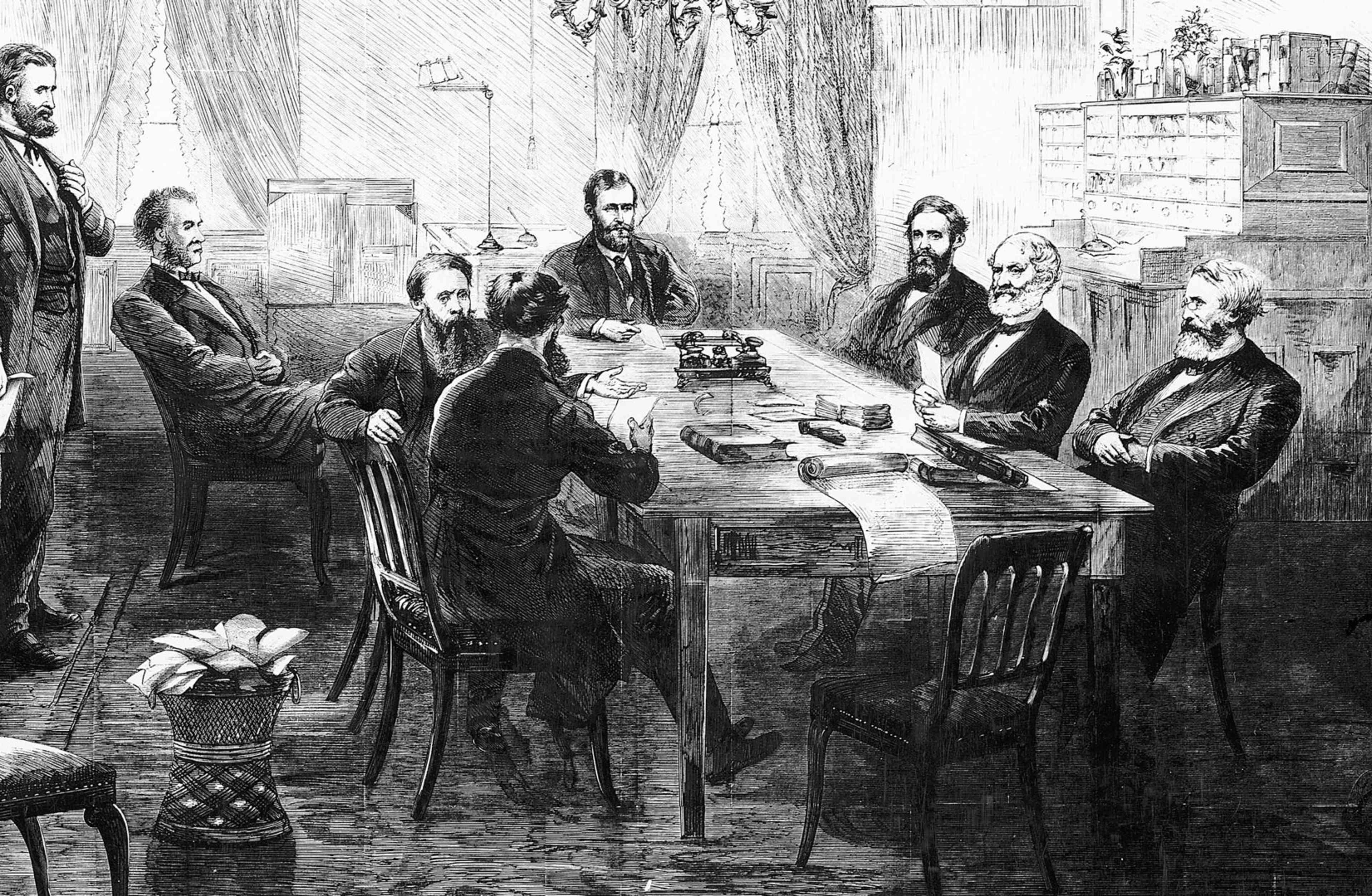
- Hamilton Fish: Serving as Secretary of State, Fish was the undisputed diplomatic star of the administration [1]. He successfully resolved the tense Alabama Claims dispute with Great Britain through the 1871 Treaty of Washington, avoiding a potential war and establishing key precedents for international arbitration.
- Ely S. Parker: A Seneca Chief and former military secretary to Grant during the Civil War, Parker was appointed Commissioner of Indian Affairs [1]. He was the first Native American to hold this office and was instrumental in implementing Grant’s reformist “Peace Policy” [1].
- Benjamin Bristow: Appointed as Secretary of the Treasury in 1874, Bristow was a crusading reformer who systematically uncovered and dismantled the corrupt Whiskey Ring, demonstrating that some members of Grant’s cabinet were deeply committed to integrity.
- Amos T. Akerman: As Attorney General, Akerman vigorously prosecuted the Ku Klux Klan in the South, utilizing the newly created Department of Justice to secure hundreds of convictions and restore temporary peace to terrorized communities.
Major Turning Points: Achievements vs. Adversity
Crushing the Ku Klux Klan and Advancing Civil Rights
At the heart of Grant’s legacy is his unwavering commitment to civil rights. Realizing that the 13th and 14th Amendments were being systematically undermined by southern violence, Grant vigorously lobbied for the ratification of the 15th Amendment, which guaranteed that the right to vote could not be denied based on race, color, or previous condition of servitude [1]. To enforce these constitutional guarantees, Grant worked with Congress to pass the Enforcement Acts, including the landmark Ku Klux Klan Act of 1871. Grant used his military resolve to declare martial law in parts of South Carolina, deploying federal troops and utilizing the newly created Justice Department to systematically dismantle the KKK [1]. In fighting for the rights of freedmen, Grant was acutely aware of the valor shown by former slaves who fought during the Civil War, building on the legacy of black heroes throughout US military history. By 1872, the Klan’s power was temporarily broken, an achievement that led legendary abolitionist Frederick Douglass to declare that the freedmen owed their enfranchisement and physical survival to Grant’s moral courage [1].
The Peace Policy and Native American Relations
During the late 19th century, westward expansion fueled intense conflicts between Native American tribes, white settlers, and the U.S. Army [1]. While some political and military leaders advocated for the outright extermination of hostile tribes, Grant took a drastically different stance [1]. In his 1869 address to Congress, he asserted that a policy aimed at the extinction of a race was too horrible for a civilized nation [1]. While Grant’s policies aimed at peace, they occurred against a backdrop of deep systemic mistreatment of Indigenous populations. Historically, relations had been devastated by warfare, forced removal, and biological devastation, such as when rumors swirled about whether early colonial authorities gave infected blankets to Native Americans as biological warfare. Grant’s solution—which involved moving tribes to reservations where they would receive federal protection, agricultural education, and citizenship training—seems paternalistic and flawed by modern standards of cultural preservation [1]. However, at the time, his efforts to replace corrupt government Indian agents with respected religious leaders (such as Quakers) and his appointment of Ely S. Parker represented a genuine attempt to end the cycle of violence and corruption [1].
Landmark Environmental Stewardship: Yellowstone National Park
While Grant is rarely remembered as an environmentalist, his presidency marked a historic milestone for global conservation. On March 1, 1872, Grant signed the Yellowstone National Park Protection Act into law [1]. This historic piece of legislation withdrew over two million acres of land in Montana and Wyoming from public sale or settlement, dedicating to being a “public park or pleasuring-ground for the benefit and enjoyment of the people” [1]. In doing so, Grant established the world’s first national park, creating a global blueprint for wilderness conservation and the preservation of natural wonders [1].
Civil Service Reform and the Fight Against Patronage
During the Gilded Age, the “spoils system”—wherein political victors rewarded their campaign donors and loyalists with government jobs regardless of qualification—reigned supreme. Grant recognized that this patronage system was the root cause of much of the corruption in public life [1]. In 1871, he pushed for reform legislation and established the first Civil Service Commission, appointing respected reformer George William Curtis to lead it [1]. The commission introduced competitive civil service exams to ensure federal employees were hired based on merit [1]. Unfortunately, members of Congress who relied on patronage to maintain power refused to fund the commission in 1874, cutting the experiment short [1]. Nevertheless, Grant’s initiative laid the intellectual and structural groundwork for the Pendleton Civil Service Reform Act of 1883.
The Dark Side: The Scandals That Clouded Grant’s Legacy
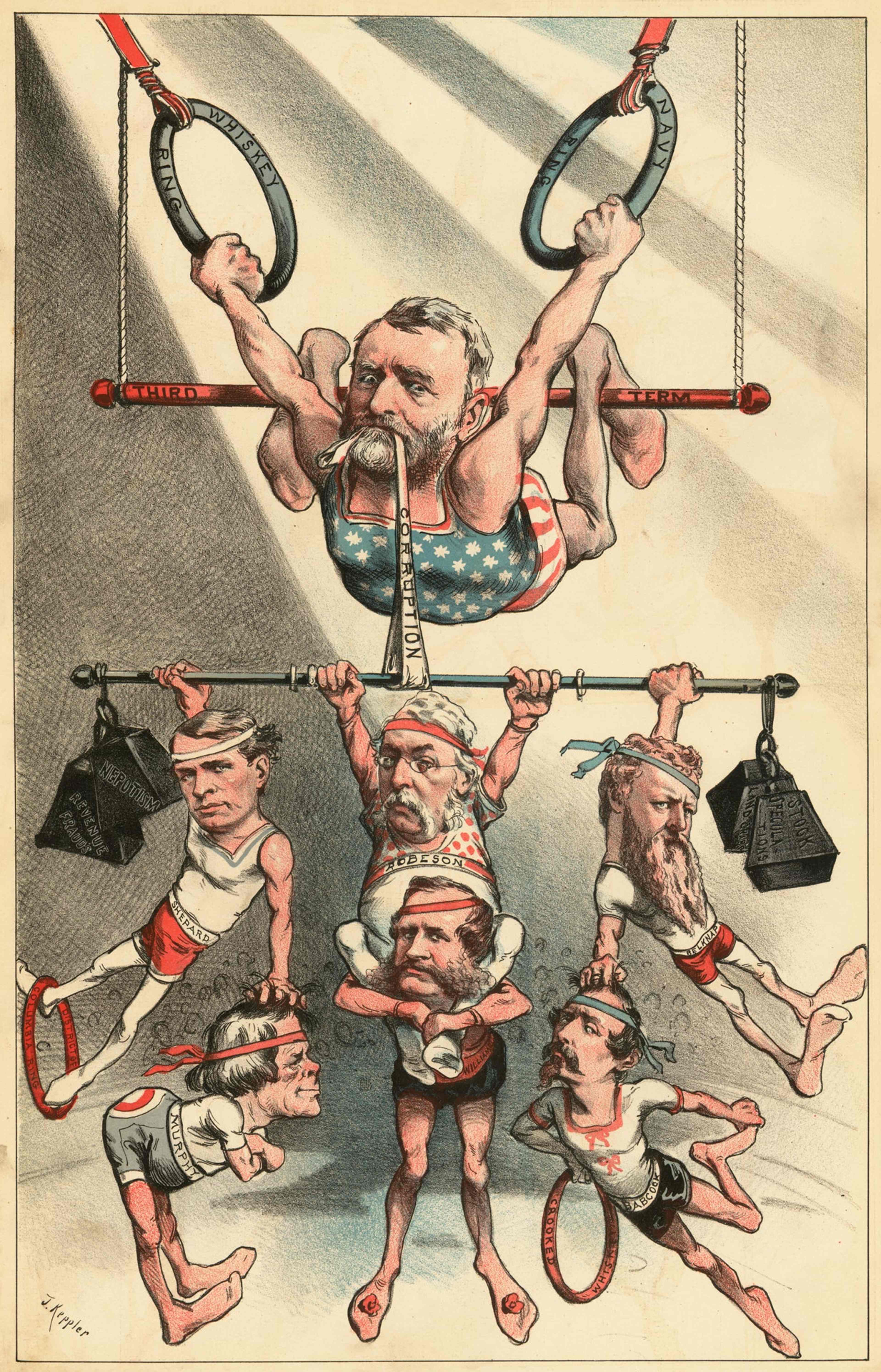
Despite his achievements, the Ulysses S. Grant presidency was undeniably plagued by unprecedented political scandals that deeply tarnished his reputation [1]. Grant’s fundamental flaw was not personal dishonesty, but an excess of loyalty to friends and subordinates, combined with a lack of political vetting [1]. In 1869, financial speculators Jay Gould and Jim Fisk attempted to corner the gold market by manipulating their social access to President Grant and his brother-in-law, Abel Corbin [1]. When Grant realized the scheme, he ordered the Treasury to release gold, breaking the corner but causing the disastrous “Black Friday” panic on September 24, 1869 [1].
Later, the “Whiskey Ring” scandal of 1875 exposed a massive conspiracy among whiskey distillers and federal agents to evade millions of dollars in liquor taxes [1]. The conspiracy implicated Grant’s own private secretary, Orville Babcock [1]. Additionally, Secretary of War William W. Belknap was impeached for accepting bribes in exchange for lucrative military trading post contracts [1]. While Grant himself never financially benefited from these crimes, his tendency to defend accused allies drew fierce public criticism [1]. Grant’s signing of the 1872 Amnesty Act was a significant gesture of national reconciliation, reflecting the broader debate over how American presidents ended up with the kingly power to pardon to heal geopolitical fractures, yet critics often argued that his leniency toward corrupt friends matched his leniency toward former rebels [1].
Long-Term Impact on America
The long-term impact of the Grant presidency is profound. By utilizing federal authority to suppress the KKK and protect black voters, Grant established the precedent that the federal government could—and must—intervene in states to protect citizens’ civil rights [1]. The creation of the Department of Justice in 1870 fundamentally restructured federal law enforcement [1]. Though the end of Reconstruction in 1877 ushered in the bleak era of Jim Crow, the constitutional precedents and civil rights protections championed by Grant survived, providing the legal foundation for the Civil Rights Movement of the mid-20th century. Furthermore, his conservation and civil service initiatives served as essential blueprints for modern American administrative and environmental systems [1].
Lesser-Known Historical Facts About Ulysses S. Grant
- The West Point Clerical Error: Grant was actually born Hiram Ulysses Grant. When he was nominated to West Point, Congressman Thomas Hamer mistakenly registered him as “Ulysses S. Grant,” assuming his middle name was Simpson (his mother’s maiden name). Grant accepted the change because he feared West Point would reject him if his name did not match the official paperwork [1].
- The Speeding Ticket: In 1872, Grant was stopped by a Washington D.C. police officer named William West for speeding in his horse-drawn carriage. The officer, recognizing the president, hesitantly issued him a ticket and fined him $20. Grant praised the officer for doing his duty.
- The Dying Battle for His Memoirs: Bankrupt due to a financial swindle in his later years and dying of painful throat cancer, Grant raced against time to write his personal memoirs [1]. Published by his friend Mark Twain in 1885, the Personal Memoirs of U.S. Grant became a literary masterpiece and earned over $450,000 in royalties, saving his family from destitution just days after his death [1].
Why Ulysses S. Grant Still Matters Today
In an era of intense political polarization and debates over federal power, civil rights, and executive integrity, Ulysses S. Grant’s presidency is more relevant than ever. His administration reminds us of the delicate balance between high-minded ideals and the pragmatic realities of governance [1]. Grant’s willingness to use federal power to protect marginalized groups from domestic terrorism offers crucial lessons for modern struggles against hate groups and voter suppression [1]. At the same time, the scandals of his administration highlight the eternal necessity of executive vigilance and the dangers of political cronyism [1].
People Also Ask (FAQs)
Was Ulysses S. Grant a bad president?
While historically ranked among the worst presidents due to the rampant scandals of his administration, modern historians have heavily revised this view [1]. Today, Grant is viewed as a highly consequential and courageous president who championed civil rights, established the national park system, and navigated the difficult Reconstruction era, even if he was overly trusting of corrupt subordinates [1].
What were the main scandals during the Grant administration?
The primary scandals included the Black Friday Gold Panic of 1869, the Whiskey Ring of 1875 (where distillers bribed government officials to avoid taxes), and the impeachment of Secretary of War William Belknap for accepting kickbacks [1]. The Credit Mobilier scandal also erupted during his presidency, though it originated prior to his inauguration [1].
How did Grant fight the Ku Klux Klan?
Grant championed the Enforcement Acts, specifically the Ku Klux Klan Act of 1871 [1]. He suspended habeas corpus in nine South Carolina counties, sent federal troops to restore order, and used the newly created Department of Justice to prosecute and temporarily dismantle the white supremacist organization [1].
Conclusion: A Legacy Restored
Ulysses S. Grant’s journey from a quiet Midwesterner to a legendary general, and finally to an embattled president, represents one of the most compelling narratives in American history [1]. While the shadow of Gilded Age corruption long darkened his legacy, a modern look at his achievements reveals a leader of immense integrity who was ahead of his time [1]. By standing up for the rights of African Americans, attempting a more humane approach to Native American affairs, and protecting America’s natural heritage, President Ulysses S. Grant earned his place as a key architect of the modern United States [1].


