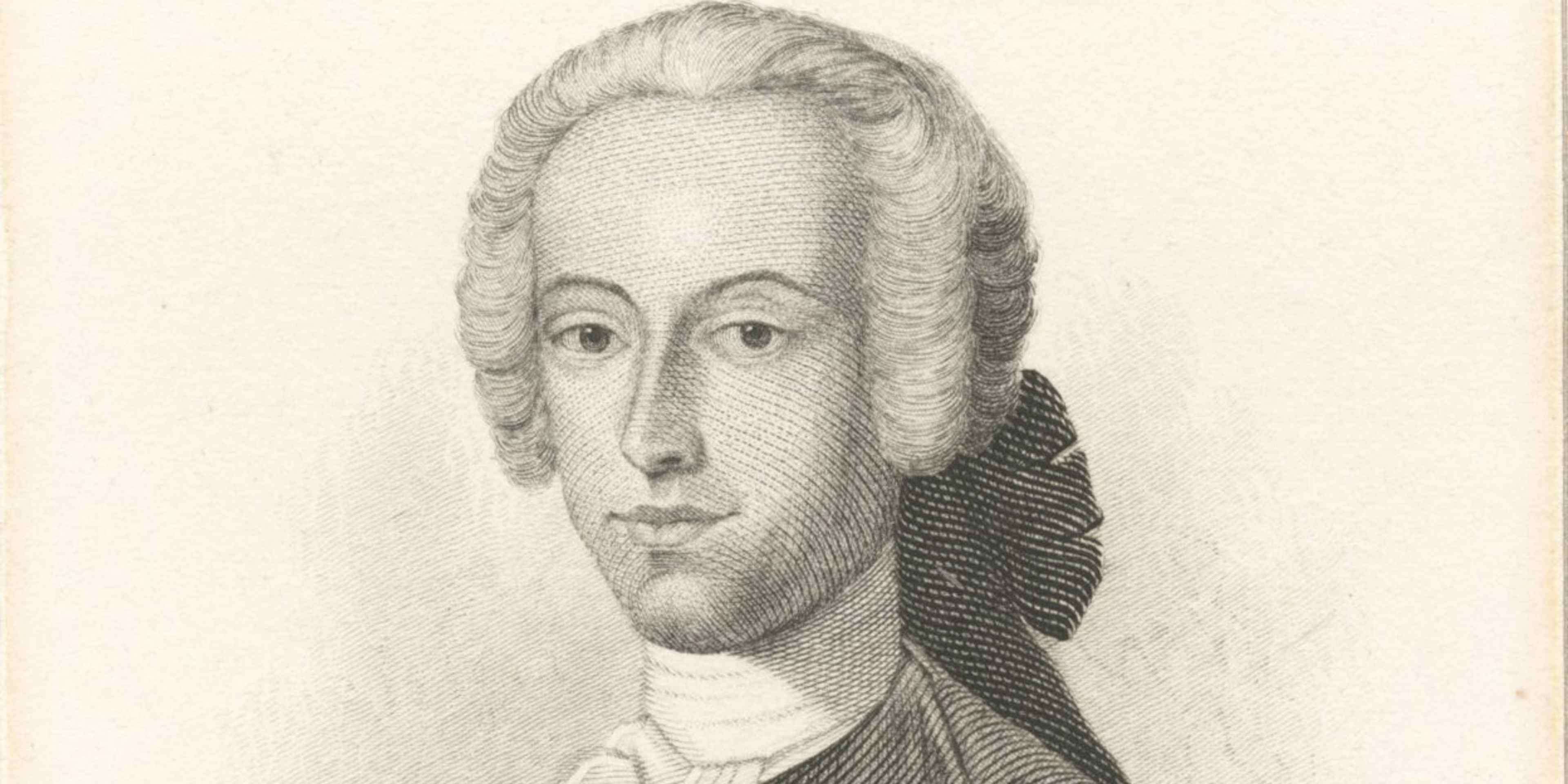
Thomas Hutchinson remains one of the most polarizing and tragic figures in American history. As the final civilian royal governor of Massachusetts on the eve of the American Revolution, Hutchinson was caught in the crossfire of a rapidly transforming empire. Born into wealth and high society, his intellectual brilliance and devotion to public service were ultimately overshadowed by his deep-seated belief in British parliamentary supremacy. While his contemporaries like John Adams and Samuel Adams mobilized a revolution that redefined liberty, Hutchinson stood firmly, if tragically, as a staunch defender of the crown. Understanding his life and downfall is essential for understanding the sheer ideological volatility that forged the United States, illustrating that the path to independence was not a unified march, but a fierce civil struggle between neighbors, relatives, and lifelong friends.
Historical Background: A Bostonian Dynasty and Early Life
To understand Thomas Hutchinson, one must first understand the elite mercantile world of eighteenth-century Boston. Born on September 10, 1711, Hutchinson was a descendant of legendary religious dissident Anne Hutchinson, whose banishment from the Massachusetts Bay Colony generations prior had made her a symbol of individual conscience. Paradoxically, while his ancestor challenged the established order, Thomas would grow up to become its ultimate defender.
Hutchinson’s father was a highly successful merchant who provided his son with every possible advantage. Entering Harvard College at the exceptionally young age of 12, Thomas graduated by 16 and immediately entered the family’s maritime shipping business. He proved to be a natural in the world of commerce, accumulating substantial wealth before his political career even began. His deep understanding of currency, trade, and economic principles would later define his early political successes, earning him a reputation as one of the colony’s sharpest financial minds.
The Rise of a Colonial Oligarch: Power and Patronage
In 1737, Hutchinson made his first foray into politics when he was elected as a Boston selectman. During this era, elections in colonial America were deeply competitive social affairs, and Hutchinson’s status as a wealthy, educated gentleman gave him an immediate advantage. He soon gained a seat in the Massachusetts provincial legislature, eventually rising to become the Speaker of the House of Representatives in 1746.
During his early tenure, Hutchinson achieved his most celebrated policy victory. When Great Britain reimbursed the colony in gold for its military efforts during the French and Indian War, Hutchinson aggressively lobbied to use this hard specie to retire the colony’s highly inflated paper currency. Although initially unpopular with debtors, this stabilizing monetary policy laid the foundation for long-term economic prosperity. Even his future political arch-nemesis, John Adams, was forced to admit that Hutchinson understood coin and commerce better than any man in the country.
However, Hutchinson’s ambition began to outpace his political wisdom. He began amassing an unprecedented number of public offices. Simultaneously serving as a legislative leader, a judge of probate, a member of the Governor’s Council, and eventually the Chief Justice of the Superior Court, Hutchinson created a virtual monopoly on political power. To local Whigs and patriots, this concentration of power was a dangerous threat to liberty, sparking intense jealousy and ideological opposition from rising figures like James Otis and Samuel Adams.
Key Events Timeline: The Tragic Descent of Governor Hutchinson
- September 10, 1711: Born in Boston, Massachusetts, into a wealthy and prestigious merchant family.
- 1727: Graduated from Harvard College at the age of 16, subsequently entering maritime trade.
- 1737: Elected as a Boston selectman, initiating a lifelong career in public service.
- 1746: Chosen as Speaker of the Massachusetts House of Representatives, solidifying his legislative influence.
- 1754: Served as a prominent delegate at the Albany Congress, participating in early discussions of colonial union.
- 1760: Appointed Chief Justice of the Superior Court of Judicature, fueling accusations of political nepotism.
- August 26, 1765: A violent Boston mob, fueled by Stamp Act anger, completely destroys and guts his mansion.
- March 5, 1770: The Boston Massacre occurs; Hutchinson successfully diffuses immediate violence by ordering the withdrawal of British troops to harbor islands.
- 1771: Officially commissioned as the Royal Governor of Massachusetts.
- June 1773: The Hutchinson Letters Affair erupts after Benjamin Franklin leaks private correspondence to the Sons of Liberty.
- December 16, 1773: The Boston Tea Party occurs after Hutchinson refuses to allow tea ships to return to London without paying import duties.
- May 1774: Replaced as governor by Military General Thomas Gage and departs for permanent exile in England.
- June 3, 1780: Dies in London following a stroke, homesick and reviled by his former countrymen.
Turning Points: The Catalyst of Revolution
The Stamp Act Riots of 1765
Perhaps no event shattered Hutchinson’s world more than the Stamp Act Riots. Although Hutchinson privately opposed the Stamp Act, believing it was economically damaging to the colonies, his duty as a royal official required him to uphold parliamentary law. On the night of August 26, 1765, an angry mob, fueled by alcohol and anti-tax rhetoric, descended upon his elegant Boston home. The rioters broke down the doors, smashed his furniture, drank his wine cellar dry, and scattered his priceless historical manuscripts into the muddy streets. Hutchinson and his family barely escaped with their lives. This traumatic event deeply hardened Hutchinson’s resolve, convincing him that the radical patriots were not defenders of liberty, but agents of lawless anarchy.

The Hutchinson Letters Affair
In 1773, Benjamin Franklin obtained a series of private letters written by Hutchinson to British officials years earlier. In these letters, Hutchinson had suggested that to maintain order in the colonies, there must be “an abridgment of what are called English liberties.” Franklin sent these letters to Samuel Adams, who promptly published them in the Boston press. Though Hutchinson’s comments were written in the context of restoring legal stability, their publication caused a massive public outcry. The letters convinced the public that their governor was actively conspiring to strip them of their natural rights, permanently ruining his political credibility.
The Boston Tea Party
The ultimate showdown occurred in late 1773 over three tea ships anchored in Boston Harbor. While local patriots demanded that the ships return to England without unloading their taxed cargo, Hutchinson stood firm, declaring that the ships could not leave until the duties were paid. His stubborn adherence to the letter of the law left the patriots with no diplomatic recourse, leading directly to the Boston Tea Party, where millions of dollars worth of tea in modern currency was dumped into the harbor. This act of defiance proved to be the point of no return for both the British Empire and Hutchinson’s career.
Key Figures and Their Crucial Roles
- Thomas Hutchinson: The central figure. A brilliant, law-abiding colonial administrator who genuinely loved Massachusetts but prioritized the rule of law and loyalty to the Crown above the democratic aspirations of his constituents.
- Samuel Adams: The radical mastermind of the Boston patriots. Adams masterfully utilized the press, public demonstrations, and the Hutchinson Letters Affair to destroy Hutchinson’s reputation and paint him as a tyrant.
- John Adams: A highly respected lawyer and intellectual leader who fiercely opposed Hutchinson’s concentration of offices, yet maintained a complex, sometimes begrudging respect for Hutchinson’s intellect.
- Benjamin Franklin: The colonial agent in London who leaked Hutchinson’s private correspondence, hoping to shift colonial anger away from Parliament and onto the royal governor.
Long-Term Impact on America
The tragic career of Thomas Hutchinson left a lasting impression on the political framework of the United States. His consolidation of multiple executive, legislative, and judicial offices in the 13 colonies served as a direct warning to the Framers of the U.S. Constitution. To prevent the rise of another figure like Hutchinson, the Framers heavily emphasized the Separation of Powers and developed strict checks and balances between the branches of government. Furthermore, his inability to maintain peace highlighted the failure of imperial governance, accelerating the transition from colonial dependency to sovereign statehood.
Lesser-Known Facts About Thomas Hutchinson
He Was a Pioneering Historian: Despite his political failures, Hutchinson was an exceptionally talented historian. He spent decades writing the multi-volume History of the Province of Massachusetts-Bay, which remains an invaluable primary source for historians studying colonial New England. When his home was sacked in 1765, neighbors saved many of his manuscripts from the mud.
The Irony of His Ancestry: As a direct descendant of the exiled religious radical Anne Hutchinson, Thomas spent his entire political career trying to enforce strict conformity and obedience to authority, representing a complete ideological reversal of his family’s legacy.
A Heart Broken by Exile: Despite being labeled a traitor by American patriots, Hutchinson was deeply homesick during his exile in England. He frequently wrote about his longing for the hills of Milton, Massachusetts, and reportedly died of a stroke brought on by the immense grief and stress of being permanently separated from his beloved homeland.
Why Thomas Hutchinson Matters Today
Thomas Hutchinson’s legacy is highly relevant in our contemporary discussions about political polarization, civic duty, and systemic change. His life forces us to examine the thin line between maintaining lawful order and suppressing legitimate civil dissent. Hutchinson was not a cartoonish villain; he was an intelligent, dedicated public servant who believed that the legal system was the only barrier preventing civilization from sliding into chaos. In a world still grappling with protests, institutional distrust, and debates over executive authority, Hutchinson’s story serves as a cautionary tale of how easily political leaders can lose touch with the very people they govern when they prioritize administrative rigidness over the shifting cultural tide.
People Also Ask
Why was Thomas Hutchinson’s house attacked?
His house was attacked because a furious mob believed he was a primary supporter of the highly unpopular Stamp Act of 1765. Despite his private objections to the tax, his role as a prominent royal official made him the perfect target for public frustration.
What were the Hutchinson Letters?
The Hutchinson Letters were private correspondences between Thomas Hutchinson and British officials that were leaked by Benjamin Franklin in 1773. In them, Hutchinson suggested that some traditional English liberties might need to be restricted to maintain order in the colonies, which the patriots interpreted as high treason.
Why did Thomas Hutchinson flee to England?
Hutchinson left for England in 1774 after his political authority completely collapsed following the Boston Tea Party and the publication of his letters. He was replaced by military General Thomas Gage and spent the rest of his life in exile.
Conclusion
In the final analysis, Thomas Hutchinson’s life was defined by a tragic mismatch of man and era. He was a seventeenth-century mind caught in an eighteenth-century revolution. His unwavering dedication to the rule of law and parliamentary sovereignty blinded him to the rapidly evolving democratic aspirations of the American colonists. Though he died in lonely exile, his career shaped the foundational laws of the United States, reminding us that the creation of a nation is often forged through the painful downfall of its most dedicated loyalists.


