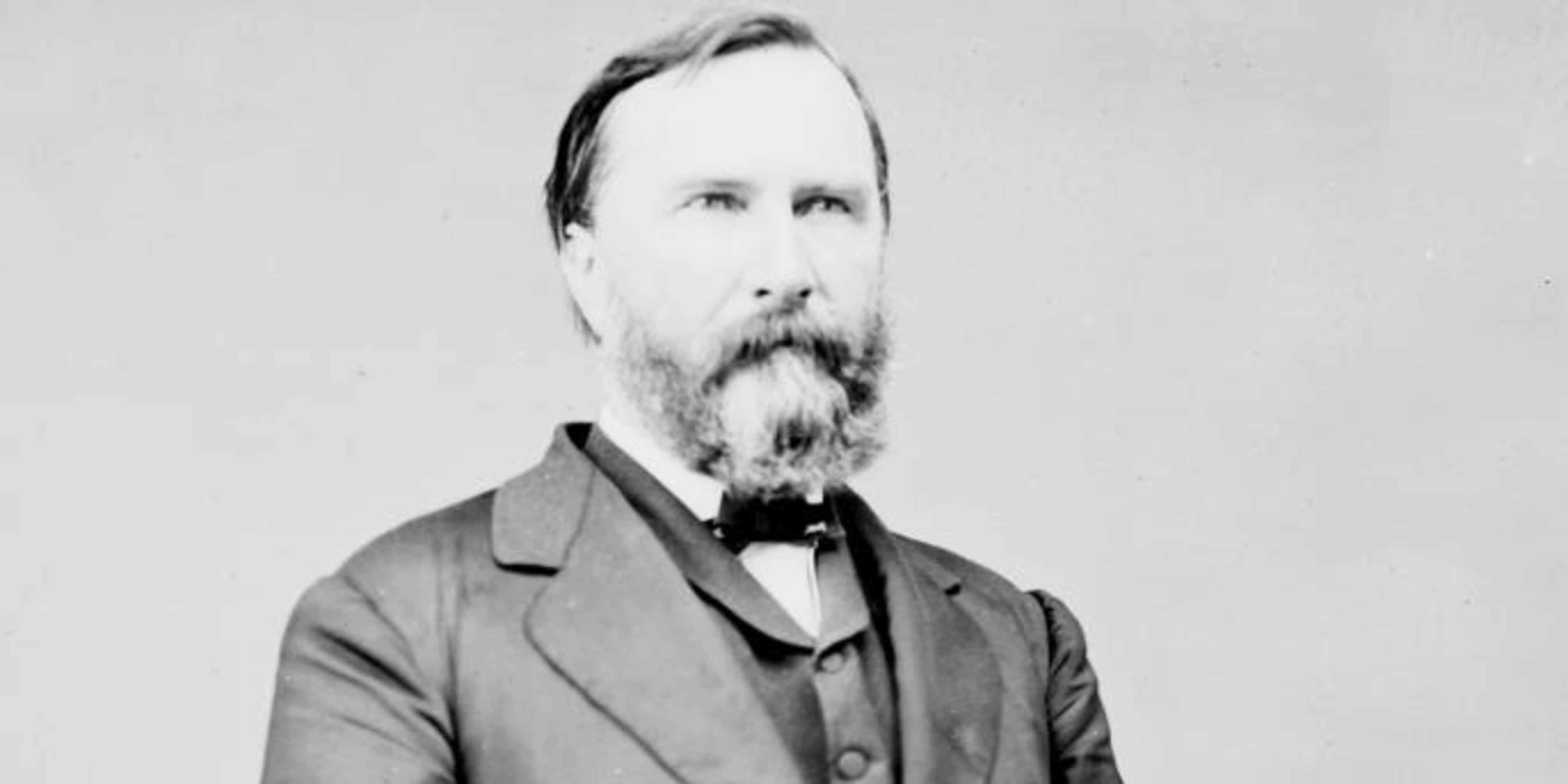
Among the military giants of the American Civil War, few figures evoke as much controversy, admiration, and intense historical debate as General James Longstreet. Revering him as his ‘Old War Horse,’ Confederate General Robert E. Lee relied heavily on Longstreet’s exceptional tactical genius and defensive expertise to secure some of the South’s most stunning early victories. Yet, history has not always been kind to this complex commander. For decades after the Civil War ended, Southern proponents of the ‘Lost Cause’ ideology cast James Longstreet as a convenient scapegoat, blaming him entirely for the catastrophic defeat at Gettysburg. This article delves deep into the life, military campaigns, and post-war political transformation of one of America’s most misunderstood generals, exploring how his choices on and off the battlefield shaped the legacy of a fractured nation.
Historical Background: The Making of an ‘Old War Horse’
Born on January 8, 1821, in the Edgefield District of South Carolina, James Longstreet was raised primarily in Augusta, Georgia, and Somerville, Alabama. Lacking a wealthy pedigree, he spent much of his youth under the wing of his famous uncle, the humorist and states’ rights advocate Augustus Baldwin Longstreet. ‘Uncle Gus’ played an instrumental role in shaping young James’s worldview and helping him secure an appointment to the United States Military Academy at West Point in 1838.
At West Point, Longstreet was known as a genial, affable cadet but was far from an academic standout. He graduated in 1842, ranking 54th in a class of 56. Despite his low class ranking, his time at West Point was crucial, forging lifelong friendships with classmate George Pickett and a quiet young cadet from Ohio named Ulysses S. Grant. Upon graduation, Longstreet was commissioned as a brevet second lieutenant in the 4th U.S. Infantry. His first taste of major warfare came during the Mexican-American War (1846–1848), where he served with distinction at battles like Palo Alto, Monterrey, and Vera Cruz. He was severely wounded in the thigh during the Battle of Chapultepec, an experience that earned him repeated commendations for bravery but sidelined him for several months. By the 1850s, he had risen to the rank of major, serving primarily as a paymaster on the Texas frontier.
Causes and Context: The Outbreak of Disunion
Like many officers of his generation, Longstreet was torn by the sectional crisis that tore the United States apart in the mid-19th century. Although he harbored deep reservations about the wisdom of secession and owned only a few enslaved people, his regional loyalties to the South ultimately dictated his path. When Alabama seceded from the Union, Longstreet resigned his U.S. Army commission in June 1861 and traveled to Richmond, Virginia, to offer his services to the newly declared Confederate States of America.
Initially commissioned as a brigadier general under General P.G.T. Beauregard, Longstreet quickly made a name for himself. His tactical philosophy differed significantly from many of his Southern peers. While commanders like Stonewall Jackson and Robert E. Lee often favored bold, aggressive, and highly risky offensive maneuvers, Longstreet championed a ‘defensive-offensive’ strategy. He argued that the Confederacy’s best hope lay in choosing highly defensible terrain, forcing the Union Army to exhaust its superior manpower in bloody frontal assaults, and then launching decisive counterattacks once the enemy was weakened. This approach, though highly practical, would frequently put him at odds with Lee’s aggressive style.
Chronology of Conflict: Key Milestones in Longstreet’s Career
- January 8, 1821: James Longstreet is born in Edgefield District, South Carolina.
- 1842: Graduates from West Point and is assigned to the 4th U.S. Infantry.
- 1846–1848: Serves with distinction in the Mexican-American War; wounded at Chapultepec.
- June 1, 1861: Resigns from the U.S. Army and is commissioned as a Confederate brigadier general.
- July 21, 1861: Fights at the First Battle of Bull Run, earning promotion to major general shortly thereafter.
- August 28–30, 1862: Orchestrates a massive flank attack at the Second Battle of Bull Run, routing the Union Army of Virginia.
- September 17, 1862: Holds the defensive line at the Battle of Antietam; promoted to lieutenant general in October.
- December 13, 1862: Successfully defends Marye’s Heights at the Battle of Fredericksburg, inflicting devastating casualties on Union forces.
- July 1–3, 1863: Commands the First Corps at the Battle of Gettysburg; reluctantly oversees ‘Pickett’s Charge’.
- September 19–20, 1863: Transferred to the Western Theater, where he secures a major victory at the Battle of Chickamauga.
- May 6, 1864: Accidentally shot in the neck and shoulder by his own men at the Battle of the Wilderness, paralyzing his right arm.
- April 9, 1865: Surrenders alongside Robert E. Lee at Appomattox Court House.
- 1867–1874: Moves to New Orleans, joins the Republican Party, and commands an integrated state militia.
- 1880–1881: Serves as the U.S. Minister to the Ottoman Empire (Turkey).
- January 2, 1904: Dies in Gainesville, Georgia, at the age of 82.
Major Turning Points: From Marye’s Heights to the Wilderness
The trajectory of Longstreet’s military career was defined by several critical turning points. The first major showcase of his defensive mastery came at Fredericksburg in December 1862. By positioning his infantry behind a stone wall on Marye’s Heights and digging sophisticated fieldworks, Longstreet’s men repulsed fourteen consecutive Union assaults, proving the devastating effectiveness of his defensive doctrines. This battle solidified his standing as Lee’s premier corps commander, particularly after the death of Stonewall Jackson in May 1863.
However, the absolute turning point of his wartime career occurred at Gettysburg in July 1863. Disagreeing with Lee’s strategy of offensive operations on Northern soil, Longstreet advocated for a flanking movement around the Union Army’s left to secure a strong defensive position between the Union Army and Washington, D.C. Lee rejected this, ordering attacks on the Union flanks on Day 2 and a massive frontal assault on the Union center on Day 3. This latter assault, known as ‘Pickett’s Charge,’ was placed under Longstreet’s reluctant command. Convinced of its futility, Longstreet was so overcome with dread that he could not bring himself to vocally order the advance, instead only nodding to General Pickett. The charge was a disaster, resulting in over 50 percent casualties and marking the beginning of the end for the Confederacy. This event became a watershed moment for how the Battle of Gettysburg turned the tide of the Civil War.
In May 1864, after a brief and turbulent stint in the Western Theater, Longstreet returned to Lee’s side at the Battle of the Wilderness. In a bizarre twist of fate reminiscent of Stonewall Jackson’s death, Longstreet was accidentally shot by his own men during a chaotic flank attack. The bullet passed through his throat and shoulder, leaving his right arm permanently paralyzed. Though he returned to active duty in October 1864, his physical capabilities were permanently diminished, and he spent the final months of the war defending the Richmond defenses before surrendering at Appomattox.
Key Figures and Their Dynamic with Longstreet
To fully understand Longstreet, one must look at his deep and often contrasting relationships with the dominant figures of the era:
- Robert E. Lee: Lee called him ‘my old war horse’ and relied on his tactical stability. While they shared mutual respect, they frequently clashed over strategy. Longstreet’s modern, defensive approach conflicted with Lee’s aggressive, Napoleonic tactics, a friction that erupted fully at Gettysburg.
- Ulysses S. Grant: Despite fighting on opposite sides, Grant and Longstreet shared a profound lifelong friendship. They were close companions at West Point, and Longstreet even served as a groomsman at Grant’s wedding to Julia Dent in 1848. This personal bond became a bridge during the Reconstruction era, as Longstreet supported Grant’s presidency and sought to rebuild the South.
- Jubal Early and the ‘Lost Cause’ Writers: Following Lee’s death in 1870, former Confederate officers like Jubal Early and William Pendleton sought to elevate Lee to a status of infallible sainthood. To explain the Confederate defeat without tarnishing Lee’s legacy, they targeted Longstreet, accusing him of treasonous insubordination at Gettysburg and citing his post-war political alignment as proof of his ‘betrayal’ of the South.
Long-Term Impact: Defying the South during Reconstruction
Longstreet’s most radical and lasting impact on America did not occur on the battlefields of Virginia, but rather in the streets of New Orleans during the Reconstruction era. Following the war, Longstreet came to the conclusion that the South had been fairly defeated and that the most patriotic and sensible course of action was to accept the terms of the federal government. In 1867, he published a series of letters urging Southerners to accept Congressional Reconstruction and the civil rights of newly freed African Americans.
By joining the Republican Party and endorsing the presidential campaign of Ulysses S. Grant, Longstreet alienated himself from the white Southern establishment. He went even further by accepting an appointment to command the integrated Louisiana State Militia and the New Orleans Metropolitan Police. In September 1874, during the infamous Battle of Liberty Place, Longstreet led these forces, which included Black militiamen, in a bloody street battle against the Crescent City White League—a heavily armed, white supremacist paramilitary group attempting to overthrow the state’s Reconstruction government. Longstreet was shot and briefly held prisoner during the insurrection before federal troops restored order. This act of armed resistance against white supremacy cemented his status as a ‘scalawag’ and pariah in the South, ensuring that his name would be omitted from Southern monuments and memorials for generations.
Lesser-Known Facts About James Longstreet
1. The Tragedy That Transformed ‘Old Pete’
Prior to 1862, Longstreet was known as a jovial, outgoing officer who loved hosting parties, playing poker, and socializing. However, in January 1862, a devastating outbreak of scarlet fever in Richmond claimed the lives of three of his young children—Mary Anne, James, and Augustus—within a single week. This immense personal tragedy transformed him overnight into a somber, deeply religious, and reserved man who rarely smiled, throwing himself entirely into his military duties.
2. A Scandalous Late-Life Marriage
In 1897, at the age of 76, the widowed Longstreet caused a massive social scandal by marrying Helen Dortch, a woman 42 years his junior. Helen, a highly educated librarian and journalist, became her husband’s fiercest defender. After his death in 1904, she traveled the country, wrote books, and campaigned tirelessly to restore his tarnished military reputation, working well into the mid-20th century to combat the myths of the Lost Cause.
3. A Pioneer of Modern Trench Warfare
Longstreet’s insistence on building earthen fortifications, digging trenches, and utilizing natural barriers during battles like Fredericksburg and the Wilderness was heavily criticized by traditionalists who viewed it as ‘unmanly’ or cowardly. In reality, Longstreet’s forward-thinking defensive strategies prefigured the brutal trench warfare that would define World War I decades later.
Why James Longstreet Still Matters Today
Today, the legacy of James Longstreet is undergoing a major historical rehabilitation. As historians and the public re-examine the mythology of the Lost Cause, Longstreet stands out as a unique figure who actively rejected the post-war victimhood of the South to embrace national reconciliation and racial integration. His post-war career highlights the bitter political struggles of Reconstruction, illustrating that the road to civil rights was fought not just by politicians in Washington, but by military leaders in the deeply divided South.
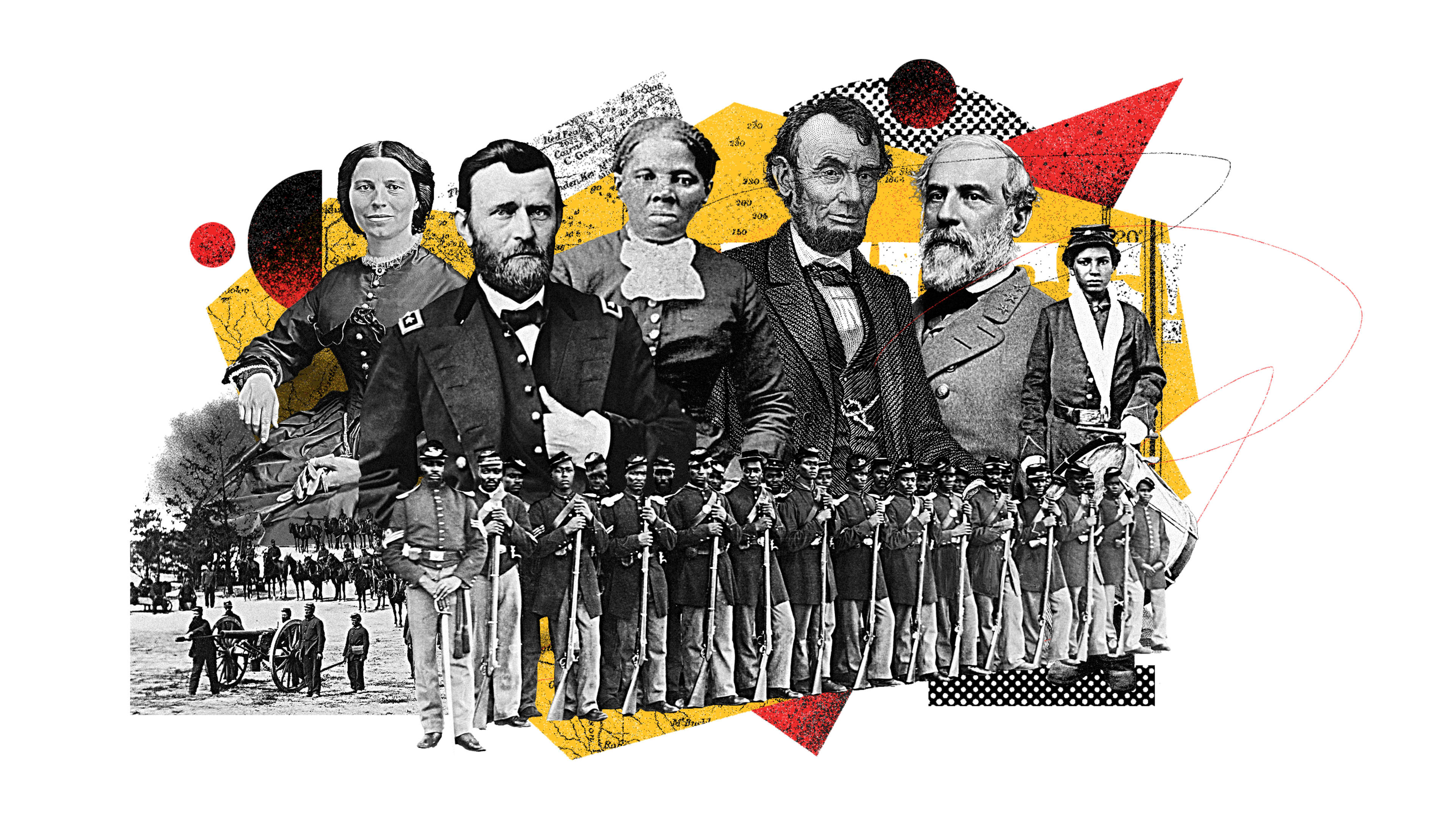
Furthermore, his long-standing friendship and collaboration with Ulysses S. Grant serves as a powerful testament to the complexity of human relationships amidst national division. In studying the partnership between Abraham Lincoln and Ulysses S. Grant, we see how the Union aimed to heal the country’s deep wounds. Longstreet’s willingness to risk his life, fortune, and reputation to defend the constitutional rights of all Americans makes him a highly relevant figure for contemporary discussions on courage, political polarization, and historical memory.
People Also Ask
Why did the South hate James Longstreet?
The South vilified Longstreet primarily because of his post-war political choices. He joined the Republican Party (the party of Abraham Lincoln), endorsed Ulysses S. Grant for president, and commanded an integrated state militia against white supremacist groups in New Orleans. Lost Cause writers also used him as a scapegoat for Robert E. Lee’s defeat at Gettysburg to preserve Lee’s infallible legacy.
Was James Longstreet a good general?
Yes, modern historians widely consider Longstreet to be one of the most capable and forward-thinking tactical generals of the Civil War. His emphasis on defensive positioning, field fortifications, and coordinated counterattacks was highly effective and anticipated the evolution of modern industrial warfare.
Did Robert E. Lee blame Longstreet for Gettysburg?
No. Robert E. Lee famously took full responsibility for the failure at Gettysburg, stating, ‘It is all my fault.’ The blame was shifted to Longstreet after Lee’s death by former Confederate officers who wanted to defend Lee’s reputation at all costs.
Conclusion
General James Longstreet remains one of the most fascinating and complex figures in American history. As a brilliant military strategist, he helped the Confederacy achieve some of its greatest defensive victories. As a post-war realist, he possessed the rare courage to defy his peers, accept defeat, and fight for a unified, racially integrated America. While his contemporaries sought to erase him from history, modern scholarship has rightfully restored James Longstreet to his place as a visionary commander and a courageous champion of national reconciliation.


