The Gatling gun stands as one of the most revolutionary, albeit terrifying, technological milestones in the history of global warfare. Developed on the cusp of the American Civil War by a visionary inventor whose primary goal was, paradoxically, to save human lives, this hand-cranked, multi-barreled weapon completely disrupted traditional battlefield tactics. Before its introduction, military strategy relied heavily on slow-loading muskets, bayonets, and large infantry formations standing in exposed lines. The Gatling gun shattered this antiquated paradigm, paving the way for the mechanization of modern combat and changing the trajectory of American military power forever. By analyzing the sociopolitical climate of the 1860s, the unique mechanics of the weapon, and its subsequent deployment across global frontiers, we can fully understand how this ‘terrible marvel’ permanently reshaped the ethics and realities of armed conflict.
The Historical Background and the Inventor’s Irony
To understand the creation of the Gatling gun, one must understand its creator, Richard Jordan Gatling. Born in North Carolina in 1818, Gatling grew up in a wealthy agricultural household where innovation was a family tradition. Alongside his father, he spent his youth developing machinery to streamline the grueling labor of harvesting and sowing cotton. In 1844, he patented a highly efficient seed planter, a device that laid the mechanical foundation for his future military masterpiece. Gatling eventually relocated to St. Louis, Missouri, and later Indianapolis, Indiana, continuing to patent agricultural tools such as rice-seed planters and wheat-drills.
When the American Civil War erupted in 1861, Gatling watched with growing horror as thousands of young soldiers marched to the front lines, only to return in pine boxes. Strikingly, Gatling realized that the vast majority of these casualties did not occur on the battlefield. Instead, poor sanitation, exposure, and infectious illnesses in military camps claimed far more lives than enemy bullets. Driven by a desire to curb this horrific loss of life, Gatling conceived a machine that would alter history. In an 1877 letter to a friend, he explained his logic: if a single soldier could operate a weapon capable of the firepower of a hundred men, the need for massive standing armies would disappear, dramatically reducing exposure to both battle and disease. This profound humanitarian irony ultimately birthed the world’s first successful rapid-fire weapon.
The Chronological Timeline of the Gatling Gun
The evolution of the Gatling gun from a crude prototype to an internationally feared instrument of war is marked by several pivotal moments:
- 1861: Richard Jordan Gatling conceives the design for a rotary, multi-barreled gun in Indianapolis, Indiana, drawing inspiration from his patented seed-sowing machinery.
- November 4, 1862: Gatling receives U.S. Patent No. 36,836 for ‘Improvement in revolving battery-guns.’ The initial model boasts six barrels and fires paper cartridges.
- 1864: Union Major General Benjamin F. Butler purchases 12 Gatling guns out of his own pocket for $1,000 each, bypassing the highly skeptical U.S. Army Ordnance Department.
- Spring 1865: Butler’s forces deploy at least one Gatling gun during the brutal Siege of Petersburg, Virginia, marking its official baptism by fire.
- 1866: Recognizing the weapon’s potential, the U.S. Army officially adopts the Gatling gun, ordering 100 units chambered in .50-caliber and 1-inch configurations.
- 1870s–1890s: The patent is sold to Colt’s Manufacturing Company. The weapon is used extensively in the American Indian Wars and by European colonial powers abroad.
- 1879: British forces deploy the Gatling gun with devastating effectiveness during the Anglo-Zulu War, notably at the Battles of Gingindlovu and Ulundi.
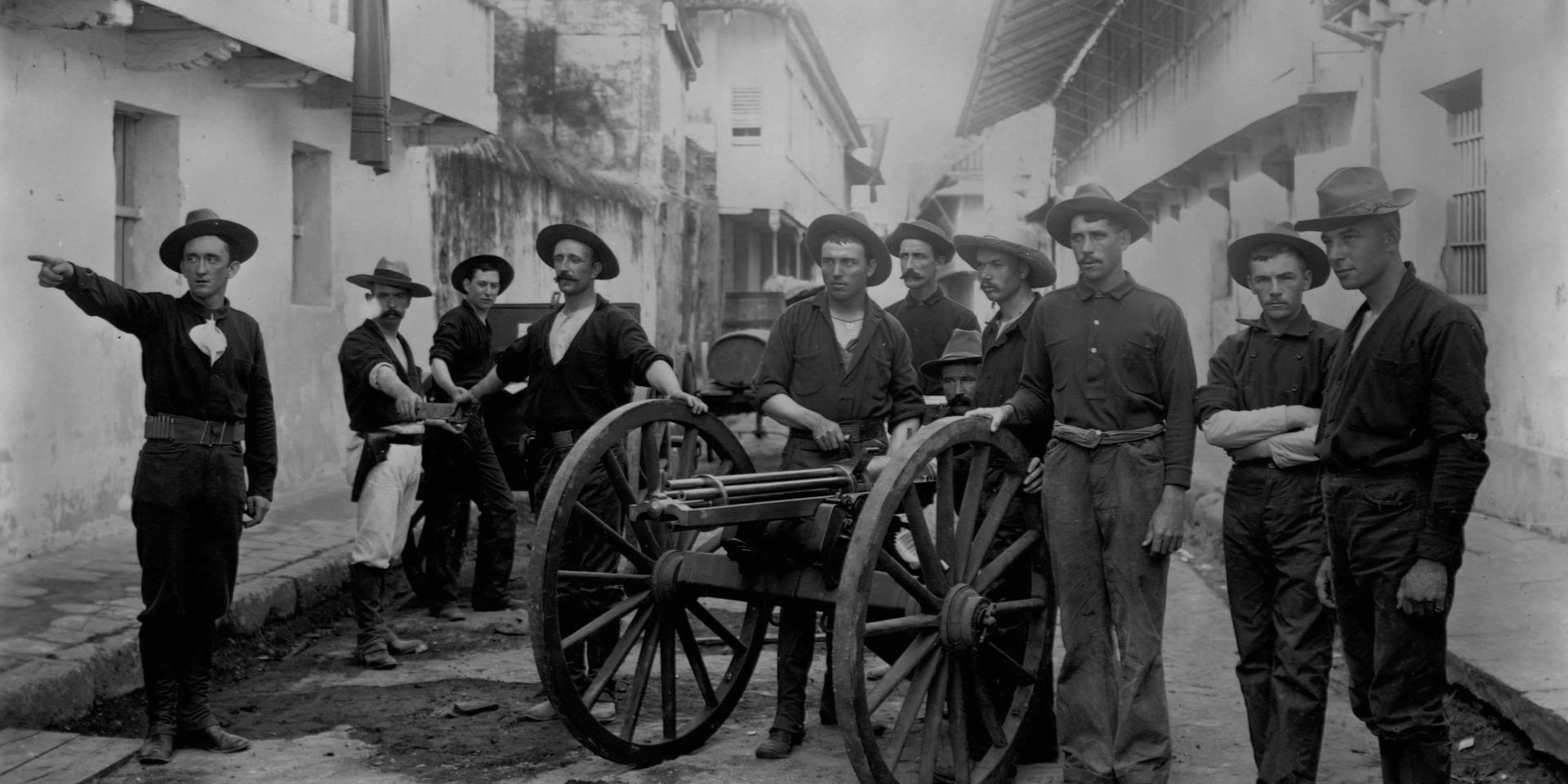
- July 1, 1898: The weapon plays a decisive tactical role in Cuba during the Spanish-American War, where Lieutenant John H. Parker’s Gatling Gun Detachment supports the legendary charge up San Juan Hill.
- 1911: The U.S. military officially declares the hand-cranked Gatling gun obsolete, replacing it with fully automatic, recoil-operated machine guns.
Mechanics and Design: A Technological Quantum Leap
The genius of the Gatling gun lay in its cyclic, multi-barrel architecture. Unlike traditional firearms of the era, which required soldiers to manually reload gunpowder and lead balls after every shot, the Gatling gun featured six to ten barrels arranged in a circle around a central shaft. The operator turned a hand crank on the side of the weapon, which initiated a continuous cycle of loading, firing, and ejecting.
As the crank rotated, gravity fed ammunition from a top-mounted hopper or magazine into the uppermost barrel. As that barrel rotated downward to the firing position, a mechanical bolt pushed the cartridge into the chamber, locked it, and released a spring-loaded firing pin. After firing at the lowest point of rotation, the continued turning of the crank extracted and ejected the spent casing, clearing the barrel to receive a fresh cartridge upon its next rotation. This brilliant division of labor among multiple barrels solved the twin problems of barrel overheating and rapid reloading. While the earliest models utilized fragile paper cartridges, the transition to self-contained metal brass cartridges elevated the weapon’s firing capacity from 200 rounds per minute to a staggering 400 to 600 rounds per minute.
The Dark Legacy: Native American Campaigns and Domestic Suppression
Despite Richard Gatling’s peaceful intentions, the reality of his invention was devastatingly violent. During the late 19th century, the United States entered an era of rapid westward expansion. The U.S. Army frequently deployed Gatling guns in its campaigns to subdue indigenous populations and claim ancestral lands. In these highly asymmetric conflicts, the sheer psychological and physical destruction of the rotary gun was used to break native resistance. This harsh utilization of superior technology mirrored other aggressive tactics of the era, drawing comparisons to earlier colonial controversies, such as debates over whether colonists gave infected blankets to Native Americans as a form of biological warfare.

Furthermore, the Gatling gun’s terrifying power was not reserved solely for foreign battlefields or frontier skirmishes. During the Gilded Age, the United States experienced severe labor unrest, marked by massive strikes and clashes between industrial workers and corporate barons. State militias, local law enforcement, and private detective agencies repeatedly positioned Gatling guns outside factories, mines, and rail yards to intimidate striking workers. In several instances, these weapons were fired upon civilian crowds, turning a tool designed to save lives into a blunt instrument of corporate and state enforcement. This rampant militarization of society fueled a growing cultural pushback, driving the evolution of organized anti-war movements that sought to challenge the moral implications of industrial arms manufacturing.
Beyond the Battlefield: Diversity in the Civil War Era
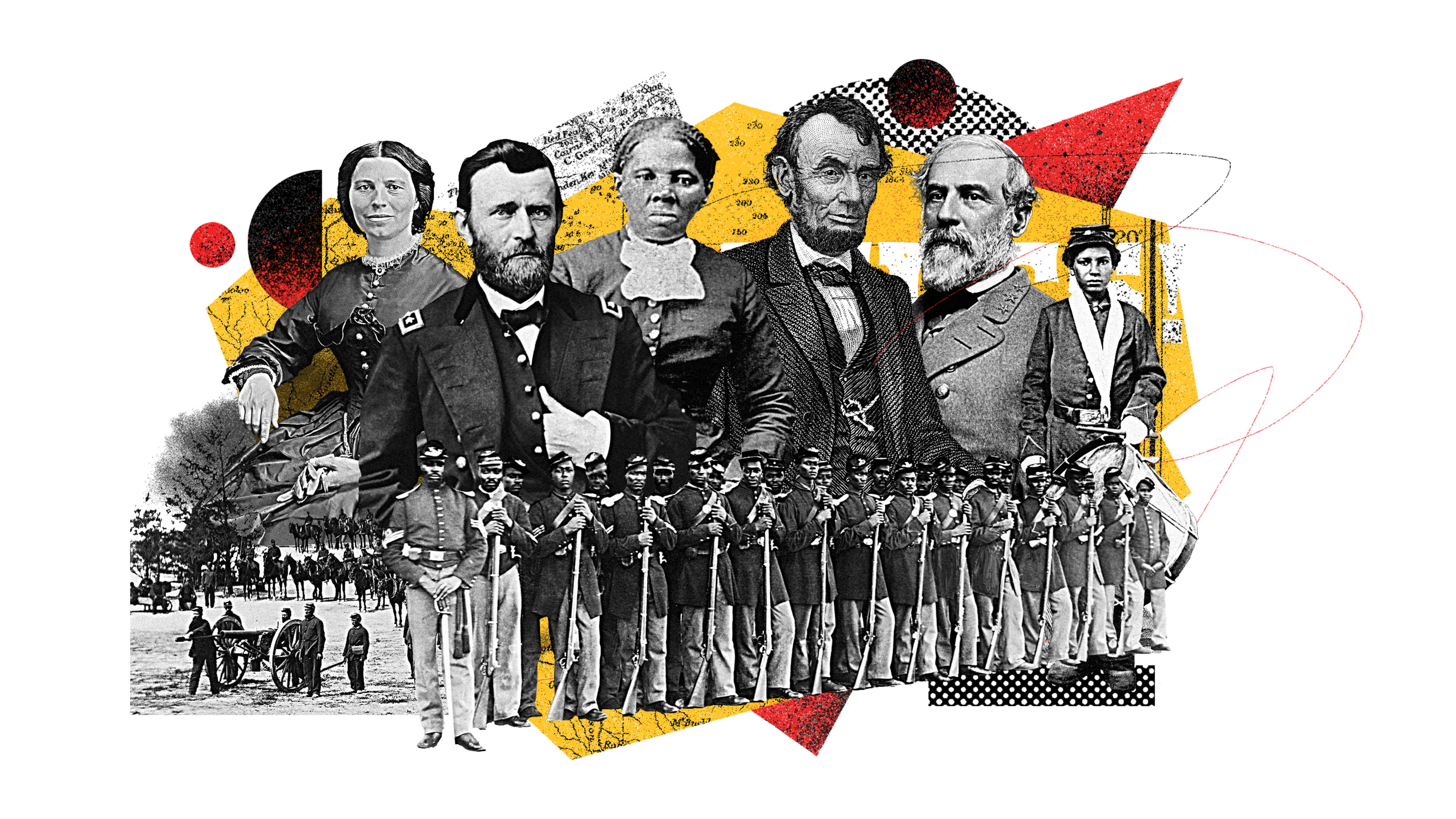
While the Gatling gun was a dramatic leap forward in engineering, the human element of the Union military was also undergoing a profound transformation. As the Civil War progressed, the Union Army increasingly relied on a diverse coalition of soldiers to secure victory. This period of radical societal change paved the way for future generations of marginalized servicemen, laying the groundwork for the extraordinary contributions of Black heroes throughout military history. Just as new technology reshaped how battles were fought, the shifting demographics of the armed forces permanently redefined who fought for the nation’s freedom.
Lesser-Known Historical Facts About the Gatling Gun
1. George Custer’s Fatal Overconfidence
Perhaps the most famous historical footnote involving the Gatling gun is its absence at the Battle of the Little Bighorn in 1876. Prior to his departure, Major General George Armstrong Custer was offered three carriage-mounted Gatling guns to support his 7th Cavalry. Custer flatly refused them, claiming that the heavy, wheeled weapons would slow down his fast-moving cavalry units over the rugged Montana terrain. He also expressed concern that carrying such devastating weaponry would make his troops look overly dependent on technology. Had Custer accepted the weapons, the overwhelming firepower likely would have altered the outcome of his fateful encounter with Lakota, Northern Cheyenne, and Arapaho forces.
2. The Doctor Who Never Practiced
Richard Jordan Gatling is frequently referred to as ‘Dr. Gatling.’ This title was entirely legitimate; after a severe bout of smallpox ravaged his family, Gatling became obsessed with medicine. He enrolled in the Ohio Medical College and successfully earned his medical degree in 1850. However, he never opened a practice or treated a single patient. He admitted that he pursued the degree solely to gain the knowledge necessary to protect his own family from rampant 19th-century illnesses.
3. From Deadly Weapons to Flushing Toilets
Gatling was a prolific inventor whose mind never rested. Over the course of his 85-year life, he secured a total of 43 patents. While the Gatling gun was undoubtedly his most famous and lucrative creation, his patent portfolio included an incredibly diverse array of items. He designed steam-driven agricultural tractors, a specialized hemp brake, a cotton cultivator, and even an improved mechanism for a domestic flush toilet. To Gatling, whether he was inventing a machine to harvest wheat or a weapon to decimate armies, the goal was always the same: efficiency through mechanics.
Why the Gatling Gun Still Matters Today
The legacy of Richard Gatling’s invention did not die with the obsolescence of the hand-cranked model in 1911. Following World War II, military engineers realized that single-barrel automatic weapons had reached their physical limits due to extreme heat and barrel wear. To solve this, designers turned back to Gatling’s original rotating, multi-barrel concept, marrying it with electric and hydraulic motors. This led directly to the development of the M61 Vulcan rotary cannon and the colossal GAU-8/A Avenger, the legendary ‘tank buster’ rotary gun built into the nose of the A-10 Thunderbolt II aircraft. Today, the Gatling design remains the backbone of close-in weapon systems (CIWS) protecting naval fleets and modern military aircraft worldwide.
Beyond its engineering legacy, the Gatling gun serves as a poignant ethical warning. It remains the ultimate historical case study of how technological solutions designed to minimize the horrors of war can backfire, resulting in unprecedented lethality. Gatling’s quest to save lives through firepower reminds us that the consequences of scientific innovation often outpace the noble intentions of their creators.
People Also Ask
Who invented the Gatling gun and when?
The Gatling gun was invented by Richard Jordan Gatling in 1861 and officially patented on November 4, 1862.
Was the Gatling gun used in the American Civil War?
Yes, but only in a very limited capacity. The U.S. Army Ordnance Department was highly skeptical of the new technology. However, Union General Benjamin F. Butler purchased 12 guns privately, and they were used during the Siege of Petersburg, Virginia, in 1865.
Why did George Custer refuse the Gatling guns?
Custer refused the Gatling guns before the Battle of the Little Bighorn because he believed their heavy wheeled carriages would slow his cavalry’s advance through the rugged terrain of Montana.
How fast could the original Gatling gun fire?
The earliest paper-cartridge models could fire approximately 200 rounds per minute. With the introduction of self-contained brass cartridges, later versions achieved firing rates of over 400 to 600 rounds per minute.
Conclusion
The Gatling gun occupies a complex, deeply ironic space in American history. Conceived by a non-practicing physician as a humanitarian instrument to reduce the size of armies and prevent combat deaths, it instead ushered in the devastating era of fully automatic industrial warfare. From the muddy trenches of Petersburg to the colonial battlefields of Africa and the modern skies of today, the mechanical legacy of Richard Gatling’s rotating barrels continues to spin, serving as both a marvel of human ingenuity and a sobering reminder of the destructive costs of technological progress.


