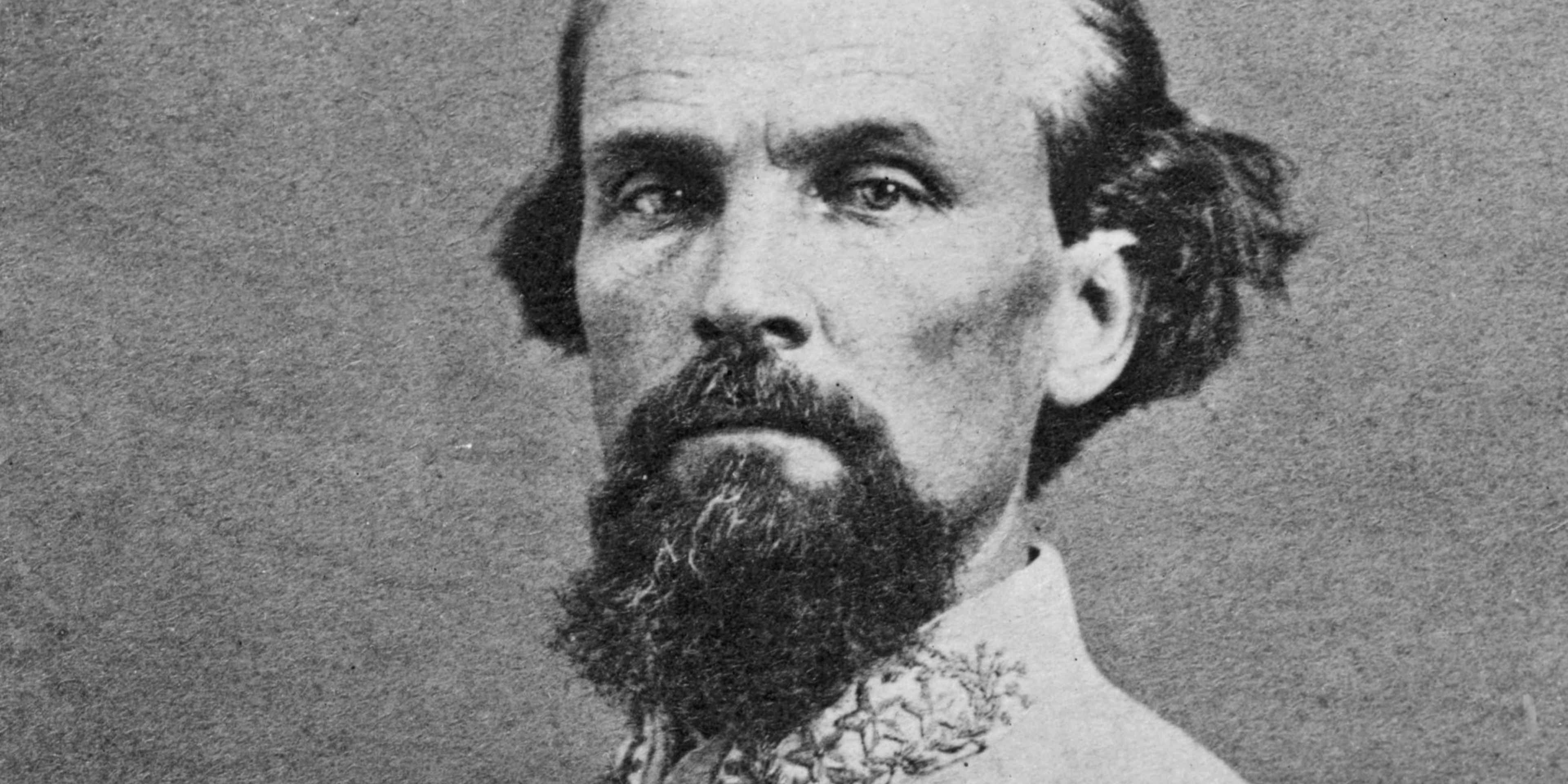
Few figures in the history of the American Civil War evoke as much intense debate, military fascination, and moral condemnation as Nathan Bedford Forrest. Known to his admirers as the “Wizard of the Saddle” for his brilliant, untrained tactical maneuvers, Forrest rose from the rank of private to lieutenant general in the Confederate Army. Yet, his legacy is deeply stained by his pre-war wealth built on the domestic slave trade, the horrific events of the 1864 Fort Pillow Massacre, and his post-war role as the first Grand Wizard of the Ku Klux Klan. This comprehensive Nathan Bedford Forrest biography explores his meteoric military rise, his controversial actions on and off the battlefield, and how his memory continues to challenge America’s historical conscience today.
Historical Background: Poverty, Violence, and the Slave Trade
Born on July 13, 1821, in the frontier town of Chapel Hill, Tennessee, Nathan Bedford Forrest grew up in extreme poverty. With almost no formal education, he was forced to become the primary provider for his family after his father died when Forrest was only sixteen. This harsh upbringing forged a ruthless, self-reliant character. In 1845, after his uncle was killed in a street fight over a business dispute in Hernando, Mississippi, Forrest famously retaliated by killing two of the attackers with a pistol and a bowie knife.
That same year, Forrest married Mary Ann Montgomery, a union that elevated his social standing. Seeking wealth, he moved his family to Memphis, Tennessee, in 1852, where he established himself as a highly successful real estate investor, cotton planter, and slave trader. By 1860, Forrest owned multiple plantations and was one of the wealthiest men in the South. This rapid ascent reflected the broader socio-economic reality of the antebellum South, where fortunes were inextricably tied to human bondage. The moral and political contradictions of this system had been brewing for decades, tracing back to the early nation’s compromises over the institution of slavery during the drafting of America’s founding documents.
The Soldier Unmade by Academies: Military Rise
When the Civil War erupted in 1861, Forrest enlisted as a private in the Tennessee Mounted Rifles. Lacking any formal military education, he relied on raw instinct, physical courage, and a natural grasp of mobile warfare. He quickly used his personal fortune to equip his unit, earning a promotion to lieutenant colonel. His philosophy of war was deceptively simple, often summarized as “getting there first with the most men.” Through aggressive reconnaissance, rapid movement, and a refusal to fight on the enemy’s terms, Forrest revolutionized cavalry tactics, transforming his mounted troopers from traditional scouts into highly mobile, hard-hitting shock infantry.
Key Events Timeline: The Cavalry Campaigns
To understand Forrest’s impact on the Civil War, one must look at the key campaigns that defined his military trajectory:
- December 1861 – Sacramento, Kentucky: Forrest wins his first engagement by leading a surprise charge against a larger Union force, establishing his reputation for audacious offensive tactics.
- February 1862 – Fort Donelson: Surrounded by Union troops under General Ulysses S. Grant, Forrest refuses to surrender alongside other Confederate commanders. He successfully leads 700 cavalrymen through icy swamps to escape to Nashville.
- April 1862 – Battle of Shiloh: Forrest commands the Confederate rearguard during the retreat. He suffers a severe bullet wound to his spine but remains in active command after single-handedly charging Union skirmishers.
- July 1862 – Murfreesboro Raid: Now a brigadier general, Forrest launches a daring raid to capture a Union garrison, severing vital federal supply lines.
- Late 1862 to 1863 – Vicksburg Campaign Harassment: Operating as a guerrilla commander, Forrest disrupts Grant’s supply lines and communication infrastructure, frustrating the Union high command.
- May 1863 – Cedar Bluff Deception: Forrest outmaneuvers and bluffs Union Colonel Abel Streight into surrendering 1,500 soldiers with a force only a third of that size.
- April 1864 – The Fort Pillow Massacre: Forrest’s forces capture the federal stronghold of Fort Pillow, leading to the controversial slaughter of surrendered Union troops, predominantly African Americans.
- June 1864 – Battle of Brice’s Crossroads: In what is widely considered his tactical masterpiece, Forrest defeats a Union force double his size, securing critical supplies and inflicting heavy casualties.
- April 1865 – Defeat at Selma and Surrender: Confronted by Union General James H. Wilson’s massive cavalry raid, Forrest is defeated at Selma, Alabama. He surrenders his forces in May 1865 following the collapse of the Confederacy.
The Tragedy and Controversy of the Fort Pillow Massacre
The darkest chapter of Forrest’s military career occurred on April 12, 1864, at Fort Pillow, a Union outpost on the Mississippi River. The garrison was defended by approximately 600 soldiers, roughly half of whom were Black troops belonging to the United States Colored Troops (USCT). After refusing a surrender demand, Forrest’s men stormed the fort. What followed was a brutal slaughter.
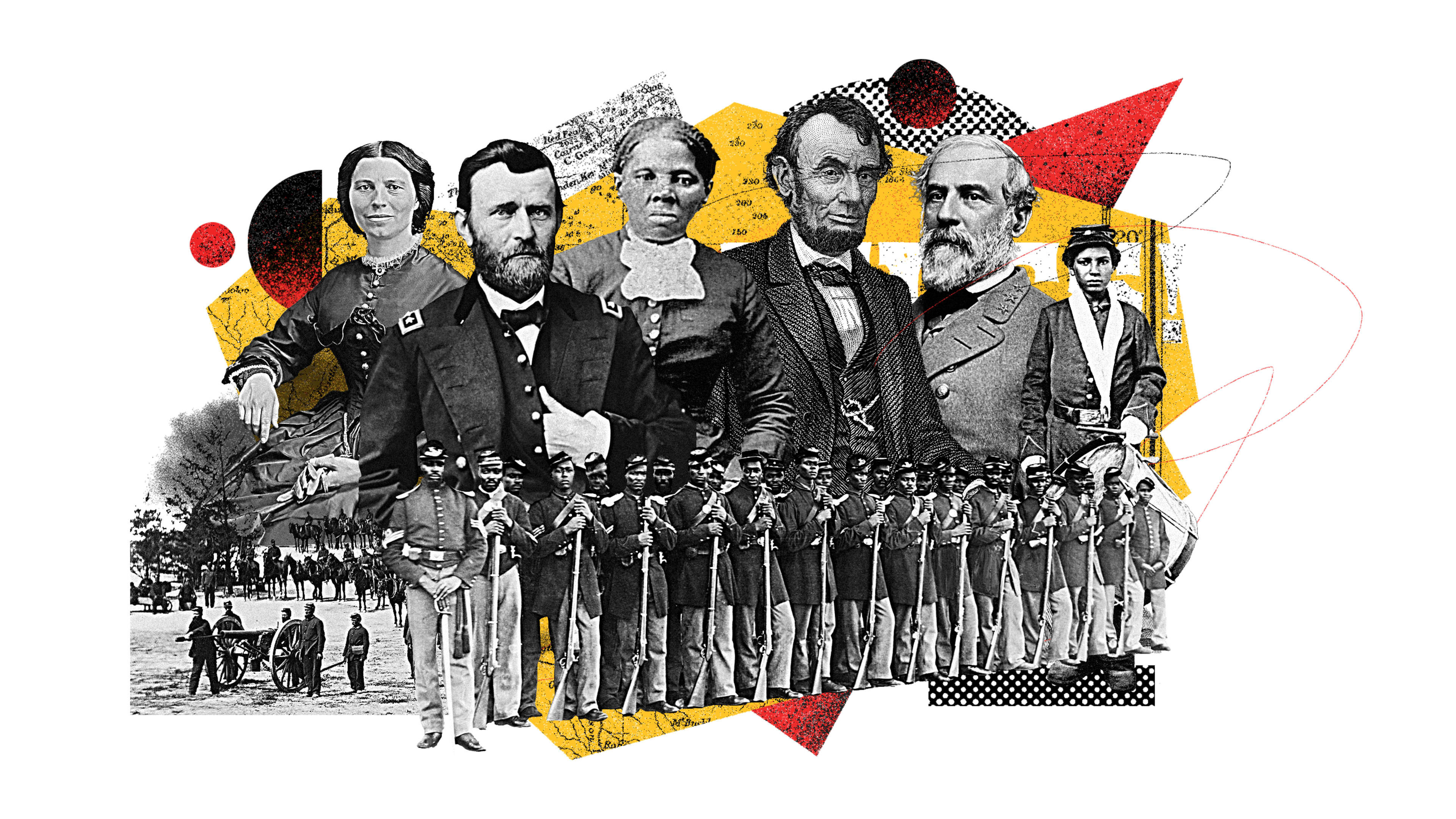
Surviving Union soldiers and subsequent federal investigations reported that Confederate forces continued to shoot unarmed Black and white soldiers after they had thrown down their weapons and attempted to surrender. While Forrest and Southern apologists argued that the garrison resisted until the end, the evidence of a systematic massacre was overwhelming. This tragedy highlighted the immense dangers faced by Black soldiers fighting for their freedom. Their bravery under such horrific conditions remains a crucial part of the contributions of African American soldiers in the nation’s military history, demonstrating their willingness to fight for liberty despite facing brutal, lawless retaliation from Confederate forces.
Post-War Years: Reconstruction and the Ku Klux Klan
Following the Confederate defeat, Forrest returned to Tennessee, bankrupt and stripped of his pre-war labor supply. He attempted to rebuild his fortune as a lumber merchant, planter, and railroad president. However, his most significant post-war action was his involvement with the newly formed Ku Klux Klan. Founded in Pulaski, Tennessee, in late 1865 or early 1866 as a social club for Confederate veterans, the Klan quickly evolved into a violent insurgent group dedicated to terrorizing newly freed African Americans and white Republicans.
Forrest is widely believed by historians to have been appointed the Klan’s first Grand Wizard in 1867. Under his leadership, the organization grew into a highly organized, clandestine network that used lynchings, beatings, and political assassinations to dismantle Reconstruction efforts. Although Forrest officially ordered the dissolution of the Klan in 1869 due to its uncontrollable local violence, and later denied his involvement when testifying before a Congressional committee in 1871, his leadership cemented the group’s foundational structure. In his final years, plagued by failing health and financial ruin, Forrest oversaw a prison labor camp before dying of complications from diabetes on October 29, 1877.
Lesser-Known Facts About Nathan Bedford Forrest
To fully understand the complexity of Forrest’s persona, historians point to several intriguing and lesser-known anecdotes:
- The Human Shield at Shiloh: During the chaotic retreat from Shiloh, Forrest found himself isolated and surrounded by Union soldiers. After being shot in the back, he grabbed a small Union soldier by the collar, lifted him onto the back of his horse to act as a human shield, and galloped to safety before tossing the soldier aside once out of range.
- A Master of Psychological Bluffing: At Cedar Bluff in 1863, Forrest ordered his artillery pieces to march in a circular loop around a hill, making his small force appear three times larger than it actually was. The ruse successfully tricked Union Colonel Abel Streight into surrendering 1,500 troops to Forrest’s 500 men.
- An Unexpected Late-Life Turn: In July 1875, just two years before his death, Forrest accepted an invitation to speak before the Independent Order of Pole-Bearers, an early Black civil rights organization in Memphis. In his speech, he advocated for racial harmony and offered a message of reconciliation, stating that Black Americans had a right to work and live in peace—a stark departure from his wartime actions and Klan leadership.
Why His Legacy Still Matters Today
Today, Nathan Bedford Forrest remains a lightning rod in American cultural and political discourse. For decades, advocates of the “Lost Cause” myth celebrated him as an unblemished military genius, erecting numerous statues and naming public parks, schools, and even a military base in his honor.
However, in the modern era, Forrest’s history has become a focal point for racial reckoning. Critics point out that honoring a slave trader, a war criminal responsible for the Fort Pillow Massacre, and the first leader of the KKK whitewashes the historical reality of white supremacy and systemic violence. In recent years, public pressure has led to the removal of his bust from the Tennessee State Capitol and the relocation of his remains from a Memphis park. Forrest’s legacy serves as a powerful reminder of how history is not just about the past, but about how society chooses to remember, memorialize, and confront its darkest chapters.
People Also Ask
Who was Nathan Bedford Forrest?
Nathan Bedford Forrest was a prominent Confederate general during the American Civil War. Despite having no formal military training, he rose from private to lieutenant general and became famous for his highly effective, aggressive cavalry tactics.
What was the Fort Pillow Massacre?
The Fort Pillow Massacre occurred on April 12, 1864, when Confederate troops under the command of Nathan Bedford Forrest slaughtered over 200 Union soldiers, the majority of whom were Black troops, after they had already surrendered.
Was Nathan Bedford Forrest the founder of the Ku Klux Klan?
While Forrest was not one of the original six founders of the Ku Klux Klan in Pulaski, Tennessee, he was recruited shortly after its formation and served as the organization’s first Grand Wizard, helping to shape it into a violent, systemic terrorist group during Reconstruction.
Where did Nathan Bedford Forrest die and where is he buried?
Nathan Bedford Forrest died in Memphis, Tennessee, on October 29, 1877, at the age of 56. Originally buried in Elmwood Cemetery, his remains (along with his wife’s) were moved to Nathan Bedford Forrest Park in Memphis, and later relocated to a private cemetery in 2021 amid public protests.
Conclusion
Nathan Bedford Forrest’s life represents the complex and painful contradictions of 19th-century America. He was undeniably a military commander of extraordinary natural talent, possessing a ruthless operational efficiency that earned him a place among the Civil War’s most formidable generals. Yet, this tactical brilliance cannot be separated from his active participation in the brutal slave trade, his culpability in the Fort Pillow Massacre, and his leadership of the Ku Klux Klan during Reconstruction. By studying his biography objectively, we gain a deeper understanding of the Civil War, the violent struggles of Reconstruction, and the ongoing, hard-fought journey toward racial justice in America.


