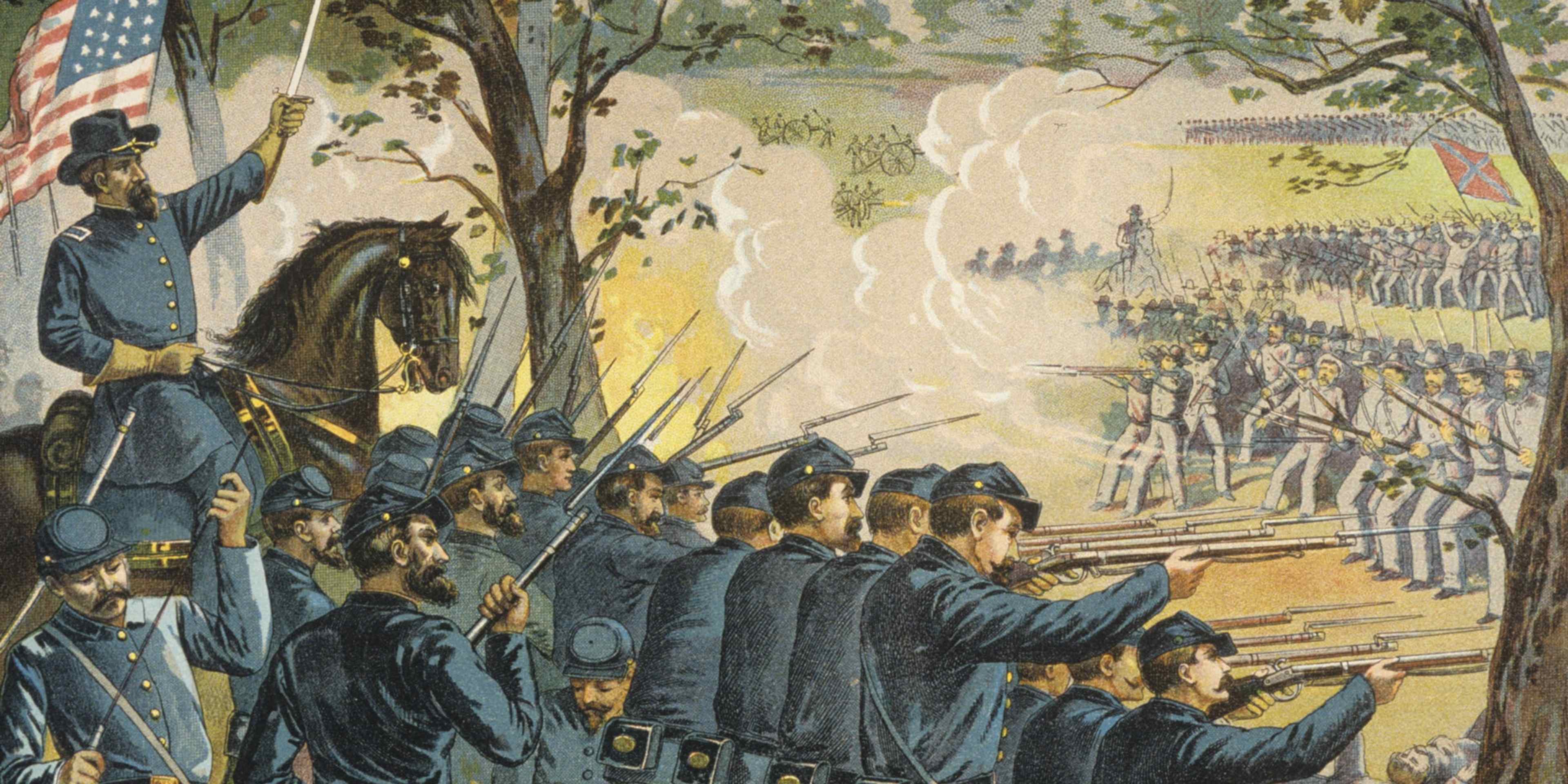
The Battle of the Wilderness, fought from May 5 to May 7, 1864, stands as one of the most grueling, terrifying, and profoundly decisive confrontations of the American Civil War. Serving as the opening salvo of Lieutenant General Ulysses S. Grant’s aggressive Overland Campaign, this clash was far more than a tactical struggle for territory; it was a psychological turning point that altered the trajectory of the entire conflict. Set within a dark, tangled labyrinth of second-growth forest in northern Virginia, the battle pitted the numerical might of the Union Army against the deeply entrenched, tactically brilliant Confederate forces under General Robert E. Lee. The resulting two days of chaotic, close-quarters combat tested the absolute limits of human endurance and military strategy. To understand the transition of the Civil War from a series of disjointed seasonal campaigns into an unrelenting war of attrition, one must look closely at the fiery, smoke-choked woods of the Wilderness.
The Strategic Causes and Context of the Overland Campaign
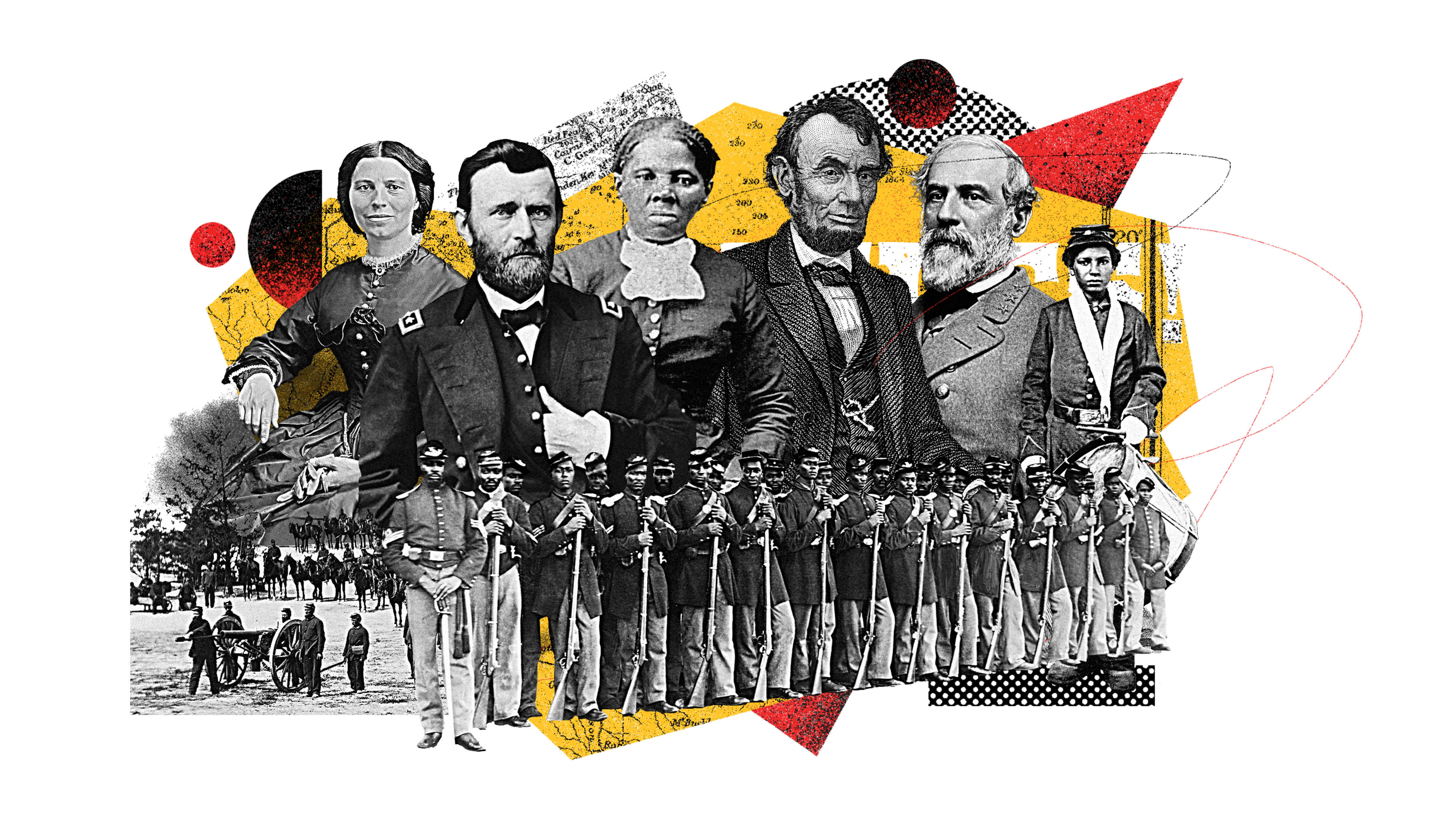
By the spring of 1864, the American Civil War had dragged on for three bloody years. While the Union had secured momentous victories in 1863, the Confederate Army of Northern Virginia remained a potent and lethal threat. Recognizing the need for a unified, relentless strategy to crush the rebellion, President Abraham Lincoln promoted Ulysses S. Grant to Lieutenant General, placing him in command of all Union forces. This promotion cemented a close partnership between Abraham Lincoln and Ulysses S. Grant, built on a shared understanding that only a continuous, multi-theater offensive could exhaust the Confederacy’s limited resources.
Grant’s strategic objective was clear: rather than focusing solely on capturing the Confederate capital of Richmond, he targeted Robert E. Lee’s army. If Lee’s forces were pinned down and continuously engaged in Virginia, they could not send reinforcements to other sectors, allowing Major General William T. Sherman to advance deep into Georgia. Thus, the Overland Campaign was born. On May 4, 1864, the Army of the Potomac, numbering roughly 115,000 men, crossed the Rapidan River, marching directly into a dense, 70-square-mile forest known locally as the Wilderness.
Key Figures and Their Roles
- Lieutenant General Ulysses S. Grant: As the newly appointed Union General-in-Chief, Grant brought a relentless determination to the Eastern Theater. Unlike his predecessors, who retreated after sustaining heavy losses, Grant possessed a bulldog tenacity. His decision to continue southward after the Battle of the Wilderness redefined Union military doctrine. To explore his strategic brilliance further, see the brilliant military leadership of Ulysses S. Grant.
- General Robert E. Lee: The legendary commander of the Army of Northern Virginia. Facing a massive numerical disadvantage with only 65,000 men, Lee used his intimate knowledge of the local geography to nullify the Union’s superior numbers, artillery, and cavalry by forcing them to fight in the dense undergrowth.
- Major General Winfield Scott Hancock: Commander of the Union II Corps. Hancock led the pivotal attack along the Plank Road on May 6, nearly breaking the Confederate right wing before being halted by rebel reinforcements.
- Lieutenant General James Longstreet: Lee’s dependable “Old War Horse.” Longstreet’s timely arrival on the second day of the battle saved the Confederate flank, though his subsequent wounding temporarily halted the Confederate momentum.
Chronological Timeline of the Battle
May 4, 1864: Crossing the Rapidan
The Union Army of the Potomac, accompanied by General Grant but still formally led by Major General George G. Meade, crosses the Rapidan River. Grant hopes to move quickly through the Wilderness to force Lee into an open-field battle. Lee, aware of the Union movements, chooses to intercept them inside the dense woods to negate their numerical superiority.
May 5, 1864: Chaos in the Undergrowth
The battle begins in earnest as the Union V Corps, led by Major General Gouverneur K. Warren, collides with Lieutenant General Richard Ewell’s Confederate Second Corps along the Orange Turnpike. Soon after, fighting erupts to the south along the Orange Plank Road between A.P. Hill’s Confederate Third Corps and Union forces. The dense brush makes visual coordination impossible, turning the combat into a series of terrifying, fragmented skirmishes. As night falls, the battlefield is a chaotic stalemate.
May 6, 1864: High Tide and Friendly Fire
At 5:00 AM, Hancock’s II Corps launches a massive assault along the Plank Road, driving Hill’s Confederates back in confusion. Just as the Confederate line is on the verge of total collapse, James Longstreet’s First Corps arrives on the field. In a dramatic counterattack, the Texans push the Union forces back. Amid the chaos, Longstreet is accidentally shot in the shoulder by his own men—strikingly close to where Stonewall Jackson was mortally wounded by friendly fire just a year earlier. Later that evening, a daring flank attack by Confederate Brigadier General John B. Gordon inflicts heavy panic on the Union right, but darkness prevents a total Confederate breakthrough.
May 7, 1864: The Decision to March South
Both armies remain in their trenches, bloodied and exhausted. Tactically, the battle is a draw, with the Union suffering over 17,500 casualties and the Confederates losing approximately 11,000. Under previous Union commanders, this level of bloodshed would have triggered a retreat back across the river. Instead, Grant issues orders to pack up and march south toward Spotsylvania Court House, signaling that there would be no turning back.
The Brutal Reality of the Wilderness Terrain
The Wilderness was a nightmarish landscape of dense pine, scrub oak, and tangled brambles. The forest canopy was so thick that it blocked out the sun, wrapping the soldiers in a gloomy, claustrophobic twilight. This terrain rendered traditional military tactics useless. Cavalry could not maneuver, and artillery was rendered virtually ineffective due to the lack of clear lines of sight. Soldiers were forced to fire blindly into the thickets, aiming only at the muzzle flashes of enemy rifles.
Even more horrifying were the fires. The dry forest floor, littered with pine needles and dried leaves, was easily ignited by the constant sparks of rifle fire and exploding artillery shells. Thick, suffocating smoke filled the woods, blinding the combatants. Hundreds of wounded soldiers, unable to crawl away, were tragically burned alive. The haunting screams of these trapped men echoed through the woods, leaving a permanent psychological scar on the survivors and marking a stark contrast to the open fields of prior campaigns, such as how the Battle of Gettysburg turned the tide of the war in the previous summer.
Long-Term Impact on the American Civil War
The Battle of the Wilderness was a strategic watershed. Although the heavy casualties made it a tactical draw, it changed the psychological dynamic of the war. On the night of May 7, as the weary Union troops marched to the crossroads, they realized they were heading south toward Richmond rather than retreating north. Understanding that they were finally led by a general who would not back down, the Union soldiers broke into spontaneous cheering. Grant’s relentless advance forced Lee into a continuous, exhausting defensive posture from which the Confederacy could never recover, eventually leading to the Siege of Petersburg and Lee’s surrender at Appomattox.
Lesser-Known Historical Anecdotes
“Lee to the Rear!”: On the morning of May 6, when Hancock’s Union troops broke the Confederate line, General Robert E. Lee was so distressed that he attempted to personally lead a countercharge with the arriving Texas Brigade. Recognizing the immense danger to their beloved commander, the fierce Texas soldiers refused to charge until Lee agreed to go to the safety of the rear, shouting, “Lee to the rear!”
A Tragic Coincidence: Lieutenant General James Longstreet’s accidental wounding by his own men on May 6 occurred less than five miles away and almost exactly one year to the day after Stonewall Jackson was shot by friendly fire during the Battle of Chancellorsville. While Jackson died of his wounds, Longstreet survived but was incapacitated for months.
Why the Battle of the Wilderness Matters Today
Today, the Wilderness battlefield is preserved as part of the Fredericksburg and Spotsylvania National Military Park. It serves as a somber monument to the immense human cost of the Civil War. For modern historians and military strategists, the battle is a classic study in asymmetrical warfare, illustrating how difficult terrain can neutralize technological and numerical superiority. Grant’s uncompromising resolve during and after the battle remains a cornerstone study in crisis leadership and strategic determination, demonstrating how a leader’s psychological fortitude can reshape the destiny of a nation.
People Also Ask (FAQ)
Who won the Battle of the Wilderness?
Tactically, the battle was a draw because neither side gained a clear territorial advantage, and the Union suffered higher casualties. However, it was a major strategic victory for the Union. Grant’s refusal to retreat and his decision to continue the offensive southward permanently shifted the momentum of the war against the Confederacy.
How many casualties occurred in the Battle of the Wilderness?
The fighting was incredibly costly. The Union Army sustained approximately 17,500 casualties (killed, wounded, or missing), while the Confederate Army suffered an estimated 11,000 casualties.
Why is it called the Battle of the Wilderness?
The battle received its name from the local geography. It was fought in an area of northern Virginia known as “the Wilderness of Spotsylvania,” a heavily forested region characterized by dense second-growth woods, thick underbrush, and swampy terrain.
Conclusion
The Battle of the Wilderness was a grueling test of wills that forever altered the course of the American Civil War. In the suffocating smoke and dense thickets of Virginia, the romanticized notions of war were utterly destroyed, replaced by the grim reality of total warfare. By refusing to retreat despite staggering losses, General Ulysses S. Grant broke the cycle of hesitation that had plagued the Union war effort, setting the stage for the ultimate preservation of the United States.


