The history of early America is often painted in broad, idealistic strokes of religious freedom, cooperation, and survival against all odds. However, beneath the pious narratives of the Plymouth colonists lies a darker, more tumultuous reality of human conflict, rebellion, and violence. At the center of this colonial discord was John Billington, a man who secured a notorious legacy as the first convicted murderer in English America. Arriving on the historic 1620 voyage of the Mayflower, Billington was not a religious Separatist but a stranger whose hot temper and persistent defiance of authority repeatedly brought him into conflict with colonial leaders. His ultimate crime—the cold-blooded murder of a fellow colonist in 1630—shook the fragile settlement to its core and forced the Plymouth magistrates to establish some of the earliest precedents for capital punishment and judicial sovereignty in the New World. Understanding Billington’s story reveals that early America was not just a sanctuary of faith, but a complex, high-stakes experiment in law, order, and survival.
The Outcast Strangers of the Plymouth Colony
To fully comprehend how John Billington became the first convicted murderer in America, one must first look at the social divisions aboard the Mayflower. When the historic vessel departed English shores in 1620, its passengers were divided into two distinct groups. On one hand were the Separatists—the deeply religious group we now know as the Pilgrims—who sought to escape religious persecution in Europe and establish a society based on their strict interpretation of Christian doctrine. If you are wondering why did the pilgrims come to america, the answer lies in their quest for spiritual autonomy, away from the corrupting influences of the Church of England. On the other hand were the strangers, a term coined by Governor William Bradford to describe the non-Separatist passengers. These individuals were recruited by the venture’s London financial investors to provide practical skills, manual labor, and security for the fledgling colony. John Billington and his family—his wife Eleanor (or Ellen) and their teenage boys, John and Francis—belonged to this latter group. Unlike the cohesive, deeply disciplined Separatist community, the Billingtons were viewed with suspicion from the outset. Bradford himself described them as one of the most profanest families in the entire company, noting their lack of religious devotion and their frequent, vocal opposition to colonial leadership.
Rising Tensions and the Mayflower Compact
The friction between the Pilgrim leaders and the strangers intensified before the colonists even stepped foot on dry land. The Mayflower was originally chartered to land in northern Virginia, but fierce Atlantic storms blew the vessel far off course, eventually bringing it to the shores of Cape Cod, Massachusetts, in November 1620. Because they had arrived outside the territorial jurisdiction of their land patent, John Billington and several other strangers argued that their restrictive labor contracts with the Virginia Company were void. They asserted their right to settle independently, threatening a full-scale mutiny that could have doomed the entire expedition. To preserve order and establish a unified authority, the colony’s leaders drafted a historic agreement. By exploring how the Mayflower Compact was signed by the adult male passengers, we can see how early democratic principles were forged out of absolute necessity to prevent social collapse. Although Billington reluctantly signed the document, his compliance was short-lived, and his family would continue to test the boundaries of law and order in the remote wilderness of the Plymouth Colony location.
A Timeline of Discord (1620–1630)
The ten years leading up to America’s first colonial execution were marked by a series of alarming incidents involving the Billington family:
- November 1620: While still anchored in Cape Cod, fourteen-year-old Francis Billington nearly blows up the Mayflower by igniting homemade fireworks (squibs) and firing a musket near an open barrel of gunpowder inside the cabin.
- March 1621: John Billington senior commits the colony’s first offense of insubordination by refusing to obey military orders from Captain Miles Standish and publicly insulting him. He is sentenced to have his neck and heels tied together but is pardoned after begging for mercy.
- Summer 1621: The younger son, John Billington Jr., wanders off into the wilderness and is lost for five days before being rescued by the local Wampanoag tribe at Nauset, requiring diplomatic intervention by the Pilgrim leaders.
- 1624: John Billington is implicated in the Oldham-Lyford scandal, a conspiracy involving a rogue Puritan minister who acted as a spy, sending letters to English investors criticizing the Pilgrim leadership. Billington denies involvement and avoids banishment.
- 1627: John Billington Jr. dies of unknown causes, leaving a grieving and increasingly bitter family.
- September 1630: John Billington senior waylays and shoots his seventeen-year-old neighbor, John Newcomen, following an unresolved personal dispute, resulting in the colony’s first murder trial.
Key Figures in Early Plymouth’s First Murder Trial
To fully appreciate the gravity of the events of 1630, it is vital to examine the main actors involved in this historic colonial drama:
- John Billington: A headstrong, confrontational English colonist from London who arrived on the Mayflower. Chronically outspoken and defensive, his decade of escalating conflict culminated in the murder of John Newcomen.
- William Bradford: The long-serving Governor of Plymouth Colony. Bradford kept meticulous records in his journal, Of Plymouth Plantation, and viewed Billington as a persistent knave who threatened the social and moral order of the colony.
- Miles Standish: The military commander of Plymouth. Standish was the target of Billington’s early insubordination, representing the secular, defensive authority of the settlement.
- John Newcomen: A young colonist, roughly seventeen years old, who became the unfortunate victim of Billington’s deadly temper. Though little is recorded about their dispute, his death catalyzed the first formal execution in the colony.
The Crime, the Trial, and the Execution of 1630
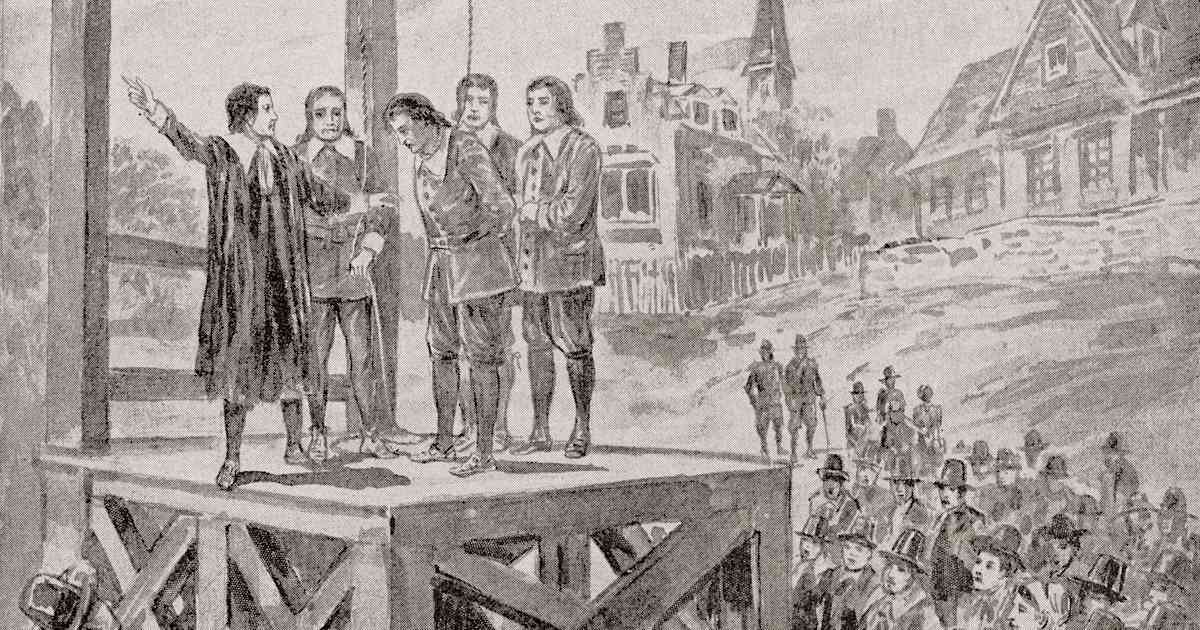
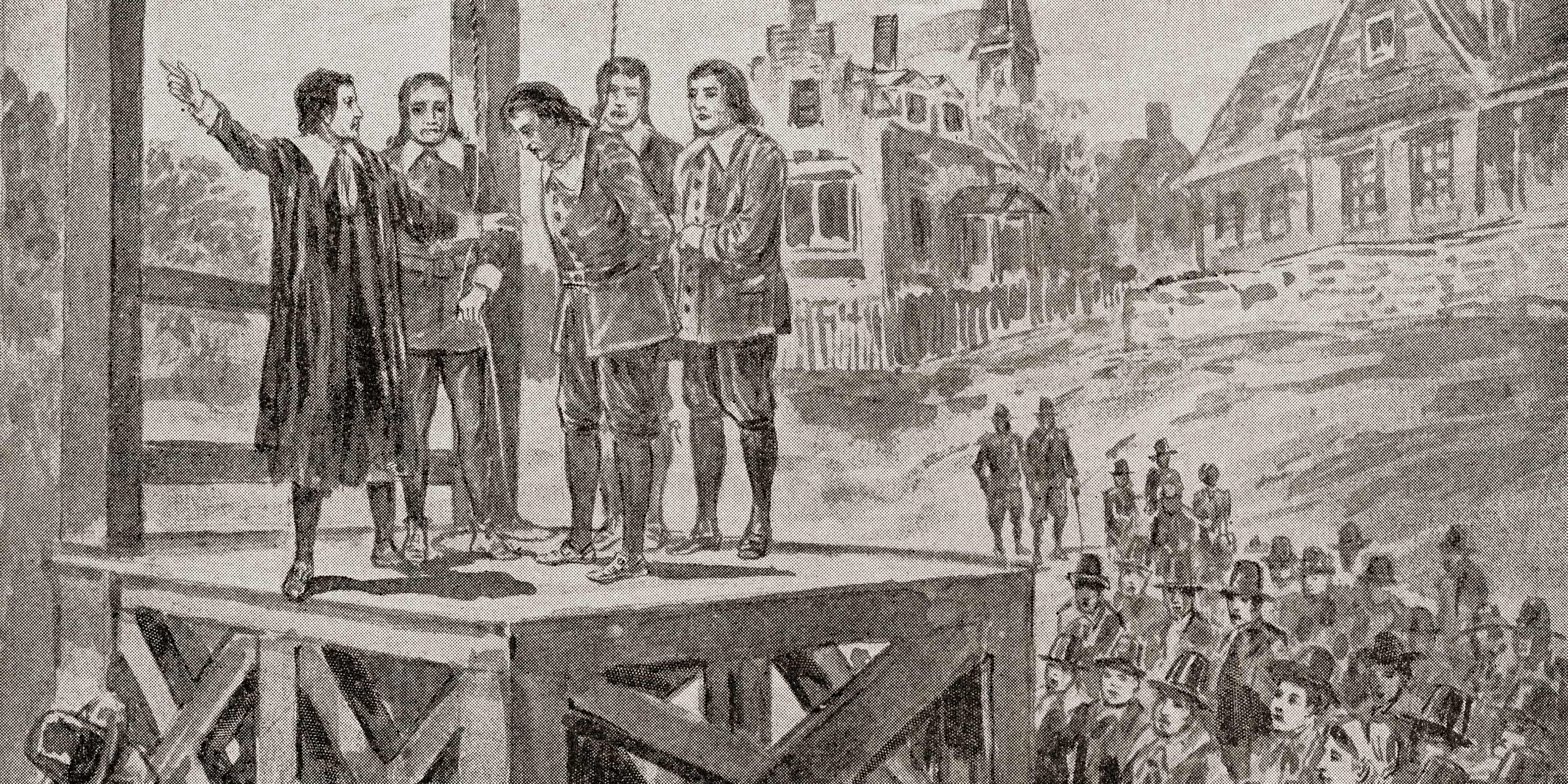
The climax of John Billington’s turbulent life occurred in the late summer of 1630. Following a long-running, unspecified feud, Billington ambushed young John Newcomen in the woods, shooting him with a musket. Newcomen died of his wounds shortly thereafter. The act of violence was a profound shock to the close-knit Plymouth community. Under English common law, the colony was technically required to provide a fair trial, but the magistrates faced a significant legal dilemma. Did they have the sovereign authority to execute one of their own citizens without direct judicial oversight from the English Crown? To ensure their actions were legally and morally defensible, Governor Bradford and his magistrates consulted with the leaders of the newly established, highly influential Massachusetts Bay Colony in Boston. The Puritan leaders in Boston gave their firm consensus: the land must be purged from blood to maintain divine favor and social order. Consequently, Billington was tried by a grand jury and a petty jury of Plymouth magistrates. Found guilty by plain and notorious evidence, John Billington was sentenced to death and hanged in September 1630, marking the first execution for murder in English-speaking America.
Long-Term Impact on the American Legal System
The trial and execution of John Billington set profound legal precedents that shaped the evolution of the American justice system. First, it established the principle of local judicial autonomy. By executing Billington without waiting for royal assent from London, the Plymouth magistrates demonstrated that colonial governments possessed the sovereign right to enforce capital punishment and maintain law and order within their borders. This early assertion of legal independence laid the groundwork for the decentralized, state-level legal systems that would later characterize the United States. Furthermore, the collaboration between Plymouth and the Massachusetts Bay Colony marked an early precursor to inter-colonial legal cooperation, showing that early American settlements recognized the need for shared ethical standards and mutual judicial support in times of crisis.
Fascinating, Lesser-Known Facts About the Billingtons
- A Brush with Total Annihilation: If fourteen-year-old Francis Billington had successfully ignited the entire barrel of gunpowder during his unauthorized play in 1620, the Mayflower would have suffered catastrophic structural damage or sunk entirely. This single act of teenage recklessness almost ended the Plymouth story before it even began.
- Diplomatic Healing with the Wampanoag: When young John Billington Jr. got lost in 1621 and was found by the Nauset Wampanoag, the Pilgrim leaders had to tread incredibly carefully. Just years earlier, an English captain named Thomas Hunt had kidnapped Nauset youths into slavery. By returning the lost boy safely and behung with beads, the Nauset demonstrated remarkable diplomatic magnanimity, helping to heal deep-seated historical wounds.
- Neck and Heels Discipline: The punishment John Billington senior nearly faced in 1621—having his neck and heels tied together—was a standard military and naval punishment designed to cause severe muscle cramping and public humiliation, serving as a substitute for formal prisons which the early colony lacked.
Why This History Still Matters Today
The tragedy of John Billington reminds modern observers that the founding of America was not a flawless, harmonious endeavor, but a messy human struggle filled with friction, lawlessness, and compromises. Today, discussions surrounding the rule of law, capital punishment, and the division between religious and secular governance remain highly relevant. Billington’s story highlights the timeless challenge of balancing individual liberty with collective survival—a debate that continues to shape American political and legal philosophy in the twenty-first century.
People Also Ask (FAQ)
Who was the first person executed in America?
While various colonial powers (like the Spanish and French) had carried out executions earlier, John Billington was the first English colonist to be legally executed for murder in Plymouth Colony in 1630.

Was John Billington a Pilgrim?
No, John Billington was not a Pilgrim (Separatist). He was a stranger, a non-Separatist colonist recruited by the Mayflower’s London investors to help build and secure the settlement.
What was the Mayflower Compact?
The Mayflower Compact was a historic agreement signed by the male passengers of the Mayflower in 1620, establishing a self-governing colony and pledging loyalty to their collective laws to prevent mutiny, especially from disgruntled strangers like the Billington family.
Conclusion
The life and death of John Billington offer a compelling window into the harsh realities of early colonial life. Far from the pristine, idealized myths of Thanksgiving and peaceful cohabitation, early Plymouth was a place where basic human passions, rivalries, and violent outbursts could threaten the very existence of a community. By examining the first convicted murderer in America, we gain a deeper, more authentic appreciation of the fragile, complex legal foundations upon which the American nation was built.


