The rise and fall of the Confederate States of America represents one of the most defining and traumatic chapters in the history of the United States. Spanning from 1861 to 1865, this unrecognized breakaway republic attempted to sever ties with the Union to preserve and expand the institution of chattel slavery. Led by Jefferson Davis from its capitals in Montgomery and later Richmond, the Confederacy plunged the nation into the American Civil War—a conflict that ultimately claimed hundreds of thousands of lives and fundamentally reshaped the constitutional, social, and economic fabric of America. Understanding the Confederacy is not merely a study of battlefield tactics, but a deep exploration of the ideological, political, and moral divides that continue to echo through modern American life.
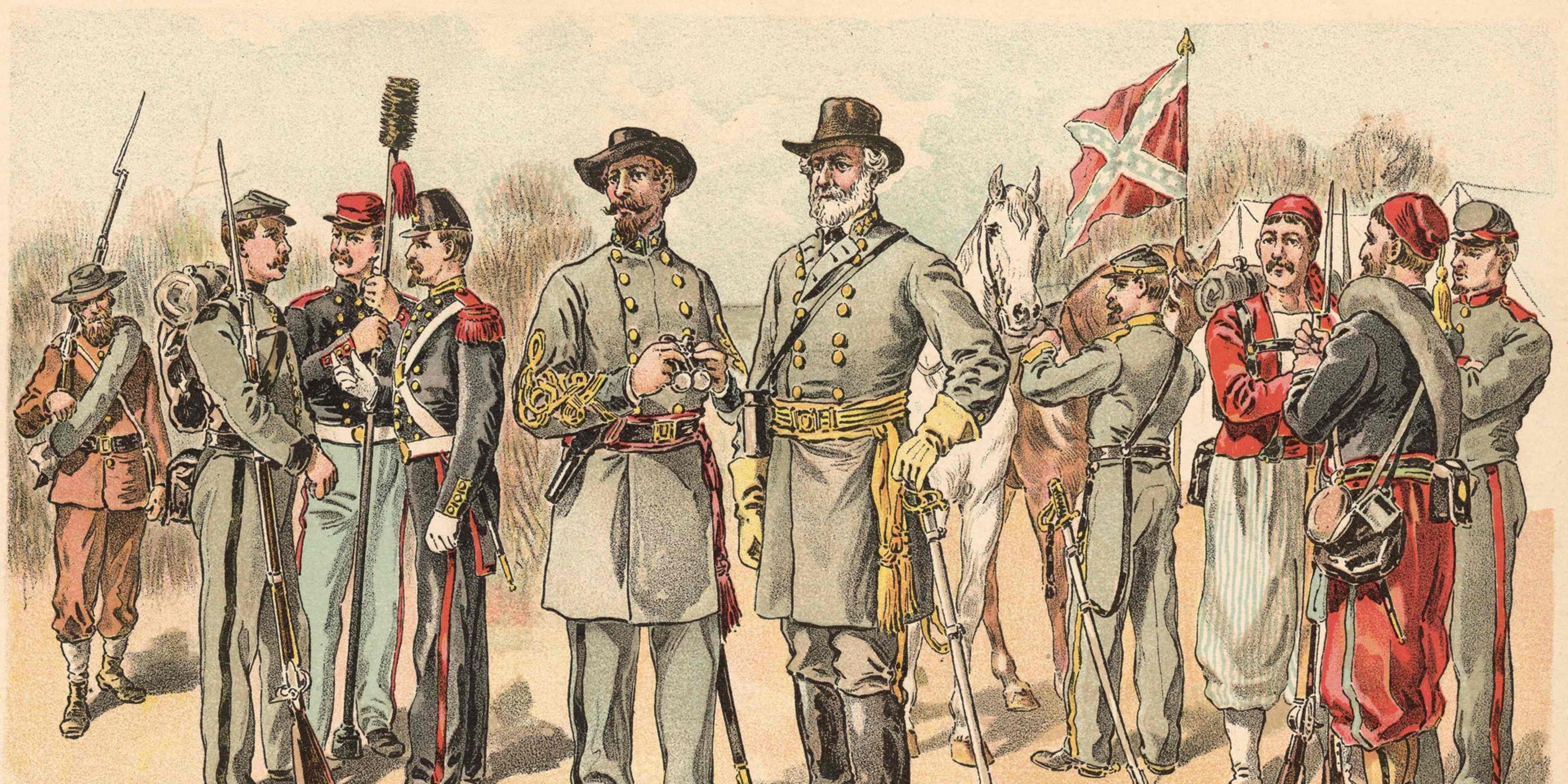
The Historical Background: A Nation Divided by Soil and Sovereignty
To understand the formation of the Confederate States of America, one must examine the widening chasm between the Northern and Southern states during the first half of the 19th century. While the North was rapidly industrializing, urbanizing, and shifting toward a wage-labor economy, the South remained intensely agrarian. This agrarian economy was almost entirely reliant on “King Cotton,” a cash crop cultivated through the brutal, systematic exploitation of millions of enslaved African Americans. As the nation expanded westward, the central political battleground became whether slavery would be permitted in new territories.
For decades, legislative compromises maintained a fragile peace, but the underlying tensions persisted. Southern politicians championed the doctrine of “states’ rights,” arguing that individual states held sovereign power superior to the federal government. However, this constitutional argument was primarily utilized to protect and perpetuate the institution of slavery. The political climate reached a boiling point in the 1850s, a decade marked by violent clashes in “Bleeding Kansas” and the controversial Dred Scott decision. You can read more about the profound political fractures of this era in our detailed guide on the events that led to the Civil War.
The ultimate catalyst for secession was the presidential election of November 1860. The victory of Abraham Lincoln, candidate of the newly formed anti-slavery Republican Party, was viewed by Southern elites as an existential threat. Although Lincoln pledged not to interfere with slavery where it already existed, Southern radicals—often called “Fire-Eaters”—predicted that the federal government would inevitably move to dismantle their agrarian way of life and emancipate enslaved workers.
Chronology of a Rebellion: Key Events and Milestones
The secession crisis quickly escalated from political rhetoric to armed conflict. Below is the chronological progression of the Confederacy’s short-lived existence:
- December 20, 1860: South Carolina becomes the first state to formally secede from the Union, declaring that the federal contract had been broken.
- January–February 1861: Mississippi, Florida, Alabama, Georgia, Louisiana, and Texas join South Carolina in seceding. On February 4, delegates from these states gather in Montgomery, Alabama, to draft a provisional constitution and establish the Confederate States of America.
- February 18, 1861: Jefferson Davis is inaugurated as the provisional President of the Confederacy in Montgomery.
- April 12, 1861: Confederate forces under General P.G.T. Beauregard open fire on the Union-held Fort Sumter in Charleston Harbor, South Carolina, officially igniting the American Civil War.
- April–May 1861: Following Lincoln’s call for troops to suppress the rebellion, four more Upper South states—Virginia, Arkansas, North Carolina, and Tennessee—secede, bringing the total number of Confederate states to eleven.
- May 1861: The Confederate capital is officially moved from Montgomery, Alabama, to Richmond, Virginia, positioning the rebel government just 100 miles from the Union capital of Washington, D.C.
- July 21, 1861: The First Battle of Bull Run (First Manassas) results in a resounding Confederate victory, crushing Northern hopes for a swift end to the rebellion.
- July 1863: The Confederacy suffers dual catastrophic defeats with the loss of the Battle of Gettysburg in Pennsylvania and the surrender of Vicksburg, Mississippi, giving the Union control of the Mississippi River.
- April 3, 1865: Richmond, the Confederate capital, falls to Union forces as the Confederate government flees southward.
- April 9, 1865: General Robert E. Lee surrenders his Army of Northern Virginia to Union General Ulysses S. Grant at Appomattox Court House, effectively ending organized Confederate military resistance.
- May 10, 1865: Confederate President Jefferson Davis is captured by Union troops in Irwinville, Georgia. By the end of the month, the last Confederate land forces surrender, and the Confederate States of America officially ceases to exist.
Key Figures of the Confederacy
The tragic trajectory of the Confederacy was shaped by several highly influential leaders, military commanders, and politicians whose legacies remain intensely debated today:
Jefferson Davis: The Reluctant Executive
A West Point graduate, veteran of the Mexican-American War, former U.S. Senator from Mississippi, and former U.S. Secretary of War, Jefferson Davis was chosen as the first and only President of the Confederate States of America. Although highly qualified on paper, Davis was often criticized for his rigid personality, micromanagement of military affairs, and inability to build consensus. He struggled to balance the ideology of “states’ rights” with the centralized executive authority required to wage a modern total war. Captured in 1865, he spent two years in prison but was never tried for treason.
Alexander H. Stephens: The Intellectual of Secession
Prior to the war, Georgia politician Alexander H. Stephens was actually a moderate who argued against immediate secession. However, once Georgia seceded, he aligned with the South and was elected Vice President of the Confederacy. In March 1861, Stephens delivered his infamous “Cornerstone Speech” in Savannah, Georgia, in which he explicitly declared that the “cornerstone” of the new Confederate government rested “upon the great truth that the negro is not equal to the white man; that slavery, subordination to the superior race, is his natural and normal condition.” His relationship with Davis grew increasingly hostile as the war dragged on, and Stephens frequently criticized Davis’s use of conscription and suspension of habeas corpus as unconstitutional overreaches.

Robert E. Lee: The Military Icon
Perhaps no figure is more central to the mythology of the Confederacy than General Robert E. Lee. A highly respected officer in the U.S. Army, Lee was offered command of the Union forces by President Lincoln. However, Lee declined, stating that he could not raise his sword against his native state of Virginia. Taking command of the Army of Northern Virginia in 1862, Lee achieved several brilliant tactical victories against numerically superior Union forces. Despite his military genius, Lee’s aggressive strategies ultimately depleted the South’s limited manpower, and his surrender in 1865 marked the symbolic end of the war.
Major Turning Points of the War
The fortunes of the Confederate States of America fluctuated wildly during the first two years of the war. However, by mid-1863, several key military turning points fundamentally broke the back of the rebellion.
The first major turning point occurred in the Eastern Theater. In June 1863, General Robert E. Lee launched an ambitious invasion of the North, hoping to secure diplomatic recognition from European powers and force the Union to negotiate for peace. This campaign culminated in the three-day Battle of Gettysburg. The resulting Union victory shattered Lee’s army and forced a retreat from which the Confederacy would never fully recover. To understand the immense tactical failures and strategic shifts of this monumental clash, explore our complete analysis of how the Battle of Gettysburg turned the tide of the conflict.
Simultaneously, in the Western Theater, Union General Ulysses S. Grant conducted a brilliant siege of Vicksburg, Mississippi. The city fell on July 4, 1863, giving the Union complete control of the Mississippi River and effectively slicing the Confederacy in two. From this point forward, the South was forced onto the defensive, struggling to cope with severe manpower shortages, economic strangulation via the Union naval blockade, and deteriorating infrastructure.
The Structural and Societal Causes of the Confederate Collapse
While military defeats were crucial, the Confederate States of America was also destroyed from within by severe structural, economic, and social contradictions. Unlike the highly industrialized North, the South had very few factories, a limited railroad network, and a volatile financial system. To fund the war, the Confederate government printed vast quantities of paper money, leading to hyperinflation that decimated the Southern home front. By 1863, food riots led by desperate women erupted in Richmond and other Southern cities.
Furthermore, the very ideology that birthed the Confederacy—extreme states’ rights—made it nearly impossible to govern. State governors regularly refused to send troops, supplies, or tax revenues to the central government in Richmond, arguing that Jefferson Davis was acting as a dictator. The imposition of the South’s first military draft (conscription) in 1862 further alienated the civilian population, especially because wealthy slaveowners who held twenty or more enslaved workers were exempted from service, sparking the bitter complaint that it was a “rich man’s war and a poor man’s fight.”
Lesser-Known Facts About the Confederacy
- The Multi-Ethnic Ranks: While the Civil War is often viewed through a rigid racial binary, the ranks of both armies contained surprising diversity. For instance, historians have documented the overlooked role of Asian soldiers in the Civil War, including individuals of Chinese and Filipino descent who fought on both the Union and Confederate sides, driven by local community ties or a desire for citizenship.
- The Late-Stage Desperation: In March 1865, faced with catastrophic manpower shortages, the Confederate Congress narrowly passed a law authorizing the recruitment and arming of enslaved black men. General Order 14 promised immediate freedom to enslaved people who volunteered to fight for the very government that had enslaved them. However, this desperate measure came too late to affect the outcome of the war.
- A President in Disguise? When Union cavalry captured Jefferson Davis in Georgia in May 1865, he was wearing his wife’s black overcoat and shawl to protect himself from the cold. Northern newspapers quickly seized upon this detail, publishing satirical cartoons depicting Davis attempting to escape in a women’s dress and petticoats—a myth that persisted for decades.
The Long-Term Impact on America and Why It Matters Today
The legacy of the Confederate States of America remains one of the most contentious topics in modern American discourse. The defeat of the Confederacy preserved the geographic integrity of the United States and led directly to the passage of the Reconstruction Amendments: the 13th Amendment, which abolished slavery; the 14th Amendment, which guaranteed equal protection and citizenship; and the 15th Amendment, which secured voting rights. These amendments fundamentally revolutionized the U.S. Constitution, shifting power from individual states to the federal government to protect civil rights.
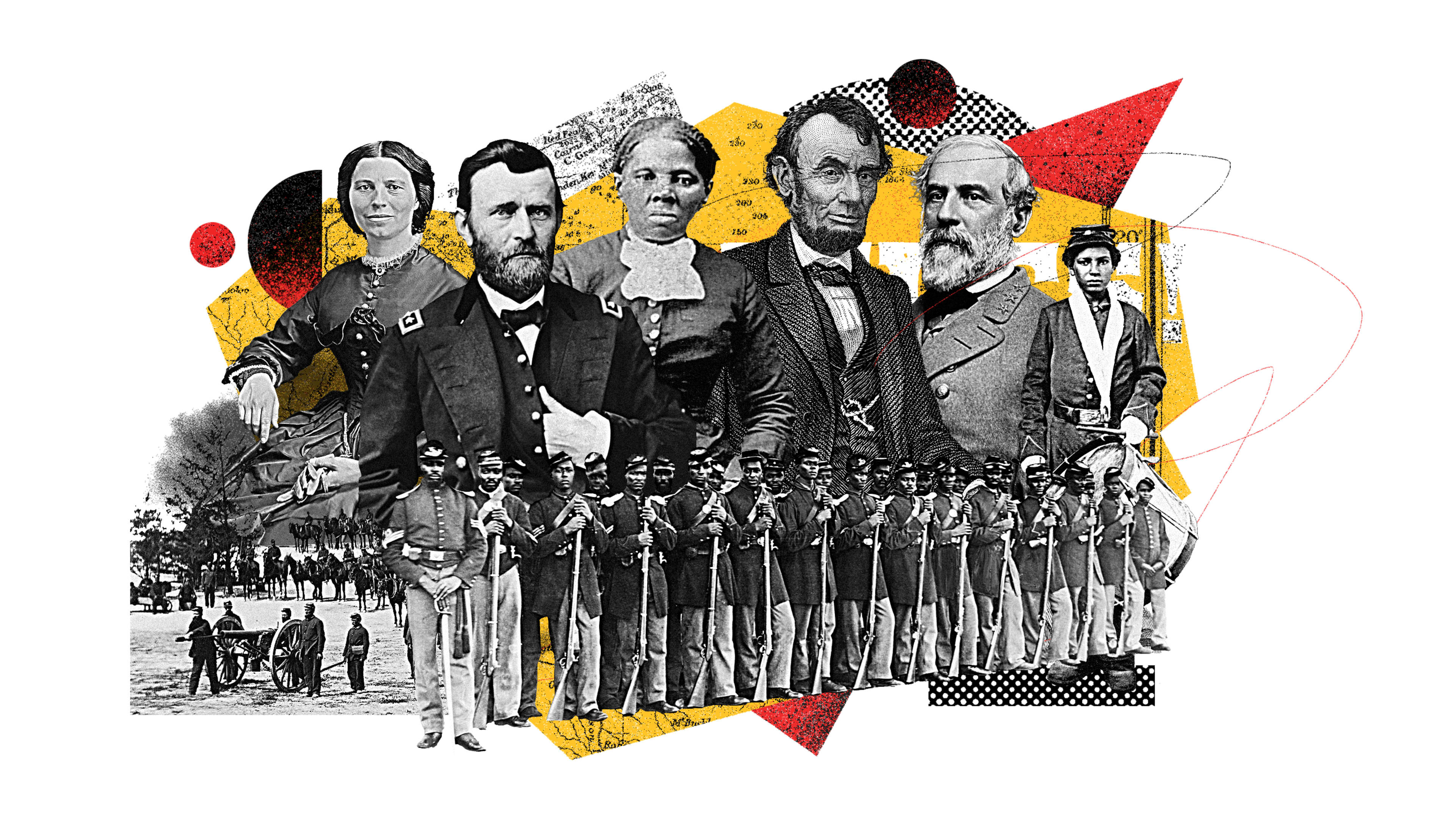
Today, the symbols, monuments, and ideology of the Confederacy continue to spark intense public debate. Issues surrounding the removal of Confederate statues and the renaming of military bases highlight the ongoing national struggle to reconcile with the historical realities of slavery and rebellion. For many, the study of the Confederacy is a vital reminder of the fragility of democracy, the high cost of division, and the enduring power of the American promise of equality for all.
People Also Ask
Why did the Confederate States of America secede?
The Southern states seceded primarily to protect and preserve the institution of slavery, which they believed was threatened by the election of Republican President Abraham Lincoln. They argued that individual states held sovereign rights that superseded the federal government, including the right to secede.
Who was the President of the Confederate States of America?
Jefferson Davis, a former U.S. Senator from Mississippi and U.S. Secretary of War, served as the first and only President of the Confederate States of America throughout its entire existence from 1861 to 1865.
What was the capital of the Confederacy?
The first capital of the Confederacy was Montgomery, Alabama, from February to May 1861. It was then moved to Richmond, Virginia, where it remained for the majority of the Civil War until the city fell to Union forces in April 1865.
How many states were in the Confederate States of America?
There were eleven states that officially seceded and joined the Confederacy: South Carolina, Mississippi, Florida, Alabama, Georgia, Louisiana, Texas, Virginia, Arkansas, North Carolina, and Tennessee.
Conclusion
The Confederate States of America was an unsustainable experiment born out of a desperate attempt to preserve a system of human bondage. From its inception in 1861 to its ultimate collapse in 1865, the Confederacy struggled against its own internal contradictions, economic isolation, and the overwhelming military power of the Union. By examining this critical era with historical accuracy and moral clarity, we gain invaluable insights into the structural foundations of modern America and the ongoing journey toward a more perfect union.


