In the aftermath of the American Civil War, a newly reunited yet deeply fractured nation faced the colossal challenge of reconstructing its civic identity, repairing its ruined infrastructure, and educating millions of newly emancipated citizens. It was during this turbulent era, on March 2, 1867, that President Andrew Johnson signed a bill creating the first-ever federal U.S. Department of Education. This legislative milestone represented a bold, unprecedented step in federal oversight, born from the scholarly ambition to elevate public schooling to a world-class standard and fueled by the passion of Northern abolitionists who championed equal rights for all. However, this historic agency was short-lived, surviving only a single year before being stripped of its departmental status by a hostile Congress. The rise and rapid fall of this early agency offer a captivating window into the post-war culture wars, demonstrating how the noble pursuit of universal literacy became a battleground for state sovereignty, systemic racism, and the enduring debate over the limits of national power.
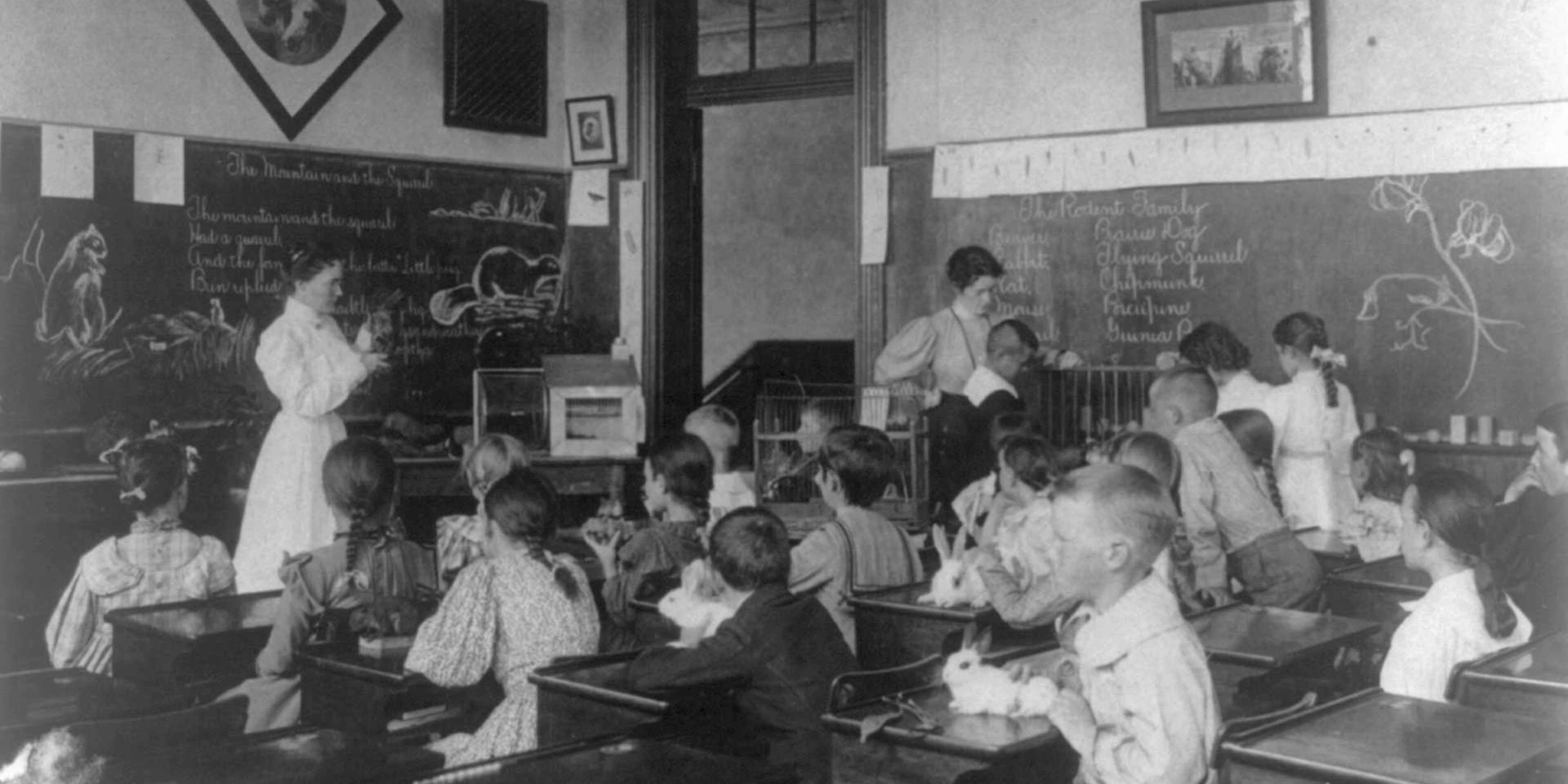
The Historical Background: Reconstruction and the Struggle for Literacy
To understand the sudden rise and swift demise of the first federal education department, one must look closely at the political climate of the Reconstruction era. For centuries, education in the American South was legally and socially restricted. Enslaved people were prohibited from learning to read or write, a systemic denial of education designed to suppress self-advocacy and maintain white supremacy. With the Union’s victory in 1865, the legal barriers to education collapsed, revealing a stark reality: roughly 90 percent of the formerly enslaved population was illiterate. There was an urgent, overwhelming hunger for education among free Black communities, who viewed literacy as the ultimate pathway to economic autonomy and political empowerment.
Simultaneously, the northern states were experiencing the powerful legacy of the “common school movement,” which began in the 1830s under the leadership of reformer Horace Mann. This movement argued that free, non-sectarian, state-funded public education was the bedrock of an informed electorate and a healthy democracy. Following the Civil War, victorious Union leaders and Radical Republicans in Congress sought to transplant this educational model to the South. They believed that establishing a national education framework was essential to rebuilding the devastated region and fully integrating the emancipated population. This ideological struggle directly mirrored early constitutional debates regarding federal overreach, echoing the question of whose vision of America won out, Hamilton’s or Jefferson’s in terms of federal centralization versus states’ rights.
The Key Figures Behind the First Education Bill
The creation of the first federal Department of Education was orchestrated by a handful of influential political and educational leaders who believed that the federal government had a moral duty to manage and support national learning. Chief among these was Ohio Representative James A. Garfield, a Union general and future President of the United States. Backed by a coalition of passionate abolitionists, Garfield introduced the bill to form the department in 1866, arguing that the nation could not successfully transition into a post-slavery democracy without a centralized system to track and encourage public literacy.
The champion appointed to lead this new department was its first commissioner, Henry Barnard. An esteemed educational reformer and close contemporary of Horace Mann, Barnard had spent decades revitalizing public school systems in Connecticut and Rhode Island. As commissioner, Barnard brought a vision of a unified national network that would gather detailed statistics, track school attendance, map educational taxes, and study the progress of newly established schools for Black children in the South. While Barnard possessed the intellect and academic pedigree to run the department, he had little political support from President Andrew Johnson. Johnson, a Southern Democrat who routinely opposed Reconstruction initiatives, signed the bill with extreme reluctance, allegedly reassured by advisors that the department would remain powerless and function as a mere empty gesture to appease the Radical Republicans.

A Chronological Timeline of Federal Education Policy
The evolution of the federal government’s role in American classrooms spans over a century of dramatic shifts, starting with the pioneering, ill-fated department of the 19th century:
- 1865: The American Civil War ends. The Freedmen’s Bureau is established, initiating the first major, albeit temporary, federal efforts to build schools and educate formerly enslaved people in the South.
- 1866: Representative Ignatius Donnelly of Minnesota and Representative James A. Garfield propose the creation of a federal education agency to the Joint Committee on Reconstruction.
- March 2, 1867: President Andrew Johnson signs the bill officially establishing the nation’s first U.S. Department of Education. Henry Barnard is sworn in as the first commissioner shortly after.
- July 20, 1868: Following fierce opposition from congressional critics, Congress slashes the department’s budget and demotes it to the “Office of Education” under the Department of the Interior.
- 1958: In response to the Soviet Union’s launch of Sputnik, Congress passes the National Defense Education Act, injecting federal funds into local science and math programs for national security.
- 1965: President Lyndon B. Johnson signs the landmark Elementary and Secondary Education Act (ESEA), initiating the first massive influx of federal funding into daily public school operations.
- October 17, 1979: President Jimmy Carter signs the Department of Education Organization Act, officially re-establishing the modern, cabinet-level U.S. Department of Education, which begins operations in May 1980.
Why Did the First Department Fall So Quickly?
The primary catalyst for the dismantling of the first Department of Education in 1868 was the fierce political pushback against Reconstruction. Former Confederate leaders and Southern Democrats vehemently associated the word “federal” with Northern military occupation. They viewed a national education department as an invasive mechanism designed to enforce racial equality and dictate the social order of the South. In their eyes, federal support for the education of formerly enslaved people was a threat to their political dominance. These tensions reflected a long history of national compromises over slavery, a bitter struggle that traces its roots to the early draft controversies of the nation, including the debated removal of Jefferson’s anti-slavery passage from the final draft of the Declaration of Independence.
Furthermore, critics from both the North and South argued that the federal government had no constitutional authority to intervene in public schooling, which had traditionally been the exclusive domain of local communities and states. Prominent politicians, such as New York Democrat Fernando Wood, argued that Congress was already overreaching in its post-war assistance to newly emancipated Black citizens. Opponents seized on the department’s small budget and limited scope, branding it an unnecessary and wasteful bureaucratic expense. Faced with escalating pressure, Congress voted in 1868 to demote the department to a minor office within the Department of the Interior, stripping it of its independence and effectively silencing federal authority in public education for more than a century.
Lesser-Known Facts About the 1867 Department
- The Four-Man Department: At its inception, the first Department of Education operated with a ridiculously small staff. It consisted of just four employees: Commissioner Henry Barnard and three clerks. Despite their grand national mission, they worked out of a small, cramped office with a minuscule budget.
- A “Yankee” Plot: Southern newspapers and politicians frequently vilified the department, referring to its initiatives as a “Yankee plot” to brainwash Southern youth and dismantle traditional local values. The regional animosity was so severe that some local school administrators refused to send educational statistics to Barnard’s office.
- A Warning in the Courant: In 1868, as Congress debated dissolving the department, the Hartford Daily Courant published a passionate editorial warning that dismantling the agency would damage America’s global reputation, arguing that collecting national data was essential to proving to European powers that the United States valued public enlightenment.
The Long-Term Impact and Why It Matters Today
The short-lived 1867 experiment laid the intellectual foundation for how the federal government would eventually approach public schooling. Though the department was demoted, the data and statistical models established by Henry Barnard proved that national tracking could identify glaring regional disparities in literacy and funding. Decades later, when the Supreme Court ruled against school segregation in Brown v. Board of Education (1954), the federal government utilized similar centralized data to enforce compliance and protect the civil rights of students.
Today, the battle over federal involvement in education remains one of the most volatile topics in American politics. The arguments heard in Congress in 1867—concerning federal overreach, local autonomy, parental rights, and wasteful spending—closely mirror modern debates, including calls by contemporary politicians to eliminate the modern Department of Education. Understanding this historical precedent helps us appreciate how the fundamental question of who controls America’s classrooms remains deeply tied to the nation’s ongoing debate over states’ rights and social equity. This ongoing struggle for educational control forces us to look back at the founding fathers’ original plans and documents, which left education out of the Constitution, thereby ensuring it would remain a permanent battleground for generations to come.
People Also Ask (PAA)
When was the first US Department of Education created?
The first federal U.S. Department of Education was established on March 2, 1867, when President Andrew Johnson signed the legislation into law. However, it was not a cabinet-level department and was quickly downgraded to an office the following year.
Why was the first Department of Education demoted?
The first department was demoted due to intense political opposition during the Reconstruction era. Southern politicians and northern critics argued that a federal education department was a constitutional overreach, an unnecessary expense, and an invasive attempt to dictate local schooling, particularly regarding the education of newly freed enslaved people.
Who was the first U.S. Commissioner of Education?
Henry Barnard, a prominent 19th-century educational reformer and advocate of the common school movement, served as the first U.S. Commissioner of Education from 1867 to 1870.
How does the 1867 department differ from the modern one?
The 1867 department was primarily tasked with gathering statistics and data on schools nationwide and had only four employees. The modern Department of Education, established in 1979 under President Jimmy Carter, is a massive cabinet-level agency responsible for administering billions of dollars in federal funding, managing student loans, and enforcing federal civil rights laws in schools.
Conclusion: The Enduring Legacy of 1867
The rise and fall of America’s first Department of Education serves as a powerful historical mirror. Born out of a progressive Reconstruction-era dream to foster a literate, unified, and equal electorate, it was quickly brought down by the fierce political currents of regionalism, racial prejudice, and a deeply ingrained suspicion of federal authority. While Henry Barnard’s department lasted only a year, the questions it raised about the federal government’s role in local classrooms remain completely unresolved. As modern political battles over school curricula, federal funding, and local control continue to dominate headlines, we are reminded that the legacy of the 1867 educational experiment is still being written in classrooms across the country today.


