For centuries, African Americans have stood on the front lines of United States history, fighting bravely in every major conflict from the earliest colonial skirmishes to modern-day strategic operations. Yet, their military service was defined by a profound and unique paradox: they fought to secure freedom and democracy abroad for a nation that routinely denied them those very same fundamental rights at home. This dual battle—for victory on the battlefield and for civil rights on the home front—shaped the course of American history. From the revolutionary struggles of the late 18th century to the desegregation of the armed forces in 1948, the story of Blacks in the military is not merely a chapter in martial history, but a central pillar of the long, ongoing struggle for civil rights and national identity. To understand the evolution of American democracy, one must look closely at the sacrifices, heroism, and systemic challenges faced by Black servicemen and women throughout history.
The Historical Background: From Colonial Militia to Desegregated Forces
Long before the formal establishment of the United States, Black individuals—both enslaved and free—participated in colonial defense. In the early colonial eras, fear of slave revolts often led to laws barring Black men from carrying arms. However, when conflicts arose, practical necessity frequently overrode racial prejudice. During the early colonial wars and the American Revolution, African Americans took up arms, believing that their loyalty and bravery on the battlefield would inevitably lead to their emancipation and equal status.
As the nation expanded, this pattern repeated itself: initial exclusion, followed by desperate recruitment during times of national crisis, and ultimately, a return to systemic discrimination once the peace was won. This cycle was particularly pronounced during the American Civil War, where the Union’s eventual recruitment of Black soldiers proved to be a decisive factor in securing victory over the Confederacy. Over the centuries, these struggles paved the way for remarkable Black heroes throughout US military history, whose contributions laid the groundwork for modern civil rights.
Causes and Context: The Fight for Freedom on Two Fronts
The underlying sociopolitical dynamics that drove African Americans to enlist were deeply complex. For enslaved individuals, the primary catalyst was the promise of personal freedom. During the Revolutionary War, both the British and the Patriots offered freedom to enslaved men who joined their ranks. Exploring how enslaved men who fought for the British were promised freedom reveals the agonizing choices they had to make to secure their liberty.
For free Black citizens, military service was viewed as an undeniable assertion of citizenship. If they could bleed for their country, how could their country deny them the right to vote, own property, or live free from the terror of racial violence? This concept of the “Double V” campaign during World War II—victory over fascism abroad and victory over racism at home—became the philosophical driving force behind 20th-century Black military service, directly fueling the mid-century Civil Rights Movement.
Chronological Timeline of African American Military Milestones
- March 5, 1770: Crispus Attucks, a man of African and Native American descent, becomes the first casualty of the American Revolution at the Boston Massacre.
- 1775-1783: Over 5,000 Black soldiers serve in the Continental Army, fighting in integrated units during the Revolutionary War.
- January 1, 1863: President Abraham Lincoln issues the Emancipation Proclamation, officially authorizing the enlistment of African American men in the Union Army.
- July 18, 1863: The 54th Massachusetts Volunteer Infantry Regiment leads a heroic assault on Fort Wagner, demonstrating unmatched valor and proving the capabilities of Black troops.
- 1866: Congress passes the Army Reorganization Act, establishing six all-Black peacetime regiments, famously known as the Buffalo Soldiers.
- 1917-1918: The 369th Infantry Regiment, nicknamed the “Harlem Hellfighters,” serves with distinction on the front lines of World War I under French command.
- 1941-1945: The Tuskegee Airmen break racial barriers in the sky, flying thousands of successful missions during World War II, while over one million Black Americans serve in various branches.
- July 26, 1948: President Harry S. Truman signs Executive Order 9981, officially desegregating the United States Armed Forces.
Prominent Historical Figures and Their Legacies
William H. Carney (1840–1908)
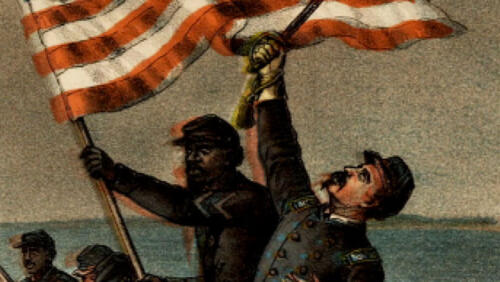
Born into slavery, William H. Carney escaped to Massachusetts and enlisted in the legendary 54th Massachusetts Volunteer Infantry. During the bloody Battle of Fort Wagner in 1863, when the regiment’s flag bearer was shot down, Carney caught the American flag and carried it to the fort’s parapet despite suffering multiple severe wounds. For his extraordinary valor, Carney became the first African American to be awarded the Medal of Honor, cementing his legacy as an icon of military courage.
Cathay Williams (1844–1893)
Cathay Williams was born a slave and later worked as a house servant for Union troops during the Civil War. Desiring to serve her country and earn a living independently, she disguised herself as a man under the pseudonym “William Cathay” and enlisted in the 38th U.S. Infantry Regiment in 1866. She became the first and only documented female Buffalo Soldier to serve, highlighting the extreme lengths to which Black women went to secure independence and serve their nation.
General Benjamin O. Davis Sr. (1877–1970)
Benjamin O. Davis Sr. entered the military during the Spanish-American War and rose steadily through the ranks despite facing rampant institutional racism. In 1940, he became the first African American general in the United States Army. His leadership paved the way for his son, Benjamin O. Davis Jr., to lead the famed Tuskegee Airmen and eventually become the first Black general in the U.S. Air Force. Together, they demonstrated supreme competence and leadership, demolishing prejudiced arguments about military hierarchy.
Major Turning Points That Reshaped the Armed Forces
The evolution of Black military participation was marked by three pivotal turning points that altered the trajectory of the nation:
- The Rise of the 54th Massachusetts Infantry: Their heroic charge at Fort Wagner shattered the widely held, prejudiced belief that Black men lacked the courage or discipline to fight in organized combat. This success prompted massive Union recruitment efforts, bringing nearly 180,000 Black soldiers into the Union army.
- The Tuskegee Airmen and the “Double V” Campaign: During World War II, the legendary all-Black 332nd Fighter Group (the Tuskegee Airmen) proved that African Americans could master the most complex military technology of their day. Their stellar record of protecting allied bombers from enemy aircraft forced military brass to reconsider segregationist policies.
- Executive Order 9981: In 1948, faced with growing political pressure and the glaring hypocrisy of fighting fascism with a segregated military, President Harry S. Truman bypassed a hostile Congress to officially desegregate the armed forces. This action made the military one of the first major American institutions to formally adopt integration, serving as a blueprint for the wider civil rights victories of the 1950s and 60s.
The Long-Term Impact on American Society
The integration of the military had profound, far-reaching social and political consequences. Historically, military service has been a recognized marker of full citizenship. By proving their patriotism and strategic necessity on the global stage, African American veterans returned home with a renewed sense of empowerment and organization. Veterans of World War II and the Korean War became the foundational leaders, organizers, and legal strategists of the Civil Rights Movement, utilizing their tactical training and leadership skills to fight Jim Crow laws.
Furthermore, the desegregation of military bases in the American South created integrated federal enclaves within deeply segregated states. This juxtaposition accelerated cultural integration and forced local communities to slowly adapt to the realities of equal rights, fundamentally reshaping the socioeconomic fabric of the United States.
Fascinating Lesser-Known Facts About Black Military History
- The Harlem Hellfighters’ Legendary Endurance: The 369th Infantry Regiment spent 191 days in front-line trenches during World War I—more time than any other American unit. They never lost a foot of ground to the enemy or had a soldier captured, and they were awarded the French Croix de Guerre for their collective heroism.
- The Secret Code of the Triple Nickles: The 555th Parachute Infantry Battalion, known as the “Triple Nickles,” was the military’s first all-Black airborne unit. During World War II, instead of overseas combat, they were deployed on a top-secret mission in the Pacific Northwest called “Operation Firefly,” jumping into burning forests to disarm dangerous Japanese balloon bombs.
- A Civil War Spy Network: Mary Elizabeth Bowser, a highly educated, formerly enslaved woman, worked as a Union spy by securing a job as a servant in the Confederate White House of Jefferson Davis. Because she was presumed illiterate, Confederate officials spoke freely around her, allowing her to memorize critical military secrets and pass them directly to Union commanders.
Why This History Matters in the Modern Era
Today, the legacy of African American service members is highly relevant as contemporary discussions focus on diversity, equity, and inclusion within national defense. Modern military leaders recognize that a diverse force is a strategic advantage. Examining the systemic barriers that historical figures overcame helps current institutions identify and dismantle ongoing disparities. Ultimately, honoring this history is about acknowledging that the rights and freedoms enjoyed by Americans today were paid for by the blood and sacrifice of individuals who were, for generations, denied those very liberties. Their legacy is a testament to the resilient pursuit of the American democratic ideal.
People Also Ask (FAQs)
Who was the first official Black unit in the US military?
The 54th Massachusetts Volunteer Infantry Regiment, established in 1863 following the Emancipation Proclamation, was one of the first official Black units in the U.S. armed forces. Prior to this, individual Black servicemen fought in various localized militias and earlier naval battles, but the 54th was a highly publicized, formal regiment that proved the vital military capability of African American troops.
What was the Double V Campaign?
The Double V Campaign was a patriotic and civil rights movement initiated by the African American community during World War II. It called for two victories: “Victory over fascism abroad” and “Victory over racism and discrimination at home.” This campaign helped build the momentum that eventually led to the modern Civil Rights Movement.
When was the US military officially desegregated?
The United States Armed Forces were officially desegregated on July 26, 1948, when President Harry S. Truman signed Executive Order 9981. This order mandated equal opportunity and treatment for all members of the military, regardless of race, color, religion, or national origin.
Conclusion: A Legacy of Unyielding Service
The story of Blacks in the military is a powerful narrative of resilience, patriotism, and social transformation. By consistently stepping forward to defend a nation that did not fully defend them, African American soldiers played a pivotal role in redefining what it means to be an American. Their legacy on and off the battlefield continues to inspire and instruct, proving that the struggle for freedom is a continuous, collective journey. As we look to the future, the courage of these historical trailblazers remains a shining beacon of commitment, justice, and democratic progress.


