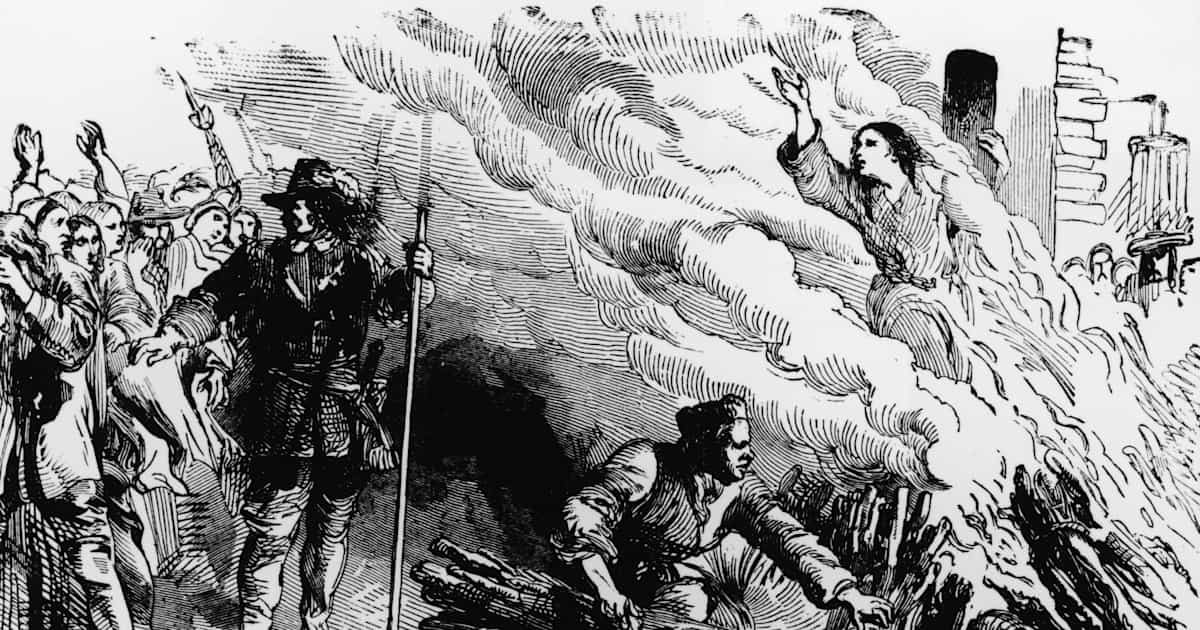
The Salem Witch Trials of 1692 remain one of the most chilling, misunderstood chapters in early American history. For centuries, popular culture has perpetuated the dramatic image of condemned “witches” tied to wooden posts, engulfed in raging flames against a New England sky. But did these infamous executions actually involve fire? Were witches really burned at the stake during the Salem Witch Trials? To understand the reality behind the myth, we must travel back to the claustrophobic, deeply religious world of Puritan Massachusetts. Here, a deadly mixture of isolation, religious extremism, political instability, and personal rivalries exploded into a legal tragedy. Debunking the myth of burning at the stake does not diminish the horror of Salem; rather, it reveals a far more complex system of colonial law, theology, and social hysteria. By examining the cold, hard facts of how these trials were conducted and how the accused actually met their fates, we gain critical insight into the fragility of justice and the origins of American jurisprudence.
Historical Background: The Crucible of Puritan New England
To understand how the Salem Witch Trials occurred, one must first look at the tense environment of the Massachusetts Bay Colony in the late 17th century. In 1692, Salem Village (now Danvers) and Salem Town were reeling from several crises. The colony had recently lost its original charter, creating political instability. Additionally, King William’s War was raging on the northern frontier, driving traumatized refugees into Salem and heightening fears of Native American attacks.
Deeply religious Puritans believed that the devil was actively working to destroy their holy experiment in the New World. Although Salem is the most famous location of this hysteria, it was not the first instance of suspicion. Decades earlier, Connecticut and Massachusetts had already prosecuted individuals for sorcery, a history detailed in the account of the first American witch hunt. In Salem, the spark was lit in January 1692 when young girls, including Abigail Williams and Betty Parris, began exhibiting inexplicable fits, contortions, and screaming episodes.
Key Events Timeline of the Hysteria
The tragedy of Salem unfolded rapidly over a period of roughly one year. Below is a chronological breakdown of the pivotal moments:
- January 1692: Betty Parris (9) and Abigail Williams (11) show signs of mysterious physical afflictions. Local physician William Griggs diagnoses them as victims of “the Evil Hand.”
- Late February 1692: Under intense pressure, the girls name their first tormentors: Tituba, an enslaved Caribbean woman; Sarah Good, a homeless beggar; and Sarah Osborne, an elderly, impoverished woman.
- March 1, 1692: Magistrates Jonathan Corwin and John Hathorne conduct public examinations. Tituba confesses to seeing the devil and claims there are other witches in the community, fueling the spreading paranoia.
- May 27, 1692: Governor William Phips establishes a special Court of Oyer and Terminer to hear the growing backlog of witchcraft cases.
- June 10, 1692: Bridget Bishop, the first accused person to be tried, is hanged on Gallows Hill.
- September 19, 1692: Giles Corey is pressed to death with heavy stones over three days for refusing to stand trial.
- October 1692: Influential ministers, including Increase Mather, condemn the use of “spectral evidence” (dreams and visions of spirits). Governor Phips dissolves the Court of Oyer and Terminer.
- May 1693: Phips pardons all remaining prisoners accused of witchcraft, officially ending the trials.
Key Figures: Accusers, Judges, and the Condemned
The trials involved a cast of characters whose actions continue to fascinate historians. Understanding who were the main accusers is essential to unraveling the psychological and social dynamics of the crisis.
The primary accusers included Abigail Williams, Ann Putnam Jr., and Elizabeth Hubbard. These young girls wielded unprecedented power in a society that typically demanded absolute silence and obedience from children.
On the judicial bench sat key figures like Chief Justice William Stoughton, a zealous prosecutor who actively permitted “spectral evidence”—the claim that an accused person’s specter or spirit was attacking a victim, even if the physical person was elsewhere.
The victims were diverse but often marginalized. Bridget Bishop, a tavern owner with a feisty reputation, was the first to hang. Giles Corey, a stubborn 81-year-old farmer, chose to endure the agonizing torture of pressing rather than submit to a rigged trial, thereby preserving his estate for his heirs. Rebecca Nurse, an elderly, pious grandmother, was initially acquitted, but the screaming of the girls forced the judges to reconsider, leading to her eventual execution. To explore these personal narratives deeper, there are several outstanding books that take you inside the Salem witch trials that vividly reconstruct their lives and final days.
The Legal Reality: Why No One Was Burned at the Stake
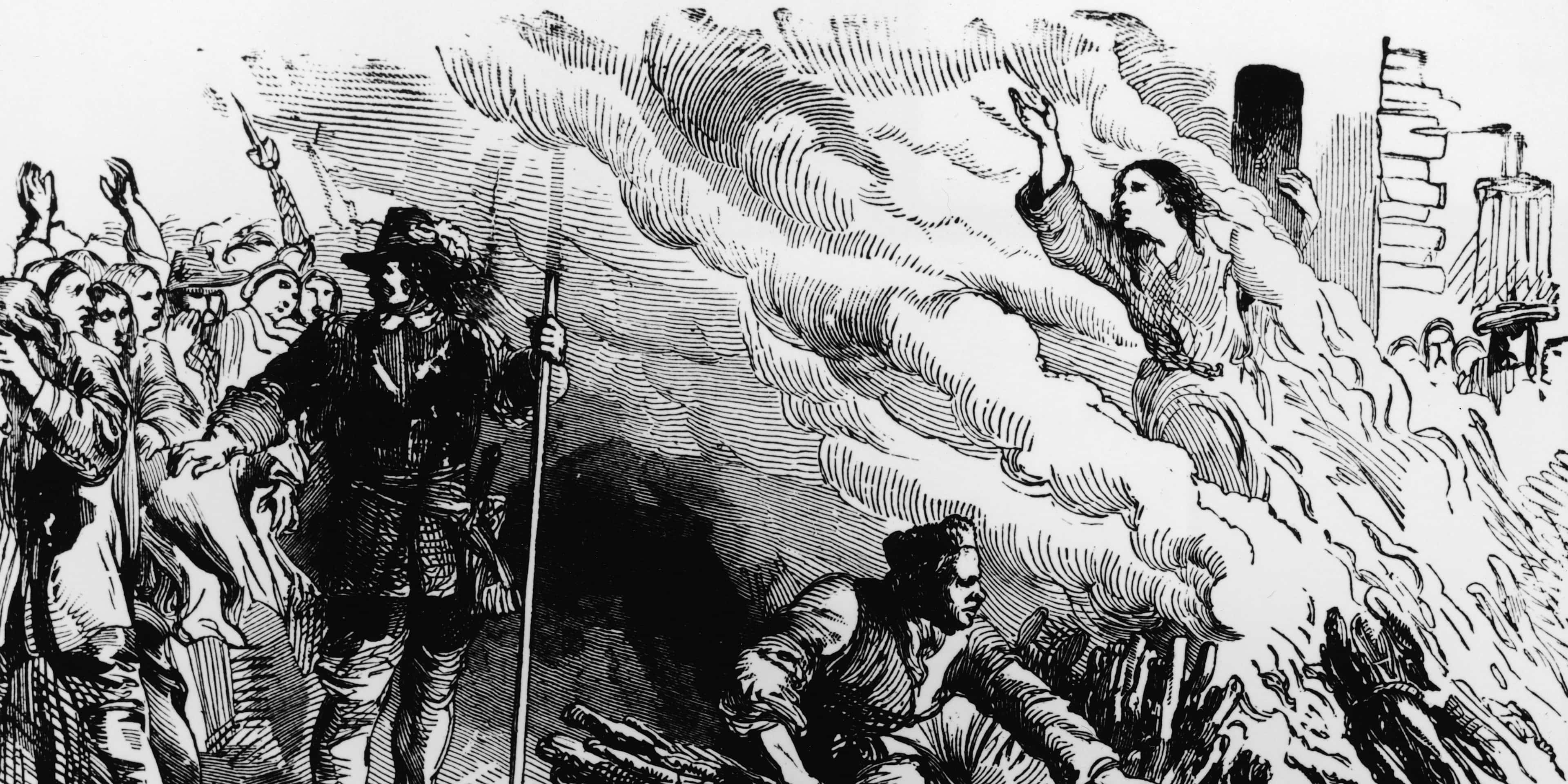
The persistent belief that Salem’s “witches” were burned at the stake is a historical fallacy. Under English common law, which governed the Massachusetts Bay Colony, witchcraft was classified as a felony, not heresy. Felonies were capital crimes punishable by hanging, not burning.
In continental Europe, particularly under the jurisdiction of the Holy Roman Empire and regions influenced by the Inquisition, witchcraft was prosecuted as heresy against the Church. European civil law codes, such as the Constitutio Criminalis Carolina, designated burning at the stake as the standard execution method for those deemed to have made pacts with the devil.
Therefore, of the 20 people executed during the Salem Witch Trials:
- Nineteen individuals (14 women and 5 men) were executed by hanging on Gallows Hill.
- One individual, Giles Corey, was pressed to death (peine forte et dure) under heavy stones.
- Several others, including Sarah Osborne and Roger Toothaker, died in the squalor of Boston and Salem jails while awaiting trial.
Not a single person was burned alive in Salem. The bodies of the hanged were quickly cast into shallow, unmarked graves, as they were denied proper Christian burials.
Major Turning Points: The Fall of Spectral Evidence
The collapse of the witch trials resulted from a growing realization among intellectual and spiritual leaders that the court’s standards of evidence were dangerously flawed. The reliance on spectral evidence meant that anyone could be accused based on another person’s dream.
By autumn 1692, the accusations had reached the highest echelons of society, including Lady Mary Phips, the wife of the Governor. This prompted prominent Boston minister Increase Mather to publish his influential work, Cases of Conscience Concerning Evil Spirits, in which he famously declared: “It were better that ten suspected witches should escape, than that one innocent person should be condemned.” This philosophical shift led to the dissolution of the court and the ultimate restoration of sanity to the colony.
Long-Term Impact on America’s Legal and Cultural Identity
The legacy of the Salem Witch Trials profoundly shaped the development of American jurisprudence. The outrage over the Salem executions directly contributed to the adoption of key legal concepts that Americans take for granted today. These include:
- The Presumption of Innocence: The transition from “guilty until proven innocent” to “innocent until proven guilty” became a cornerstone of the American legal system.
- The Right to Legal Representation: Accused individuals in Salem had no defense attorneys; subsequent reforms ensured the right to counsel.
- Separation of Church and State: The trials demonstrated the catastrophic dangers of a theocracy where religious dogma dictates secular law. This realization heavily influenced the Framers of the United States Constitution and the Bill of Rights.
Lesser-Known Facts About the Salem Witch Trials
While most are familiar with the basic story of the hysteria, several bizarre and lesser-known historical details are often overlooked:
- Two Dogs Were Executed: Puritans believed that animals could also be possessed or act as familiars for witches. Two dogs were accused, tried, and executed in Salem for their alleged involvement in the occult.
- Giles Corey’s Final Words: As heavy stones were piled onto his chest to force a plea, the elderly Corey famously refused to yield. When asked for his plea, he repeatedly cried out, “More weight!” until he suffocated.
- No Confessed Witches Were Hanged: Ironically, if an accused person confessed to practicing witchcraft and begged for forgiveness, their execution was delayed so they could testify against others. Those who maintained their innocence, refusing to lie to God, were the ones sent to the gallows.
Why the Salem Witch Trials Matter Today
The term “witch hunt” remains a powerful metaphor in modern political and social discourse. It is frequently invoked to describe moral panics, scapegoating, and systemic rushes to judgment where public hysteria overrides objective evidence and due process. The Salem Witch Trials stand as a timeless psychological case study in how fear can be weaponized to suppress dissent and persecute vulnerable populations. Understanding the cold legal realities of Salem reminds us that the preservation of civil liberties requires constant vigilance against collective paranoia.
People Also Ask
How many people died in the Salem Witch Trials?
A total of 20 people were executed: 19 were hanged, and 1 was pressed to death. Additionally, at least 5 individuals died in prison, and several dogs were executed.
Who was the first person executed in Salem?
Bridget Bishop was the first person to be executed during the trials, hanged on Gallows Hill on June 10, 1692.
Why did the Puritans believe in witches?
Puritans held a literal interpretation of the Bible, which contains passages warning against witchcraft. They believed the physical world was a constant battleground between God and the Devil, making supernatural events a plausible reality to them.
Conclusion
The myth that Salem’s witches were burned at the stake is a conflation of European history and American lore. In truth, the victims of 1692 met their ends through hanging and torture, victims of an unchecked legal system fueled by mass hysteria. By separating historical fiction from legal fact, we can honor the memory of those who perished and appreciate the critical legal safeguards that emerged from one of America’s darkest hours.


