Throughout the tapestry of human history, few subjects have captured the public imagination quite as intensely as secret societies. From the early days of global exploration to the corridors of modern global power, these elusive organizations have operated in the shadows, fostering a unique blend of intrigue, suspicion, and curiosity. While conspiracy theories often connect them to major historical cataclysms—ranging from the French Revolution to the halls of modern governance—separating documented historical facts from wild speculation is vital for a true understanding of their impact. In American history, these groups have left an indelible mark, counting prominent military leaders, Founding Fathers, and global diplomats among their ranks. By analyzing the origins, rituals, and real-world influence of the Knights Templar, the Freemasons, the Bavarian Illuminati, Skull and Bones, and the Bilderberg Group, we can uncover how secret fraternities shaped the political, economic, and cultural landscapes of the modern world.
The Knights Templar: Crusaders, Bankers, and Martyrs
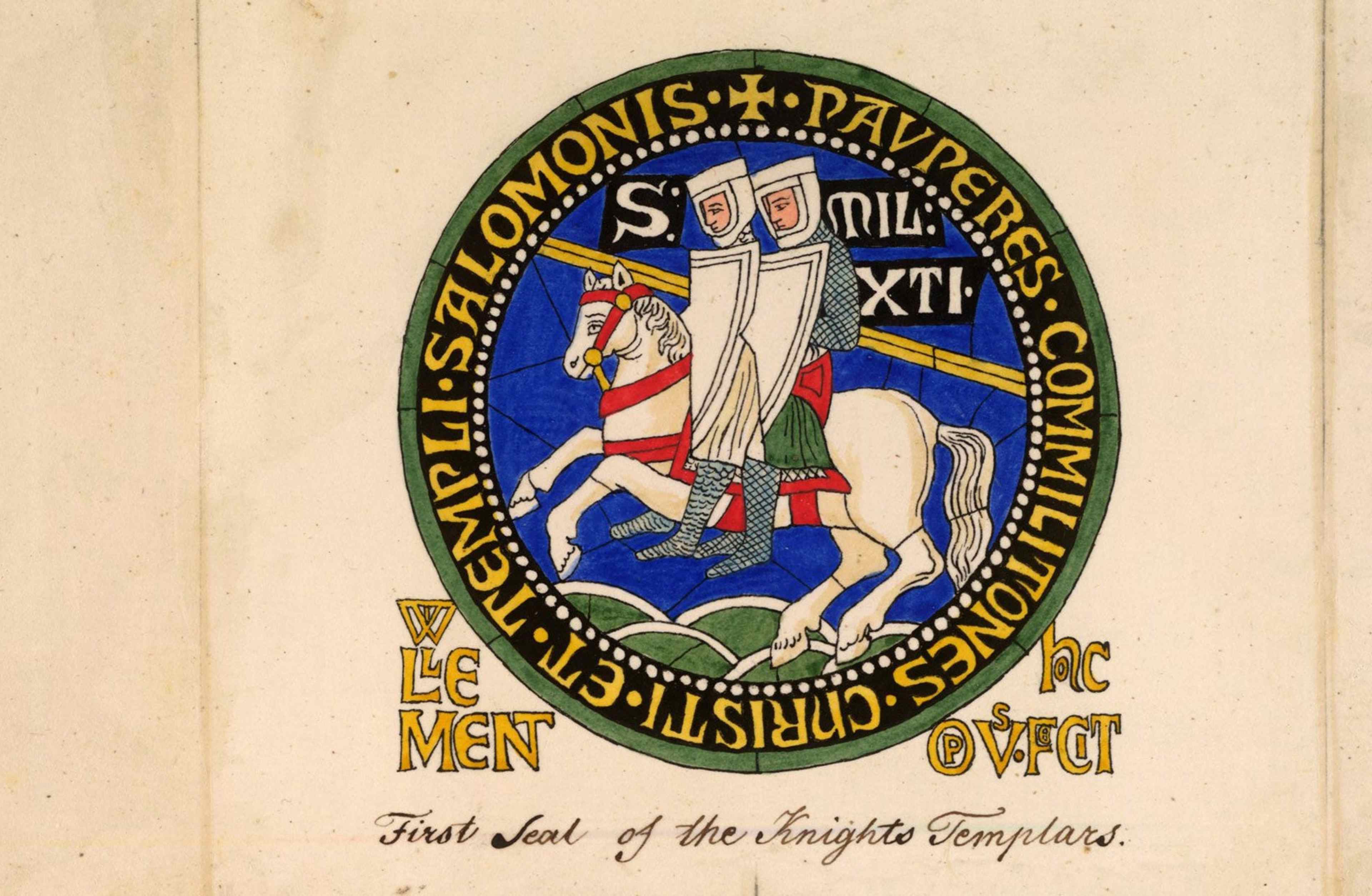
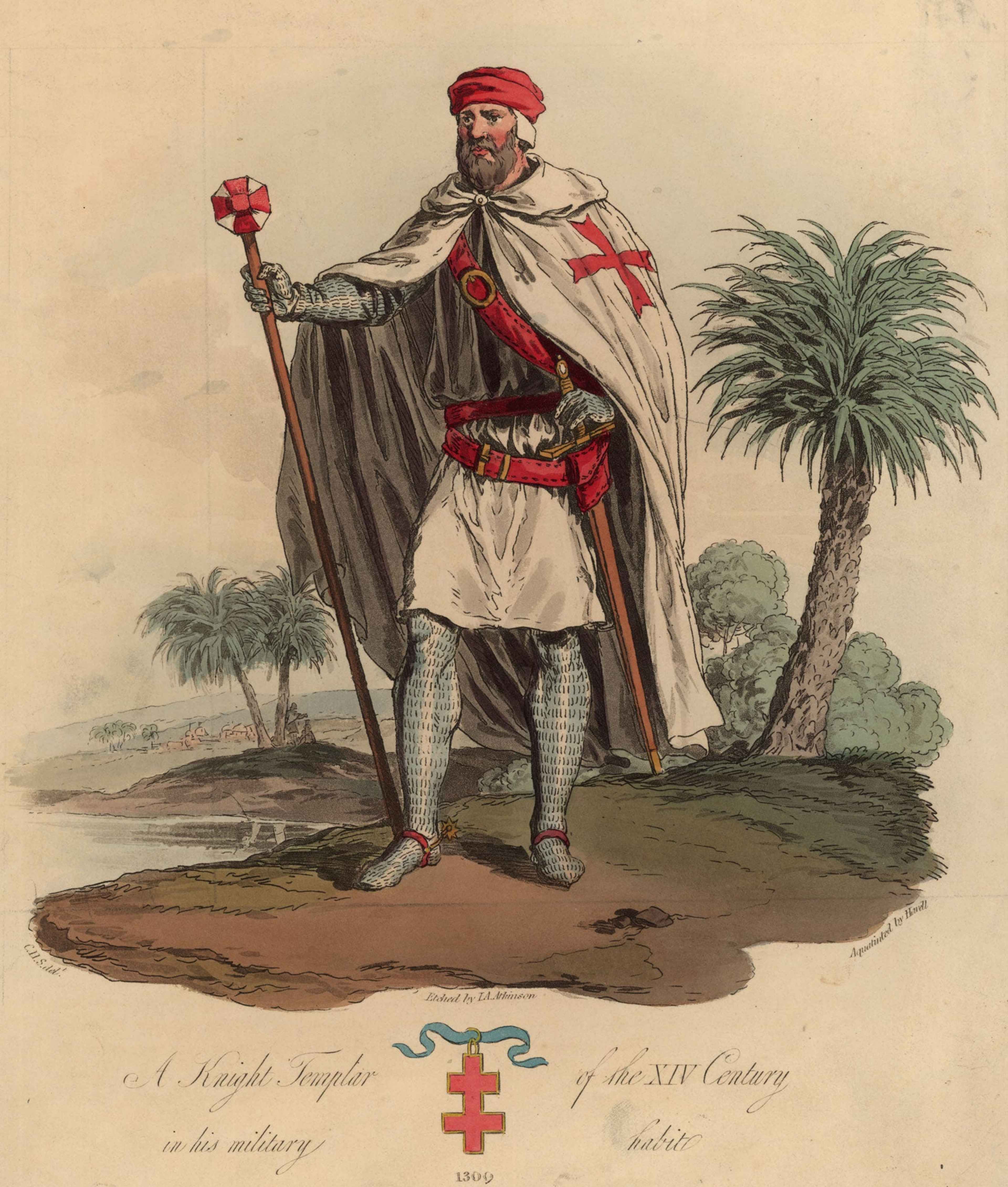
The story of the Knights Templar begins around 1118 in the aftermath of the First Crusade. Founded by a French knight named Hugues de Payens, the order was originally called the Poor Fellow-Soldiers of Christ and the Temple of Solomon. Their primary, noble mission was to protect Christian pilgrims traveling to the Holy Land. Headquartered at the legendary Temple Mount in Jerusalem, these warrior-monks swore strict vows of poverty, chastity, and obedience, abstaining from swearing, gambling, and alcohol.
However, the Templars soon evolved far beyond their humble origins. They established an innovative, transcontinental banking system that allowed pilgrims to deposit funds in their home countries and safely withdraw them in the Holy Land. This financial revolution transformed them into one of the wealthiest and most influential entities in Europe. In 1139, Pope Innocent II issued a Papal Bull exempting the order from paying taxes and declaring that they answered solely to the Pope, further solidifying their autonomy. At the peak of their influence, the Knights Templar owned the island of Cyprus, controlled a massive fleet of merchant and military ships, and lent enormous sums of money to European monarchs.
But this immense wealth ultimately became their undoing. After the Fall of Acre in 1291 marked the end of the Crusades, the Templars retreated to Paris. King Philip IV of France, heavily indebted to the order, plotted their downfall. On Friday, October 13, 1307—a date many believe inspired the modern superstition of Friday the 13th—Philip ordered the mass arrest of the Templars. Subjected to brutal torture, many confessed to heresy and depravity. In 1312, Pope Clement V formally dissolved the order, and its remaining wealth was redistributed. The dramatic collapse of the Templars birthed centuries of myths, with legends suggesting they hid the Holy Grail, the Shroud of Turin, or ancient treasure, themes that continue to inspire popular culture today.
Freemasonry and the Shaping of America
Perhaps no secret society has left a more visible imprint on the United States than the Freemasons. Tracing their ancestry back to the stonecutter guilds of medieval Europe, early masons used secret handshakes, signs, and tools of their trade—like the square and compass—to identify one another as they traveled between cathedral construction sites. The modern era of Freemasonry officially began in 1717 with the merger of four London lodges to form the Grand Lodge of England, quickly spreading across the Atlantic to the American colonies.
In the New World, Freemasonry flourished. The organization’s principles of rationalism, deism, and fraternity aligned beautifully with the social landscape, which was characterized by the surprising religious diversity of America’s 13 colonies. Masonic lodges became intellectual hubs where colonial elites discussed Enlightenment ideals. Remarkably, 13 of the 39 signers of the U.S. Constitution, including George Washington and Benjamin Franklin, were active Masons. Other legendary figures like Paul Revere, John Hancock, and James Monroe were also members.
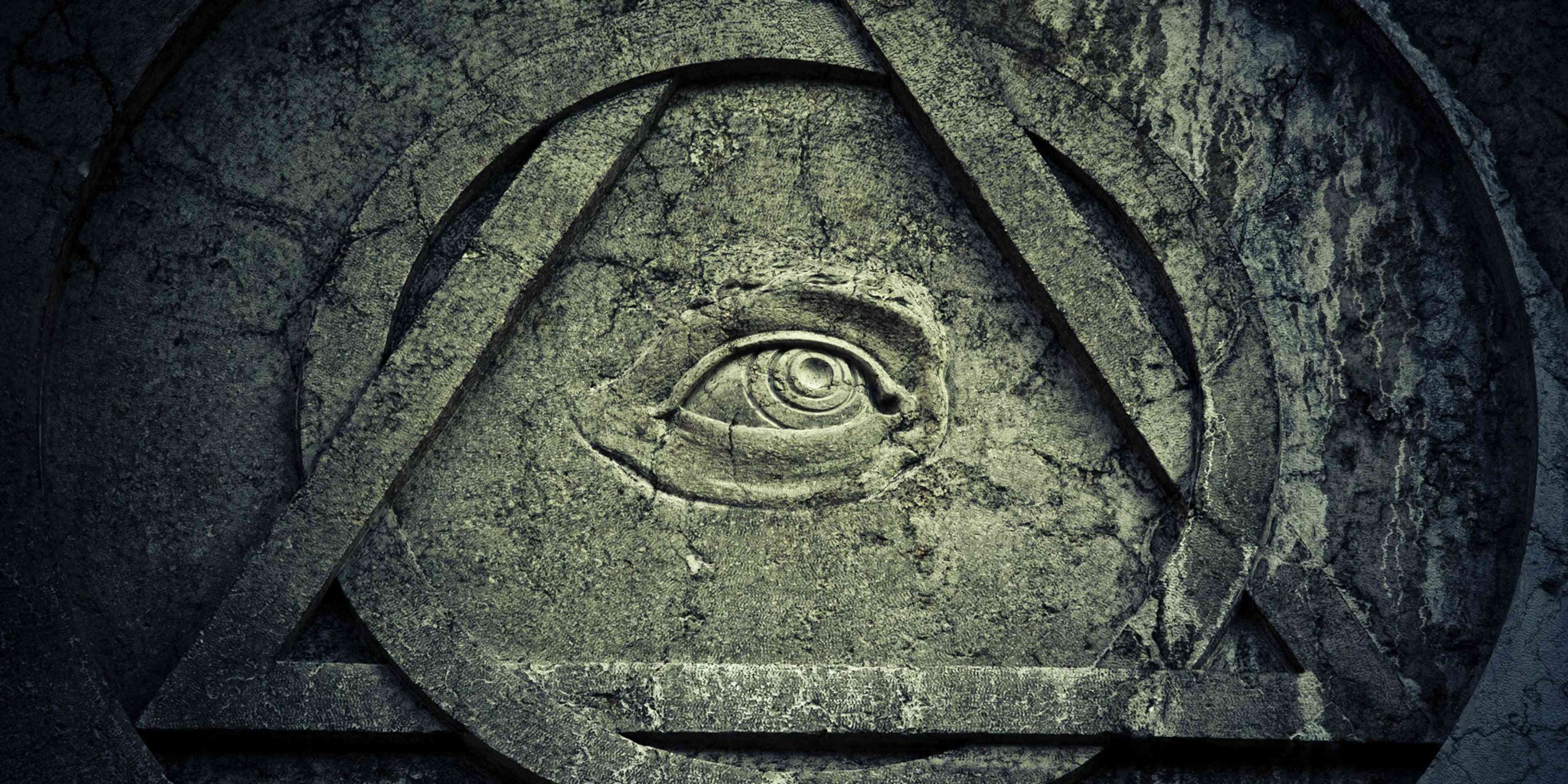
Despite their civic contributions, the Freemasons’ secretive rituals stoked deep public suspicion. In the early 19th century, this paranoia culminated in the creation of the Anti-Masonic Party, America’s first prominent third party. Today, symbols associated with Freemasonry—such as the Square and Compasses (often featuring a ‘G’ representing God or Geometry) and the All-Seeing Eye (symbolizing the watchful eye of the Grand Architect)—remain prominent on the U.S. dollar bill, keeping public intrigue alive. Today, associated organizations like the Shriners maintain a visible public presence through extensive philanthropic work, balancing historical mystery with modern charity.
The Bavarian Illuminati: Enlightenment and the Birth of Conspiracy
On May 1, 1776, a law professor named Adam Weishaupt founded the Bavarian Illuminati in Ingolstadt, Germany. A former Jesuit, Weishaupt was deeply frustrated by the overreaching power of the conservative Catholic Church and the Bavarian monarchy. He sought to establish an organization that would promote the secular ideas of the Enlightenment, relying on reason rather than religious dogma to guide human behavior.
To grow his influence, Weishaupt strategically infiltrated Freemason lodges, recruiting wealthy, influential, and intellectually elite men across Europe. Members, known as “Perfectibilists,” were organized into three tiers of secret ranks. They adopted classical pseudonyms (Weishaupt went by “Spartacus”) and used complex ciphers to communicate. Prominent figures like the writer Johann Wolfgang von Goethe were drawn into its ranks. However, the group’s radical goals of dismantling monarchy and organized religion proved to be its downfall. In 1787, Karl Theodor, the Duke-Elector of Bavaria, banned all secret societies and made membership in the Illuminati punishable by death, effectively destroying the group.
Despite its brief, eleven-year existence, the Illuminati became the ultimate scapegoat for global events. Conspiracy theorists claimed the group survived underground, orchestrating the French Revolution, the rise of global banking dynasties, and even modern political assassinations. This enduring mythology has solidified the Illuminati as a staple of modern pop culture and literature.
Yale’s Skull and Bones: The Elite Cradle of Power
Moving from European origins to American academia, the Order of Skull and Bones represents one of the most exclusive collegiate secret societies in the world. Founded at Yale University in 1832 by William Huntington Russell and Alphonso Taft, the society was modeled after occult student groups Russell had observed in Germany. Alphonso Taft would later serve as Secretary of War, and his son, William Howard Taft, would become both a U.S. President and a Supreme Court Chief Justice—initiating a long line of prominent “Bonesmen.”
Every year, precisely 15 Yale seniors are tapped to join the society. While their names are published in Yale’s campus publications, what occurs inside their windowless, brownstone headquarters—known simply as “The Tomb”—remains strictly confidential. Members take lifetime oaths of secrecy and refer to outsiders as “barbarians.” The roster of Bonesmen reads like a roll call of American power, featuring U.S. Presidents George H.W. Bush and George W. Bush, Time magazine founder Henry Luce, and former Secretary of State John Kerry. Looking back at these powerful networks, one might marvel at the famous coincidences in history that bring so many leaders from a single college club into the highest offices of global leadership.
The society’s emblem features a skull over crossed bones, accompanied by the mysterious number “322.” Historians suggest this number refers to 322 B.C., the year the Greek orator Demosthenes died, which marks the transition of Athens from a democracy to an oligarchy. Conspiracy theories, notably popularized by Anthony Sutton’s 1986 exposé, argue that the society aims to establish a “New World Order” run by its elite alumni, a claim that continues to spark intense debate.
The Bilderberg Group: Modern Diplomacy or Globalist Puppet Masters?
Unlike medieval guilds or collegiate clubs, the Bilderberg Group operates on a massive geopolitical scale. Founded in May 1954 at the Hotel de Bilderberg in the Netherlands, the group was initiated by Prince Bernhard of the Netherlands and Polish political adviser Józef Retinger. The primary goal was to foster stronger ties and open dialogue between North American and European leaders during the height of the Cold War, amid concerns over rising anti-American sentiment in Western Europe.
The Bilderberg meetings are not a secret society in the traditional sense, but they are wrapped in extreme privacy. Roughly 120 to 140 global elites—including sitting presidents, prime ministers, central bankers, and corporate CEOs—attend the annual conference. High-profile figures like Henry Kissinger, Margaret Thatcher, Bill Clinton, and Angela Merkel have been documented attendees. Crucially, the meetings operate under the Chatham House Rule, meaning participants are free to use the information received, but the identity of the speakers and other participants must remain anonymous. Journalists are strictly barred, no official votes are taken, and no policy statements are issued.
This absolute secrecy has made the Bilderberg Group a frequent target of global conspiracy theories. Critics accuse the group of acting as a shadow world government, manipulating global markets, initiating military conflicts, and choosing political leaders behind closed doors. The group’s organizers, however, maintain that the private nature of the forum simply allows leaders to speak candidly without being bound by the political constraints of their official offices.
A Timeline of Mystery: Key Milestones of Secret Societies
- 1118: Hugues de Payens founds the Knights Templar in Jerusalem to protect Christian pilgrims.
- 1139: Pope Innocent II issues a Papal Bull exempting the Templars from taxes, propelling them to immense wealth.
- 1307: King Philip IV of France orders the mass arrest and torture of the Knights Templar on Friday, October 13.
- 1717: Four London lodges merge to establish the Grand Lodge of England, marking the birth of modern Freemasonry.
- 1776: Professor Adam Weishaupt establishes the Bavarian Illuminati on May 1 to promote Enlightenment secularism.
- 1787: Karl Theodor of Bavaria outlaws all secret societies, effectively dismantling the Bavarian Illuminati.
- 1832: William Huntington Russell and Alphonso Taft found the Order of Skull and Bones at Yale University.
- 1954: The first Bilderberg Meeting is held in the Netherlands to strengthen transatlantic relations during the Cold War.
Fascinating and Lesser-Known Facts
- The Oreo Connection: The Cross of Lorraine, which was heavily utilized by the Knights Templar and later the French Resistance during World War II, bears a striking resemblance to the double-barred cross found in the historical Nabisco logo and stamped onto Oreo cookies.
- The Anti-Masonic Backlash: The disappearance of William Morgan, a former Mason who threatened to expose the group’s secrets in 1826, triggered such massive public outrage in the United States that it led to the formation of the Anti-Masonic Party, which actually won several congressional seats and influenced the presidential election of 1832.
- Spartacus of Bavaria: Adam Weishaupt was so obsessed with classical antiquity that he mandated all Illuminati members adopt Greco-Roman aliases. Weishaupt chose “Spartacus,” after the famous Roman gladiator who led a massive slave rebellion, reflecting his desire to rebel against religious and monarchical tyranny.
Why Secret Societies Still Matter Today
The enduring fascination with secret societies is not merely a product of active imaginations; it reflects deep-seated human anxieties about power, governance, and transparency. In an era where decisions are often made behind closed doors by multinational corporations, international coalitions, and elite political networks, the suspicion that a “hidden hand” is steering global events remains a powerful narrative. Furthermore, studying these organizations offers valuable historical insights into how networks of influence operated before the age of mass communication, reminding us that personal connections and shared allegiances have always played a pivotal role in shaping the course of human history.
People Also Ask
Are any U.S. Presidents still members of Skull and Bones?
Yes, historically, several U.S. Presidents have been members, most notably William Howard Taft, George H.W. Bush, and George W. Bush. While they are now considered “patriarchs” (graduate members), their involvement remains a matter of historical record, though they have maintained their lifetime oaths of secrecy regarding what happens inside “The Tomb.”
Is the Illuminati still active today?
Historically, the Bavarian Illuminati was completely disbanded and suppressed by the Bavarian government in 1787. There is no credible historical evidence to suggest the group survived or continues to operate today. Modern references to the Illuminati are almost exclusively the domain of conspiracy theories, fiction, and popular culture.
Can women join the Freemasons?
Traditional Freemasonry remains a male-only fraternal organization. However, women can join associated concordant bodies, such as the Order of the Eastern Star, which was established in the 19th century and welcomes both men and women with Masonic relationships.
Conclusion: Separating Myth from Historical Reality
From the holy battlefields of the Crusades to the manicured lawns of Yale University, secret societies have occupied a unique space in our collective consciousness. While it is easy to get swept up in sensationalized tales of global domination and occult rituals, the actual history of these groups is far more grounded in human ambition, political networking, and the pursuit of influence. By exploring their true origins, we gain a clearer, more nuanced understanding of the social and political dynamics that shaped both early America and the broader modern world.


