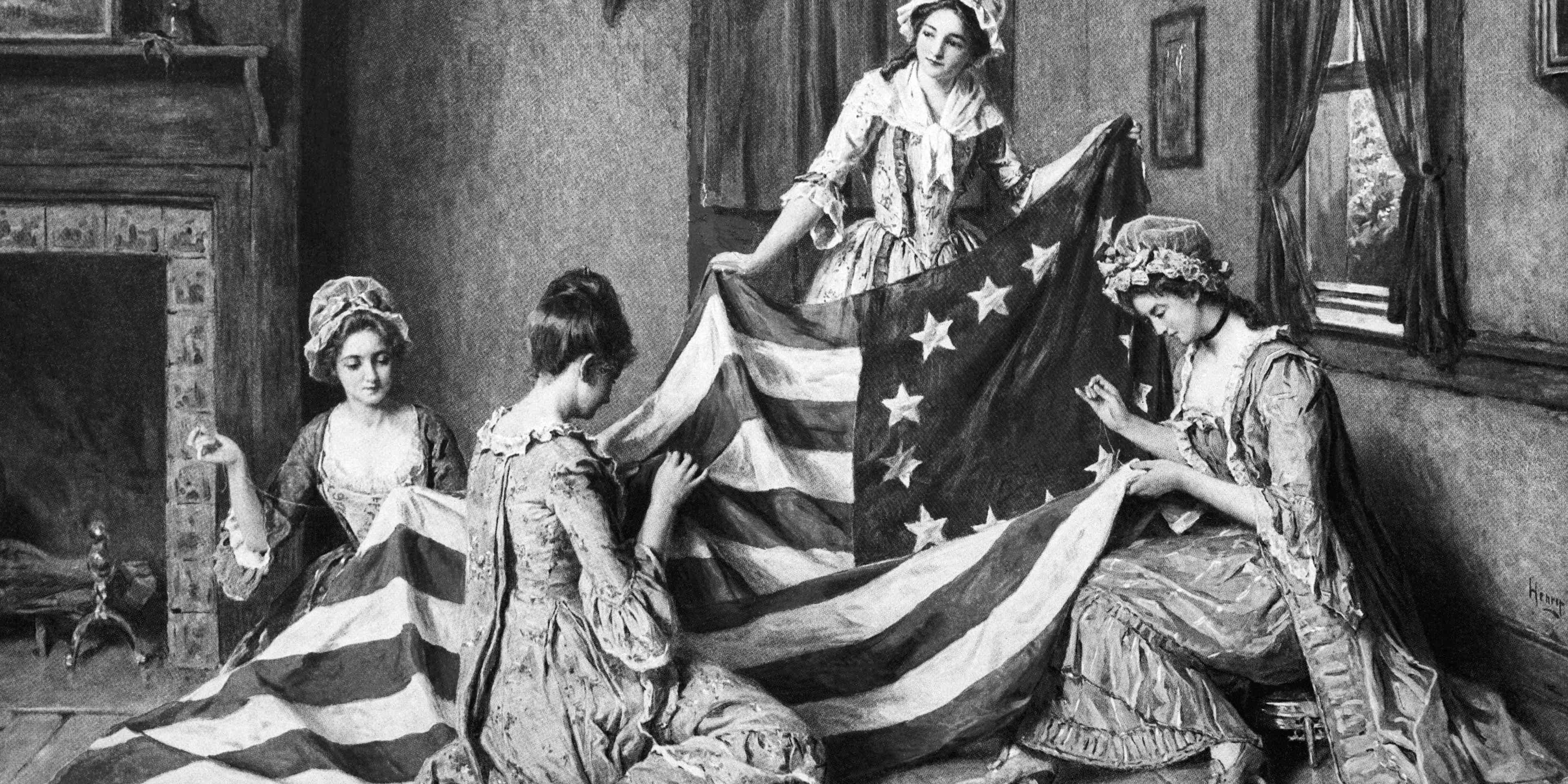
For generations, school children across the United States have been taught the heartwarming story of Elizabeth “Betsy” Ross, the patriotic Philadelphia seamstress who allegedly sewed the first American flag at the personal request of General George Washington in 1776. This classic narrative of the American Revolution is deeply woven into the country’s national identity, symbolizing the ingenuity, grit, and involvement of ordinary citizens—specifically women—in the birth of a new nation. But did Betsy Ross really make the first American flag, or is this iconic tale merely a beautifully constructed historical myth? While Betsy Ross was indeed a skilled upholsterer who produced flags for the Pennsylvania navy, modern historians have cast significant doubt on her role as the creator of “Old Glory.” Unraveling the truth behind the first American flag requires us to peer into the chaotic years of the Revolutionary War, examine the scarce archival evidence, and evaluate competing claims, most notably those of Founding Father Francis Hopkinson. Exploring this historical mystery not only reframes our understanding of revolutionary mythology but also highlights how symbols of national unity are manufactured, preserved, and cherished across centuries of American memory.
Historical Background: The Birth of a Symbol in 1776
To understand the origin of the American flag, we must step back into the tense atmosphere of mid-1776. The thirteen original colonies were on the verge of declaring independence from Great Britain, and the Continental Army was desperately in need of unifying symbols. Before a national flag was adopted, various regional militias and naval vessels flew their own banners, leading to confusion on the battlefield and at sea. The catalyst for a unified flag was both practical and political: the emerging nation needed an international emblem to represent its sovereignty and coordinate military operations. During this pivotal era, Betsy Ross worked as a widowed upholsterer in Philadelphia, struggling to maintain her business in a city disrupted by war. At the same time, the Continental Congress was seeking ways to establish a formal identity for the nascent United States. The intersection of these historical forces laid the groundwork for the legendary meeting that supposedly took place in Ross’s upholstery shop.
Key Events Timeline: The Evolution of “Old Glory”
The timeline of the American flag’s creation and the emergence of the Betsy Ross legend is marked by several critical dates:
- Late May or Early June 1776: According to legend, George Washington, Robert Morris, and George Ross visit Betsy Ross’s Philadelphia shop to commission the first flag.
- July 4, 1776: The Declaration of Independence is formally adopted, officially separating the colonies from Great Britain.
- May 29, 1777: The Pennsylvania State Navy Board pays Betsy Ross more than 14 pounds for making “ships colours,” proving she was actively manufacturing flags for the war effort.
- June 14, 1777: Congress passes the Flag Act of 1777, declaring that the flag of the United States consist of thirteen stripes, alternate red and white, and thirteen stars, white in a blue field, representing “a new constellation.”
- 1780: Francis Hopkinson, a signer of the Declaration of Independence, officially petitions Congress for payment for designing “the flag of the United States of America.”
- March 14, 1870: William Canby, Betsy Ross’s grandson, presents a paper to the Historical Society of Pennsylvania, introducing the Betsy Ross legend to the public for the first time.
- 1873: Canby’s account is published in Harper’s New Monthly Magazine, rapidly embedding the story into school curricula and national folklore.
Important Figures: Roles and Legacies
Several key figures dominate the narrative surrounding the first American flag, each leaving a distinct footprint on history:
Elizabeth “Betsy” Ross (1752–1836)
An independent businesswoman and skilled artisan, Elizabeth “Betsy” Ross ran an upholstery shop in Philadelphia. While her role in sewing the very first flag remains unproven, she was a prolific craftswoman who supported the revolutionary cause by sewing flags, tents, and uniforms. Her lasting legacy is her transformation into a legendary symbol of female patriotism during the American Revolution.
George Washington (1732–1799)
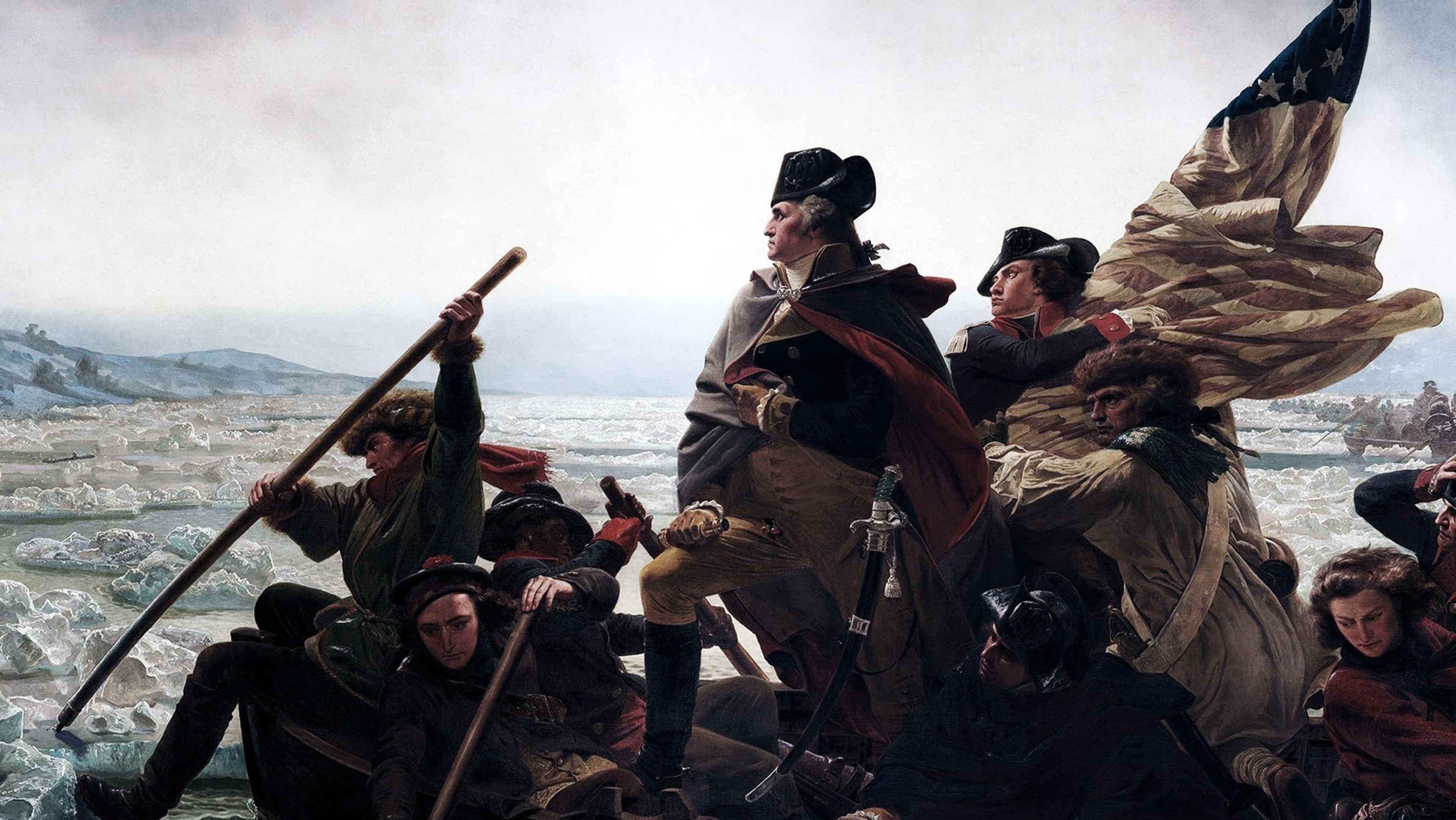
As the Commander-in-Chief of the Continental Army, Washington understood the vital importance of military emblems. While the legend describes him sketching the flag in Betsy’s shop, historians argue that his focus was primarily on commanding troops. Understanding who commanded the Continental Army before Washington and how Washington assumed leadership helps put his massive organizational responsibilities into context, making a personal visit to a seamstress in mid-1776 highly improbable.
Francis Hopkinson (1737–1791)
A true Renaissance man, Hopkinson was a lawyer, musician, delegate from New Jersey, and signer of the Declaration of Independence. Serving on the Continental Navy Board, Hopkinson is widely recognized by modern vexillologists (flag historians) as the most likely designer of the Stars and Stripes. His design utilized a staggered grid of six-pointed stars, reflecting his background in heraldry and graphic design.
William Canby (1825–1890)
Betsy Ross’s grandson, who first popularized her story nearly a century after the events allegedly occurred. Lacking contemporary written evidence, Canby relied on oral family testimonies to build his case, which ultimately shaped American popular history for generations.
Causes and Context: Why a National Flag Was Needed
The demand for a unified flag was born out of intense sociopolitical and military necessity. Prior to 1777, American forces utilized the “Grand Union Flag,” which featured thirteen red and white stripes but retained the British Union Jack in the canton. This design created dangerous ambiguity, as British forces sometimes mistook the American banner for their own, and vice versa. Furthermore, as the colonies transitioned from rebellious British subjects into an independent republic, they required a distinct diplomatic symbol to present to European allies like France and Spain. To establish sovereignty on the global stage, the Continental Congress needed a clean break from British heraldry, prompting the search for a new national design that celebrated “a new constellation” of states.
Major Turning Points: From Oral History to National Legend
The transition of the Betsy Ross story from a private family anecdote to a widely accepted national truth is a major turning point in American cultural history. The story was first made public in 1870, shortly after the end of the American Civil War. During this era of reconstruction, the United States was deeply fractured and desperately seeking stories of shared heritage, patriotism, and national healing. The narrative of a humble, hard-working widow contributing to the birth of the republic was the perfect healing balm. Americans eagerly embraced the story, and it quickly transitioned from a localized family memory to an undisputed historical fact taught to millions of school children.
Evaluating the Evidence: Did Betsy Ross Make It?
To determine the validity of the Betsy Ross claim, historians analyze the available documentary evidence. On one hand, there is no official record, congressional minute, or diary entry from 1776 mentioning Betsy Ross in connection with George Washington or the design of the national flag. The story relies entirely on oral tradition written down nearly a century later. On the other hand, we do know that Ross was an active flag maker, as evidenced by a receipt from the Pennsylvania State Navy Board in May 1777. Upholsterers and seamstresses were among the most common jobs in colonial America, and Ross was highly respected in her trade. While she likely made flags for local military and naval units, there is no contemporary proof that she crafted the historic first Stars and Stripes authorized by Congress.
The Case for Francis Hopkinson
While Betsy Ross remains the public face of the American flag, academic consensus strongly favors Francis Hopkinson as its actual designer. In 1780, Hopkinson wrote letters to the Board of Admiralty requesting payment for several artistic services, including designing the Great Seal of the United States, Continental currency, and “the flag of the United States of America.” Although Congress ultimately denied his request for financial compensation—arguing that he was already receiving a salary as a public official and that other individuals were consulted—they never disputed his claim of authorship. Because Hopkinson worked directly with the Navy Board during the period when the flag was conceived, his historical claim is backed by official government archives, unlike the purely oral history of the Ross family.
Lesser-Known Facts About the American Flag and Betsy Ross
- The Five-Pointed Star Trick: According to legend, Washington’s original design featured six-pointed stars, which were common in British heraldry. Betsy Ross supposedly demonstrated how to easily fold a piece of paper and make a perfect five-pointed star with a single snip of her scissors, convincing Washington to change the design. This simple demonstration remains a popular feature of tours at the historic Betsy Ross House in Philadelphia.
- The Myth of the Circle: The iconic design featuring thirteen stars arranged in a perfect circle—commonly called the “Betsy Ross Flag”—was not actually the standard layout in 1777. The Flag Act of 1777 did not specify how the stars should be arranged, leading to dozens of different designs, including rows, circles, and even star-shaped patterns. The circular design only gained widespread popularity in nineteenth-century paintings.
- A Multi-Generational Flag Dynasty: Even if Betsy did not make the very first flag, she and her family ran a successful flag-making business for over fifty years. After Betsy retired, her daughter Clarissa Wilson continued the business, supplying flags to the United States government and military well into the mid-nineteenth century.
Long-Term Impact on America
The Betsy Ross legend has had a profound and lasting impact on American society and historical memory. Culturally, it elevated a working-class woman to the status of a founding figure, providing a female hero in a revolutionary narrative dominated almost exclusively by men. Structurally, it helped establish the flag as a sacred national symbol, fostering a deep culture of patriotism and respect for the banner. In the late nineteenth and early twentieth centuries, as millions of immigrants arrived in the United States, the story of Betsy Ross was used in classrooms to teach civic pride and assimilate new citizens into the American story. Today, the Betsy Ross Flag remains an enduring symbol of American heritage, though it has occasionally been swept up in modern political and cultural debates regarding its historical context.
Why It Still Matters Today
Understanding the distinction between history and folklore is vital for modern citizens. The debate over who designed and sewed the first flag is not about devaluing Betsy Ross’s contributions; rather, it highlights the importance of historical critical thinking. It teaches us how nations construct myths to foster unity and how oral histories can shape a country’s collective consciousness. By studying both the legend of Betsy Ross and the documented contributions of Francis Hopkinson, we gain a richer, more nuanced appreciation of the American Revolution—not as a series of flawless, mythical moments, but as a complex, collaborative effort of ordinary artisans, political leaders, and civil servants working together to build a new nation.
People Also Ask
Did George Washington really visit Betsy Ross?
There is no contemporary evidence, letters, or diaries indicating that George Washington visited Betsy Ross in 1776. While Washington was in Philadelphia during that period and attended the same church as Betsy, a personal meeting to design a national flag is considered highly unlikely by historians.
Who actually designed the first American flag?
Most historians credit Francis Hopkinson, a signer of the Declaration of Independence and member of the Continental Navy Board, with designing the first official Stars and Stripes flag in 1777.
Why did Betsy Ross get credit for the flag?
Betsy Ross was credited nearly a century after the revolution when her grandson, William Canby, presented her story to the Historical Society of Pennsylvania in 1870. The story captured the public’s imagination during the Post-Civil War Reconstruction era, a time when America was looking for unifying national legends.
What does the circle of 13 stars represent?
The circle of thirteen stars on the early American flag represents the equality and unity of the thirteen original colonies, symbolizing that no single colony or state was superior to the others.
Conclusion: Balancing Myth and History
In conclusion, while the charming story of Betsy Ross sewing the first American flag at the behest of George Washington is almost certainly a legend, it remains a vital part of the American tapestry. Betsy Ross was a real, hardworking woman who made significant, documented contributions to the revolutionary war effort through her craft. By placing her side-by-side with figures like Francis Hopkinson, we honor both the verified facts of the American Revolution and the powerful cultural myths that continue to shape national identity. Ultimately, whether stitched in an upholstery shop or designed on a naval board, the Stars and Stripes remains an enduring testament to the collaborative, revolutionary spirit that founded the United States.


