In the freezing, bleak winter of 1776, the flame of the American Revolution was on the verge of being permanently extinguished. Having suffered a series of devastating defeats in New York, General George Washington and his battered Continental Army were forced into a desperate retreat across New Jersey. With morale at an all-time low, enlistments expiring, and the British forces confident of an imminent victory, Washington knew that only a bold, seemingly impossible stroke could save the cause of independence. What followed over the next ten days—spanning Christmas night to early January 1777—would become known as the “Ten Crucial Days.” The legendary Battles of Trenton and Princeton not only revived the dying American rebellion but also fundamentally altered the trajectory of global history, proving that a ragtag army of citizens could stand against the mightiest empire on earth.
The Cold Road to Despair: Historical Background and Context
To understand the sheer desperation that drove the Battles of Trenton and Princeton, one must look at the disastrous autumn of 1776. Beginning in August, British General William Howe unleashed a massive military offensive aimed at crushing the rebellion in New York. The Continental Army, composed largely of inexperienced farmers and merchants, was consistently outmaneuvered. By November, the British had captured Fort Washington in Manhattan, taking over 2,000 Americans prisoner and seizing invaluable military supplies. The loss devastated the strategic standing of the 13 colonies, casting a dark shadow over the promise of the Declaration of Independence signed just months earlier.
As the British pursued the retreating patriots across New Jersey, Washington’s forces dwindled due to disease, desertion, and expiring enlistments. By mid-December, the remnants of the Continental Army crossed the freezing Delaware River into Pennsylvania. They were short on food, clothing, ammunition, and basic shelter. Meanwhile, General Howe, believing the rebellion was practically over, ordered his troops into winter quarters, establishing a chain of outposts across New Jersey. As the winter set in, intense doubts surfaced about whether Washington was fit to lead the revolutionary cause. Some even compared his tactical retreats unfavorably to provincial commanders, raising debates about who commanded the Continental Army before Washington and whether a change in leadership was necessary to save the nascent nation.
The Daring Gamble: The Battle of Trenton
Washington recognized that inaction meant certain defeat. He devised a highly complex, three-pronged surprise attack on the Hessian garrison stationed at Trenton, New Jersey. The Hessians were professional German soldiers hired by the British crown, renowned for their discipline and brutality. Washington’s plan called for his main force of 2,400 men to cross the Delaware River north of Trenton, while a 1,900-man diversionary force under Colonel John Cadwalader and a 700-man blocking force under General James Ewing crossed at other points. It was a strategy that relied on absolute synchronization under the worst possible conditions.
Crossing the Icy Delaware
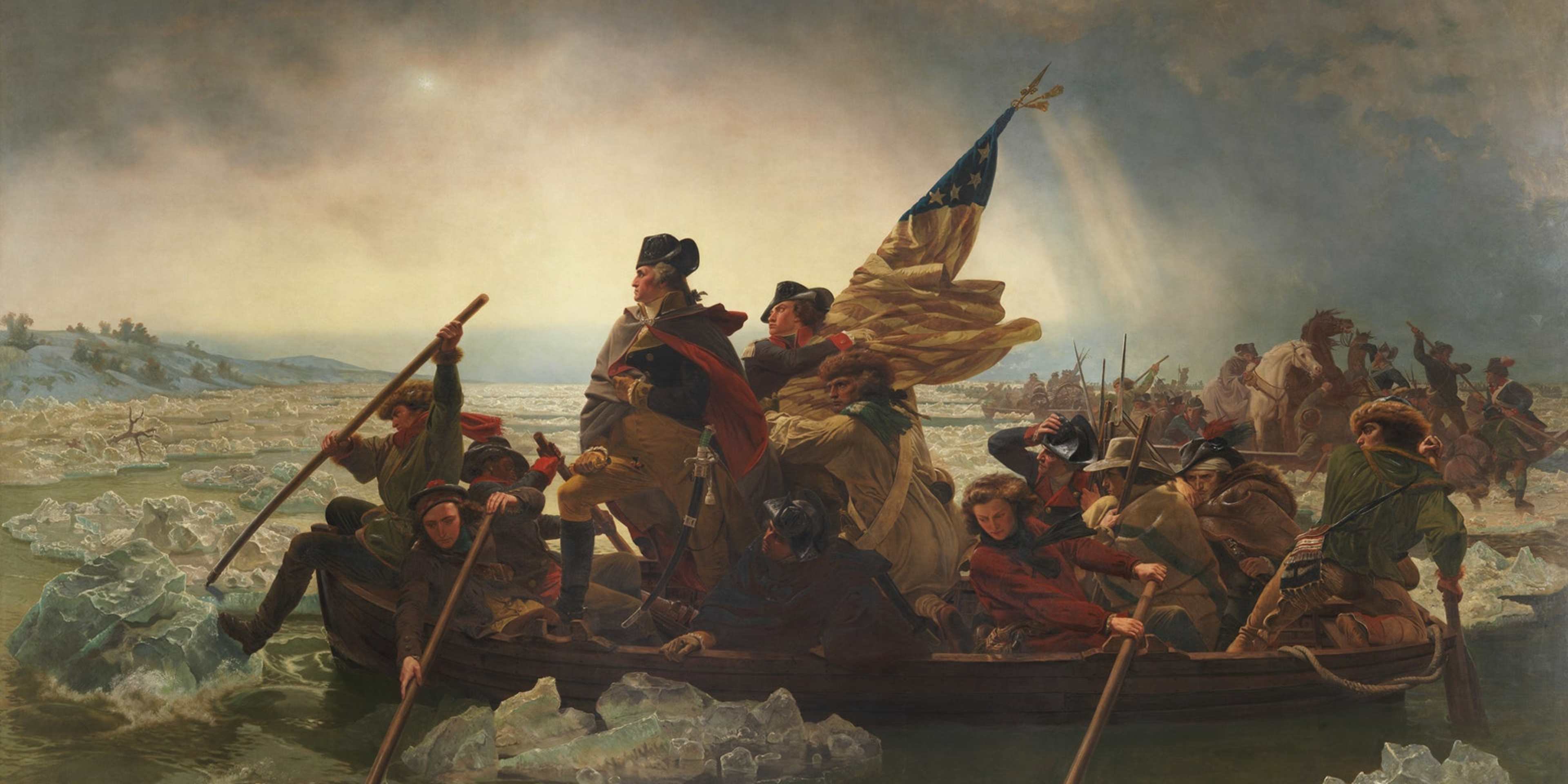
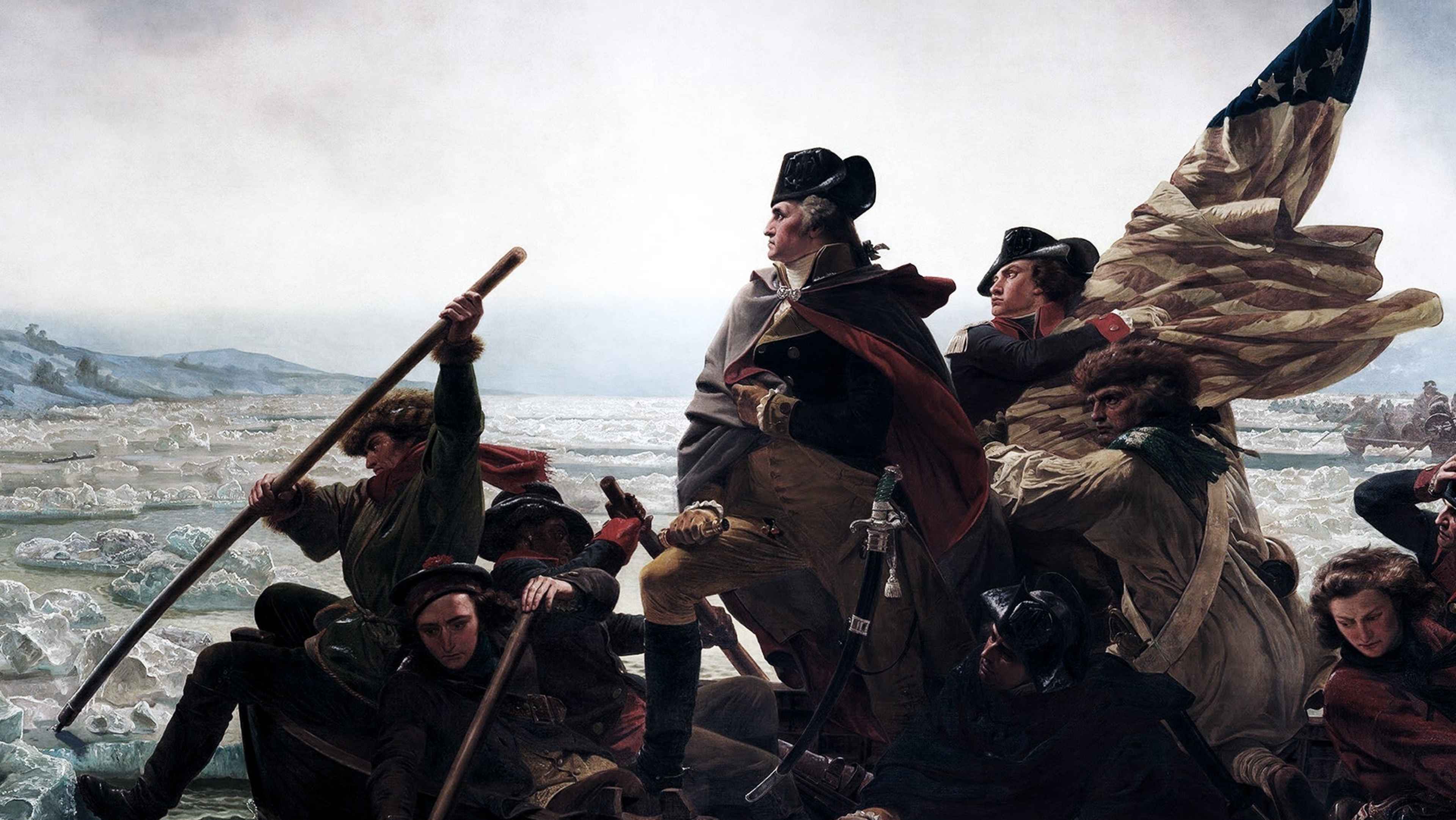
On the night of December 25, 1776, Washington’s men embarked on their historic crossing. The weather was atrocious—a mix of rain, sleet, and snow, with the river choked by heavy ice floes. While the severe conditions prevented Cadwalader and Ewing from executing their crossings, Washington pressed on. Guided by Colonel Henry Knox, the Continental troops and their heavy artillery successfully made it to the New Jersey shore. The subsequent nine-mile march south to Trenton was a brutal test of endurance; two soldiers froze to death along the road, yet the army marched on in silence, their footsteps muffled by the falling snow.
The Surprise at Dawn
At 8:00 AM on December 26, the Americans launched their assault on Trenton. The Hessian garrison, numbering 1,400 men under Colonel Johann Rall, was completely unprepared. While popular myth suggests the Hessians were sluggish from Christmas drinking, historical evidence indicates they were simply exhausted from constant patrolling and sleep deprivation. Washington split his force into two columns, led by General Nathaniel Greene and General John Sullivan, effectively surrounding the town while Knox’s artillery opened fire. Rall attempted to organize a counterattack but was mortally wounded. Within an hour, the battle was over. The Americans captured over 900 Hessians, along with invaluable muskets, ammunition, and food supplies, suffering only a handful of casualties of their own.
The Turning Tide: The Battle of Princeton
While the victory at Trenton was a massive psychological boost, Washington’s strategic position remained precarious. Recognizing that the British would seek immediate revenge, Washington initially withdrew across the Delaware but crossed back into New Jersey on December 30 with 2,000 men. He quickly persuaded militiamen whose service was ending to stay on for another six weeks by promising them a bounty. This raised his force to roughly 5,000 men, though many were poorly trained and ill-equipped.
The British response was swift. General Charles Cornwallis marched south from Princeton with 5,500 elite troops to crush the Americans. On January 2, 1777, Cornwallis pinned Washington’s army against the Assunpink Creek in Trenton. After three failed British attempts to cross the creek bridge, Cornwallis decided to pause operations for the night, confidently remarking that he would “bag the fox” in the morning.
The Silent Escape and Night March
Washington, however, had no intention of waiting. Utilizing his signature tactical cunning, he left 500 men behind to keep campfires burning, dig trenches loudly, and mimic the sounds of an army preparing for battle. Meanwhile, the rest of the Continental Army muffled their wagon wheels with heavy cloth, extinguished their torches, and slipped away in the dead of night, marching twelve miles north toward Princeton along an unmapped back road. This brilliant maneuver is a prime example of how local geography and strategic movement in how 3 colonial towns shaped the course of US history came to define the ultimate success of the Revolutionary War.
Clash at Princeton
At dawn on January 3, Cornwallis woke to find the American camp entirely empty. At the same time, Washington’s vanguard, led by General Hugh Mercer, encountered a British brigade under Lieutenant Colonel Charles Mawhood just outside Princeton. A fierce firefight ensued, and General Mercer was bayoneted and mortally wounded. As the American militia began to panic and retreat, Washington rode directly into the center of the battle. Standing between the opposing lines of fire, he rallied his men, shouting encouragement until the Continental troops charged and broke Mawhood’s lines.
During the chaos, a group of British soldiers took refuge inside Nassau Hall, the main building of the College of New Jersey (now Princeton University). A young artillery captain named Alexander Hamilton—who had been rejected by the college years prior—ordered his cannons to fire on the building. A cannonball famously struck a portrait of King George II inside the hall. Shortly after, the blockaded British troops surrendered, sealing another stunning victory for the Americans.
Chronological Timeline of the Ten Crucial Days
- August 27, 1776: The British defeat the Continental Army at the Battle of Long Island, initiating a long American retreat.
- November 16, 1776: Fort Washington falls to the British, resulting in heavy American casualties and captives.
- December 25, 1776: General Washington leads his army across the icy Delaware River during a fierce winter storm.
- December 26, 1776: The Americans achieve a stunning surprise victory over the Hessians at the Battle of Trenton.
- December 30, 1776: Washington’s forces recross the Delaware into New Jersey to re-engage the British.
- January 2, 1777: The Battle of Assunpink Creek occurs; Washington successfully deceives Cornwallis under cover of darkness.
- January 3, 1777: The Continental Army defeats British regulars at the Battle of Princeton, forcing a British retreat to New Brunswick.
- January 6, 1777: Washington establishes secure winter quarters in Morristown, New Jersey.
Key Historical Figures and Their Roles
Several individuals played indispensable roles in the success of these winter campaigns:
- George Washington: Commander-in-Chief of the Continental Army. His tactical audacity, physical bravery at Princeton, and calculated risks saved the American cause from collapse.
- Charles Cornwallis: British Lieutenant General who sought to trap Washington at Trenton but was outsmarted by the American night march.
- Johann Rall: The Hessian Colonel at Trenton whose failure to establish strong defensive perimeters and fortify the town led to the swift defeat of his garrison.
- Hugh Mercer: A brigadier general and close friend of Washington whose heroic stand and subsequent death at Princeton galvanized the rallying American forces.
- Henry Knox: Chief of Artillery who expertly managed the treacherous logistics of transporting heavy cannons across the icy Delaware River.
Lesser-Known Facts and Historical Anecdotes
Beyond the famous paintings and textbooks, several fascinating details highlight the human side of these battles:
- The Future President in the Fray: A young lieutenant named James Monroe, who would later become the fifth President of the United States, fought bravely at the Battle of Trenton. He was severely wounded in the shoulder, surviving only because a local doctor quickly repaired his severed artery.
- The Myth of the Drunken Hessians: Popular history often claims that the Hessians were easily defeated because they were hungover from Christmas festivities. In reality, historical records show that the Hessian troops had been on high alert for days due to constant American militia raids and were simply exhausted, not drunk.
- Muffled Wagon Wheels: To ensure the complete silence of their nighttime escape from Assunpink Creek, soldiers wrapped the iron-rimmed wooden wheels of their supply wagons in rags and clothing, preventing any metallic grinding sounds from reaching British ears just across the creek.
The Long-Term Impact on the American Republic
The dual victories at Trenton and Princeton did far more than recover lost territory. Before these battles, the Continental Army was on the verge of dissolution. The victories instantly restored public confidence, prompted thousands of veterans to re-enlist, and inspired new recruits to join the ranks. Furthermore, the campaigns shifted the strategic landscape of the war, forcing General Howe to abandon most of his outposts in New Jersey and withdraw toward New York, leaving the New Jersey countryside in patriot hands.
On a global scale, these victories demonstrated to European powers—most notably France—that the American rebellion was not a hopeless endeavor. The tactical brilliance shown by Washington laid the groundwork for the formal French alliance in 1778, which provided the vital naval and military support necessary to ultimately win the war.
Why the Battles of Trenton and Princeton Still Matter Today
Today, the “Ten Crucial Days” serve as a timeless lesson in leadership, resilience, and strategic adaptability. In moments of extreme crisis, when defeat seemed absolute, Washington did not capitulate; instead, he embraced calculated risk and innovative thinking. The courage of those poorly clothed, freezing soldiers marching through the snow reminds us of the profound sacrifices required to build and sustain a democratic nation. These events underscore the idea that hope and determination can overcome seemingly insurmountable structural disadvantages.
People Also Ask
Why did George Washington cross the Delaware River?
Washington crossed the Delaware River to launch a surprise attack on the Hessian garrison at Trenton, New Jersey. With morale plummeting and enlistments set to expire at the end of the year, he needed a decisive victory to save the Continental Army from total collapse.
How many soldiers died in the Battle of Trenton?
The Hessian forces suffered 22 killed, 92 wounded, and over 900 captured. In contrast, the Americans suffered remarkably light casualties: none were killed in direct combat (though two froze to death on the march) and only five were wounded.
Why was the Battle of Princeton significant?
The Battle of Princeton proved that the Continental Army could defeat professional British regulars in an open field. It forced the British to evacuate most of New Jersey, boosted American morale, and established George Washington’s reputation as a highly capable military strategist.
Conclusion
The Battles of Trenton and Princeton stand as defining moments in the history of liberty. By turning a desperate retreat into a masterclass of offensive warfare, George Washington and his determined soldiers breathed new life into the American Revolution. The icy waters of the Delaware and the snowy fields of Princeton became the proving grounds where a new nation proved its resolve to survive, forever changing the course of the modern world.


