On the misty morning of April 19, 1775, a tense standoff on a small town common in Massachusetts forever altered the course of global history. The Battles of Lexington and Concord marked the fiery ignition of the American Revolutionary War, a conflict that would ultimately dismantle British colonial authority and birth a new sovereign nation. For years, economic pressures, heavy-handed taxation, and military occupation had pushed the relationship between Great Britain and the thirteen American colonies to a breaking point. When British Regulars marched out of Boston under the cover of darkness, their mission was simple: seize a cache of colonial weapons and arrest key rebel leaders. However, they underestimated the resolve of a highly motivated, local militia alerted by a network of midnight riders. The ensuing engagements at Lexington Green and Concord’s North Bridge did more than just trigger military hostilities; they transformed a localized rebellion into an ideological war for liberty and self-governance. Today, understanding these opening salvos remains crucial to grasping the foundational ideals of American democracy and the complexities of revolutionary change.
The Winds of Rebellion: Causes and Sociopolitical Context
The road to the Battles of Lexington and Concord was paved with over a decade of escalating socio-political and economic tensions. Following the end of the Seven Years’ War in 1763, Great Britain found itself saddled with immense national debt. Believing the American colonists should help shoulder the financial burden of their own defense, the British Parliament enacted a series of aggressive taxation measures. Laws like the Sugar Act of 1764, the Stamp Act of 1765, and the Townshend Acts of 1767 sparked widespread outrage across the colonies. The fundamental grievance was simple: the colonists were being taxed by a distant parliament where they had no elected representatives, giving rise to the famous rallying cry, ‘No taxation without representation.’
Boston quickly emerged as the epicenter of this radical resistance. Tragic events such as the Boston Massacre in 1770 and the iconic Boston Tea Party in 1773 demonstrated the volatile atmosphere. In response to the destruction of British tea, King George III and Parliament passed the Coercive Acts (referred to by colonists as the ‘Intolerable Acts’) in 1774, which stripped Massachusetts of its self-governing rights and placed it under military rule. This volatile climate saw figures like John Adams defending British soldiers during the Boston Massacre trials in a bid to preserve legal integrity, even as popular anger boiled over. To comprehend how localized protests morphed into a unified continental front, one only needs to examine the map and structures of the 13 colonies, which highlights how geographically isolated settlements were increasingly bound together by shared grievances against the British Crown.
Chronology of Chaos: A Detailed Timeline of April 18-19, 1775
The physical confrontation did not happen by accident; it was the result of meticulous planning, espionage, and sudden mobilization. Below is a detailed chronological breakdown of the fateful hours that catalyzed the American Revolution:
- April 18, 1775 (Late Evening): Dr. Joseph Warren, a prominent leader of the Sons of Liberty, receives intelligence from a highly placed source within the British command. He learns that British Regulars are preparing to march to Concord to confiscate a massive provincial arms cache.
- April 18, 1775 (10:00 PM): Warren dispatches two primary riders, Paul Revere and William Dawes, via separate routes to warn the countryside and alert Samuel Adams and John Hancock, who are hiding in Lexington.
- April 18, 1775 (11:00 PM): Two lanterns are hung in the steeple of Boston’s Old North Church, signaling to patriots across the Charles River that the British troops are crossing by water (‘by sea’).
- April 19, 1775 (Midnight to 2:00 AM): Revere and Dawes meet in Lexington and warn Adams and Hancock. They are joined by Dr. Samuel Prescott as they ride toward Concord. Revere is captured by a British patrol, Dawes is thrown from his horse, but Prescott successfully evades capture and warns the residents of Concord.
- April 19, 1775 (Dawn): Approximately 700 British troops under the command of Lieutenant Colonel Francis Smith and Major John Pitcairn arrive at Lexington Green, facing a small, assembled militia of 77 men.
- April 19, 1775 (Approx. 5:00 AM): A shot rings out from an unknown source. The British unleash devastating volleys, killing eight militiamen and wounding nine others.
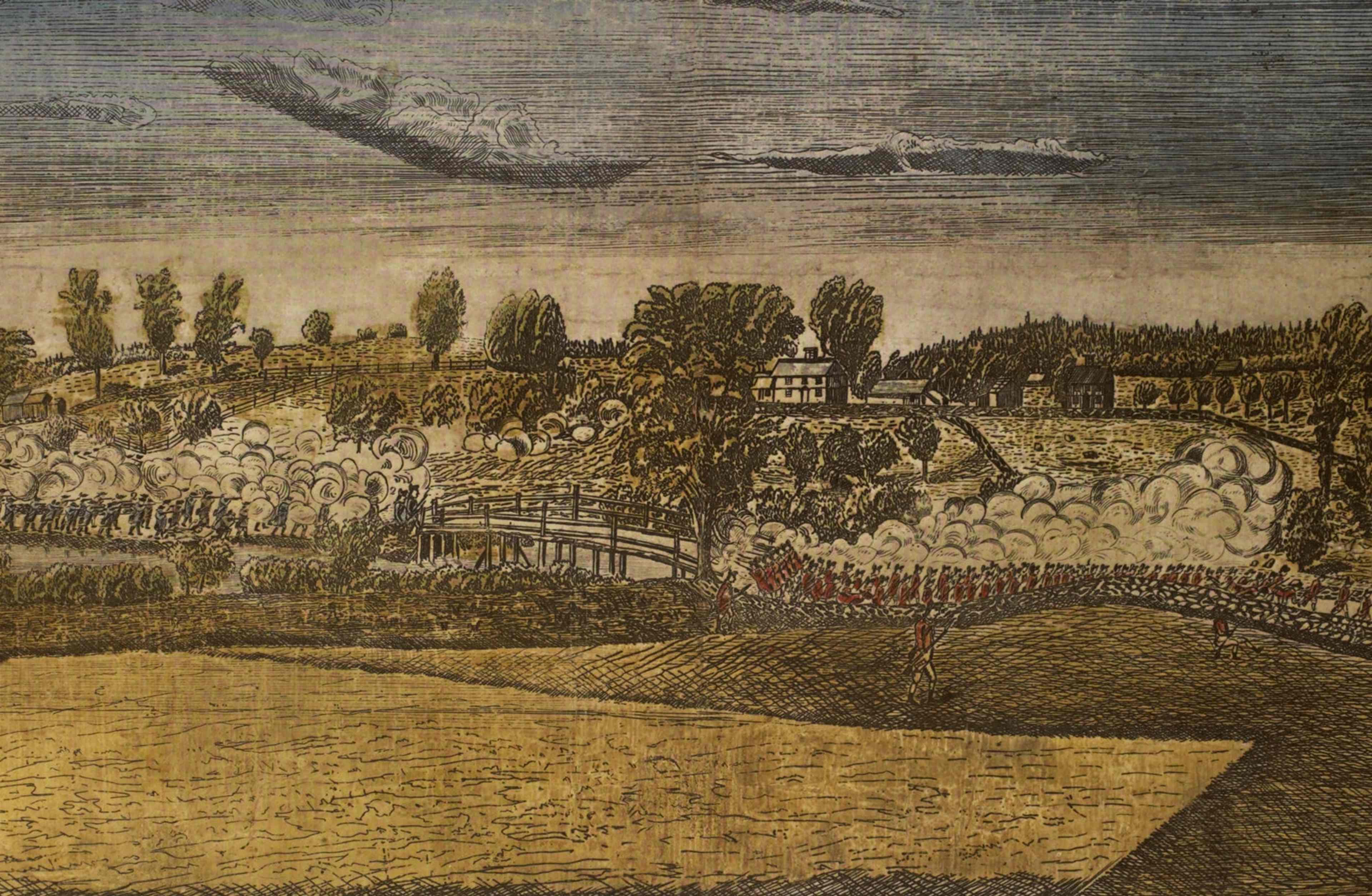
- April 19, 1775 (9:00 AM): The British reach Concord and begin searching for weapons. At the Old North Bridge, local militiamen return fire on British forces, marking the historic ‘shot heard ’round the world.’
- April 19, 1775 (Noon to Evening): The British forces attempt to retreat to Boston, facing relentless guerilla warfare along the 18-mile road from thousands of gathering minutemen. They finally reach the safety of Charlestown under the protection of naval guns.
Key Figures and Their Indelible Impact
The drama of Lexington and Concord was defined by a cast of complex individuals whose choices on those two days left an indelible mark on history:
- Paul Revere: A silversmith and trusted courier whose midnight ride has become legendary. While romanticized in 19th-century poetry, his actual role involved setting up a sophisticated network of visual signals and alarm riders. For a deeper look at his fascinating and often misunderstood life, read about the 9 things you may not know about Paul Revere.
- Captain John Parker: The commander of the Lexington militia. Standing on the green, Parker gave his men the famous instruction: ‘Stand your ground. Don’t fire unless fired upon, but if they mean to have a war, let it begin here.’
- Major John Pitcairn: The British officer who commanded the advance guard at Lexington. Despite wanting to disarm the militia peacefully, he lost control of the situation when the first shot was fired, leading to the tragic opening clash.
- Dr. Joseph Warren: The intellectual leader of the Boston patriots who coordinated the intelligence network. Warren would tragically lose his life just months later at the Battle of Bunker Hill.
Major Turning Points: From Lexington Green to the Old North Bridge
The military engagement of April 19, 1775, can be broken down into three crucial turning points that escalated a tense standoff into an irreversible war.
The Mystery at Lexington Green
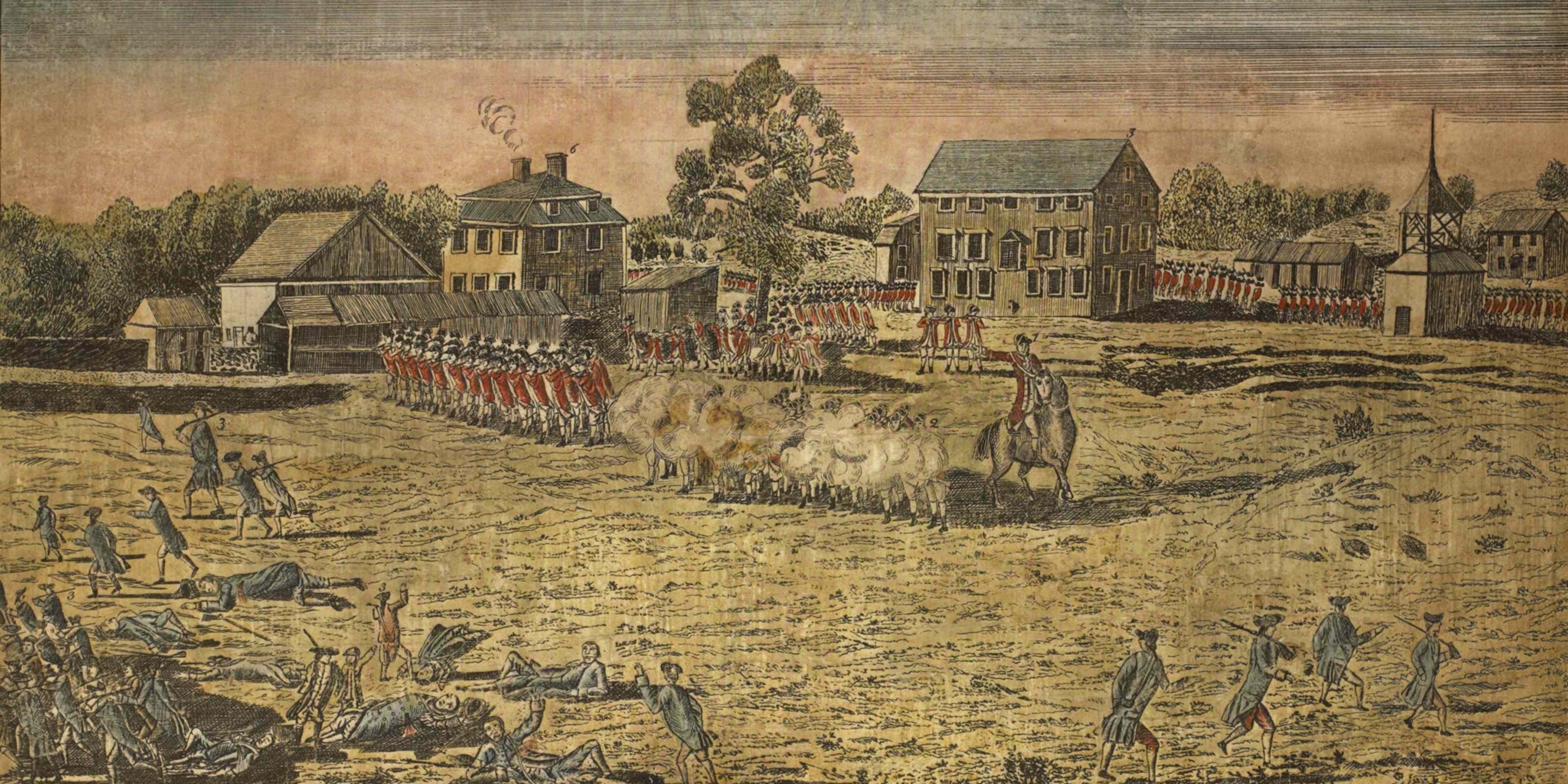
When the British column arrived at Lexington, they encountered a small band of local farmers and tradesmen led by Captain John Parker. Heavily outnumbered, Parker ordered his men to disperse. As the militiamen began to walk away, a shot was fired. To this day, historians cannot definitively prove who pulled the trigger. Whether it was a spectator, a colonial sniper from behind a hedge, or an agitated British soldier, the result was immediate. The British soldiers, acting without explicit orders, fired directly into the dispersing crowd, leaving eight Americans dead and initiating the physical rebellion.
The Stand at Concord’s North Bridge
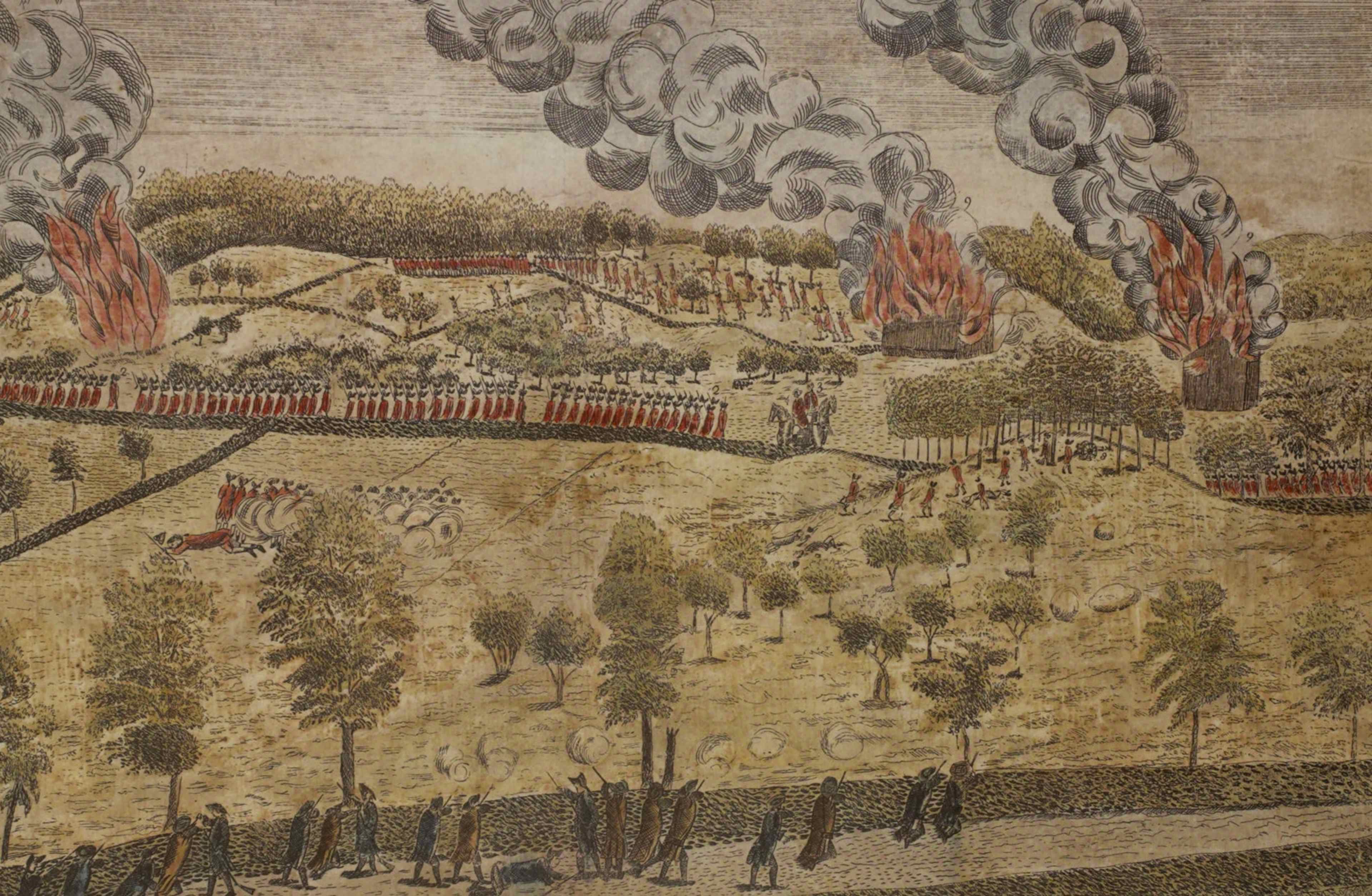
After the brief skirmish at Lexington, the British pushed onward to Concord. They discovered that most of the military supplies had already been moved or hidden by foresightful patriots. When the British set fire to a few gun carriages, the rising smoke convinced the gathering militia on the surrounding hills that the Redcoats were burning the town. Descending upon the North Bridge, the militiamen faced a detachment of British infantry. For the first time, colonial commanders ordered their men to fire directly upon His Majesty’s soldiers. The effective colonial volley forced the British to retreat, proving that the provincial ‘ragtag’ army was capable of tactical coordination and lethal force.
The Brutal 18-Mile Retreat
What began as a disciplined military expedition turned into a desperate, bloody retreat for the British. Over 2,000 minutemen, arriving from neighboring towns, lined the road back to Boston. Utilizing Native American-style skirmishing tactics, they fired from behind stone walls, trees, and buildings. The British soldiers, exhausted from marching all night, were picked off one by one. Only the timely arrival of reinforcements under Lord Percy in Lexington prevented a complete massacre of the retreating force. This ‘Battle Road’ engagement demonstrated that traditional European open-field tactics were highly vulnerable to American guerilla warfare.
The Long-Term Impact on the American Legacy
The Battles of Lexington and Concord fundamentally shifted the geopolitical landscape of North America. Prior to April 19, 1775, the majority of colonists still sought reconciliation with King George III, hoping to restore their rights as British subjects. The bloodshed at Lexington and Concord shattered those hopes, making peaceful resolution impossible. Within weeks, the Second Continental Congress convened, established the Continental Army, and appointed George Washington as its Commander-in-Chief. This military escalation directly paved the way for the drafting of the Declaration of Independence in 1776, marking the formal birth of the United States.
Lesser-Known Facts about the Historic Day
History is often polished for textbooks, but the reality of the American Revolution is filled with fascinating, lesser-known details:
- The Myth of ‘The British are Coming’: Paul Revere never shouted this famous phrase. The mission was highly secretive, and shouting would have quickly alerted British patrols. Furthermore, because the colonists still considered themselves culturally British, shouting ‘the British are coming’ would have been confusing; instead, Revere warned that ‘the Regulars’ or ‘the redcoats’ were marching.
- A Third Rider Saved the Day: While Paul Revere gets all the fame, it was actually Dr. Samuel Prescott, a young physician who joined the ride halfway through, who succeeded in warning Concord. Revere was captured by a British patrol, and William Dawes was thrown from his horse.
- An Inefficient Exchange of Fire: Despite hours of intense shooting along the 18-mile retreat, the marksmanship of the colonial militia was surprisingly poor. Historians estimate that up to 3,500 militiamen fired thousands of rounds, yet they only managed to kill or wound approximately 250 British soldiers.
Why the Battles of Lexington and Concord Matter Today
Centuries later, the events of April 19, 1775, continue to resonate deeply within the American consciousness. The Battles of Lexington and Concord represent the ultimate symbol of citizens rising up against perceived tyranny to defend their fundamental rights and liberties. This historical narrative heavily influences modern debates regarding the Second Amendment, the limits of government authority, and the inherent right of self-defense. By studying the courage, chaos, and collaborative efforts of these early Americans, we gain a profound appreciation for the sacrifices that established the democratic frameworks we enjoy today.
People Also Ask (FAQ)
Who won the Battles of Lexington and Concord?
The Battles of Lexington and Concord are widely considered a tactical and psychological victory for the American colonists. While the British successfully destroyed some supplies in Concord, they suffered heavy casualties during their retreat to Boston and failed to capture colonial leaders Samuel Adams and John Hancock.
What date did the Battles of Lexington and Concord take place?
The battles were fought on April 19, 1775, marking the official beginning of the American Revolutionary War.
What was the ‘shot heard ’round the world’?
This phrase, coined by poet Ralph Waldo Emerson in his 1837 poem ‘Concord Hymn,’ refers to the first shot fired by the colonists at the North Bridge in Concord. It symbolizes the global impact of the American Revolution, which inspired democratic movements around the world.
Conclusion: The Undying Echo of the First Shot
The Battles of Lexington and Concord were far more than a simple clash of arms; they were the catalyst for a global revolution. On that historic spring day, everyday citizens—farmers, blacksmiths, and merchants—faced down the most powerful military empire in the world and proved that the hunger for liberty could overcome professional military might. The legacy of Lexington Green and the Old North Bridge continues to inspire those who strive for freedom, serving as a powerful reminder that the fight for human rights and self-determination is a timeless endeavor.


