Long before the United States became a global economic powerhouse, the early British settlers faced a desperate, existential struggle for survival. Deprived of a central banking system and fiercely resistant to direct taxation, the young settlements had to find creative ways to generate public revenue. The surprising solution? Early American lotteries. In the seventeenth and eighteenth centuries, buying a lottery ticket was not seen as a reckless gamble or a guilty vice; rather, it was widely promoted as a vital civic duty. These public drawings acted as a voluntary tax, raising the essential capital required to pave muddy streets, construct sturdy bridges, and establish churches. More incredibly, early American lotteries laid the financial brickwork for some of the nation’s most prestigious Ivy League universities and even helped finance the earliest stages of the Revolutionary War. Understanding this forgotten chapter of history reveals how a speculative game of chance became the unlikely cornerstone of early American infrastructure, culture, and educational legacy, showing that America was quite literally built on the rolls of the lottery drum.
The Cash-Strapped Reality of the New World
To comprehend why colonial governments turned to games of chance, one must understand the economic isolation of early America. The British Crown was eager to expand its global empire but notoriously unwilling to fund these risky colonial ventures directly. Instead, colonization was largely outsourced to private joint-stock enterprises and wealthy proprietors who quickly ran out of capital. Under traditional circumstances, a government would levy taxes to build infrastructure. However, the early colonists had a fierce, deep-seated aversion to direct taxation. Cash was also incredibly scarce in the colonies, with most trade relying on tobacco, animal pelts, or barter systems.
In this financial vacuum, lotteries emerged as the perfect alternative. They allowed colonial assemblies to raise substantial funds without angering a population sensitive to taxation. As you explore the fascinating facts about the 13 colonies, it becomes clear that these settlements operated more like independent entities than a unified nation, and each colony tailored its lottery systems to meet its immediate fiscal needs.
The Jamestown Gamble: The First Great Standing Lottery of 1612
Lotteries were baked into the DNA of English settlement in North America from the very beginning. By 1612, the historic settlement at Jamestown was on the brink of total collapse due to disease, famine, and conflicts with local Indigenous tribes. The Virginia Company of London, which financed the venture, was nearly bankrupt. Desperate to keep the colony afloat, the company petitioned King James I for assistance.
The King granted the company a third royal charter in 1612, which authorized them to run a lottery in England to raise funds. This led to the Great Standing Lottery of June 1612, held in a specially constructed “Lotterie House” near St. Paul’s Cathedral in London. The grand prize was an astronomical 4,000 crowns, which was won by a London tailor named Thomas Sharplisse. While the initial drawing was slow to sell tickets, the Virginia Company adapted by taking “instant” scratch-and-win style lotteries on the road across English towns in 1616.
These games were a monumental success, generating roughly £29,000 (equivalent to nearly £8 million today). This vital influx of cash funded the ships, supplies, and settlers that ultimately saved the Jamestown Colony from ruin. Without this early lottery, the first permanent English settlement in North America might have been abandoned entirely.
A Chronological Timeline of Colonial Lotteries (1612–1777)
- 1612: King James I signs the Third Charter of Virginia, authorizing the first lottery to rescue the struggling Jamestown settlement.
- 1616: The Virginia Company introduces mobile, “instant” lotteries to boost ticket sales across England.
- 1720: The first recorded lottery on American soil is advertised in Philadelphia, offering a brand-new brick house as the grand prize.
- 1745: Massachusetts authorizes its first official colony-wide lottery to pay off heavy military debts incurred during King George’s War.
- 1747–1748: Benjamin Franklin organizes a highly successful lottery to fund the military defense of Philadelphia.
- 1761: Boston authorizes a lottery to rebuild the iconic Faneuil Hall after it was destroyed by a fire.
- 1768: George Washington sponsors the “Mountain Road Lottery” in Virginia to build infrastructure over the Blue Ridge Mountains.
- 1776–1777: The First Continental Congress launches the United States National Lottery to fund the Revolutionary War, which ultimately fails due to currency inflation.
Financing Higher Education: Building the Ivy League
Perhaps the most enduring legacy of early American lotteries is their contribution to higher education. In the seventeenth and eighteenth centuries, establishing a college was a massive financial undertaking. Tuition fees were minimal, and wealthy donors were few and far away in Europe. To secure their futures, early American colleges turned to colonial assemblies for permission to hold lotteries.
Between 1740 and the eve of the Revolution, lotteries funded the construction of halls, libraries, and dormitories at America’s most prestigious institutions, including:
- Harvard University (founded in 1636)
- The College of William & Mary (founded in 1693)
- Yale University (founded in 1701)
- Princeton University (originally the College of New Jersey, founded in 1746)
- Columbia University (originally King’s College, founded in 1754)
To understand what school was like in the 13 colonies, one must recognize that these institutions were reserved for the elite, yet their very physical structures were built through the pennies of ordinary citizens playing the lottery. However, a respectful and honest look at history requires acknowledging a darker truth: while lottery revenues purchased the building materials, the backbreaking labor of construction and ongoing maintenance was largely forced upon enslaved Black people, significantly driving down the schools’ expenses.
Prominent Founding Fathers of the Lottery Era
It is a common misconception that early American lotteries were viewed as shady back-alley operations. In reality, they were managed, promoted, and sponsored by the most respectable members of colonial society, including several Founding Fathers.
Benjamin Franklin
In 1747, during King George’s War, Philadelphia faced the threat of attacks by French and Spanish privateers. Because of Pennsylvania’s pacifist Quaker leadership, the colony refused to fund a militia. To bypass this, Benjamin Franklin organized a voluntary militia and sponsored a lottery to raise £3,000 to purchase defensive cannons for the city’s harbor. His effort succeeded, demonstrating the practical, civic power of early American lotteries.
George Washington
In 1768, George Washington sponsored the “Mountain Road Lottery” in Virginia. The goal was to raise money to build a road through the Blue Ridge Mountains to give settlers access to the western frontier and a resort area at Warm Springs. Although the lottery did not sell enough tickets to succeed, Washington personally signed individual tickets, which have since become incredibly rare and valuable collector’s items.
John Hancock
When Boston’s famous Faneuil Hall—often called the “Cradle of Liberty”—was gutted by fire in 1761, the town could not afford the repairs. John Hancock, a wealthy merchant and future signer of the Declaration of Independence, stepped in to co-sponsor a massive lottery. The successful draw raised the funds needed to rebuild the hall, which later became a central meeting place for revolutionary organizers.
The “Voluntary Tax” and Its Ethical Shadows
Colonial leaders widely characterized lotteries as a “voluntary tax”—a brilliant civic compromise. Thomas Jefferson famously defended the practice, writing that a lottery was a benign way for individuals to voluntarily contribute to public works while enjoying the exciting prospect of a prize. Conversely, the British philosopher and economist Adam Smith took a more critical view, famously describing lotteries as a “tax on ignorance,” noting that the poor were disproportionately drawn to buy tickets they could ill afford.
Beyond the economic debates, early American lotteries harbored darker ethical shadows. Historically, prizes were not always cash or real estate. In several tragic instances, cash-strapped planters used lotteries to settle debts by raffling off their property. In 1768, a wealthy Virginia planter named Bernard Moore fell into financial ruin and organized a lottery to pay off his debts. Along with land and cattle, Moore partitioned and raffled off dozens of enslaved human beings. For these enslaved families, a simple lottery drawing could instantly sever parental and marital bonds, scattering loved ones to whichever ticket-holder held the winning number.
The Revolutionary War and the Great Continental Lottery Failure
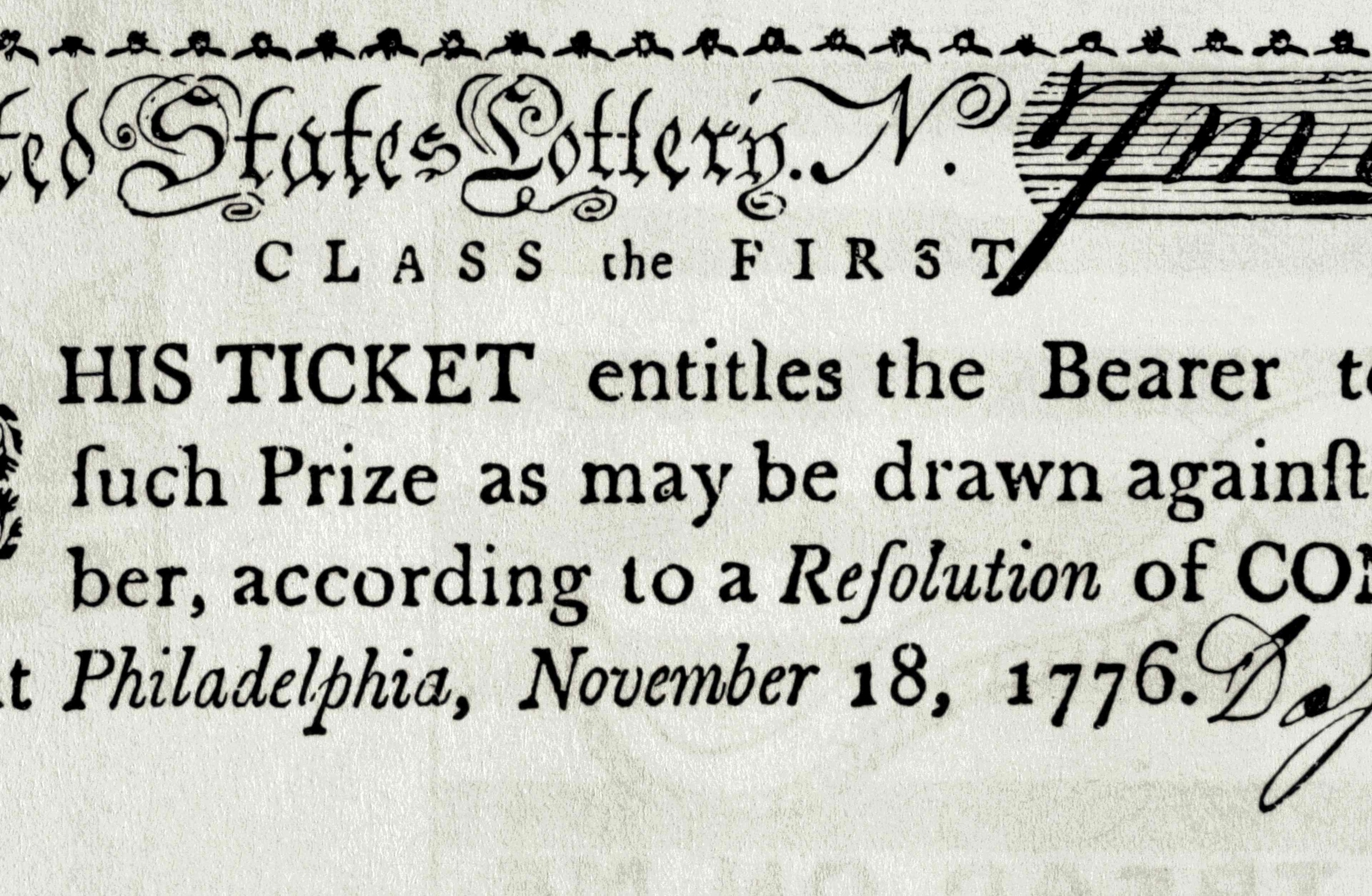
When the Revolutionary War erupted in 1775, the First Continental Congress faced the daunting task of funding an army against the world’s most powerful military empire. Lacking the authority to levy direct taxes, the Congress turned to the tried-and-true colonial method: they launched the Great United States Lottery in 1776.
The goal was to raise $5 million to fund the Continental Army. However, this national experiment turned into a colossal failure. Unlike previous lotteries that dealt in stable British pounds, this lottery relied on the newly minted Continental Currency. Because the Congress printed this paper money rapidly to fund the war, it suffered from hyperinflation, rapidly losing its value. Colonists quickly realized that even if they won, the prize money would be virtually worthless. The lottery was a total bust, forcing the young nation to rely on critical financial loans and military assistance from the French to win their independence.
Lesser-Known Historical Anecdotes
- The “Incorruptible” Child Drawers: To prevent fraud and assure the suspicious public that the drawings were completely fair, managers of colonial lotteries routinely hired young children or orphans to draw the tickets blindly from large wooden drums.
- Raffling a Mansion: Cash prizes were rare in the early eighteenth century. A highly publicized 1720 lottery in Philadelphia offered a beautiful, brand-new brick house at the corner of Third and Arch Streets. Tickets sold for 20 shillings each.
- The Quakers’ Crusade: Not everyone loved the lotteries. The Quakers of Pennsylvania were early and vocal opponents of the practice, arguing that it promoted greed, idle habits, and moral decay, leading to occasional bans in Philadelphia.
Why It Still Matters Today
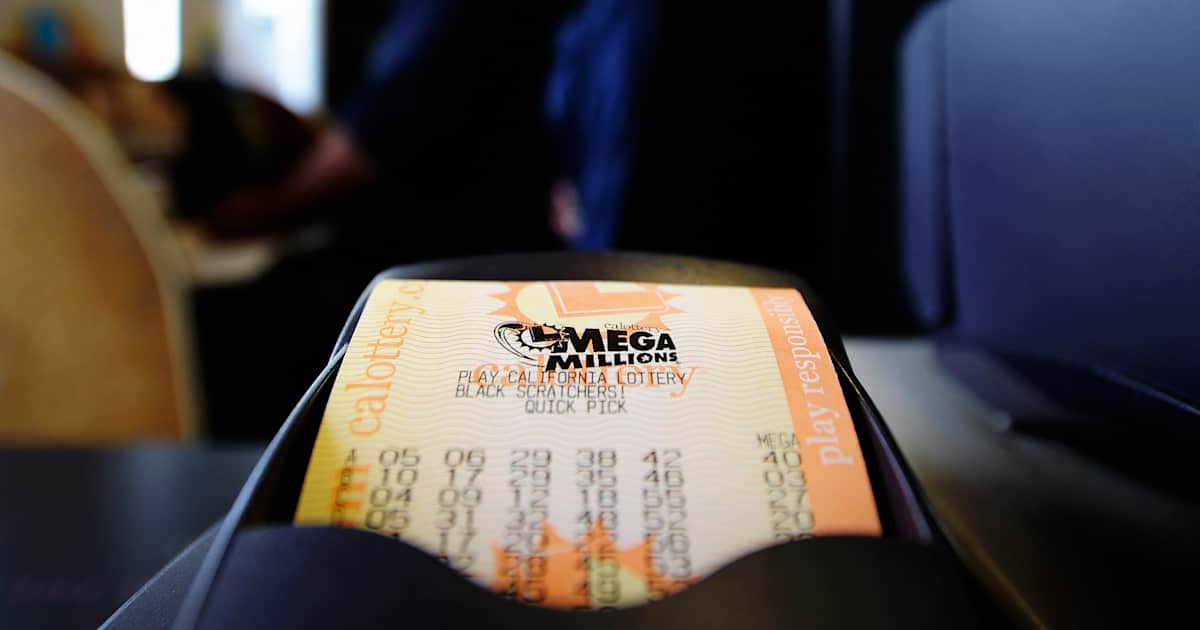
The legacy of early American lotteries is alive and well in modern society. Today, 45 U.S. states, along with Washington D.C., Puerto Rico, and the U.S. Virgin Islands, run official state lotteries. Just as in the 1700s, modern state lotteries are marketed under the banner of civic virtue, with governments promising that ticket revenues will fund public education, environmental preservation, and highway construction.
However, the modern debate mirrors the colonial one. Critics still argue that state lotteries function as a regressive tax on low-income communities, while proponents maintain that they provide vital, non-mandatory funding for the public good. Every time a modern American buys a Powerball or Mega Millions ticket, they are participating in a financial tradition that dates back to the very survival of Jamestown.
People Also Ask
Did George Washington support lotteries?
Yes. George Washington was a strong supporter of lotteries and viewed them as a practical way to fund public works. He actively sponsored the Mountain Road Lottery in Virginia in 1768 and frequently purchased lottery tickets himself throughout his life.
What was the first lottery held in America?
The first lottery associated with American colonization was authorized by King James I in 1612 for the Virginia Company of London. The first lottery drawn physically on American soil took place in Philadelphia in 1720, offering a brick house as the grand prize.
How did lotteries help build Harvard and Yale?
During the colonial era, educational institutions struggled to raise funds. Colonial legislatures authorized Harvard and Yale to hold public lotteries. The proceeds from these ticket sales were directly used to construct classrooms, libraries, and dormitories that still stand today.
Conclusion
The story of how lotteries helped fund America’s 13 colonies highlights the resourcefulness and financial pragmatism of early Americans. Confronted with a vast, untamed wilderness and an aversion to direct taxation, the colonists gamified public finance. From saving Jamestown from starvation to building the brick-and-mortar foundations of the Ivy League and constructing historical landmarks like Faneuil Hall, early American lotteries proved that sometimes, the greatest national achievements begin with a simple roll of the dice.


