When we picture the American Revolutionary War, our minds immediately conjure images of the snows of Valley Forge, the strategic heights of Saratoga, or the muddy redoubts of Yorktown. However, this classical narrative overlooks a crucial geographic theater that arguably decided the entire conflict: the role of the Caribbean in the Revolutionary War. While the Continental Army struggled against the might of the British Empire, the warm waters of the Caribbean Sea became the setting for a high-stakes chess match involving the world’s most powerful empires. The “shot heard round the world” fired in Concord, Massachusetts, sent geopolitical shockwaves through the West Indies, transforming a local colonial rebellion into a global maritime war. From the massive sugar plantations of Jamaica to the tiny Dutch trading post of St. Eustatius, the Caribbean islands served not merely as a backdrop, but as the logistical lifeline and strategic epicenter that secured American independence.
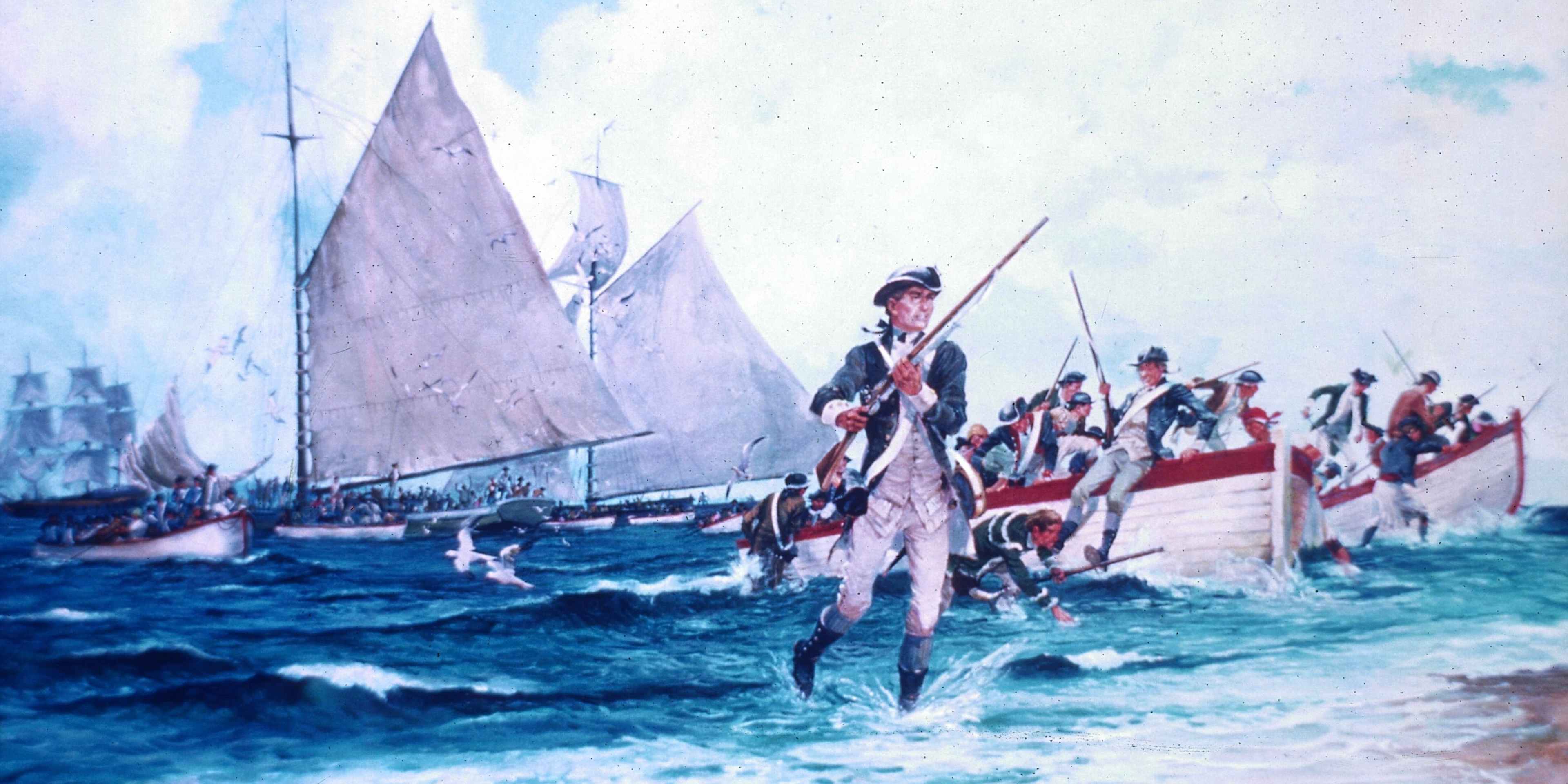
The Sugar Islands: Geopolitical Stakes and Imperial Rivalry
To understand why the Caribbean became such a critical arena, one must examine the economic landscape of the late eighteenth century. The European powers—Great Britain, France, Spain, and the Dutch Republic—viewed the Caribbean as the crown jewel of their imperial possessions. The primary driver of this immense wealth was cane sugar, a commodity so lucrative that it shaped global economic policies. At the outbreak of the war in 1775, Britain’s island colonies, including Jamaica, Barbados, and the Leeward Islands, were considered far more economically valuable to the crown than the mainland thirteen colonies. This disparity in economic value explains why British military strategists were consistently torn between defending their mainland territory and safeguarding their sugar wealth. When evaluating the general facts about the 13 colonies, it becomes clear that their agricultural output, while important, did not match the astronomical immediate cash returns generated by the Caribbean sugar trade. This economic reality made the West Indies an irresistible target for Britain’s rivals, who saw the American rebellion as a golden opportunity to dismantle British dominance, seize valuable islands, and redraw the global colonial map.
The Gunpowder Lifeline: St. Eustatius and Covert Aid
One of the most pressing challenges facing the Continental Army during the first years of the war was an acute shortage of gunpowder and artillery. In 1774, Great Britain banned all imports of firearms and ammunition to the rebellious colonies. With only a single, poorly equipped gunpowder mill operating on the mainland, the American patriots faced immediate military collapse. This is where the tiny Dutch island of St. Eustatius, measuring a mere twelve square miles, stepped in to alter the course of history. Officially neutral, the Dutch Republic possessed an insatiable appetite for commerce. St. Eustatius quickly transformed into a bustling free port and a clearinghouse for European munitions. Just as public lotteries funded America’s early development and infrastructure back on the mainland, the covert trade of St. Eustatius relied on high-risk, high-reward financial networks. Between 1778 and 1780, thousands of American merchant vessels and privateers bypassed British blockades to load their hulls with European gunpowder, weapons, and textiles. British Admiral George Rodney famously lamented that this single, tiny island did Great Britain more damage than all the armies of her most potent enemies combined. The illicit trade eventually grew so immense that Britain declared war on the Dutch Republic in 1780, leading to a direct military invasion of the island.
Spies, Privateers, and Martinique’s Shadow Network
Martinique and Saint-Domingue (modern-day Haiti) served as the primary hubs for French covert operations prior to France’s official entry into the conflict in 1778. French Foreign Minister Charles Gravier, Comte de Vergennes, recognized that a weakened Britain directly benefited French interests. As early as 1776, Vergennes authorized the covert financing of the American rebels, funneling millions of livres in credit, gunpowder, and clothing through Caribbean networks. American agent William Bingham operated out of Martinique, coordinating a massive network of spies, merchants, and privateers. The Continental Congress commissioned over two thousand privateers—privately owned armed vessels—to prey upon British merchant ships. Martinique’s harbors provided safe haven for these privateers and their captured booty, forcing the British Royal Navy to divert capital warships from the American coast to protect their valuable Caribbean trade routes. This massive diversion of naval power weakened the British blockade of the American mainland, allowing critical supplies to reach George Washington’s army.
Timeline of Key Events in the Caribbean Theater
- 1774: Great Britain imposes a strict ban on the export of gunpowder and arms to the American colonies, prompting the Continental Congress to seek external supplies.
- May 1776: French Foreign Minister Comte de Vergennes authorizes secret funds and arms shipments to the rebels, establishing Martinique and Saint-Domingue as major distribution hubs.
- November 1776: The Dutch fort on St. Eustatius fires the “First Salute” to an American vessel carrying the Grand Union flag, officially recognizing the nascent United States.
- 1778: France signs the Treaty of Alliance, officially entering the war. The British government immediately transfers five thousand troops from New York to the Caribbean to capture St. Lucia.
- 1779: Spain joins the war as a French ally, targeting British strongholds in West Florida and looking to secure Jamaica.
- December 1780: Britain declares war on the Dutch Republic (Fourth Anglo-Dutch War) to crush the illicit supply chain at St. Eustatius.
- September 1781: Admiral de Grasse defeats the British fleet at the Battle of the Chesapeake, directly leading to the British surrender at Yorktown.
- April 1782: The British achieve a decisive naval victory at the Battle of the Saintes, securing their remaining Caribbean colonies.
Key Figures and Their Historical Impact
Several prominent historical figures shaped the dramatic events of the Caribbean theater during the Revolutionary War:
- Admiral François Joseph Paul, Comte de Grasse: The French naval commander whose bold decision to sail his entire fleet from Saint-Domingue to the Chesapeake Bay sealed the fate of Lord Cornwallis at Yorktown. Without his intervention, the American Revolution may have dragged on or ended in defeat.
- William Bingham: A brilliant Philadelphia diplomat and spy who successfully integrated himself into French high society in Martinique. Bingham managed the logistics of privateering and established a reliable intelligence network that kept the Continental Congress informed of British naval movements.
- Admiral George Rodney: An aggressive and formidable British commander whose obsession with capturing and plundering St. Eustatius temporarily distracted him from intercepting de Grasse’s fleet, illustrating the deep conflict of interest British officers faced in the Caribbean.
The Ultimate Turning Point: How Saint-Domingue Saved Yorktown
The campaign that concluded the Revolutionary War at Yorktown, Virginia, in October 1781 was fundamentally a Caribbean operation. In the summer of 1781, Admiral de Grasse was stationed in Saint-Domingue with a massive French fleet. He received desperate pleas from George Washington and French General Rochambeau to bring his naval forces north. De Grasse made the audacious decision to leave the valuable French sugar colonies temporarily undefended, sailing his entire fleet of twenty-eight ships of the line to the Chesapeake Bay. To finance this operation, de Grasse raised over 1.2 million livres in hard silver from merchants and citizens in Havana, Cuba, providing the cash-strapped Continental Army with much-needed funds. When de Grasse arrived at the Chesapeake, he successfully blocked the British Royal Navy from reinforcing or evacuating Lord Cornwallis. This naval blockade, combined with the arrival of Washington’s land forces, forced Cornwallis to surrender, effectively securing American independence.
Long-Term Global Impacts
The involvement of the Caribbean in the Revolutionary War had profound, long-lasting consequences that extended far beyond the borders of the United States. First, the war devastated the economies of many Caribbean islands, interrupting trade and causing severe food shortages that led to the starvation of thousands of enslaved laborers. Second, the heavy debts incurred by France during the conflict directly precipitated the French Revolution in 1789. Third, the ideals of liberty and self-determination spread rapidly through the Caribbean, sparking the Haitian Revolution in 1791, where self-liberated slaves overthrew French colonial rule to establish the world’s first free Black republic. Additionally, revolutionary figures like Francisco de Miranda, who fought alongside Spanish forces in the Caribbean during the American Revolution, took these democratic concepts back to South America, paving the way for the Spanish-American wars of independence.
Lesser-Known Historical Anecdotes
The Battle of the Saintes: While Yorktown is celebrated as the end of the war, fighting in the Caribbean continued. In April 1782, the British fleet under Admiral Rodney defeated Admiral de Grasse at the Battle of the Saintes near Dominica. This massive naval engagement restored British prestige and ensured they retained control over valuable sugar islands like Jamaica in the peace treaty.
The Havana Cash Contribution: The pivotal Yorktown campaign was funded in part by the wealthy citizens of Havana. When de Grasse needed immediate funds to pay his sailors and buy supplies, Spanish authorities in Cuba collected gold and silver from local merchants, ensuring the allied army did not mutiny at the final hour.
The First Salute: On November 16, 1776, the American brig Andrew Doria arrived at St. Eustatius. The island’s Dutch governor, Johannes de Graaff, ordered an eleven-gun salute to the American flag, marking the first time a foreign power officially recognized a vessel of the United States.
Why It Still Matters Today
The history of the Caribbean in the Revolutionary War serves as a powerful reminder of the interconnected nature of global history. It challenges the traditional, Eurocentric, and isolationist narratives of the American founding, illustrating that American independence was achieved through a complex network of international alliances, covert trade, and global geopolitics. Today, as we discuss international relations, maritime security, and the shared heritage of the Americas, understanding the vital role of the Caribbean islands helps us appreciate the deep historical ties that bind the United States to its southern neighbors.
People Also Ask
Why was the Caribbean important in the Revolutionary War?
The Caribbean was vital because it served as the primary source of covert gunpowder, weapons, and financial credit for the Continental Army, while also acting as a strategic naval theater where European powers diverted British military resources away from the North American mainland.
How did the Dutch help the Americans during the war?
The Dutch helped the Americans by operating a massive, highly profitable smuggling hub on the island of St. Eustatius, which bypassed British blockades to supply the patriots with crucial ammunition, firearms, and gunpowder.
What role did French islands like Martinique play?
French islands like Martinique served as operational bases for American spies and privateers, and acted as safe harbors where covert aid from the French government was collected and shipped to American ports.
Conclusion
The story of the American Revolution is incomplete without recognizing the vital role played by the Caribbean theater. Far from being a sideshow, the West Indies were the logistical engine that kept the Continental Army armed and fighting. By drawing the naval forces of France, Spain, and the Netherlands into a global conflict, the Caribbean ultimately forced Great Britain to spread its military resources too thin. From the covert trading houses of St. Eustatius to the decisive naval maneuvers of Admiral de Grasse, the rich sugar islands of the Caribbean proved to be the ultimate catalyst for American liberty.


