Benjamin Franklin remains one of the most enigmatic, multifaceted, and brilliant figures in the history of the Western world. As a self-made printer, world-renowned scientist, satirical writer, civic activist, and shrewd diplomat, Franklin’s contributions laid both the physical and philosophical foundations of the United States. While many of his contemporary Founding Fathers of America were aristocratic planters or elite lawyers, Franklin was a proud working-class runaway who rose to global prominence through sheer intellect and unparalleled pragmatism. Yet, behind his folksy, avuncular public image lay a complex individual whose eccentric behaviors and private contradictions often defied the rigid puritanical norms of his era. Far from being a mere bystander or a passive academic, Franklin was an active revolutionary who single-handedly orchestrated the international alliances that saved the American War of Independence. By examining his early life, his revolutionary turning points, and his diplomatic maneuvers, we uncover how a seventy-year-old man wearing a fur cap managed to alter the course of global geopolitics and forge a new nation.
Historical Background: From British Subject to Revolutionary Icon
Born in Boston in 1706 as the fifteenth of seventeen children, Benjamin Franklin’s early years were defined by constraints. Apprenticeship to his overbearing brother, James, a printer, introduced him to the power of the press but also to the sting of subjugation. Under the pseudonym Silence Dogood, a middle-aged widow, a teenaged Franklin secretly penned satirical essays highlighting the hypocrisy of Boston’s religious elite. In 1723, Franklin ran away to Philadelphia, a bustling colonial town where he would establish his own printing business, famously publishing Poor Richard’s Almanac from 1732 to 1758. The publication, filled with practical aphorisms and witty proverbs, was later collected into his famous economic essay, The Way to Wealth.
For decades, Franklin was a proud, loyal subject of the British Empire. He envisioned a grand, collaborative empire where the American colonies would grow alongside Great Britain. However, as the British Parliament began imposing direct taxes on the colonies without providing legislative representation, Franklin’s perspective shifted. His moderation dissolved as British arrogance hardened, prompting him to dedicate his final decades to colonial self-determination and eventual independence.
Key Events Timeline in the Life of Benjamin Franklin
To understand Franklin’s immense impact, we must look at the pivotal moments that shaped his life and the young republic:
- 1706: Born on January 17 in Boston, Massachusetts.
- 1723: Runs away to Philadelphia, starting his career as an independent printer.
- 1732: Publishes the first edition of Poor Richard’s Almanac, cementing his cultural influence.
- 1751: Publishes his ground-breaking scientific work, Experiments and Observations on Electricity.
- 1754: Drafts the Albany Plan of Union and publishes the famous ‘Join, or Die’ cartoon.
- 1776: Co-drafts and signs the Declaration of Independence; sails to France as a commissioner.
- 1778: Secures the Treaty of Alliance and Treaty of Amity and Commerce with France.
- 1783: Signs the Treaty of Paris, formally ending the Revolutionary War.
- 1787: Serves as the elder statesman at the Constitutional Convention, helping broker crucial compromises.
- 1790: Dies on April 17 in Philadelphia at the age of 84.
The Albany Plan of Union and Indigenous Democratic Roots
As tensions escalated between Great Britain, France, and various indigenous groups in North America during the mid-18th century, Franklin recognized that colonial disunity was a fatal flaw. In 1754, he proposed the Albany Plan of Union, which suggested a unified colonial government under a single crown-appointed president-general and a grand council. In developing this framework, Franklin and other colonial leaders drew inspiration from the structure of the Iroquois Confederacy (Haudenosaunee). The Great Law of Peace, which united six distinct indigenous nations into a powerful, democratic federation, served as a profound real-world proof of concept that diverse independent entities could unite under a single federal government while preserving their local sovereignty.
To promote this message of unity, Franklin published the first political cartoon in American history—a segmented snake representing the divided colonies. Understanding how Benjamin Franklin’s viral political cartoon united the 13 colonies is crucial to appreciating how visual media was first weaponized to foster national consciousness decades before the actual outbreak of hostilities.
The Eccentric Diplomat Who Secured the French Alliance
When the Continental Congress declared independence in 1776, the prospect of victory was bleak. The Continental Army, plagued by lack of funds, weapons, and training, faced the world’s most powerful military empire. Recognizing that America could not win alone, Congress sent the seventy-year-old Franklin to Paris in December 1776 to negotiate a formal alliance. It was here that Franklin’s genius for psychological strategy and public relations truly shone.
Rather than trying to mimic the opulent, highly structured French court, Franklin did the exact opposite. He understood that the intellectual elite of Paris, heavily influenced by Enlightenment philosophers like Jean-Jacques Rousseau, romanticized the American colonies as a land of pristine, rustic virtue. Franklin leaned into this myth completely. He abandoned courtly powdered wigs and instead wore simple, drab brown clothing and a prominent marten fur cap. To the French, he appeared as the physical embodiment of the ‘philosopher of the backwoods’—wise, unpretentious, and virtuous.
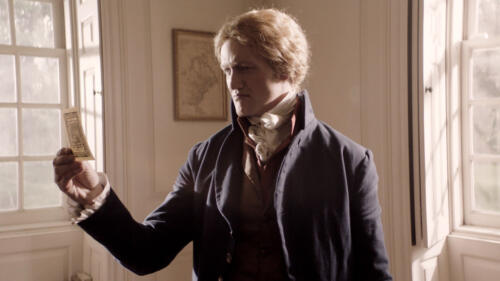
His charm was irresistible. Wealthy aristocrats bought portraits of him, fashionable women styled their hair in the ‘coiffure à la Franklin’ to mimic his fur cap, and King Louis XVI’s court was captivated by his wit. Behind this eccentric, folksy facade lay a brilliant diplomatic operator. Franklin capitalized on French resentment toward Great Britain following the Seven Years’ War. Following the American victory at the Battle of Saratoga, Franklin successfully leveraged his high social standing and tactical brilliance to secure the Treaty of Alliance in February 1778. This critical alliance unlocked massive financial loans, naval fleets, and ground troops, demonstrating the vital ways the French helped win the American Revolution and turn the tide against the British.
Franklin’s Complex Private Life: Debunking the Myths
While Franklin’s public accomplishments are legendary, his private life reveals a far more complex, human, and sometimes flawed personality. Popular folklore often portrays Franklin as a prolific, unchecked romantic with an endless appetite for the ladies of Paris. While it is true that Franklin had a deep appreciation for the intellect and company of women—engaging in highly flirtatious correspondences with brilliant French salonnières like Madame Brillon and Madame Helvétius—historical evidence suggests these relationships were primarily intellectual, emotional, and social rather than physical. After all, Franklin was in his late seventies and plagued by severe gout and bladder stones during his time in Paris.
His domestic life was equally intricate. He entered a common-law marriage with Deborah Read in 1730, a steadfast woman who managed his printing businesses and household in Philadelphia while he spent decades living abroad in London and Paris. Sadly, Deborah suffered from declining health and died in 1774 while Franklin was in England, having not seen her husband for a decade.
Perhaps the greatest tragedy of Franklin’s personal life was his relationship with his illegitimate son, William Franklin. Benjamin had raised William as a trusted partner; William even assisted in the famous 1752 kite-and-key electricity experiment. However, when the Revolution broke out, William remained a staunch Loyalist and served as the royal governor of New Jersey. This political divergence fractured their relationship permanently. Benjamin refused to reconcile with his son even after the war, demonstrating a cold, unyielding commitment to the American cause that contrasted sharply with his otherwise affable public persona.
Constitutional Statesman: Architect of Federal Balance
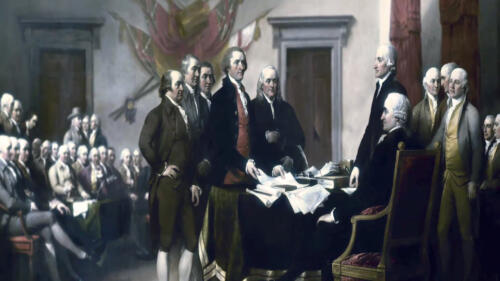
Upon his return to America in 1785, Franklin was celebrated as a national hero. In 1787, at the age of 81, he was chosen as a delegate to the Constitutional Convention in Philadelphia. He was the oldest delegate in attendance, acting as a stabilizing force in a room filled with passionate, younger men who frequently clashed over the distribution of power.
As the delegates argued bitterly over representation—with larger states wanting proportional representation and smaller states demanding equal representation—Franklin played a pivotal role in drafting the ‘Great Compromise’ (or Connecticut Compromise). This compromise created a bicameral legislature, balancing power between a Senate (equal representation) and a House of Representatives (proportional representation). Franklin’s pragmatism helped structure how the Founding Fathers divided power between states and federal governments, ensuring that the nascent nation would not fracture before it even began.
Lesser-Known Facts and Fascinating Anecdotes
Beyond the lightning rod and the bifocals, Franklin’s life was filled with surprising, eccentric details:
- The Daily Naked ‘Air Bath’: Long before modern wellness trends, Franklin believed that cold fresh air helped prevent disease. Every morning, he would sit entirely naked in his bedroom next to an open window for up to an hour, reading and writing letters, claiming it invigorated his constitution.
- The Musical Inventor: Intrigued by the sound of wet fingers on glass bowls, Franklin invented the ‘glass armonica’ in 1761. The instrument became a sensation in Europe; both Wolfgang Amadeus Mozart and Ludwig van Beethoven composed original pieces specifically for Franklin’s glass invention.
- A Champion Swimmer: Franklin was an exceptionally strong swimmer. During an early trip to London, he performed legendary swimming stunts in the River Thames, including floating on his back and using a paper kite to pull himself across a pond. He wrote extensive treatises on the health benefits of swimming and was posthumously inducted into the International Swimming Hall of Fame.
Why Benjamin Franklin Still Matters Today
Benjamin Franklin’s legacy endures not merely because his face is printed on the hundred-dollar bill, but because he championed the democratic ideals of meritocracy, civic engagement, and scientific inquiry. In an era dominated by hereditary monarchies and religious dogma, Franklin argued that a person’s worth should be judged by their utility to society rather than their ancestral lineage. He founded America’s first subscription library, the first volunteer fire department, a public hospital, and the University of Pennsylvania—all driven by a secular, civic-minded duty to improve human life.
In today’s polarized political climate, Franklin’s pragmatic approach to compromise, his devotion to scientific facts, and his understanding of international diplomacy serve as vital reminders of the qualities necessary to sustain a democratic republic. He famously warned, upon leaving the Constitutional Convention, that the founders had created ‘a republic, if you can keep it.’ His life remains an enduring handbook on how citizens can actively keep and nurture that republic.
People Also Ask (FAQ)
Was Benjamin Franklin ever the President of the United States?
No, Benjamin Franklin was never the President of the United States. However, he held numerous vital leadership roles, including President of the Pennsylvania Executive Council (similar to a governor), Postmaster General, and Ambassador to France. He is the only Founding Father to have signed all four of the key documents that established the nation: the Declaration of Independence, the Treaty of Alliance with France, the Treaty of Paris, and the United States Constitution.
What did Benjamin Franklin actually discover about electricity?
While Franklin did not ‘invent’ electricity, his groundbreaking experiments proved that lightning was a form of static electricity. His famous 1752 kite experiment led to his invention of the lightning rod, which saved countless wooden colonial structures from devastating fires. He also coined many foundational electrical terms still used today, including battery, charge, conductor, positive, and negative.
How did Benjamin Franklin’s lifestyle impact his political career?
Franklin’s eccentricities, sharp wit, and rejection of traditional aristocratic conventions actually enhanced his political career. His folksy, unpretentious persona was highly effective in France, helping him secure the critical military alliance that won the Revolutionary War. While his personal life was complex and his political views split his family, his public reputation as a pragmatic, brilliant philosopher remained untarnished.
Conclusion
Benjamin Franklin was a man of extraordinary depth who lived at the intersection of scientific curiosity, literary genius, and revolutionary statecraft. By utilizing his eccentricities as diplomatic tools and his unmatched intellect as a legislative anchor, he ensured the survival of a fragile American rebellion and the birth of a global superpower. Franklin’s life teaches us that progress is achieved not through rigid dogmatism, but through relentless curiosity, civic responsibility, and the willingness to compromise. Over two centuries after his death, Dr. Franklin continues to light the path of American democracy and scientific achievement.


