The Salem witch trials of 1692 are deeply etched into the collective memory of the United States, serving as a cautionary tale of mass hysteria, religious extremism, and the dangers of unchecked judicial power. Yet, decades before the tragedy in Massachusetts, an infinitely larger and more devastating phenomenon swept across Europe. Known to historians as the “Great Hunt,” this period between 1560 and 1630 resulted in approximately 80,000 witchcraft accusations and more than 40,000 executions. For centuries, historians attributed this wave of violence to bad weather, economic decline, or weak centralized governments. However, groundbreaking research by modern economists Peter Leeson and Jacob Russ offers a startlingly different explanation: early Christian churches used witch hunts as a highly calculated marketing and recruitment tool. During the intense rivalry of the Reformation and Counter-Reformation, Catholic and Protestant officials competed fiercely for the hearts, minds, and souls of European citizens. By actively prosecuting “witches,” these churches sought to demonstrate their spiritual authority and prove that they alone possessed the divine power to protect their congregations from the influence of Satan. This competitive persecution established a grim precedent that would eventually cross the Atlantic, deeply influencing the religious and social landscapes of early colonial America.
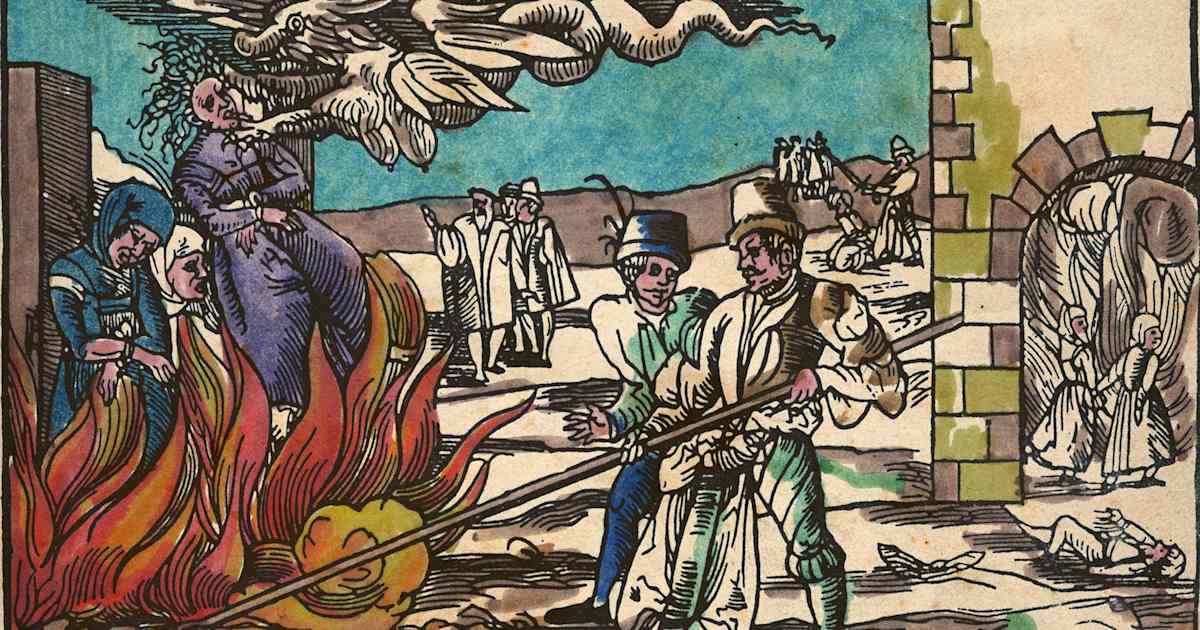
The Historical Background: From Skepticism to Burning Stakes
To understand how witch hunts became a tool for church recruitment, we must first look at how the medieval Church viewed witchcraft. For nearly half a millennium, from roughly 900 to 1400 AD, the Catholic Church did not actively persecute witches. In fact, official doctrine denied their very existence. The Canon Episcopi, a vital piece of medieval canon law, declared that belief in the flight of witches or their supernatural powers was a heretical superstition. In 1258, Pope Alexander IV explicitly prohibited the prosecution of witchcraft unless it directly involved heresy, directing inquisitors to focus on theological deviations rather than local folk magic.
This long-standing skepticism shattered in the late 15th century. The catalyst was the publication of the infamous Malleus Maleficarum (The Hammer of Witches) in 1486 by German inquisitor Heinrich Kramer. This text argued that witches were real, active agents of the devil, and that failing to prosecute them was itself a form of heresy. However, the real turning point did not occur until 1517, when Martin Luther nailed his 95 Theses to the door of Wittenberg Castle church, igniting the Protestant Reformation. Suddenly, the Catholic Church’s absolute religious monopoly in Western Europe was shattered. The continent was divided into competing factions: Catholics and Protestants. To survive and expand, both sides had to compete aggressively for the loyalty of undecided Christians.
Causes and Context: The Market for Faith and Spiritual Warfare
The core theory proposed by economists Peter Leeson and Jacob Russ suggests that the European witch trials functioned similarly to modern political campaigns. In regions where one faith held an absolute monopoly, there was no need to spend resources on dramatic displays of spiritual defense. However, in “confessional battlegrounds”—areas where Protestantism had made significant inroads and citizens had a genuine choice between competing churches—the clergy had to prove their worth. In these contested areas, witch trials served as sensational public advertisements of a church’s power over the forces of darkness.
This economic model perfectly explains the geographical distribution of the Great Hunt. Germany, the birthplace of Protestantism and the primary battleground of the Reformation, accounted for a staggering 40 percent of all witchcraft executions in Europe. Switzerland, France, England, and the Netherlands—all regions characterized by intense Protestant-Catholic competition—accounted for another 35 percent. By contrast, in regions where Catholicism remained unchallenged, such as Spain, Italy, Portugal, and Ireland, witch trials were exceedingly rare. Collectively, these nations accounted for a mere six percent of all prosecutions. The Spanish and Italian Inquisitions, far from being the bloodthirsty witch-hunting machines of popular myth, actually dismissed the vast majority of witchcraft accusations due to lack of empirical evidence, as they had no market incentive to participate in the hysteria.
A Timeline of Spiritual Conflict and Persecution
- 1258: Pope Alexander IV issues a papal bull prohibiting the prosecution of witchcraft, classifying it as a minor superstition rather than a capital offense.
- 1486: Heinrich Kramer publishes the Malleus Maleficarum, laying the theological groundwork for the systematic persecution of witches across Europe.
- 1517: Martin Luther initiates the Protestant Reformation, breaking the religious monopoly of the Catholic Church and creating a competitive spiritual market.
- 1560–1630: The peak of the “Great Hunt” in Europe, characterized by hyper-intense competition between Catholics and Protestants, resulting in tens of thousands of executions.
- 1647: The execution of Alse Young marks the first American witch hunt in Connecticut, showing how European anxieties had migrated to the New World.
- 1648: The signing of the Treaty of Westphalia ends the Thirty Years’ War, establishing clear territorial monopolies for Catholicism and Protestantism and bringing a swift decline to European witch trials.
- 1692: The Salem Witch Trials erupt in colonial Massachusetts, fueled by localized social tensions and lingering puritanical anxieties.
Important Figures of the Witch-Hunting Era
Several historical figures played defining roles during this dark era of religious competition:
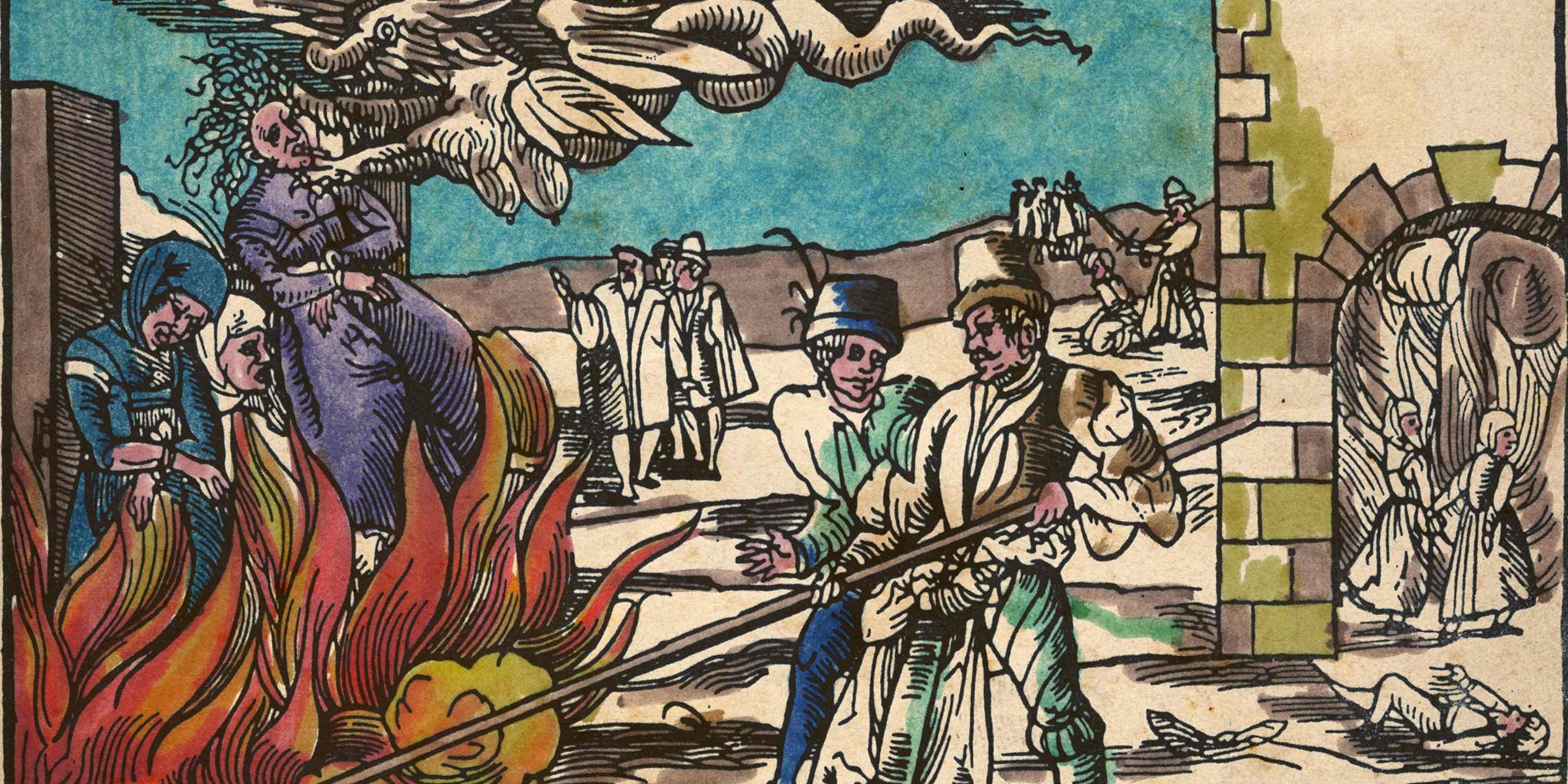
- Martin Luther (1483–1546): While his primary goal was reform, his theological split from Rome inadvertently created the competitive environment that fueled the witch trials. Luther himself believed in witchcraft and supported the execution of those deemed to be in league with Satan.
- Heinrich Kramer (1430–1505): The zealous inquisitor whose writings popularized the concept of the diabolical witch covenant, shifting the legal focus from petty magic to active treason against God.
- Peter Leeson and Jacob Russ: The contemporary economists whose groundbreaking 2018 study analyzed historical data from thousands of trials to prove the statistical correlation between inter-church competition and execution rates.
Major Turning Points: The Rise and Fall of the Great Hunt
Two major developments dictated the trajectory of the European witch hunts. The first was the Protestant Reformation, which transformed localized superstitions into matters of geopolitical survival. The second was the Peace of Westphalia in 1648. This landmark peace treaty ended the devastating Thirty Years’ War and established a new international order. Crucially, the treaty partitioned Europe into distinct Catholic and Protestant territories, granting local rulers the authority to determine the religion of their lands. By legally restoring religious monopolies across most of the continent, the Treaty of Westphalia effectively eliminated the need for churches to compete for followers. Consequently, the number of witch trials plummeted dramatically in the decades following 1648.
Simultaneously, the dawn of the Scientific Revolution in the late 17th century began to reshape European intellectual thought. As scholars like Isaac Newton, Francis Bacon, and René Descartes popularized empirical observation and rational skepticism, the belief that natural disasters, illnesses, and crop failures were caused by demonic witchcraft began to erode. Legal systems across Europe slowly stopped accepting spectral evidence and confessions obtained under torture, bringing a formal end to the judicial persecution of witches.
The Long-Term Impact on America: Seeds of Colonial Suspicion
The legacy of European religious competition crossed the Atlantic with the early English Puritans. These settlers fled what they viewed as a corrupt and compromised church system in Europe, bringing with them a deeply ingrained fear of satanic subversion and a fierce desire to establish a pure, godly society. This intense religious anxiety, coupled with the harsh realities of frontier life, conflict with Native Americans, and internal political instability, created a fertile ground for moral panics.
This cultural inheritance culminated in the Salem Witch Trials of 1692. To understand the dynamics of this panic, historians look closely at who the main accusers were in the Salem witch trials, revealing how younger generations utilized accusations to assert authority within a highly rigid religious hierarchy. Furthermore, the folklore of the era underwent a fascinating evolution; European traditions, such as the mysterious lore of why witches ride brooms, became deeply embedded in the American imagination. The eventual horror and shame of the Salem executions ultimately accelerated the separation of church and state in America, as colonial leaders realized that integrating religious dogmatism with the secular judicial system yielded catastrophic results.
Lesser-Known Facts About the Witch Trials
- The Inquisition Was Surprisingly Lenient: Popular culture often portrays the Spanish and Roman Inquisitions as the most brutal witch-hunters in history. In reality, their strict legal standards, refusal to accept tortured confessions without corroboration, and theological skepticism meant that almost no one was executed for witchcraft under their direct jurisdiction.
- Men Were Also Targets: While the vast majority of those accused were marginalized women, approximately 20 to 25 percent of all accused witches in Europe were men. In some regions, such as Iceland and Normandy, the majority of prosecuted individuals were male.
- Economic Competition, Not Just Bigotry: Statistical models show that variables like temperature drops (the Little Ice Age) or localized inflation do not align with the frequency of witch trials nearly as well as the proximity of competing Catholic and Protestant parishes.
Why It Still Matters Today: Modern Witch Hunts and Moral Panics
Understanding how early churches utilized witch trials to gain followers teaches us a vital lesson about human psychology and institutional behavior. When institutions—whether they are religious, political, or social—feel their dominance threatened by competitors, they often resort to creating “out-group” narratives and fueling moral panics. By defining a clear, demonic enemy, these organizations can rally their base, silence internal dissent, and present themselves as the sole defenders of truth and safety.
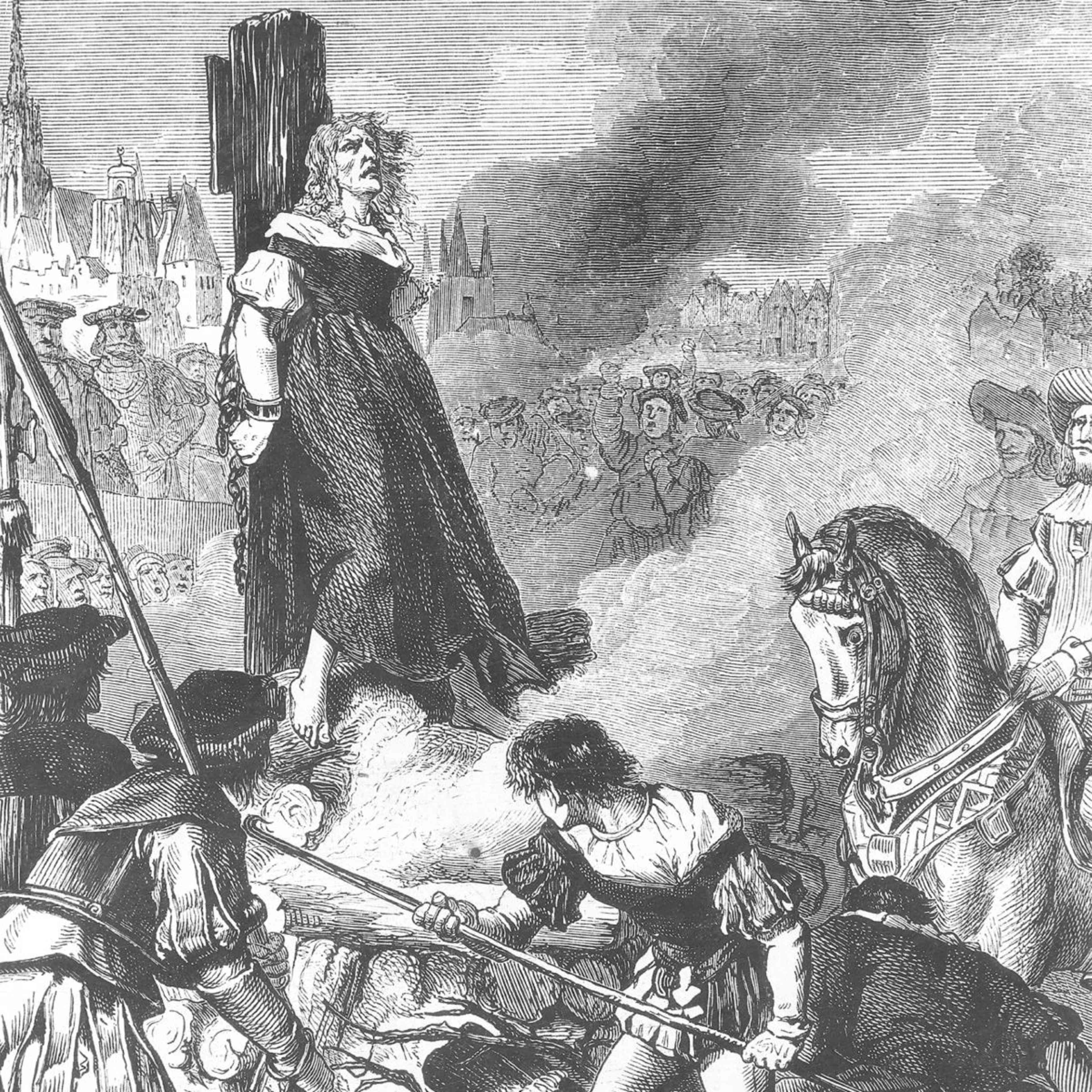
Today, we see modern parallels in political polarization, online cancel culture, and conspiracy theories. The historical mechanisms of the European Great Hunt remind us to remain deeply skeptical of any authority that attempts to consolidate power by manufacturing fear and division.
People Also Ask
Why did early churches hunt witches?
Early churches utilized witch trials during the Reformation and Counter-Reformation as a form of competitive advertisement. By successfully identifying and prosecuting “witches,” both Catholic and Protestant churches sought to prove their spiritual superiority and offer protection to undecided Christians.
Did the Catholic Church always believe in witches?
No. For centuries, the Catholic Church denied the existence of witches, viewing belief in witchcraft as a pagan superstition. It was only during the late medieval period and the onset of the Protestant Reformation that the Church reversed its stance to combat Protestantism and maintain its followers.
What ended the European witch trials?
The European witch trials were brought to an end by the Peace of Westphalia in 1648, which stabilized religious boundaries and reduced church competition, and the rise of the Scientific Revolution, which promoted rational skepticism and eliminated spectral evidence from legal courts.
Conclusion
The history of the European Great Hunt reveals that the persecution of witches was not merely a product of ignorant superstition, but a highly organized, politically motivated campaign fueled by religious competition. By analyzing this tragedy through an economic and sociological lens, we gain a profound understanding of how easily fear can be weaponized for institutional gain—a historical lesson that continues to echo in our modern world.


