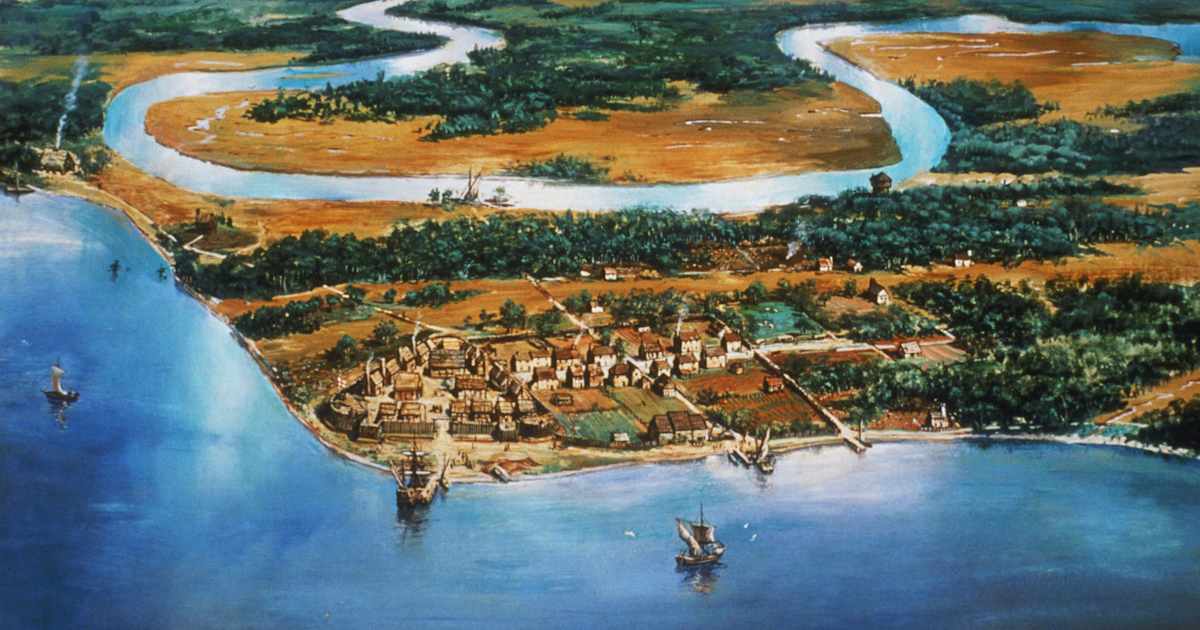
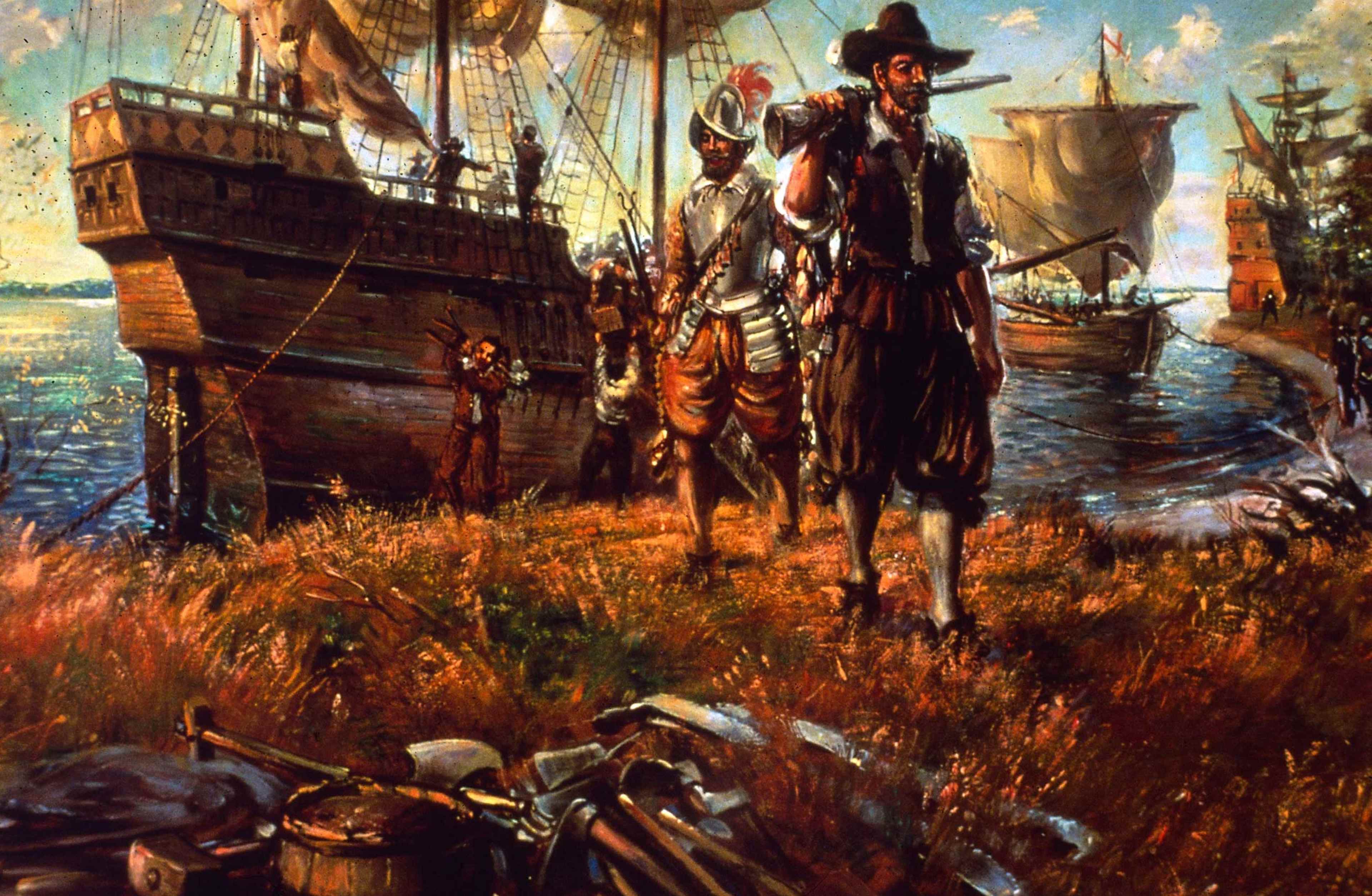
In the spring of 1607, three wooden ships—the Susan Constant, the Godspeed, and the Discovery—sailed into the Chesapeake Bay, carrying a group of English adventurers who would forever alter the course of human history. This brave yet deeply flawed expedition marked the founding of the Jamestown Colony, the first permanent English settlement in North America. Established on May 14, 1607, under the auspices of the joint-stock Virginia Company of London, Jamestown serves as the painful, triumphant, and complex crucible from which modern America emerged. Far from a simple tale of peaceful discovery, the history of Jamestown is a dramatic saga of desperate survival, brutal conflict with indigenous nations, economic revolution, and the tragic convergence of representative democracy and racialized slavery. To truly understand the United States today, one must first look back to the muddy, swampy shores of the James River, where the American story began in earnest.
Historical Background: The Race for the New World
By the late 16th and early 17th centuries, Spain was the undisputed superpower of the Americas, pulling vast wealth in gold and silver from its southern colonies. Meanwhile, England’s early attempts to plant a flag in the New World had met with disastrous failure, most notably the mysterious disappearance of the Roanoke Colony in the 1580s. Eager to challenge Spanish dominance, acquire wealth, and find a trade route to the Pacific Ocean, King James I granted a charter in 1606 to the Virginia Company of London. This joint-stock venture allowed wealthy investors to pool their resources, sharing both the immense financial risks and the potential rewards of colonizing a territory they named ‘Virginia’ in honor of Queen Elizabeth I.
Crucial Timeline of the Jamestown Colony
- 1606: King James I issues a royal charter to the Virginia Company of London to establish a colony in Virginia.
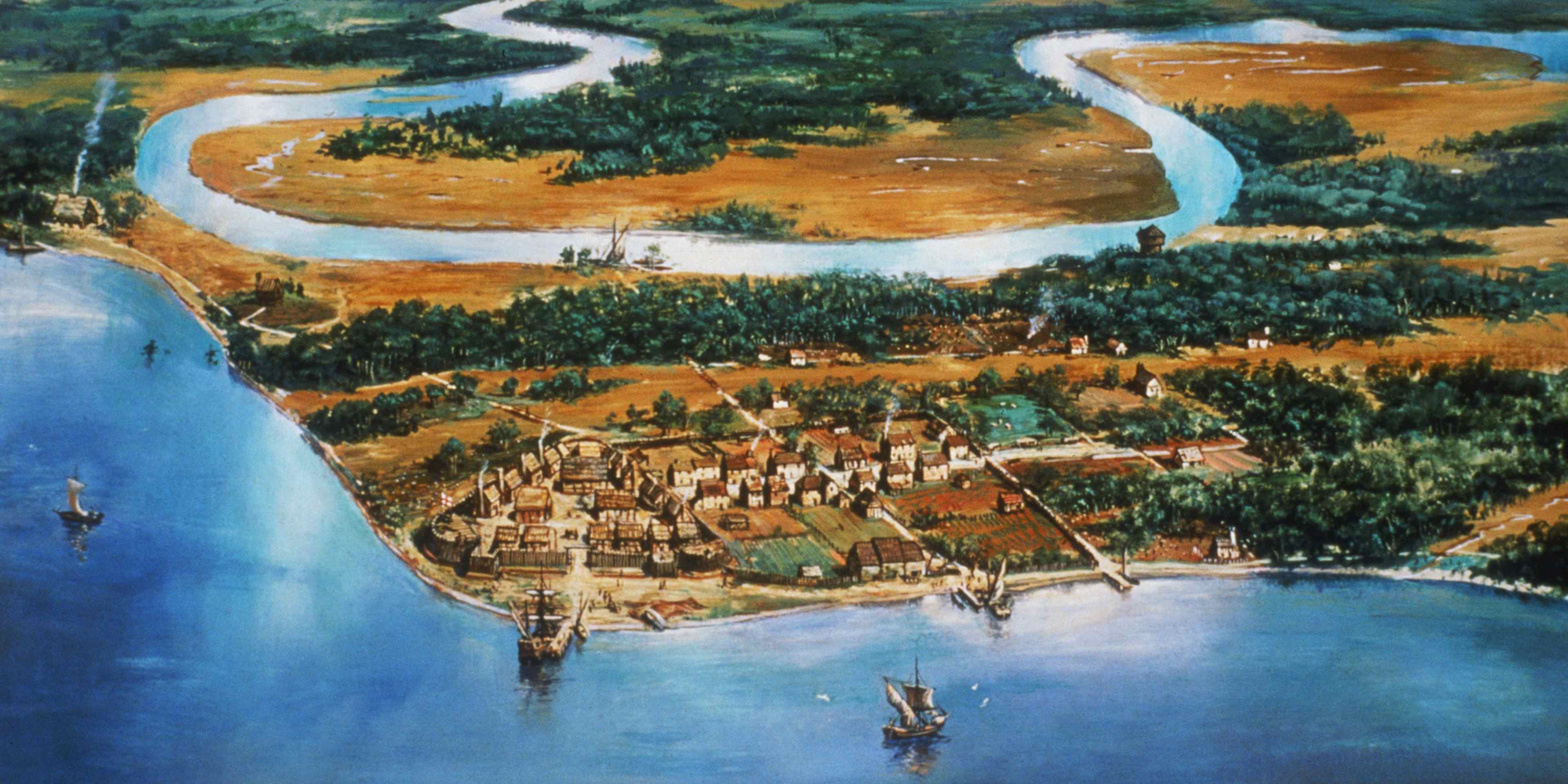
- May 13-14, 1607: Approximately 104 English men and boys land on a peninsula along the James River, establishing Jamestown.
- Winter 1609–1610: ‘The Starving Time’ decimates the colony, reducing the population from hundreds to just a few dozen survivors.
- June 1610: Lord De La Warr arrives with fresh supplies and settlers, preventing the abandonment of Jamestown.
- 1612: John Rolfe introduces Orinoco tobacco seeds, creating Virginia’s first highly profitable cash crop.
- April 1614: Pocahontas marries John Rolfe, establishing a temporary peace between the English and the Powhatan Confederacy.
- July 1619: The House of Burgesses meets for the first time, marking the birth of representative democracy in English America.
- August 1619: The first recorded Africans arrive in Jamestown aboard a privateer ship, laying the seeds of chattel slavery.
- March 1622: The Powhatan Uprising, led by Chief Opechancanough, kills nearly one-quarter of the English population in Virginia.
- 1624: King James I revokes the Virginia Company charter, turning Virginia into an official royal crown colony.
- 1676: Bacon’s Rebellion erupts, resulting in the burning of Jamestown to the ground.
- 1699: The colonial capital is officially moved from Jamestown to Middle Plantation (Williamsburg), leading to the colony’s abandonment.
Key Historical Figures and Their Legacies
Captain John Smith
A seasoned mercenary and explorer, John Smith’s iron-fisted leadership saved Jamestown from early collapse. Imposing the famous rule ‘He that will not work shall not eat,’ Smith mapped the region, established trade with the local Powhatan tribes, and enforced military discipline among the largely aristocratic colonists who were ill-prepared for physical labor.
Pocahontas
The daughter of Chief Powhatan, Pocahontas played a vital intermediary role between her people and the English. Though popularized by myth as John Smith’s romantic interest, her actual historical role was far more complex. Captured by the colonists in 1613, she converted to Christianity, took the name Rebecca, and married John Rolfe, which ushered in an era of peace crucial for the colony’s survival.
John Rolfe
While John Smith saved Jamestown physically, John Rolfe saved it economically. By successfully cultivating a sweet, West Indian strain of tobacco, Rolfe turned the struggling outpost into a booming agricultural powerhouse, establishing Virginia’s reliance on a single-crop export economy.
Chief Powhatan (Wahunsenacawh)
The supreme leader of an empire of over 30 Algonquian-speaking tribes, Powhatan initially sought to integrate the English into his tributary system as allies. His sophisticated diplomacy and control over food supplies dictated the early survival of the Jamestown settlers.
Causes, Context, and the Quest for Wealth
The establishment of Jamestown was driven by economic desperation and global rivalry. The English hoped to find deposits of gold and silver similar to those found by Spain in Central and South America. Furthermore, they sought a passage to the Orient to bypass traditional, dangerous trade routes. Instead of gold, the settlers encountered a harsh reality. They chose a low, swampy peninsula for defense against Spanish ships, but the location was plagued by mosquitoes, poor sanitation, and brackish water. To understand how difficult their everyday existence was, historians often look at what daily life was like in Jamestown during those grueling early years, marked by typhoid, dysentery, and near-constant starvation.
Pivotal Turning Points: From Failure to Empire
Jamestown’s survival was never guaranteed. The winter of 1609-1610, known as ‘The Starving Time,’ saw the colony’s population shrink from around 500 to roughly 60. Colonists were reduced to eating rats, leather, and in well-documented archaeological instances, resorting to cannibalism. The colony was on the verge of total abandonment in the spring of 1610 when ships under Lord De La Warr arrived, bringing fresh supplies, military discipline, and new colonists.
Another major turning point occurred in 1619, a year of monumental dual legacies. In July of that year, the General Assembly—later known as the House of Burgesses—met for the first time, establishing the precedent of self-governance and representative democracy in the New World. However, just weeks later, a Dutch privateer landed with approximately 20 to 30 enslaved Africans. This fateful year established the paradoxical dual path of American history: the pursuit of liberty alongside the institutionalization of human bondage.
Conflict, Expansion, and Rebellion
As tobacco cultivation exploded, the settlers’ insatiable demand for land led to inevitable clashes with the Powhatan Confederacy. Major uprisings in 1622 and 1644 showed the strength of indigenous resistance, but also resulted in retaliatory campaigns that decimated native populations and forced survivors onto early reservations. Over fifty years later, internal divisions within the colony culminated in Bacon’s Rebellion of 1676. Led by Nathaniel Bacon, disgruntled frontiersmen rebelled against Governor William Berkeley, demanding more aggressive measures against Native Americans and protesting colonial taxes. This violent uprising resulted in the burning of the capital city. For a deeper look at this conflict, read about why America’s first colonial rebels burned Jamestown to the ground.
Lesser-Known Facts About Jamestown
- The Cannibalism Evidence: For centuries, stories of cannibalism during ‘The Starving Time’ were dismissed as rumors. However, in 2012, archaeologists discovered the skull and leg bones of a 14-year-old girl, nicknamed ‘Jane,’ bearing clear marks of post-mortem butchering, confirming the horrific lengths to which the starving settlers resorted.
- The ‘Gentlemen’ Problem: More than half of the initial 104 settlers were classified as ‘gentlemen,’ individuals of high social status who believed manual labor, farming, and building fortifications were beneath them, which severely crippled the colony’s early survival efforts.
- A Sinking Legacy: Due to climate change and rising sea levels, Jamestown Island is slowly eroding into the James River, making archaeological efforts by the Jamestown Rediscovery project an urgent race against time.
Why Jamestown Still Matters Today
Jamestown is not merely a collection of ruins; it is the laboratory where the foundational ideas of modern America were first tested. The struggles between individual liberty and public safety, the birth of representative democracy, the violent displacement of indigenous peoples, and the origins of systemic racial slavery all occurred in this tiny settlement. By studying Jamestown, we gain an unvarnished look at the complex roots of the American experiment, helping us understand the ongoing struggles for equality and justice today.
People Also Ask
Who founded Jamestown?
Jamestown was founded on May 14, 1607, by a group of roughly 104 English settlers sent by the Virginia Company of London, a joint-stock venture chartered by King James I.
Did Pocahontas marry John Smith?
No, Pocahontas did not marry John Smith. While they knew each other and she historically assisted the colony, she was captured by the English in 1613, converted to Christianity, and married tobacco planter John Rolfe in 1614.
What was the Starving Time?
The ‘Starving Time’ refers to the winter of 1609–1610 in Jamestown. Blockaded by the Powhatan Confederacy and lacking leadership, the colony suffered a devastating famine, during which the population plummeted from hundreds to barely sixty survivors.
Conclusion: The Lasting Legacy of Jamestown
From its precarious beginnings as a swampy military outpost to its rise as a tobacco-driven economic powerhouse, the Jamestown Colony laid the groundwork for the British Empire in America. Its legacy is a tapestry of human endurance, tragic cultural clashes, and systemic shifts that continue to shape the social and political landscape of the modern United States. By examining both its triumphs and its deep tragedies, we confront the raw, unfiltered truth of America’s origins.


