Few symbols in global history evoke as much immediate recognition and deep-seated patriotism as the American flag. Lovingly known as “Old Glory,” its origin story is almost universally tied to one legendary name: Betsy Ross. According to enduring folklore, this humble Philadelphia upholsterer single-handedly sewed the first Stars and Stripes in 1776 at the personal request of General George Washington. It is a story of feminine ingenuity, patriotic resolve, and colonial craft during the revolutionary fires that forged a new nation. However, as with many of the stories surrounding the birth of the United States, the line between historical fact and popular mythology is fascinatingly blurred. Exploring the life of Betsy Ross reveals not only the story of a legendary flag maker but also the grit of a female entrepreneur surviving amidst the chaos of the Revolutionary War. Understanding the truth behind this American icon provides critical insight into how early Americans constructed their national identity and celebrated the unsung heroes of the home front.
Historical Background: Philadelphia and the Spark of Revolution
To understand the world of Elizabeth “Betsy” Griscom, we must step back into the mid-18th century. Born on January 1, 1752, in Gloucester City, New Jersey, Betsy was raised in a strict Quaker household. The Quakers, or the Religious Society of Friends, emphasized simplicity, pacifism, and rigorous discipline. In her youth, Betsy apprenticed under John Webster, a prominent Philadelphia upholsterer. This trade was far more expansive than modern upholstery; it involved cutting, sewing, and arranging mattress covers, draperies, tablecloths, and yes, military accoutrements and flags. In 1773, Betsy made a choice that would permanently alter her social and spiritual standing. She fell deeply in love with John Ross, a fellow apprentice who was an Anglican (Protestant). Because Quaker rules strictly forbade marrying outside of the faith, the couple eloped across the Delaware River to New Jersey. Consequently, Betsy was expelled from the Quaker meeting house—a painful social exile. Undeterred, the young couple opened their own upholstery business in Philadelphia, just as the embers of the American Revolution began to glow. Vital context on the origins of the nation can be found in our overview of 13 facts about the 13 colonies.
The Legend of the First Flag
The core of the Betsy Ross story takes place in the late spring of 1776, a few weeks before the signing of the Declaration of Independence. As the legend goes, a secret “flag committee” consisting of General George Washington, financier Robert Morris, and Colonel George Ross (the uncle of Betsy’s late husband, John, who had tragically died in early 1776 in a militia gunpowder explosion) walked into her upholstery shop. Washington reportedly showed her a rough sketch of a flag featuring thirteen red and white stripes and thirteen six-pointed stars. When asked if she could make such a flag, Betsy famously replied, “I do not know, but I will try.” She then suggested two crucial design modifications: arranging the stars in a circle to represent equality among the colonies, and changing the stars from six-pointed to five-pointed. To prove how much easier the latter would be to produce, she took a piece of scrap paper, folded it deftly, and with a single snip of her scissors, revealed a perfect five-pointed star. Washington was convinced, and the blueprint for the primary symbol of the United States was born.
Fact vs. Fiction: What the Historical Evidence Reveals
While the story of the meeting in Betsy’s parlor is taught to millions of school children, modern historians have found absolutely no contemporary evidence to prove it occurred. There are no mentions of a flag committee in the papers of the Continental Congress, no diary entries from George Washington, and no receipts showing Betsy Ross was paid for a flag in the summer of 1776. In truth, the story of Betsy Ross was entirely unknown to the American public until 1870. In March of that year, her grandson, William Canby, presented a paper to the Historical Society of Pennsylvania. Canby claimed that his grandmother had told him the story on her deathbed when he was eleven years old. To bolster his claim, he gathered affidavits from Betsy’s surviving daughters and other relatives, who swore they had heard the same oral history. However, by 1870, the United States was approaching its centennial and desperately seeking unifying, romantic symbols after the devastating trauma of the Civil War. The story of a brave, maternal figure sewing the nation’s banner captured the public’s imagination. It was widely popularized in school textbooks, paintings, and eventually, the restoration of the Betsy Ross House in Philadelphia. To explore the daily objects of this era, check out our guide on the 13 everyday objects of colonial America.
If Betsy Ross didn’t design the flag, who did? Most historians credit Francis Hopkinson, a signer of the Declaration of Independence from New Jersey and a member of the Continental Navy Board. In 1780, Hopkinson even sent a bill to Congress requesting payment for designing “the Flag of the United States of America.” Congress acknowledged his work but ultimately refused to pay him, arguing that he was already on the government payroll and others had contributed to the design.
The Real Betsy Ross: A Story of Revolutionary Resilience
While her role as the sole designer of the first flag is debatable, Betsy Ross was undoubtedly an active participant in the American Revolution. Her life was characterized by immense personal tragedy and a fierce, independent spirit. After her first husband John died, Betsy continued running the upholstery shop on her own. In 1777, she married Joseph Ashburn, a merchant mariner. While serving the revolutionary cause, Ashburn’s ship was captured by the British Navy. He was imprisoned in England, where he died in 1782. Betsy learned of Joseph’s death from his fellow prisoner, John Claypoole. In a remarkable twist of fate, Betsy and Claypoole fell in love and married in 1783. Together, they joined the “Free Quakers,” a group of Quakers who supported the military defense of American independence. Throughout these years, Betsy’s shop continued to produce supplies for the Continental forces, including uniforms, tents, and indeed, government and navy flags. She ran her successful business for over fifty years, eventually handing it down to her daughters and nieces before her death on January 30, 1836, at the age of 84. To explore the geographic and historical landscape of her era, view the 13 colonies map and original states facts.
Timeline of the American Flag and Betsy Ross’s Life
To visualize the chronological intersection of Betsy’s life and the evolution of the American flag, we can examine the following milestones:
- January 1, 1752: Elizabeth Griscom (Betsy Ross) is born in Gloucester City, New Jersey.
- November 1773: Betsy elopes with John Ross and is expelled from the Quaker community.
- January 1776: John Ross dies; Betsy takes sole control of the upholstery business.
- June 1776 (Legendary): George Washington visits Betsy Ross’s shop to commission the first flag.
- June 14, 1777: The Continental Congress passes the Flag Act, declaring that the flag have 13 stripes and 13 stars in a blue field, representing “a new constellation.”
- June 1777: Betsy marries her second husband, Joseph Ashburn.
- 1780: Francis Hopkinson formally petitions Congress for payment for designing the U.S. flag.
- 1782: Joseph Ashburn dies in a British prison; John Claypoole delivers the news to Betsy.
- May 1783: Betsy marries John Claypoole.
- January 30, 1836: Betsy Ross passes away in Philadelphia at the age of 84.
- March 1870: William Canby presents the Betsy Ross story to the public for the first time.
Lesser-Known Facts About Betsy Ross and the Flag
- The Secret of the Five-Pointed Star: The most tangible part of the Betsy Ross legend is the five-pointed star trick. Anyone can replicate it today: fold a rectangular sheet of paper in a specific triangular sequence and make one clean diagonal cut. Before this, most colonial flags used six-pointed stars, which required laborious, individual sewing of multiple angles. Betsy’s recommendation was, at its heart, an industrial efficiency upgrade.
- She Was Expelled Twice: Beyond her exile from the orthodox Quakers for marrying a Protestant, her third husband John Claypoole was also raised a Quaker. When the couple joined the “Free Quakers” (who rejected pacifism to fight the British), they were seen as radicals by traditionalists.
- Her Remains Were Moved Multiple Times: Betsy’s final resting place has not been peaceful. She was first buried in the Free Quaker Burying Ground in Philadelphia. In 1857, her remains were moved to Mount Moriah Cemetery. Finally, in 1975, in preparation for the American Bicentennial, her remains were moved again to the courtyard of the Betsy Ross House, where they lie today.
Why the Betsy Ross Story Still Matters Today
The endurance of the Betsy Ross story highlights a fundamental truth about history: national myths are often just as powerful as documented facts. For over a century, Betsy Ross has stood as a vital symbol of female contribution to a revolutionary struggle that is traditionally dominated by male “Founding Fathers.” She represents the thousands of unnamed colonial women who managed households, ran businesses, manufactured munitions, and stitched the physical fabric of an emerging nation. Today, the “Betsy Ross Flag”—with its circular arrangement of 13 stars—remains a powerful emblem of early American history. It reminds us that our national symbols are living histories, constructed not just by generals on battlefields, but by ordinary working-class citizens in back-parlor workshops.
People Also Ask
Did Betsy Ross actually sew the first American flag?
There is no surviving archival evidence or documentation from the Revolutionary era proving that Betsy Ross designed or sewed the very first American flag. The story relies entirely on family oral history presented by her grandson in 1870. However, historical records do prove that Betsy Ross was a professional flag maker who produced flags for the Pennsylvania navy during the war.
Who actually designed the American flag?
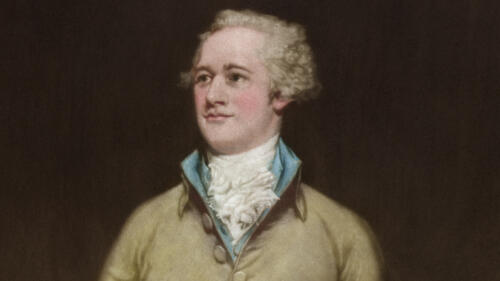
Most historians attribute the design of the first official American flag to Francis Hopkinson, a signer of the Declaration of Independence and delegate from New Jersey. Hopkinson submitted bills to the Continental Congress for his design work on the national flag, the Great Seal, and other naval flags.
Why did the original American flag have 13 stripes and stars?
The 13 alternating red and white stripes and 13 stars represented the original colonies that declared independence from Great Britain. The stars were set in a blue field to symbolize “a new constellation” rising on the global stage.
Conclusion
Ultimately, whether Elizabeth Griscom Ross was the literal creator of the very first Stars and Stripes does not diminish her profound legacy. She was a master artisan, a resilient businesswoman who survived three husbands and the ravages of war, and an enduring symbol of American patriotism. Her story bridges the gap between historical documentation and the shared mythologies that bind a nation together, ensuring her place in the pantheon of American history remains eternally secure.


