Today, the residents of the Lone Star State are known universally as Texans, possessing a brand of cultural pride that is famous worldwide. However, during the early 19th century, before Texas became a U.S. state, deciding what to call the people living in this vast, contested frontier was a source of widespread confusion. Various publications and citizens floated names like Texonians, Texasians, and Texicans. Yet, as the drums of revolution began to beat in 1835, one specific term emerged as the gold standard of patriotic identity: Texians. This unique moniker came to define the brave, stubborn, and diverse coalition of Anglo-American settlers and their allies who rebelled against Mexican centralism to carve out an independent republic. The history of the Texians is not just a regional tale; it is a foundational chapter in the larger American saga of westward expansion, constitutional debate, and the complex collision of cultures.
Historical Background: The Birth of Mexican Texas
To understand who the Texians were, one must look back to the early 1820s when Mexico won its independence from Spain. The newly formed Mexican nation faced a massive security and demographic challenge: its northern frontier, particularly Coahuila y Tejas, was sparsely populated and vulnerable to raids from powerful indigenous nations like the Comanche and Apache. To establish a buffer zone, the Mexican government instituted an open immigration policy, inviting foreign settlers—primarily from the United States—to populate the region. Under the leadership of empresarios (land agents) like Stephen F. Austin, thousands of Anglo-American families migrated westward. While these settlers came from various backgrounds, many traced their ancestry to the original British colonies in America. They brought with them distinct political philosophies, agrarian traditions, and a deeply ingrained reliance on the institution of chattel slavery. These newly arrived American settlers, together with the native Spanish-speaking residents known as Tejanos, began the difficult process of carving out a life on the Mexican frontier, sowing the seeds of a new regional identity.
Causes and Socio-Political Context of the Revolution
The initial relationship between the Mexican government and the incoming settlers was built on a fragile compromise. The Mexican Constitution of 1824 established a federalist system of governance, granting significant autonomy to individual states. This arrangement appealed to the Anglo settlers, who favored local self-government reminiscent of the American political system. However, cultural, religious, and political friction quickly developed. The Mexican government required settlers to convert to Catholicism and conduct legal transactions in Spanish. More critically, Mexico took steps to outlaw slavery, a move that threatened the economic model of the cotton-growing Anglo-Texians. The breaking point arrived in the 1830s when General Antonio López de Santa Anna seized power in Mexico City, scrapped the federalist Constitution of 1824, and established a centralized, authoritarian regime. This political shift alarmed both the Anglo settlers and many native Tejanos, who viewed centralism as a direct assault on their constitutional liberties and economic survival.
Key Events Timeline of the Texian Era
The transition of Texians from peaceful colonists to armed revolutionaries took place rapidly over several pivotal years:
- 1821: Stephen F. Austin establishes the first major Anglo-American settlement, bringing the “Old Three Hundred” families to Texas.
- 1830: The Mexican government passes the Law of April 6, 1830, banning further immigration from the United States and increasing customs duties.
- 1835 (October 2): The Battle of Gonzales occurs. Texian forces refuse to return a cannon loaned to them by the Mexican military, rallying behind the famous “Come and Take It” banner and sparking the Texas Revolution.
- 1836 (March 2): The Texas Declaration of Independence is formally signed at Washington-on-the-Brazos, officially birthing the Republic of Texas.
- 1836 (March 6): The tragic Fall of the Alamo occurs, where a small garrison of Texian and Tejano defenders is overwhelmed by Santa Anna’s army.
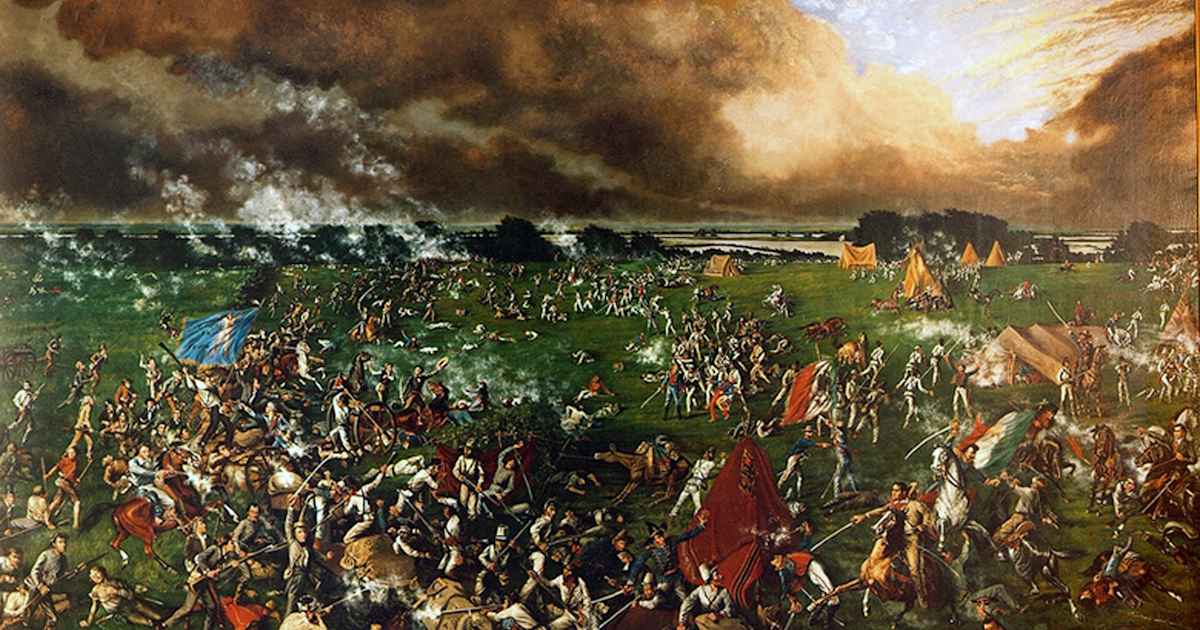
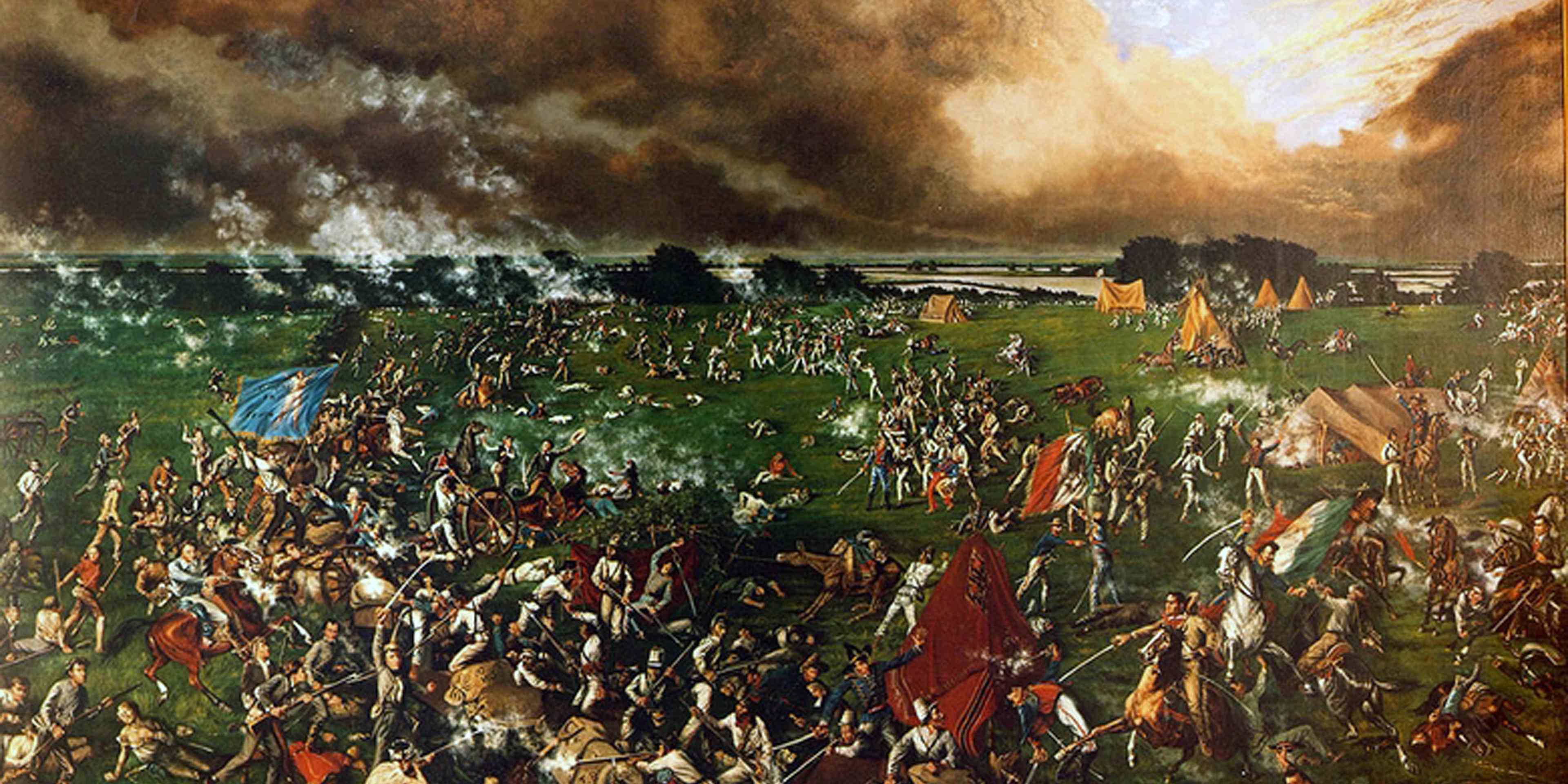
- 1836 (April 21): In a decisive surprise attack, the Texian Army, led by Sam Houston, defeats Santa Anna at the Battle of San Jacinto, securing Texas’s de facto independence.
- 1845 (December 29): The Republic of Texas is annexed by the United States, officially becoming the 28th state of the Union.
Prominent Figures of the Texian Revolution
The Texian era was defined by larger-than-life personalities whose decisions shaped the political geography of North America:
Stephen F. Austin
Widely regarded as the “Father of Texas,” Austin was a moderate who initially sought to work within the Mexican system. He spent months imprisoned in Mexico City advocating for Texas statehood, an experience that eventually convinced him that peaceful coexistence was impossible. His leadership was crucial in organizing the early colonies and unifying the diverse settlers.
Sam Houston
A seasoned political and military leader, Houston was appointed commander-in-chief of the Texian Army. His strategic retreat during the Runaway Scrape drew criticism, but his tactical brilliance at San Jacinto cemented his legacy and earned him the presidency of the young republic.
Juan Seguín
A proud Tejano and political leader, Seguín served as a captain in the Texian Army, fighting bravely at the Alamo (as a courier) and San Jacinto. His story highlights the crucial role played by native Texas-Mexicans, though he was later tragically forced to flee to Mexico due to rising anti-Mexican prejudice from incoming Anglo settlers.
Mirabeau B. Lamar
The second president of the Republic of Texas, Lamar was a fierce nationalist who envisioned Texas as a grand empire stretching to the Pacific. He actively promoted the term “Texian” to foster a distinct national identity separate from the United States.
Major Turning Points and Their Significance
The Texas Revolution was not an easy victory; it was a desperate struggle marked by extreme hardship. The early months of 1836 saw devastating losses at the Alamo and the Goliad Massacre, where hundreds of surrendering Texian soldiers were executed on Santa Anna’s orders. Rather than crushing the rebellion, these tragedies galvanized the Texian forces. The Battle of San Jacinto became the ultimate turning point. Armed with the battle cries “Remember the Alamo!” and “Remember Goliad!”, Houston’s forces executed a lightning-fast assault that lasted just eighteen minutes, capturing Santa Anna himself. This victory altered the course of history, leading to the creation of the Republic of Texas. Just as early colonial towns shaped the course of American history, frontier hubs like San Felipe de Austin, Goliad, and San Antonio de Béxar became sacred spaces of sacrifice and political transformation.
Long-Term Impact on America
The rise and fall of the Texian identity had massive, structural consequences for the United States. When the Republic of Texas was annexed in 1845, it immediately triggered the Mexican-American War (1846–1848). The resulting American victory led to the Mexican Cession, through which the United States acquired over 500,000 square miles of territory, including present-day California, Nevada, Utah, Arizona, and parts of New Mexico, Colorado, and Wyoming. This massive territorial expansion reignited the fierce national debate over the extension of slavery into new territories, directly paving the road to the American Civil War. Additionally, as Texas integrated into the Union, the unique identity of the “Texian” gradually faded into the more familiar “Texan,” though the state retained its independent spirit and its unique right to divide itself into five separate states if it ever chose to do so.

Lesser-Known Facts About the Texians
- Linguistic Identity Crisis: An 1835 issue of the Telegraph and Texas Register documented a lively debate over the region’s demonym. While “Texonians,” “Texasians,” and “Texicans” were all used, the editors noted that “Texians” was the term preferred by both Anglo and Mexican residents alike.
- The Runaway Scrape: Following the fall of the Alamo, panic swept through the settlements. Thousands of Texian civilians fled their homes in a mass exodus toward the Louisiana border in what became known as the Runaway Scrape, leaving behind ghost towns and burning crops.
- The Lone Star Flag: The iconic Lone Star flag we know today was not the original flag of the revolution. During the war, Texians fought under various banners, including the Troutman flag, the Alabama Red Rovers flag, and even modified Mexican flags displaying “1824” to show support for the original federalist constitution.
Why It Still Matters Today
The legacy of the Texians remains a powerful force in modern American culture. The fierce independent streak, often referred to as “Texas exceptionalism,” traces its roots directly back to the decade when Texas stood alone as an independent republic. Modern debates surrounding border security, federalism, immigration, and multiculturalism are deeply rooted in the history of this region. When examining early attempts at frontier self-governance, historians often draw parallels to early American legislative bodies like the House of Burgesses, illustrating how the desire for representation and local autonomy has continuously shaped the American experiment. Understanding the Texians helps us appreciate the complex, often painful, and deeply diverse origins of the American West.
People Also Ask
What is the difference between a Texian and a Texan?
“Texian” refers specifically to the residents of Texas during the Mexican colonial era, the Texas Revolution, and the Republic of Texas (roughly 1821 to 1845). “Texan” became the standard term after Texas joined the United States in 1845.
Did Tejanos fight for Texas independence?
Yes, many Tejanos (Texas residents of Mexican descent) fought bravely alongside Anglo-Texians against Santa Anna’s centralist forces. Prominent Tejanos like Juan Seguín and Lorenzo de Zavala played key military and political roles.
Why did the term Texian disappear?
After annexation in 1845, the influx of new American settlers and the integration of Texas into the United States led to the adoption of the more standard American suffix “-an,” transforming “Texian” into “Texan.”
Conclusion
The story of the Texians is a testament to the complex, turbulent, and diverse forces that shaped the American frontier. From their origins as invited colonists under Mexican rule to their desperate struggle for independence and eventual integration into the United States, the Texians left an indelible mark on history. Their legacy lives on not only in the geography of the American Southwest but also in the enduring, independent spirit of the modern Lone Star State.


