On November 19, 1863, amid the lingering scars of the American Civil War, President Abraham Lincoln stood before a somber crowd in the small town of Gettysburg, Pennsylvania. He was there to dedicate a national cemetery for the soldiers who had fallen in one of the bloodiest conflicts ever fought on American soil. At the time, few onlookers realized that the brief, 272-word speech Lincoln was about to deliver would become one of the most immortalized, cited, and moving addresses in global history. Far more than a simple eulogy, the Gettysburg Address fundamentally redefined the meaning of the American experiment. By framing the Civil War not merely as a constitutional battle to preserve a geographic union, but as a moral test of whether a nation dedicated to human equality could endure, Lincoln reshaped the soul of the country. His soaring rhetoric challenged Americans to ensure that those who died had not done so in vain, establishing a benchmark of liberty that continues to inspire democratic movements worldwide.
Historical Background: A Nation Torn Asunder
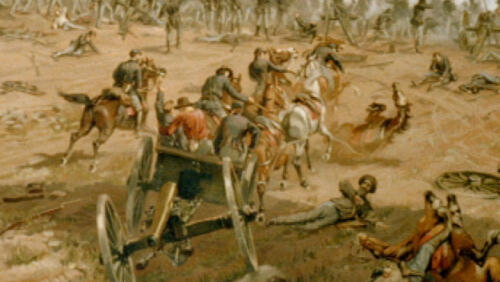
To understand the gravity of the Gettysburg Address, one must look back to the summer of 1863. The American Civil War had been raging for over two grueling years, pitting the industrial North against the agrarian, slaveholding South. In June 1863, Confederate General Robert E. Lee launched a daring invasion of the North, hoping to force a peace agreement and secure foreign recognition for the Confederacy. This aggressive maneuver culminated in the Battle of Gettysburg, fought from July 1 to July 3, 1863.
The battle was an absolute slaughterhouse. Over three days of intense fighting, approximately 165,000 soldiers clashed in the fields and hills of Pennsylvania. When the smoke finally cleared, the Union emerged victorious, but the cost was staggering. More than 51,000 soldiers were killed, wounded, captured, or missing. The small town of Gettysburg, with a resident population of only about 2,400 people, was left to deal with thousands of rotting corpses, dead horses, and overwhelmed field hospitals.
In the wake of this catastrophe, local attorney David Wills championed the creation of a proper resting place for the Union dead. This effort led to the establishment of the Soldiers’ National Cemetery. While organizing the dedication ceremony, Wills invited the country’s most celebrated orator, Edward Everett, to give the primary speech. Almost as an afterthought, on November 2, 1863, Wills sent a formal invitation to President Lincoln, asking him to provide “a few appropriate remarks” to formally dedicate the ground.
In linking the sacrifice of the Union dead directly to the promise of human equality, Lincoln bypassed the legalistic arguments of the Constitution and went straight back to the foundational ideals of 1776, invoking why the Declaration of Independence was written in the first place.
Key Events Timeline
To place this historic speech in its proper context, we can look at the sequence of events leading up to and immediately following its delivery:
- July 1–3, 1863: The Battle of Gettysburg takes place, resulting in a crucial Union victory and halting General Lee’s northern invasion.
- July 4, 1863: The Confederate forces retreat from Pennsylvania, marking a psychological and physical turning point in the war.
- August 1863: Pennsylvania Governor Andrew Curtin appoints David Wills to purchase land for a national cemetery to honor the fallen Union soldiers.
- November 2, 1863: David Wills formally invites President Abraham Lincoln to speak at the dedication ceremony.
- November 18, 1863: Lincoln arrives in Gettysburg by train and spends the evening refining his speech at the Wills home.
- November 19, 1863: The dedication ceremony takes place. Edward Everett speaks for two hours, followed by Lincoln, who speaks for just over two minutes.
- November 20, 1863: Newspaper reports begin publishing the text of the speech, with reactions highly divided along partisan lines.
Important Figures and Their Impact
Several key individuals played critical roles in the creation, delivery, and preservation of the Gettysburg Address:
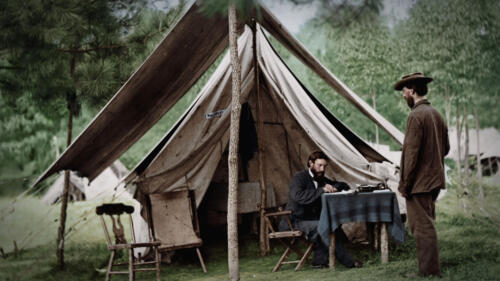
- Abraham Lincoln: As the 16th President of the United States, Lincoln used the platform to transcend the immediate political division of the war. His short speech became a defining statement of American national identity, shifting the war’s objective from merely maintaining the union to actively birthing a more egalitarian society.
- Edward Everett: A legendary politician, diplomat, and orator, Everett was the actual star of the dedication ceremony. While his two-hour, 13,607-word speech is largely forgotten today, his subsequent letter to Lincoln praised the president’s brief remarks, noting, “I should be glad if I could flatter myself that I came as near to the central idea of the occasion, in two hours, as you did in two minutes.”
- David Wills: A prominent Gettysburg citizen and attorney, Wills was instrumental in securing the land for the cemetery and organizing the event. His home on Gettysburg’s center square, where Lincoln spent the night before the speech, is now a historic site.
- John L. Burns: A local 70-year-old veteran of the War of 1812, Burns became a national celebrity for grabbing his flintlock musket and joining the Union forces during the Battle of Gettysburg. Lincoln requested to meet him during his visit, highlighting the courage of ordinary citizens.
Causes and Context: Redefining the Union
The underlying sociopolitical environment of late 1863 was deeply fractured. Despite the twin victories at Gettysburg and Vicksburg in July, the North was weary of war. Anti-war Democrats, known as Copperheads, were gaining traction, arguing that the war was a costly failure and demanding immediate peace negotiations with the Confederacy.
Lincoln faced immense pressure to justify the immense loss of life. To understand this philosophical pivot, one must look at the founding principles laid out by the Founding Fathers. Lincoln’s reference to “four score and seven years ago” pointed directly to 1776, a time when the nation was conceived in liberty. By doing so, Lincoln argued that the true foundation of America was not the U.S. Constitution of 1787—which had notoriously compromised on the institution of slavery to secure Southern ratification—but rather the Declaration of Independence, which declared that “all men are created equal.”
Thus, the speech served as an intellectual bridge. It connected the immediate tactical sacrifice of the Union soldiers to a grand, global experiment in self-governance. If the Union fell, Lincoln argued, it would prove to the monarchs of Europe that a democratic republic could not survive, and that “government of the people, by the people, for the people” would indeed perish from the earth.
Major Turning Points: The Birth of a “New Birth of Freedom”
The Gettysburg Address marked a profound rhetorical and ideological turning point in American history. Prior to the speech, the war’s primary aim was the restoration of the Union as it had existed before secession. However, Lincoln’s address introduced a revolutionary concept: a “new birth of freedom.”
This phrase signaled that the post-war United States could not simply return to the status quo. It had to evolve. By explicitly linking the preservation of the Union with the eradication of slavery, Lincoln aligned the soldiers’ sacrifices with a higher moral calling. Furthermore, this promise of a “new birth of freedom” opened the door to a more inclusive society, recognizing the immense sacrifices of those who fought, including the brave contributions of black heroes throughout US military history who rallied to the Union cause to defeat the institution of slavery.
Long-Term Impact on America
The legacy of the Gettysburg Address is woven into the very fabric of modern American identity.

- Constitutional Shift: Historian Garry Wills argues that Lincoln’s speech performed a “rhetorical coup,” effectively rewriting the Constitution in the minds of the public. By establishing the Declaration of Independence as the supreme moral document of the United States, Lincoln paved the way for the reconstruction amendments (the 13th, 14th, and 15th Amendments) that abolished slavery and established equal protection under the law.
- Grammatical Transformation: Before the Civil War, people routinely said “the United States are…” treating the nation as a collection of individual sovereign entities. Following the war and the cultural adoption of Lincoln’s centralized view of the Union, the phrasing permanently shifted to “the United States is…” signaling a singular, indivisible nation.
- Global Inspiration: The concluding phrase—”government of the people, by the people, for the people”—has become the universal definition of democracy, quoted by freedom movements from the French Revolution’s legacy to modern struggles for liberty across the globe.
Lesser-Known Facts About the Gettysburg Address
- Lincoln’s Brief Speech Was Originally Dismissed: Many contemporary newspapers completely ignored or actively ridiculed Lincoln’s remarks. The Democratic-leaning Patriot and Union newspaper in Harrisburg, Pennsylvania, wrote: “We pass over the silly remarks of the President. For the credit of the nation we are willing that the veil of oblivion shall be dropped over them and that they shall no more be repeated or thought of.” (They officially retracted this critique 150 years later, in 2013).
- Lincoln Was Feeling Ill During the Speech: Modern medical historians believe Lincoln was in the early stages of a mild form of smallpox (variola minor) when he delivered the address. He was weak, lightheaded, and had a severe headache on the train ride back to Washington, D.C.
- The Five Manuscripts: There is no single “original” manuscript of the speech. Lincoln wrote out five different copies for various charitable purposes and aides. The “Bliss Copy” is the most famous, as it is the only one Lincoln signed, and its text is carved into the walls of the Lincoln Memorial in Washington, D.C.
Why the Gettysburg Address Still Matters Today
Over 160 years later, the Gettysburg Address remains highly relevant. It stands as a timeless reminder that democracy is not a self-sustaining machine; it is an ongoing, active struggle. Lincoln’s call to action—to be “dedicated here to the unfinished work” of those who fought—applies directly to modern challenges. Whether discussing civil rights, voting access, or the global defense of democratic institutions, the core question remains: can a nation “so conceived and so dedicated, long endure?”
People Also Ask
How long did it take to deliver the Gettysburg Address?
The Gettysburg Address is incredibly brief, consisting of only about 272 words. It took President Abraham Lincoln just over two minutes to deliver, which stood in stark contrast to the two-hour speech delivered by the main orator of the day, Edward Everett.
What is the most famous line of the Gettysburg Address?
The most famous line of the address is its opening phrase: “Four score and seven years ago our fathers brought forth on this continent, a new nation, conceived in Liberty, and dedicated to the proposition that all men are created equal.” Another equally famous line is its conclusion, promising that “government of the people, by the people, for the people, shall not perish from the earth.”
Where is the original copy of the Gettysburg Address located?
There are five existing manuscript copies of the speech. The two copies given to Lincoln’s private secretaries, John Nicolay and John Hay, are preserved in the Library of Congress. The other copies are housed at the Illinois State Historical Library, Cornell University, and the White House.
Conclusion
Abraham Lincoln’s Gettysburg Address remains a masterclass in political rhetoric and moral clarity. Delivered at a moment of profound national grief and division, it managed to distill the entire meaning of the American experiment into ten simple sentences. By anchoring the nation’s destiny in the promise of human equality and challenging future generations to continue the “unfinished work” of building a perfect union, Lincoln ensured that the sacrifices of Gettysburg would echo through the ages. It is a timeless testament to the power of words to heal, unite, and elevate a nation.


