The aftermath of the American Civil War was not merely a period of domestic reconstruction; it was also a time of high-stakes international drama that brought the United States and Great Britain to the absolute brink of a third war. At the heart of this intense geopolitical crisis were the Alabama claims—a series of legal and diplomatic demands made by the U.S. government against Great Britain. The dispute arose because the British had permitted Confederate agents to construct highly destructive commerce raiders, most famously the CSS Alabama, in British shipyards during the Civil War. These vessel-raiders decimated the Union’s merchant marine, dealing a catastrophic blow to American maritime trade. By turning to a groundbreaking international tribunal instead of the battlefield, the two global powers did more than just settle a financial debt; they pioneered a revolutionary legal precedent that forever transformed global diplomacy and set the stage for modern international law.
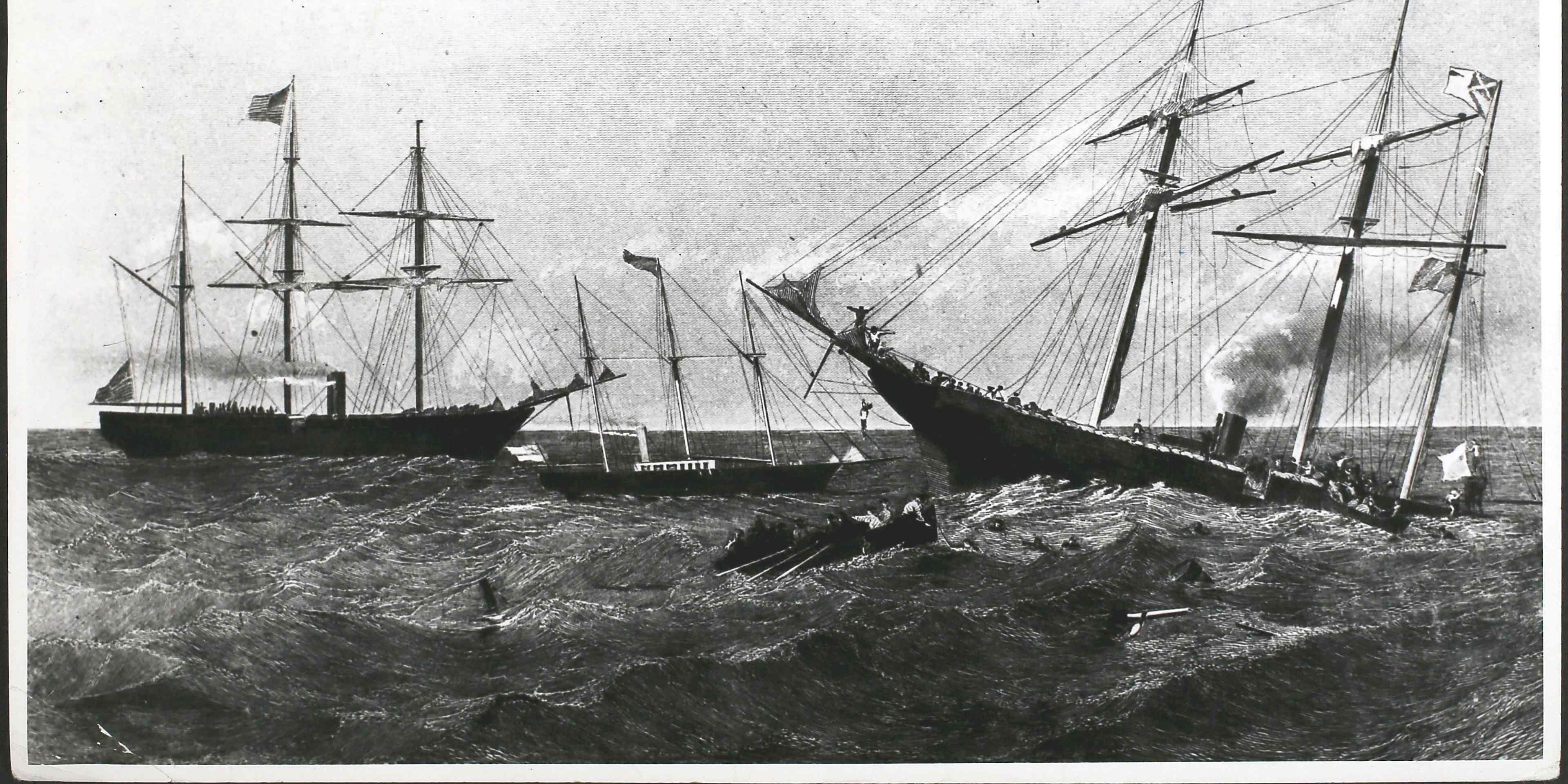
Historical Background: The Birth of the Confederate Commerce Raiders
When the Civil War erupted in 1861, the newly formed Confederate States of America faced a crippling disadvantage: they possessed virtually no navy, merchant marine, or industrial shipbuilding capacity. To counter the Union’s suffocating naval blockade, Confederate President Jefferson Davis dispatched secret agents to Europe. Their primary objective was to acquire fast, heavily armed commerce raiders to harass Union merchant vessels, raise insurance rates, and force the Union Navy to divert its warships from the blockade. This maritime strategy aimed to choke the northern economy and force European recognition of the Confederacy.
The mastermind of this covert operation was James Dunwoody Bulloch, a brilliant former U.S. Navy officer and Confederate secret service agent. Operating out of Liverpool, England, Bulloch exploited a major loophole in the British Foreign Enlistment Act of 1819. The law prohibited British subjects from building or arming warships for foreign belligerents. However, it did not explicitly forbid building an unarmed vessel and then equipping it with guns and ammunition once it sailed into international waters. Bulloch utilized Laird Brothers shipyard in Birkenhead to construct a fast, state-of-the-art steamship under the deceptive cover name “Hull No. 290.” Despite desperate protests from the U.S. Minister to Great Britain, Charles Francis Adams, British authorities allowed the ship to slip away in July 1862. Once in international waters, the vessel met other ships carrying British-made armaments, was fully outfitted as a warship, and was commissioned as the CSS Alabama under Captain Raphael Semmes.
The relations between the two global powers had been fraught with historical baggage dating back to the American Revolution, and this maritime crisis threatened to ignite a third catastrophic conflict. The CSS Alabama went on to capture or destroy over 60 Union merchant vessels, totaling millions of dollars in damages, before she was finally sunk by the USS Kearsarge off the coast of France in June 1864.
The Devastating Economic Toll: Flight from the Flag
The CSS Alabama was not alone; other British-built Confederate raiders, including the CSS Florida, the CSS Georgia, and the CSS Shenandoah, wreaked havoc across the globe. Together, these cruisers captured or destroyed more than 250 American merchant vessels. The psychological and economic terror they inflicted was far-reaching. Panicked American shipowners, faced with astronomical insurance premiums, chose to sell their vessels or transfer their registrations to neutral foreign flags—a phenomenon known as the “flight from the flag.”
Over 700 American ships were converted to foreign registry during the war. Consequently, by the time the Confederacy collapsed in 1865, the United States Merchant Marine had lost roughly half of its total fleet. While historians debate whether these raiders materially altered the length of the war, their destructive impact on American commerce was undeniable: the U.S. merchant fleet never fully recovered its pre-war global dominance.
Post-War Anger and the Audacious Demands of Senator Sumner
When the Civil War ended, public anger in the North toward Great Britain was palpable. Many Americans felt that British shipbuilders, backed by a government that tacitly favored the South, had directly subsidized the Confederate war effort. Seeking redress, the U.S. government demanded full compensation for the losses. Early diplomatic attempts to resolve the issue failed. The Johnson-Clarendon Convention of 1869, which proposed a joint commission to review the claims, was overwhelmingly rejected by the United States Senate.
Leading the opposition was Senator Charles Sumner of Massachusetts, the powerful chairman of the Senate Foreign Relations Committee. Sumner delivered a fiery speech in which he argued that Great Britain was responsible not only for direct shipping losses but also for the “indirect costs” of the war. Sumner claimed that by providing ships and giving tacit support to the Confederacy, Britain had effectively doubled the duration of the conflict. He calculated these indirect damages at an astronomical $2 billion—roughly equivalent to half the total cost of the Union’s war effort. As a realistic alternative to paying this massive sum, Sumner audaciously suggested that Great Britain cede Canada to the United States. While Sumner’s demands thrilled a highly nationalistic American public, they outraged the British government, pushing the two nations dangerously close to a fresh military confrontation.
The Breakthrough: The Treaty of Washington (1871)
Recognizing the extreme danger of Sumner’s rhetoric, cooler heads in Washington and London stepped in to salvage the relationship. President Ulysses S. Grant’s Secretary of State, Hamilton Fish, was a pragmatist. Fish understood that a war with Great Britain would be economically ruinous and physically devastating for both nations. He quietly bypassed Sumner, working closely with British diplomat Sir John Rose to establish a Joint High Commission of British and American statesmen in 1871.
The commission’s intense negotiations culminated in the signing of the landmark Treaty of Washington on May 8, 1871. This historic treaty accomplished two critical goals: it officially expressed Great Britain’s regret for the escape of the Confederate raiders, and it agreed to submit the Alabama claims to a neutral, five-member international arbitration panel. While popular sentiment occasionally clamored for war, a growing tradition of diplomacy and peaceful resolutions—similar to the ideals found in the history of U.S. anti-war movements—pushed both governments toward a legal framework instead.
The Geneva Tribunal of 1872: A New Precedent for Global Peace
The arbitration tribunal convened in December 1871 in the magnificent Salle de l’Alabama at the City Hall of Geneva, Switzerland. It represented a dazzling assembly of global legal minds, consisting of five distinguished arbitrators appointed by the heads of state of the United States, Great Britain, Italy, Switzerland, and Brazil:
- Charles Francis Adams (appointed by the United States)
- Sir Alexander Cockburn (appointed by Great Britain)
- Count Frédéric Sclopis (appointed by Italy, who served as tribunal president)
- Jakob Stämpfli (appointed by Switzerland)
- Viscount d’Itajubá (appointed by Brazil)
The tribunal’s deliberations were tense. The British were furious when American legal representatives initially attempted to present Sumner’s indirect claims for the cost of the war. Seeing that the talks would collapse entirely, the neutral arbitrators made a decisive preliminary ruling: they declared that, under public international law, “indirect claims” were not a valid basis for a monetary award. With this major obstacle removed, the tribunal focused strictly on the direct losses caused by the CSS Alabama, CSS Florida, and CSS Shenandoah.
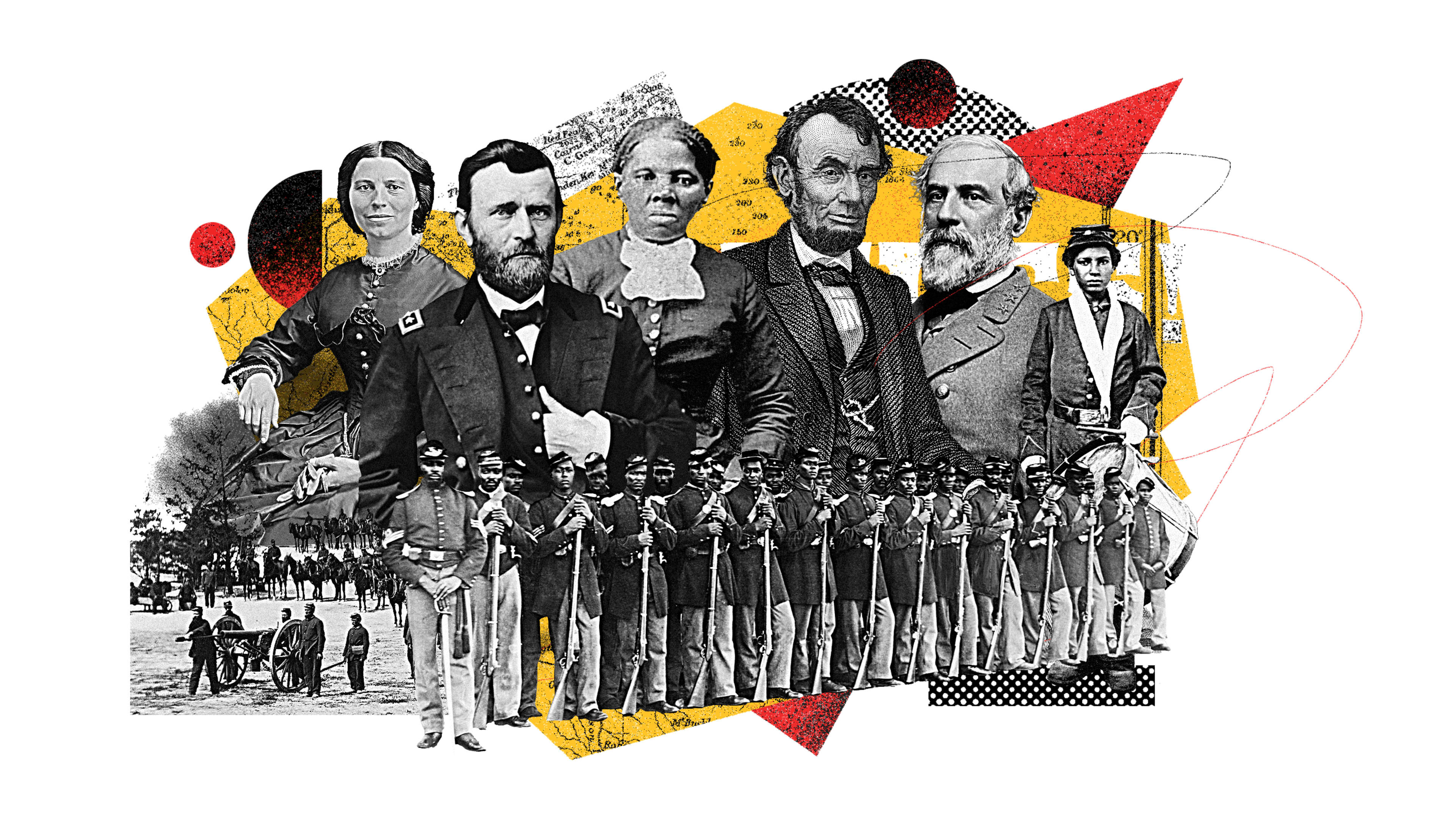
On September 14, 1872, the tribunal issued its historic final verdict. By a 4-to-1 vote, it ruled that Great Britain had failed to exercise “due diligence” in maintaining its neutrality obligations. The tribunal ordered Great Britain to pay the United States a sum of $15.5 million in gold as full compensation. Sir Alexander Cockburn, the British arbitrator, vehemently dissented and refused to sign the final award, but the British government honored the decision, paying the full amount in gold certificates in 1873. This pivotal era of national reconstruction and global diplomacy occurred just as the nation was beginning to recognize the massive, diverse sacrifices made on the battlefields, including the vital contributions of Black heroes throughout U.S. military history.
Lesser-Known Facts About the Alabama Claims
- Theodore Roosevelt’s Confederate Uncle: James Dunwoody Bulloch, the mastermind who secretly contracted the construction of the CSS Alabama in Liverpool, was the biological uncle of future U.S. President Theodore Roosevelt. Bulloch’s sister, Martha “Mittee” Bulloch, was Roosevelt’s mother.
- The Laird Rams Crisis: In addition to the commerce raiders, Bulloch contracted for two ironclad warships equipped with devastating 7-foot iron rams, known as the “Laird Rams.” Knowing these would smash the Union blockade, Minister Charles Francis Adams sent a famous letter to the British government stating: “It would be superfluous in me to point out to your Lordship that this is war.” Terrified of an armed conflict, the British government quietly seized the ships for the Royal Navy.
- The Unclaimed Surplus: The $15.5 million gold payout was so massive that after the U.S. government compensated every merchant shipowner who could prove a direct loss, millions of dollars remained. The federal government had to establish a special Court of Commissioners of Alabama Claims, which operated for years to distribute the leftover “surplus fund” to secondary claimants.
The Long-Term Impact: Why It Still Matters Today
The resolution of the Alabama claims remains one of the most significant events in the history of international relations. First, it codified the modern concept of state responsibility, establishing that neutral countries must exercise active “due diligence” to prevent their territories from being used by belligerents. Second, the case proved that complex, highly emotional disputes between major powers could be resolved through peaceful, legal arbitration rather than bloodshed. The success of the Geneva Tribunal directly inspired the creation of the Permanent Court of Arbitration in 1899, the League of Nations, and eventually the United Nations International Court of Justice.
Furthermore, the peaceful settlement ended decades of bitter rivalry between the United States and Great Britain, initiating a diplomatic warming trend. This historic reconciliation laid the foundational groundwork for the “Great Rapprochement” that bound the two nations as unstoppable allies in the global conflicts of the 20th century.
People Also Ask
What were the Alabama Claims in simple terms?
The Alabama claims were demands for financial compensation made by the United States against Great Britain after the Civil War. The U.S. argued that Britain violated its neutrality by allowing Confederate agents to build warship raiders—most notably the CSS Alabama—in British ports, which subsequently destroyed over 250 Union merchant ships.
How did the Alabama Claims affect Canada?
The claims deeply worried Canada. U.S. Senator Charles Sumner proposed that Great Britain pay its $2 billion debt by ceding Canada to the United States. Although this demand was rejected, the fear of American annexation and aggressive expansionism served as a massive catalyst for the Canadian provinces to unify, directly accelerating Canadian Confederation in 1867.
Why did Great Britain support the Confederacy?
Great Britain never officially recognized the Confederacy, but many British elites and industrialists favored the South due to economic self-interest, particularly their heavy reliance on Southern cotton to fuel British textile mills. However, the British working class and key political figures strongly opposed slavery, keeping Britain officially neutral throughout the conflict.
The Legacy of Geneva
Ultimately, the Alabama claims represented a triumph of reason over retaliation. In an era where international disputes were almost universally settled by the sword, the United States and Great Britain chose the gavel. The legacy of the 1872 Geneva Arbitration remains a shining beacon for international law, proving that even the deepest diplomatic wounds can be healed through peaceful, binding legal discourse.


