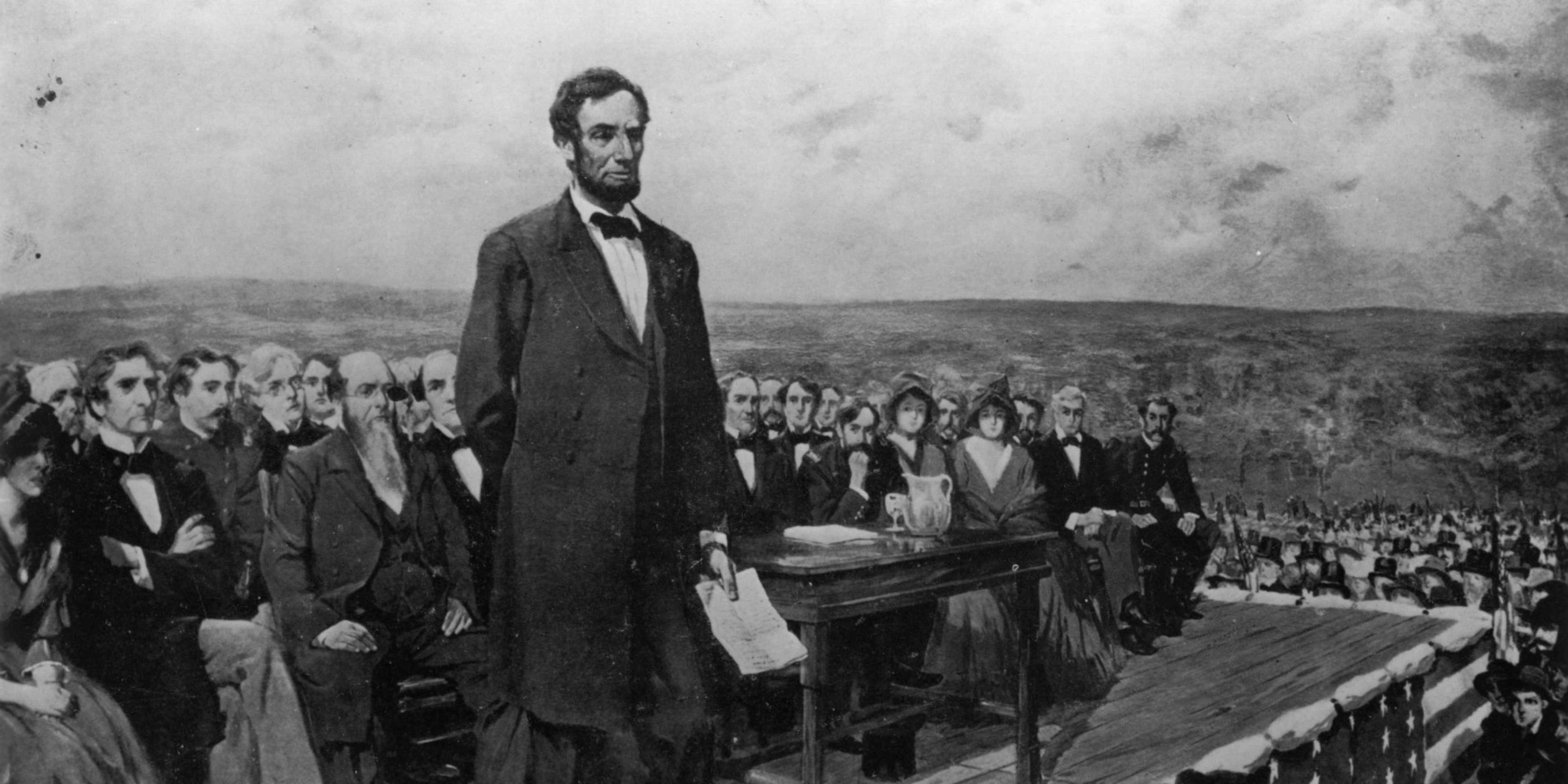
On the crisp morning of November 19, 1863, amidst the lingering scent of death and the freshly dug graves of Pennsylvania, President Abraham Lincoln delivered a mere 272 words that would permanently redefine the soul of the United States. The Gettysburg Address, though lasting less than two minutes, stands as a monumental masterpiece of American political oration, transforming a local cemetery dedication into a defining manifesto for global democracy. Coming just five months after the catastrophic Battle of Gettysburg, this brief speech bridged the painful chasm of a divided nation by anchoring the Union’s struggle to the lofty ideals of the Declaration of Independence. Lincoln did not merely mourn the fallen; he challenged the living to ensure that a government of, by, and for the people would never perish from the earth, cementing this speech as an enduring beacon of liberty and a cornerstone of American identity.
Historical Background: A Nation Torn Asunder
The autumn of 1863 was one of the darkest periods in American history. The Civil War had raged for over two blood-soaked years, pitting brother against brother. In July of that year, the Union and Confederate armies clashed in the small market town of Gettysburg, Pennsylvania. The three-day battle resulted in more than 50,000 casualties, making it the bloodiest battle ever fought on North American soil. The sheer scale of death left the local community overwhelmed, with thousands of bodies hastily buried in shallow graves across local farms.
In response to this humanitarian crisis, prominent local attorney David Wills spearheaded efforts to establish a proper final resting place for the Union dead: the Soldiers’ National Cemetery. To dedicate this hallowed ground, organizers planned a grand ceremony. They invited the nation’s most celebrated orator, Edward Everett, to deliver the main address. President Abraham Lincoln was invited almost as an afterthought, asked only to provide “a few appropriate remarks” at the conclusion of the ceremony.
Causes and Context: Redefining the Civil War
By late 1863, Northern war weariness was reaching a boiling point. The mounting death toll, combined with economic strain and political opposition from “Copperhead” Democrats who favored a negotiated peace, threatened to fracture Northern resolve. Lincoln faced immense pressure to justify the staggering cost of the war.
Initially, the conflict was framed purely as a constitutional struggle to preserve the geopolitical boundaries of the United States. However, Lincoln recognized that for the Union to survive, the war required a higher moral purpose. He sought to connect the current bloodshed directly to the nation’s founding ideals. For readers curious about how these ideals were originally formulated, exploring Founding Fathers quotes and documents reveals the deep philosophical roots that Lincoln drew upon to re-conceptualize the American experiment as a moral crusade for human equality rather than just a legal federation of states.
Chronological Timeline of Key Events
- July 1–3, 1863: The Battle of Gettysburg takes place, resulting in a crucial Union victory but catastrophic loss of life on both sides.
- July 1863: Gettysburg resident David Wills proposes the creation of a national cemetery funded by the Union states.
- September 1863: The dedication ceremony is postponed from October to November to accommodate the busy schedule of keynote speaker Edward Everett.
- November 2, 1863: David Wills formally invites President Lincoln to deliver brief remarks to dedicate the cemetery.
- November 18, 1863: Lincoln arrives in Gettysburg by train, carrying drafts of his speech, which he refines late into the night.
- November 19, 1863: The dedication ceremony is held. Edward Everett speaks for two hours, followed by Lincoln’s two-minute address.
Important Figures and Their Historical Impact
The legacy of the Gettysburg Address is tied to several key historical actors who shaped that momentous November day:
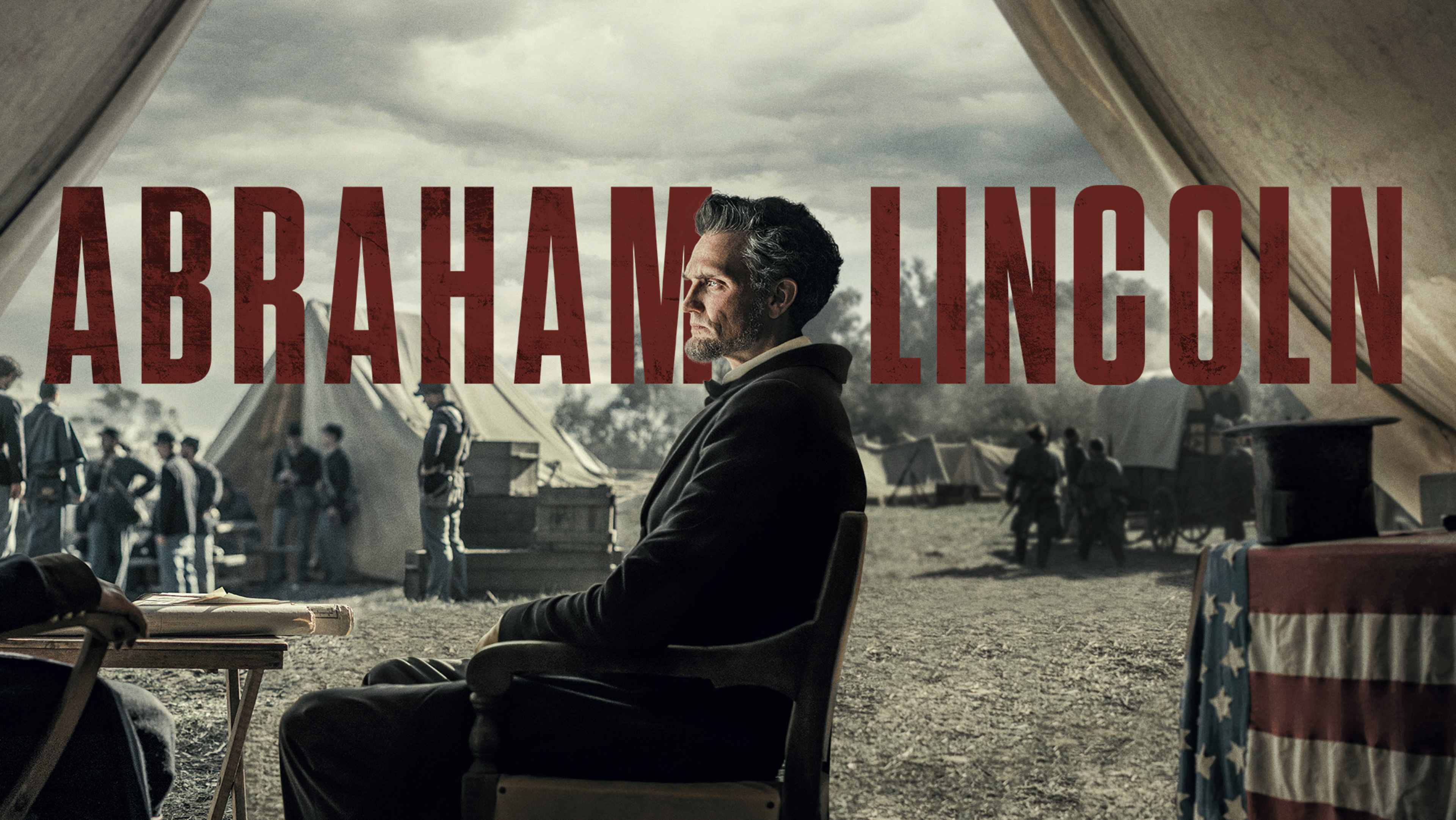
- Abraham Lincoln: As the 16th President of the United States, Lincoln used his brief remarks to articulate a bold, revolutionary vision of American democracy that went far beyond the immediate goal of military victory.
- Edward Everett: A former US Senator, Governor of Massachusetts, and President of Harvard University, Everett was the premier orator of the Victorian era. While his two-hour, 13,000-word classical speech was highly praised at the time, it was quickly eclipsed in the historical memory by Lincoln’s brief masterpiece.
- David Wills: The energetic civic leader who conceived the Soldiers’ National Cemetery, managed its execution, and hosted President Lincoln at his home the night before the speech.
Major Turning Points: The Birth of a “New Birth of Freedom”
The Gettysburg Address represents a major ideological turning point in American history. By declaring that the nation was “conceived in liberty, and dedicated to the proposition that all men are created equal,” Lincoln did something revolutionary. He bypassed the US Constitution—which originally protected and condoned slavery—and pointed instead to the Declaration of Independence as the true founding document of the United States.
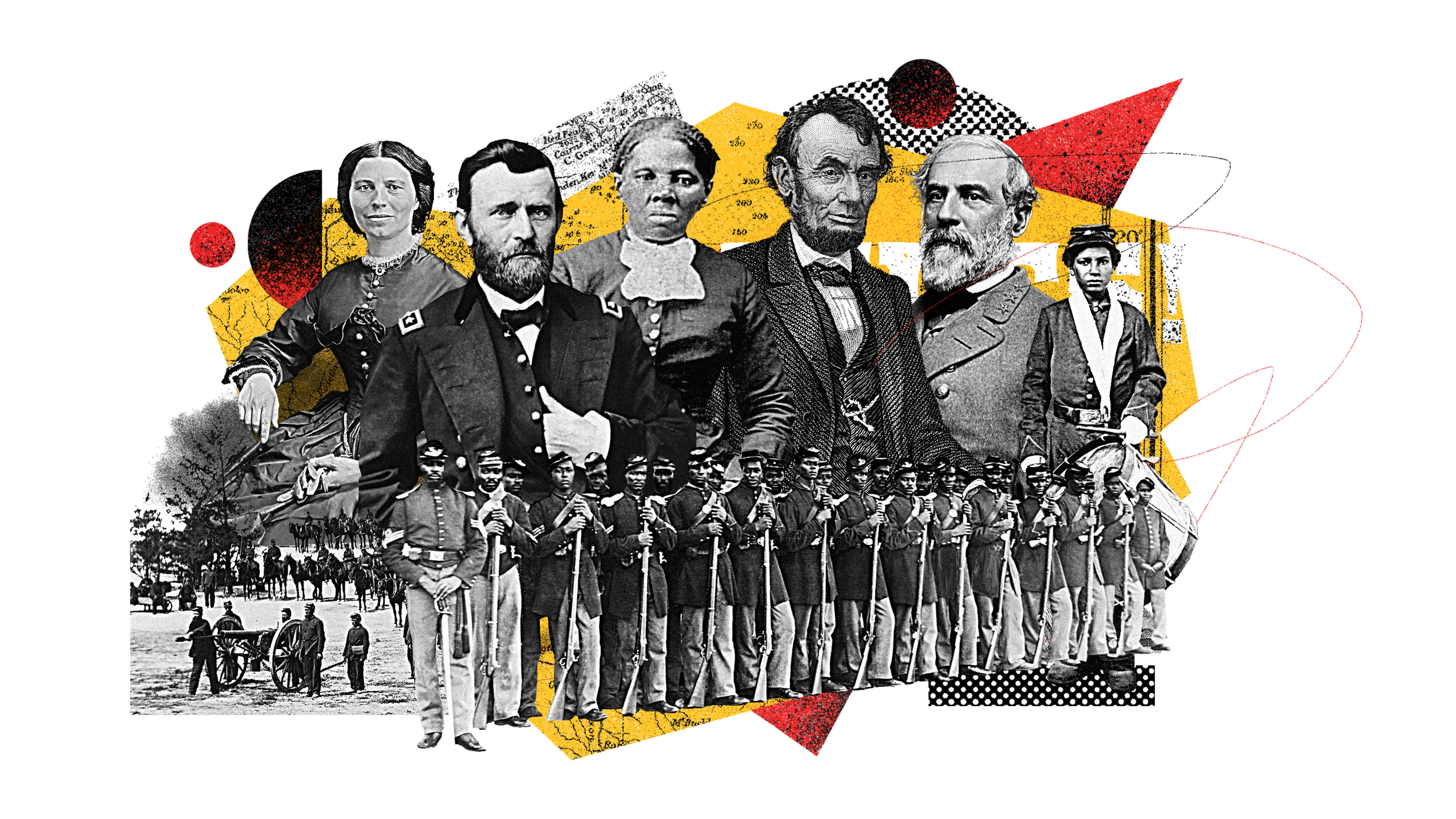
This shift in focus meant the war was no longer just about preserving the Union as it was. Instead, it was about creating a “new birth of freedom.” This transformation in the nation’s mission was heavily bolstered by the service of African American soldiers, whose contributions are remembered among the black heroes throughout US military history who fought to turn Lincoln’s promise of universal equality into a legal reality.
Long-Term Impact on America
The long-term effects of Lincoln’s 272-word address have reverberated through American culture, law, and politics for over a century:
- Constitutional Reconstruction: By elevating the concept of equality to a central constitutional principle, the Gettysburg Address paved the theoretical way for the landmark Civil War Amendments—the 13th, 14th, and 15th Amendments—which abolished slavery, guaranteed equal protection, and secured voting rights.
- The Rhetoric of Democracy: Lincoln’s closing phrase, “government of the people, by the people, for the people,” became the globally recognized definition of democracy, inspiring freedom movements worldwide.
- Cultural Canonization: In the decades following World War I, the speech became secular scripture. With the opening of the Lincoln Memorial in 1922, where the address is permanently carved into marble, the speech became an essential part of American civic education and national identity.
Lesser-Known Facts About the Gettysburg Address
History is often filled with surprising details that challenge common myths. Here are three fascinating anecdotes about Lincoln’s famous speech:
- The Myth of the Envelope: A popular legend claims Lincoln casually scribbled the speech on the back of an envelope while riding the train to Gettysburg. In truth, Lincoln prepared carefully, writing a first draft in the White House and revising it meticulously the night before the dedication.
- Everett’s Generous Praise: While modern audiences often mock Edward Everett for his two-hour speech, Everett himself was one of the first to recognize Lincoln’s genius. The very next day, Everett wrote to Lincoln, stating: “I should be glad if I could flatter myself that I came as near to the central idea of the occasion, in two hours, as you did in two minutes.”
- The Lost Photographers: There is only one confirmed photograph of Lincoln at the Gettysburg dedication. Because his speech was so short, photographers who were still setting up their heavy glass plates and adjusting their cameras completely missed the delivery, capturing him only as he sat back down into the crowd.
Why the Gettysburg Address Still Matters Today
The Gettysburg Address remains deeply relevant today because it addresses the ongoing challenges of a diverse, democratic society. Lincoln did not speak of the battle as a completed victory, but as an ongoing challenge to “the living” to complete the “unfinished work” of democracy. In an era marked by deep political polarization and struggles over civil rights, Lincoln’s words serve as a perennial reminder that democracy is not a static achievement, but a continuous, active experiment that requires the dedication and vigilance of every generation.
People Also Ask (FAQ)
How many words are in the Gettysburg Address?
The Gettysburg Address is incredibly brief, consisting of only 272 words (though minor variations exist across the five known handwritten manuscript copies). It took President Lincoln less than two minutes to deliver.
What is the main message of the Gettysburg Address?
The core message of the address is that the American Civil War was the ultimate test of whether a nation founded on the principles of liberty and human equality could endure. Lincoln argued that the best way to honor the fallen soldiers was to commit to the survival of global democracy and ensure a “new birth of freedom” for all citizens.
How did the public initially react to the speech?
Initial reactions were highly partisan. Republican newspapers praised the speech for its solemn dignity and depth, while Democratic-aligned papers dismissed it as silly, dull, and inappropriate for the occasion. Foreign press, such as the Times of London, also ridiculed it. It took several decades for the speech to achieve its current status as a masterpiece of rhetoric.
Conclusion
The Gettysburg Address stands as a testament to the power of concise, purposeful language. In just ten sentences, Abraham Lincoln did not merely eulogize the fallen soldiers of a devastating battle; he permanently reshaped the trajectory of the United States. By linking the sacrifice of the Civil War to the revolutionary promise of 1776, Lincoln gave America a renewed moral compass. Today, his words continue to echo through history, challenging us to safeguard the fragile, noble experiment of self-governance.


