In the twilight of the eighteenth century, as the embers of the American Revolutionary War cooled into the foundation of a new nation, a physical landscape of rebellion began to take on a sacred status. When the Marquis de Lafayette embarked on his famous farewell tour of the United States in 1824 and 1825, his itinerary was filled with grand monuments and battlefields, yet one of his most deeply anticipated stops in Boston was merely a weathered tree stump. This was no ordinary remnant of timber; it was the site of the legendary Boston Liberty Tree, a majestic elm that had served as the physical and emotional crucible of early American resistance. For colonists striving to forge a unified identity against British imperial policies, these living landmarks became vital instruments of protest, binding local communities to a shared cause of liberty. As we explore the history of these living monuments, we uncover how a simple elm tree transformed into a global phenomenon of anti-tyrannical defiance, illustrating why Liberty Trees became such a profound obsession both during and long after the war.
The Roots of Rebellion: Historical Background of the Liberty Trees
The story of the Liberty Trees begins in the mid-1760s, a period defined by growing friction between Great Britain and its North American colonies. In the aftermath of the Seven Years’ War, the British Parliament sought to recoup its massive financial losses by imposing direct taxes on the colonies. The catalyst for the initial protests was the Stamp Act of 1765, which mandated that virtually all printed materials—including legal documents, newspapers, and even playing cards—bear a revenue stamp. This direct tax, levied without colonial representation in Parliament, outraged local merchants, lawyers, and artisans, particularly in the thriving port of Boston.
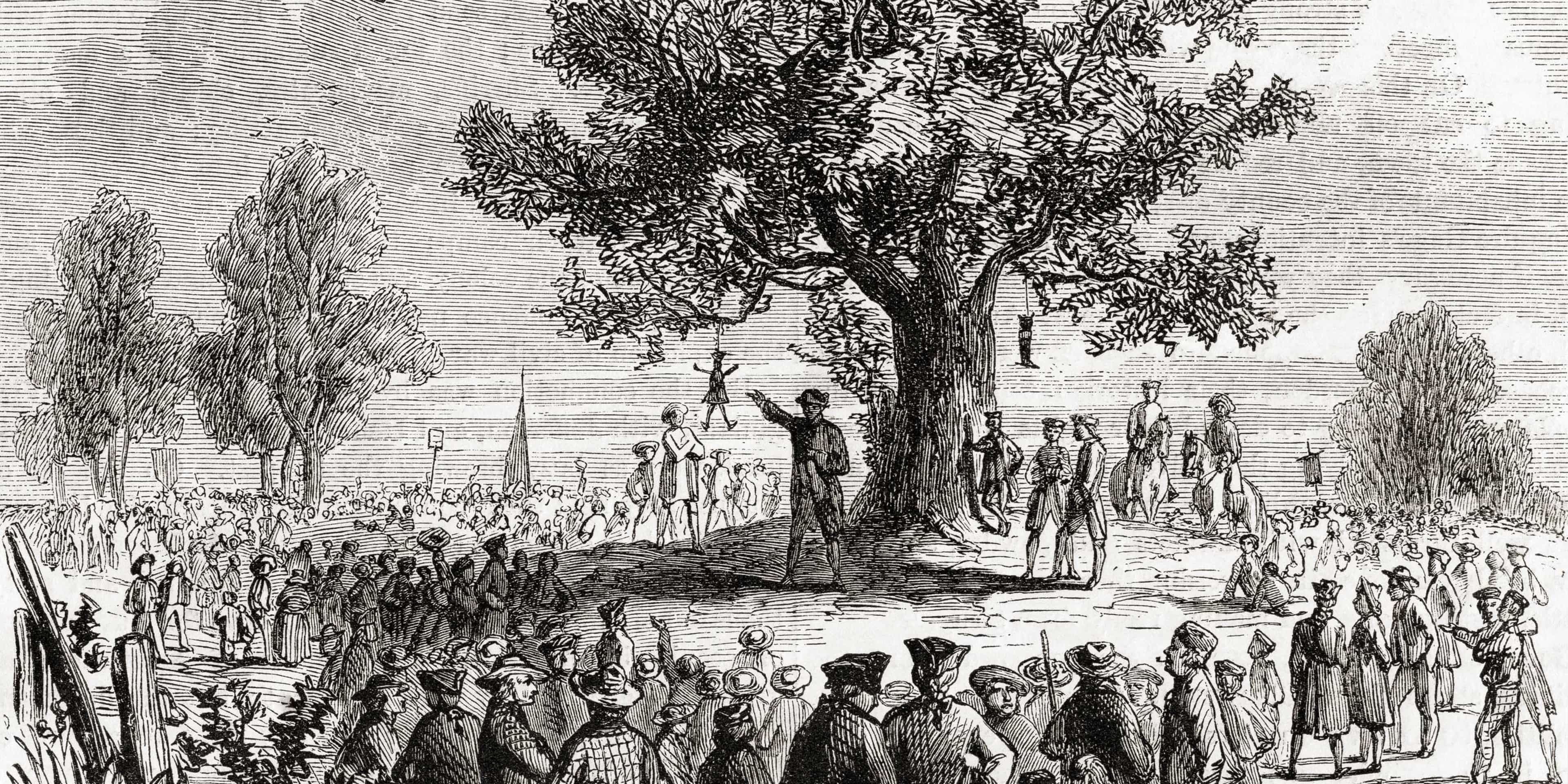
To coordinate their resistance, a clandestine group of nine Boston patriots, calling themselves the Loyal Nine, began planning public demonstrations. The Loyal Nine, which would soon evolve into the broader and more famous Sons of Liberty, realized they needed a public stage to capture the community’s imagination. During the early years of the thirteen colonies, natural landmarks had frequently served as community boundaries and gathering points. Recognizing the psychological power of nature, the Loyal Nine selected a massive, 120-year-old elm tree at the corner of Essex and Washington Streets in Boston to serve as the focal point of their campaign against the Stamp Act.
Causes and Context: Why Trees Became Political Statements
In the eighteenth century, trees held a deeply rooted place in European folklore and civic life. English tradition was rich with stories of historic trees associated with royal charters, localized rebellions, and ancient treaties. When colonists arrived in North America, they carried this veneration of nature with them, frequently designating specific old-growth trees as civic assembly sites. Thus, using a tree as a political forum was a natural adaptation of traditional practices, though it quickly assumed a radical new purpose under the weight of imperial taxation.
The sociopolitical climate of Boston in 1765 was incredibly tense. Prominent community leaders, including Samuel Adams, who was closely connected to early protest movements, recognized that formal legal petitions to Parliament were yielding little result. By utilizing a highly visible, public tree situated at a busy intersection, the Sons of Liberty could bypass official colonial channels and communicate directly with the masses. The tree became a living bulletin board, a place where broadsides could be nailed, political ideas debated, and corporate acts of civil disobedience planned. The spatial dynamic of the tree democratized the protest, transforming an elite political debate into a popular, participatory movement.
A Chronology of Resistance: Key Events Timeline
The transformation of a simple Boston elm into a legendary political icon occurred through a series of dramatic, well-orchestrated events. Below is a chronological breakdown of how the Liberty Trees rose to prominence and met their eventual fates:
- August 14, 1765: The Loyal Nine hang an effigy of Andrew Oliver, the newly appointed stamp distributor, from the branches of the Boston elm, alongside a boot symbolizing the hated Lord Bute. This act marks the first public demonstration against the Stamp Act and triggers widespread protests.
- September 1765: A copper plate is officially fastened to the trunk of the elm, formally designating it as the “Tree of Liberty.”
- Late 1765–1770: The practice of naming “Liberty Trees” spreads rapidly across the colonies. Cities from Newport, Rhode Island, to Annapolis, Maryland, designate their own trees. Simultaneously, communities construct tall “Liberty Poles” to serve a similar symbolic purpose in areas lacking suitable trees.
- August 1775: Armed British soldiers and local Loyalists, seeking to dismantle a critical symbol of rebellion, chop down the Boston Liberty Tree. The wood is split into fourteen cords and burned for fuel. In response, local patriots defiantly rename the site “Liberty Stump” and erect a pole in its place.
- 1789: As the French Revolution begins, French revolutionaries adopt the American custom, planting thousands of “arbres de la liberté” across France to symbolize their own struggle against monarchy.
- 1824–1825: During his historic farewell tour of the United States, the Marquis de Lafayette pays a highly publicized tribute to the site of the Boston Liberty Tree, cementing its place in global revolutionary history.
Key Figures and Their Roles in the Tree’s Legacy
Several critical historical figures shaped the narrative surrounding the Liberty Trees, turning a physical object into a powerful symbol of national unity:
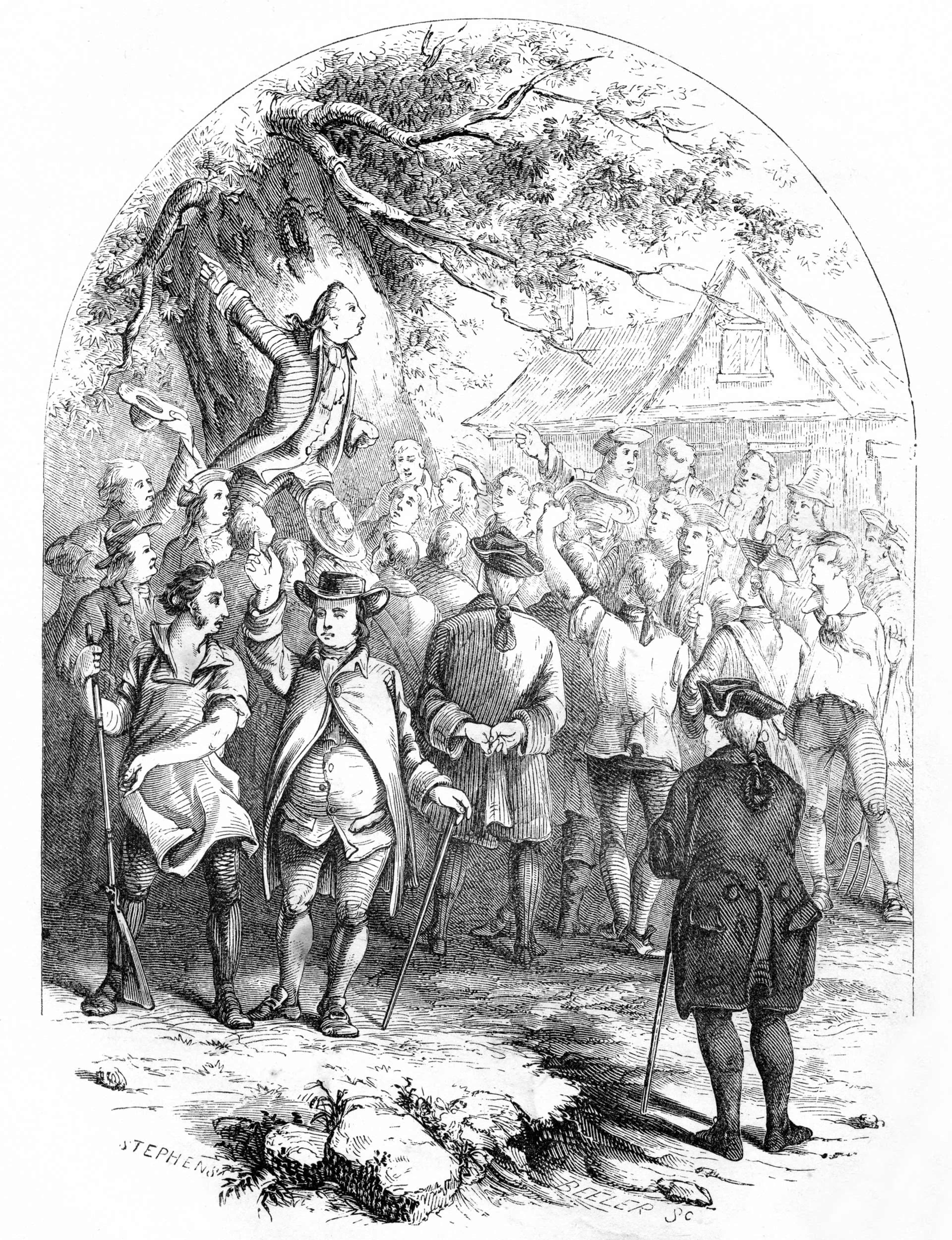
- Andrew Oliver: As the designated stamp distributor for Massachusetts, Oliver became the primary target of early protests. The public hanging of his effigy from the Boston elm on August 14, 1765, effectively destroyed his political authority and forced his eventual resignation, proving the political efficacy of the Liberty Tree as a venue for protest.
- Samuel Adams: A brilliant political organizer and key leader of the Sons of Liberty, Adams utilized the Liberty Tree to mobilize the working class of Boston. Under his guidance, the tree became a site for regular town meetings, ensuring that political discourse remained grounded in the public sphere.
- The Marquis de Lafayette: The French hero of the American Revolution recognized the international weight of the symbol. By paying homage to the Boston Liberty Tree stump during his nineteenth-century tour, Lafayette reminded a rising generation of Americans of the botanical roots of their democratic heritage.
Major Turning Points: From Local Elm to International Icon
The ultimate turning point in the history of the Liberty Tree occurred when the British military attempted to silence the symbol by destroying it. In August 1775, as Boston was under siege, a group of Loyalists and British soldiers executed a systematic attack on the elm. Believing that cutting down the physical tree would dampen the rebellious spirit of the colonists, they spent hours axing the massive structure. However, this act of destruction had the opposite effect. It martyred the tree, elevating it from a local landmark into a transcendent, indestructible symbol of the patriot cause.
Instead of fading away, the concept of the Liberty Tree multiplied. Across the Atlantic, the symbol captured the imagination of European reformers. When the French Revolution erupted in 1789, the planting of liberty trees became a mandatory civic ritual, demonstrating that the botanical symbol of freedom had outgrown its North American roots to become a universal beacon of democratic aspiration.
The Long-Term Impact on American Identity and Global Democracy
The legacy of the Liberty Trees profoundly shaped the symbolic vocabulary of the United States. Following the successful conclusion of the Revolutionary War, the concept of the Liberty Tree was integrated into early American literature, art, and political philosophy. The imagery of deep roots and growing branches served as a powerful metaphor for a young republic attempting to establish itself on the global stage. Ideas born under the canopy of these trees were ultimately formalized in the Declaration of Independence, proving that public protest and community organization were essential to American self-governance.
Furthermore, the physical legacy lived on through the preservation of other historic trees. While Boston’s elm was lost in 1775, other colonial Liberty Trees survived for centuries. The Annapolis Liberty Tree at St. John’s College survived until 1999, when it was fatally damaged by a hurricane. Before its removal, horticulturists collected seedlings and grafted branches, ensuring that genetic descendants of the original revolutionary trees continue to grow across the nation today.
Fascinating and Lesser-Known Facts About Liberty Trees
History is filled with intriguing nuances, and the story of the Liberty Trees is no exception. Here are three lesser-known anecdotes that highlight their unique place in American lore:
- The Violent War Over Liberty Poles: Because trees could not be easily moved, many towns erected wooden “Liberty Poles.” These poles became the center of highly dangerous, localized turf wars. British soldiers repeatedly sawed down New York’s liberty poles, only for local patriots to erect even taller ones, sometimes securing them with iron bands to prevent them from being cut down.
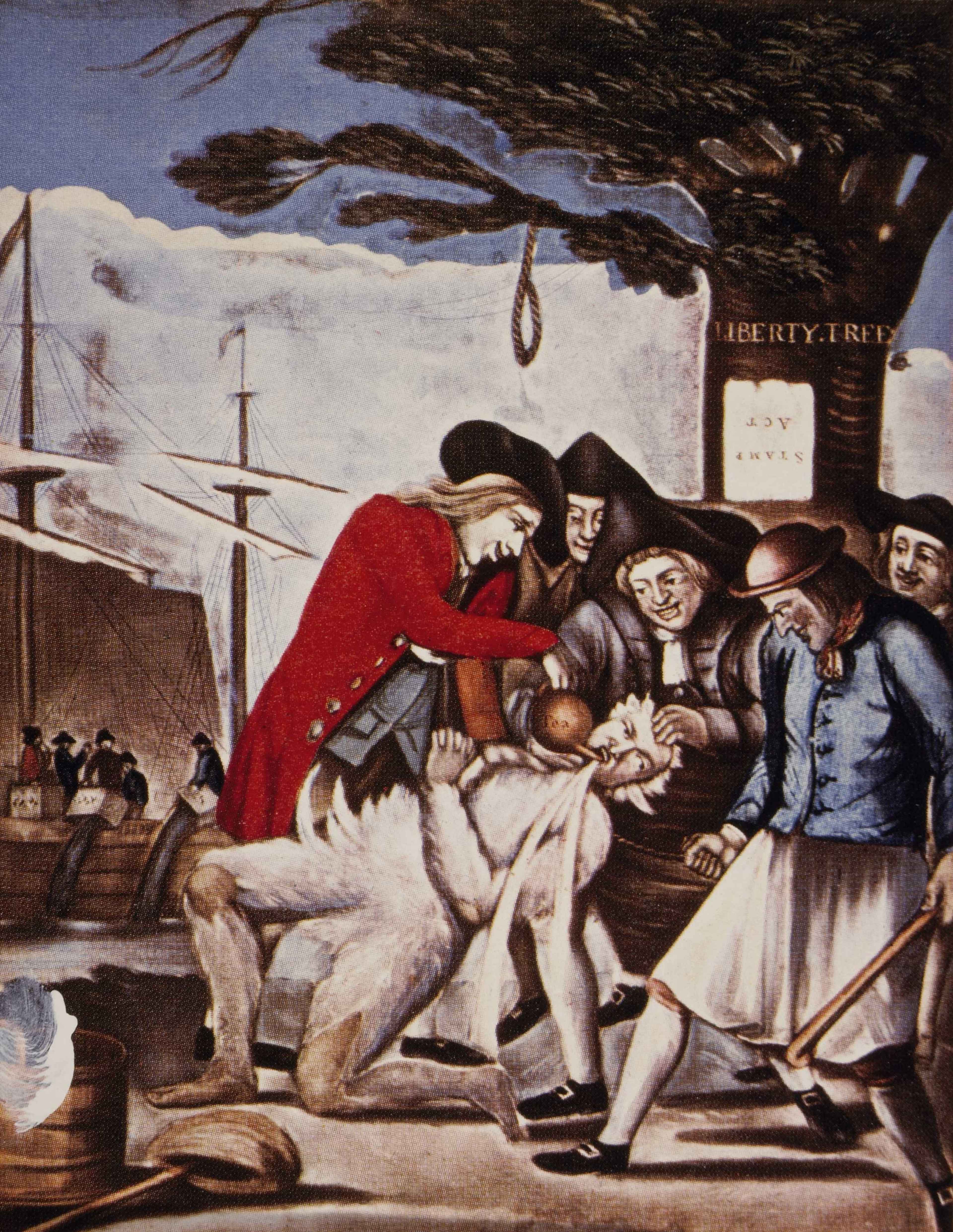
- Tar, Feathers, and the Tree: In 1775, British soldiers tarred and feathered a local farmer named Thomas Ditson. To maximize his humiliation, they forced him to march directly past the Boston Liberty Tree while wearing a mocking sign, demonstrating that even the British military recognized the tree as the ultimate symbol of colonial self-identity.
- The World’s Largest Fuel Source: When the Boston Liberty Tree was chopped down in 1775, it yielded fourteen cords of wood. This massive amount of firewood was used to heat the barracks of the British army during the cold winter siege of Boston, representing a literal and symbolic consumption of colonial liberty.
Why Liberty Trees Still Matter in the Modern Era
In the twenty-first century, the story of the Liberty Tree offers vital lessons about the power of public space and the importance of civic assembly. Long before social media, television, or digital newsletters, early Americans relied on physical locations to share ideas, organize movements, and debate the future of their society. The Liberty Tree reminds us that a healthy democracy requires physical gathering spaces where people can voice their opinions and engage in peaceful protest. In an increasingly digital world, the enduring legacy of these green monuments serves as an important call to protect our public parks, community forums, and historic landmarks as essential spaces for civic engagement.
People Also Ask
What is the history of the Liberty Tree?
The Liberty Tree was a famous elm tree in Boston, Massachusetts, where colonists gathered in 1765 to protest the British Stamp Act. It became a powerful symbol of colonial resistance and inspired similar trees and poles throughout the thirteen colonies.
Why did the British cut down the Liberty Tree?
During the siege of Boston in August 1775, British soldiers and Loyalists chopped down the Boston Liberty Tree to destroy a potent symbol of American rebellion and to use its massive wood supply for winter heating.
What is the difference between a Liberty Tree and a Liberty Pole?
While a Liberty Tree was an existing, living natural landmark used for protests, a Liberty Pole was a tall, constructed wooden mast erected in towns that lacked a suitable historic tree, allowing patriots to easily post broadsides and gather for political meetings.
Conclusion: The Everlasting Canopy of Freedom
The story of the Liberty Trees captures the essence of the American spirit: a commitment to community, a dedication to public voice, and an unyielding resistance to tyranny. From its humble origins as an old elm in colonial Boston to its eventual global adoption during the French Revolution, the Liberty Tree evolved from a simple physical meeting point into an eternal symbol of human freedom. Though the original Boston tree is long gone, the ideas cultivated beneath its branches continue to shade and protect the democratic institutions of the United States today.


