On the humid morning of June 17, 1775, a ragtag militia of colonial farmers, merchants, and tradesmen stood atop a freshly dug dirt redoubt in Charlestown, Massachusetts, staring down the barrels of the most formidable military force on the planet. The Battle of Bunker Hill, as this fierce encounter would forever be known, represents one of the most defining chapters of the American Revolutionary War. While technically a tactical victory for the British Crown, this dramatic clash proved to be a profound psychological triumph for the American patriots. It shattered the myth of British military invincibility, transformed a localized colonial rebellion into an all-out war for independence, and demonstrated to the world that the colonists were willing to pay the ultimate price for liberty. Understanding the sheer bravery, tactical missteps, and desperate struggles of this battle offers a vivid window into the birth of a nation.
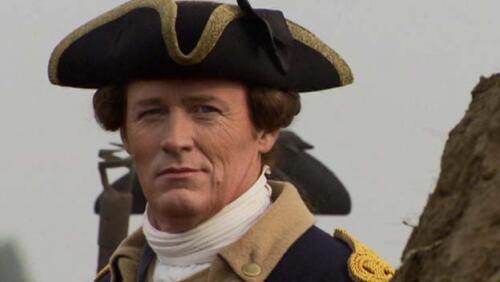
Historical Background: A City Under Siege
The year 1775 opened with Massachusetts on the absolute brink of war. Following the historic shots fired at Lexington and Concord on April 19, local colonial militias successfully forced the British regular army to retreat back into the confines of Boston. Within days, thousands of militiamen from Connecticut, New Hampshire, Rhode Island, and Massachusetts converged on the outskirts of the city, effectively trapping the British garrison led by General Thomas Gage. Boston was geographically isolated, connected to the mainland by only a narrow neck of land, making it highly vulnerable to a siege.
The roots of this armed standoff lay deep within a decade of growing sociopolitical tension in Boston. This was the same restive city where, just five years prior, British troops fired on a crowd in the street, an event that led to the famous Boston Massacre trials where future president John Adams defended the accused soldiers. The economic hardships of British taxation without representation and the heavy-handed military occupation had turned the city into a powder keg. By June 1775, the British command realized they needed to break the colonial stranglehold. Their strategy was to occupy the unoccupied high ground surrounding the city, specifically the Dorchester Heights to the south and the peninsula of Charlestown to the north, which would allow them to sweep the harbor and secure their positions.
Key Events Timeline
The events leading up to, during, and immediately after the Battle of Bunker Hill unfolded in a rapid, dramatic sequence that forever altered the course of the war:
- April 19, 1775: The Battles of Lexington and Concord mark the outbreak of open armed conflict, prompting local militias to besiege the British troops inside Boston.
- June 13, 1775: Colonial intelligence learns of a secret British plan to seize the high ground of the Charlestown Peninsula to break the colonial siege.
- June 16, 1775 (Night): Colonel William Prescott leads a detachment of roughly 1,200 colonial soldiers onto the peninsula with orders to fortify Bunker Hill. Instead, they choose the lower, more exposed Breed’s Hill and spend the night quietly digging a massive dirt fort (redoubt).
- June 17, 1775 (Dawn): The British warship HMS Lively spots the newly constructed dirt redoubt and begins bombardment. British commanders are stunned by the speed of the colonial engineering.
- June 17, 1775 (Midday): British Major General William Howe lands with thousands of highly trained regular soldiers on the shores of Charlestown to dislodge the colonists.
- June 17, 1775 (Afternoon – First and Second Assaults): Howe launches two successive frontal assaults up Breed’s Hill. The colonial defenders hold their fire until the Redcoats are at close range, devastating the British ranks and forcing humiliating retreats.
- June 17, 1775 (Late Afternoon – Third Assault): Having run out of ammunition, the colonial defenders are unable to repel a third British charge. British troops breach the redoubt, forcing the colonists to engage in hand-to-hand combat before retreating.
- July 3, 1775: General George Washington arrives in Cambridge, Massachusetts, to take formal command of the newly organized Continental Army.
- March 17, 1776: Following a long and grueling siege, the British military officially evacuates Boston, leaving the city in Patriot hands.
Important Figures and Their Lasting Impact
Several extraordinary individuals played pivotal roles during this legendary battle, leaving an indelible mark on American history:
Colonel William Prescott
The commanding officer of the colonial forces at Breed’s Hill, Colonel William Prescott, was a veteran of the French and Indian War. His cool-headed leadership under intense pressure kept the inexperienced, poorly equipped militia focused. Prescott famously directed his men to conserve their precious gunpowder, a directive that entered American folklore. His ability to construct a formidable defensive position overnight and hold off two waves of the world’s elite infantry proved that colonial leadership was highly capable of tactical brilliance.
Major General William Howe
As the commander of the British assault forces, Major General William Howe epitomized the overconfidence of the British military establishment. Believing that a simple show of European-style force would cause the “ragged rebels” to scatter, Howe ordered a direct, frontal assault up the steep, grassy incline. While he ultimately secured the hill, the massive casualties his troops suffered deeply traumatized him, making him far more cautious and hesitant in his future campaigns against George Washington.
Dr. Joseph Warren
Perhaps the most tragic and inspiring figure of the battle was Dr. Joseph Warren. A highly respected Boston physician and President of the Massachusetts Provincial Congress, Warren was a passionate Son of Liberty who had sent Paul Revere on his historic midnight ride. Despite recently being commissioned as a major general, Warren refused to take command, choosing instead to fight as a common private in the dirt redoubt alongside the militiamen. He was killed during the final British breakthrough, immediately becoming one of the first great martyrs of the American Revolution.
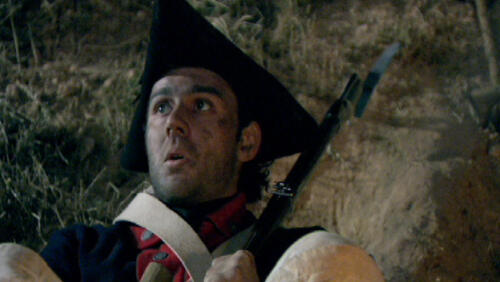
Causes and Context: The Fight for High Ground
The immediate catalyst for the Battle of Bunker Hill was the strategic geometry of Boston Harbor. Whichever side controlled the heights overlooking the water controlled the city itself. When the Committee of Safety in Massachusetts learned that General Gage intended to fortify the Charlestown Peninsula, they knew they had to act first. The decision to send troops to fortify the hills was a high-stakes gamble. It was an offensive-defensive move designed to force the British to fight on colonial terms. However, due to darkness, confusion, or a deliberate tactical choice by Colonel Prescott, the colonists bypassed the higher, safer Bunker Hill and constructed their redoubt on the lower, more forward-facing Breed’s Hill. This placed them dangerously close to the British shipping lanes and within range of naval artillery, practically ensuring a violent British response.
Major Turning Points of the Battle
The battle was defined by three critical turning points that decided its outcome and cemented its historical legacy:
The Shift to Breed’s Hill
The decision to build the redoubt on Breed’s Hill rather than Bunker Hill brought the colonial forces much closer to the shoreline. While this made them more vulnerable to naval bombardment, it also put them in a position where they directly threatened the British fleet. This forced General Howe’s hand, compelling him to launch an immediate assault rather than starving the colonists out via a naval blockade.
The Devastating Discipline of the First Assaults
As the British Redcoats marched in perfect, glittering lines up the hill, the colonial defenders displayed astonishing discipline. They held their fire until the British were mere yards away. When the colonists finally unleashed their volleys, the effect was catastrophic. Entire lines of British soldiers were swept away. The second assault met the same bloody fate, leaving the hillside littered with red coats and shattered officers.
The Agonizing Depletion of Ammunition
By the time General Howe rallied his men for a third attempt, the colonial defenders had exhausted their supply of gunpowder and musket balls. Many resorted to loading their guns with rocks and nails, while others had no bayonets to defend themselves. When the British finally breached the dirt walls, the lack of ammunition left the colonists with no choice but to engage in a desperate, hand-to-hand retreat. This critical shortage of supply ultimately doomed their chances of holding the hill.
Long-Term Impact on America
Though the British occupied the Charlestown Peninsula at the end of the day, the Battle of Bunker Hill was a turning point that fundamentally shifted the political and military dynamics of the war. For the colonists, the battle was an immense moral victory. It proved beyond a shadow of a doubt that their citizen-soldiers could stand toe-to-toe with the legendary British Army. It boosted recruitment and united the colonies in a shared sense of pride and capability.
For the British, the battle was a sobering, horrifying wake-up call. They suffered over 1,000 casualties—more than double the colonial losses—including an exceptionally high number of officers. General Clinton famously remarked that another such victory “would have ruined us.” The high cost of the battle made British commanders highly cautious for the remainder of the war. Furthermore, the sheer brutality of the conflict convinced King George III that there was no turning back; he officially declared the colonies to be in open rebellion. By demonstrating that they could inflict massive casualties on the formidable British military, the colonial forces proved to European observers—most notably the French—that this was a rebellion worth supporting. This hard-fought credibility eventually paved the way for crucial alliances, illustrating how the French helped win the American Revolution by providing naval, financial, and military backing in the years to come.
Lesser-Known Facts About Bunker Hill
History is often rich with unexpected details, and the Battle of Bunker Hill is no exception:
- The Wrong Hill: Despite its iconic name, the vast majority of the fighting actually took place on Breed’s Hill. The battle was named after the original objective, Bunker Hill, which lay slightly further inland and was only utilized during the retreat.
- Unsung Heroes of Color: Dozens of free and enslaved African American soldiers fought alongside white patriots at Breed’s Hill. Among them was Peter Salem, a freed slave who is credited with firing the shot that killed British Major John Pitcairn, the officer who had famously ordered the British troops to fire at Lexington Green.
- Forensic Dentistry in the Dirt: When Dr. Joseph Warren was tragically killed, his body was hastily buried in a shallow, unmarked grave by British forces. Months later, after the British evacuated Boston, his family sought to locate and identify his remains. It was none other than the famous silversmith who recognized a false ivory tooth he had crafted for the doctor, a fascinating detail among the many things you may not know about Paul Revere, marking one of the earliest recorded instances of forensic dentistry in American history.
Why It Still Matters Today
Today, the Battle of Bunker Hill stands as a timeless symbol of the power of determination over raw military might. It coined the classic concept of a “Pyrrhic victory”—a win that is so costly it closely resembles a defeat. The towering 221-foot Bunker Hill Monument in Charlestown, Massachusetts, serves as a permanent reminder of the sacrifices made by ordinary citizens who stood up against tyranny. In modern military strategy and political discussions, the battle is still studied as a prime example of how morale, preparation, and defensive positioning can level the playing field against a vastly superior opponent. It reminds us that the American legacy was built not on easy victories, but on the enduring courage of those who refused to back down when the odds were heavily stacked against them.
People Also Ask (FAQ)
Who actually won the Battle of Bunker Hill?
The British Army won the battle tactically because they successfully drove the colonial militia off the peninsula and captured the high ground. However, it was a Pyrrhic victory, as they suffered over 1,000 casualties compared to the estimated 450 colonial casualties, severely damaging their military capabilities in Boston.
Did William Prescott really say, “Don’t fire until you see the whites of their eyes”?
While this legendary quote is famously attributed to Colonel William Prescott (and sometimes General Israel Putnam), historians debate whether those exact words were uttered. However, the command perfectly reflects the actual tactical necessity of the battle, as the colonists had very limited ammunition and needed to make every single shot count at extremely close range.
Why was the Battle of Bunker Hill fought on Breed’s Hill?
The colonial forces were originally ordered to fortify Bunker Hill. However, when they arrived on the Charlestown Peninsula under the cover of darkness on June 16, they decided that Breed’s Hill, being lower and closer to Boston, was a more strategic and commanding position to challenge the British fleet, despite being more vulnerable to attack.
What was the significance of Dr. Joseph Warren’s death?
Dr. Joseph Warren was one of the most influential political leaders in Massachusetts. His decision to fight as a private and his subsequent death on the battlefield shocked and galvanized the colonies, turning him into an early martyr of the revolutionary cause and inspiring thousands of others to join the fight for independence.
The Ultimate Historical Takeaway
The Battle of Bunker Hill was far more than an early, bloody skirmish on the outskirts of Boston; it was the crucible in which the American spirit of resistance was forged. By standing firm against repeated waves of the British Army’s finest troops, a group of untrained colonial volunteers proved that they possessed the courage, coordination, and resilience required to challenge an empire. Though they lost the hill due to a fatal lack of ammunition, they won the respect of their enemies and the confidence of a budding nation, setting America on an irreversible course toward independence and liberty.


