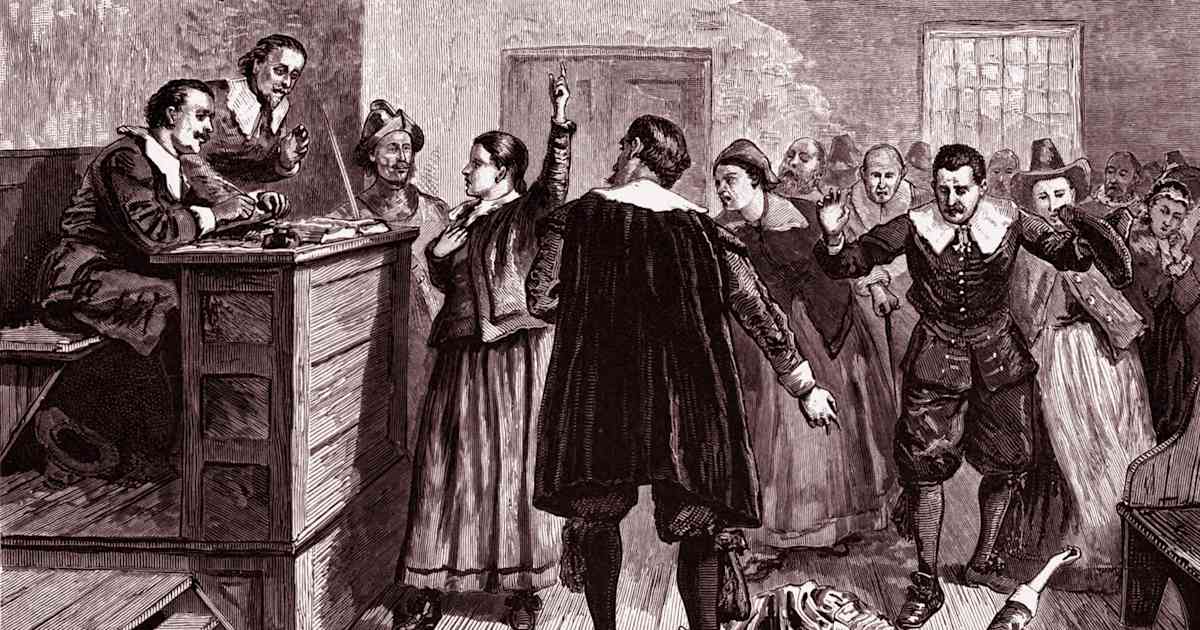
The early modern period was marked by a dark, persistent panic that crossed oceans and claimed thousands of innocent lives: the hysteria of witch trials. In both Europe and the American colonies, communities gripped by religious fervor, disease, and social anxiety resorted to desperate measures to root out what they believed was active satanic worship. When fear overrode reason, courts and villagers turned to a series of bizarre witch trial tests designed to compel confessions or reveal “magical” guilt. These tests, ranging from torturous physical ordeals to absurd culinary counter-spells, represent one of the most chilling chapters in human legal history, showing how easily justice can be subverted by mass paranoia. Understanding these brutal trials is not just a study of the past, but an essential lesson in how societies react to fear, making it a critical foundation for modern legal protections and human rights.
The Historical Background: Faith, Fear, and the Supernatural World
To understand why communities resorted to bizarre witch trial tests, one must examine the socio-religious landscape of the 16th and 17th centuries. This was an era dominated by a literal belief in the struggle between God and the Devil. In the early modern mind, physical misfortunes—such as crop failures, sudden illnesses, or infant deaths—were not viewed as random natural occurrences. Instead, they were often attributed to the work of malevolent forces. The belief in witchcraft was codified in European legal and theological treatises, most notably the 15th-century Malleus Maleficarum (The Hammer of Witches), which laid out detailed guides on how to identify, interrogate, and prosecute suspected witches.
As European colonists crossed the Atlantic to settle in North America, they carried these deeply entrenched anxieties with them. In the isolated, high-stress environment of Puritan New England, fear of Indigenous conflicts, harsh winters, and religious dissent created a boiling pot of paranoia. While many associate these trials solely with Salem, Massachusetts, there was an earlier panic of the first American witch hunt that gripped Connecticut and other parts of New England decades before the events of 1692. The legal frameworks of the time permitted trials by ordeal, where supernatural signs were treated as absolute, concrete evidence in a court of law.
7 Bizarre Witch Trial Tests Used as Supernatural Evidence
In the absence of physical evidence, magistrates, clergy, and self-proclaimed “witch-hunters” devised several absurd, dangerous, and often fatal tests to determine guilt. Here is how these seven infamous trials by ordeal operated:
1. The Swimming Test (Trial by Water)
Deriving from ancient medieval legal codes, the swimming test relied on the theological belief that pure water, a creation of God used in the sacrament of baptism, would reject anyone who had made a pact with the Devil. Accused individuals were stripped to their undergarments, had their thumbs tied tightly to their big toes, and were thrown into a deep river or pond. If the accused floated, they were declared guilty because the water “rejected” them. If they sank, they were considered innocent. While ropes were often tied around their waists to pull them out, many innocent victims accidentally drowned before they could be rescued. A notable European case occurred in 1710 in Hungary, where a woman named Dorko Boda was subjected to this test before being beaten and executed.
2. The Prayer Test (Scripture Recitation)
It was commonly believed that witches were physically incapable of reciting the Word of God without stumbling. Judges would force suspects to read scripture aloud, with a particular emphasis on the Lord’s Prayer. Any stumble, mispronunciation, or omission of words—even if caused by sheer terror, exhaustion, or illiteracy—was accepted as proof of a demonic covenant. In 1712, Jane Wenham was convicted in England after she struggled to pronounce “forgive us our trespasses” during her trial. Even a flawless performance was no guarantee of safety; during the Salem Witch Trials, former minister George Burroughs recited the Lord’s Prayer perfectly right before his hanging, but the crowd’s awe was quickly dismissed by Cotton Mather as a clever deception from the Devil.
3. The Touch Test
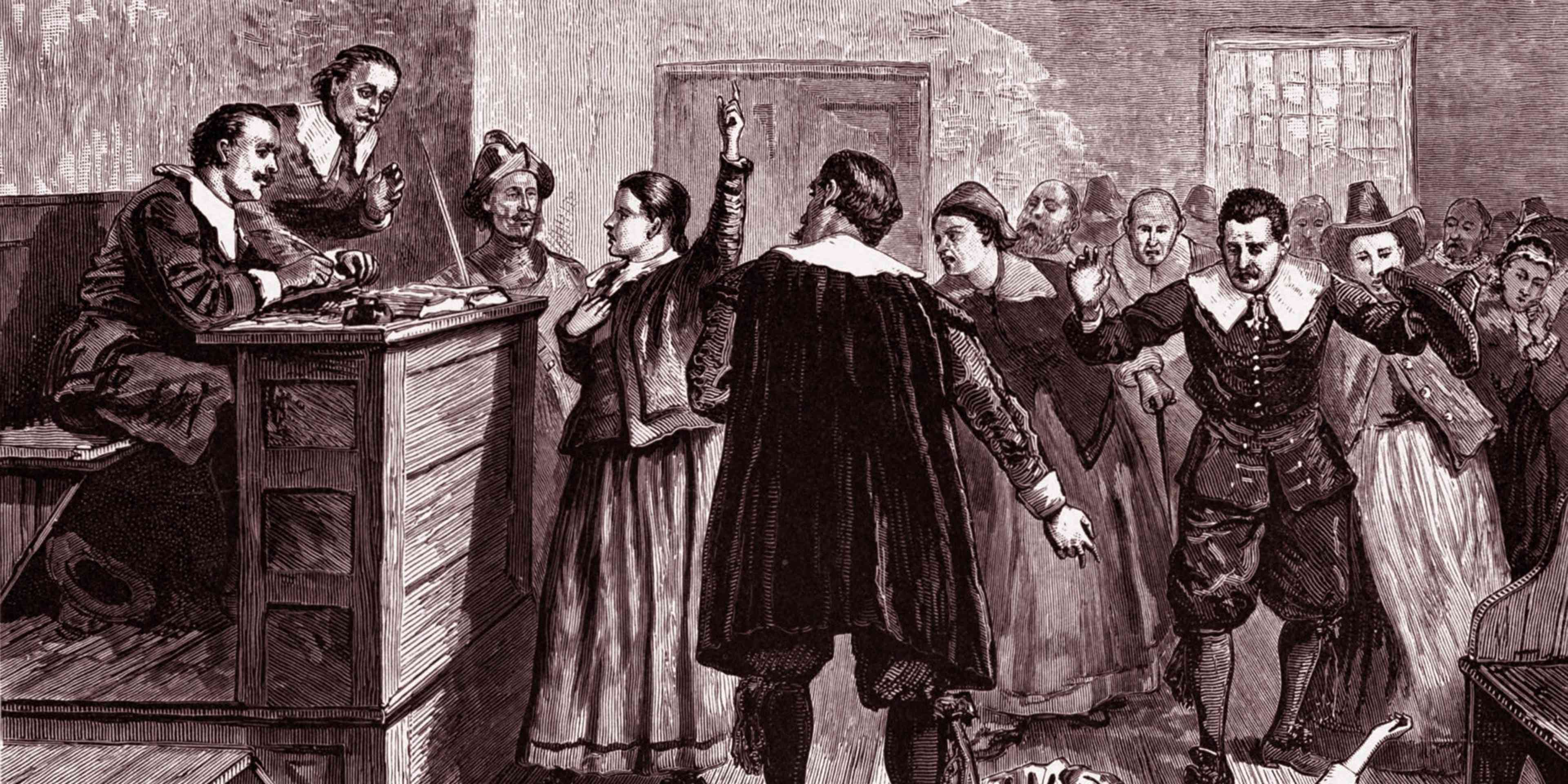
This test operated under the theory of “effluvia”—the idea that the evil energy radiating from a witch into a possessed person would be drawn back into the witch upon physical contact. During a trial, a “possessed” victim experiencing fits or convulsions would be brought into the courtroom. The accused would be forced to touch the victim. If the fits immediately ceased, it was seen as definitive proof of guilt. This test famously doomed Rose Cullender and Amy Denny in England in 1662. Even when a blindfolded control test showed that the afflicted girls reacted identically to random bystanders, the biased court dismissed the anomaly and sentenced the two elderly women to hang.
4. The Witch Cake
The witch cake was a bizarre form of counter-magic used to diagnose suspected witchcraft. In cases where children or villagers exhibited strange sicknesses, investigators would take a sample of the victim’s urine, mix it with rye meal and ashes, and bake it into a cake. This stomach-turning pastry was then fed to a dog, which was believed to be a “familiar” or animal helper of the witch. It was thought that the dog would either fall under a spell or reveal the identity of the tormentor. This exact test was prepared in Salem, Massachusetts, by the enslaved woman Tituba at the behest of a neighbor to cure Betty Parris. Rather than curing the girl, it fueled accusations of sorcery against Tituba herself.
5. Identifying the “Devil’s Mark” or “Witch’s Teat”
Examiners would strip suspects publicly to search for any unusual physical anomalies. It was believed that the Devil left a physical scar, mole, birthmark, or extra nipple (the “teat”) on his servants to allow them to nurse their familiars. Because of the vast diversity of human skin, finding a blemish, scar, or supernumerary nipple was almost guaranteed. This practice has deep ties to the broader mythology of witchcraft, including the folklore surrounding why witches ride brooms and maintain animal helpers. Terrified villagers would sometimes cut or burn their own moles off, only to have the resulting wounds interpreted as attempts to hide the Devil’s mark.
6. Pricking and Scratching
If no obvious marks were found, professional witch-finders would employ “prickers” who used long needles to repeatedly stab the suspect’s flesh. Since the Devil’s mark was believed to be entirely numb and incapable of bleeding, the discovery of any spot that did not bleed or feel pain was used as evidence of guilt. This horrific form of torture became a lucrative business, with highly paid “prickers” utilizing retractable, dull needles to fabricate guilt. Additionally, “scratching” allowed the afflicted to claw at the suspect’s skin; if the victim felt relief after drawing the suspect’s blood, it was considered a partial confirmation of the suspect’s guilt.
7. The Charging Test (Verbal Command)
In this test, the accused was forced to verbally order the Devil to let the possessed victim come out of their fit or trance. If the victim immediately recovered upon hearing the command, it proved the suspect had authority over the evil spirit. During the 1590 trial of Alice Samuel, her husband, and her daughter in Warboys, England, the judges forced them to recite: “As I am a witch… so I charge the devil to let Mistress Throckmorton come out of her fit.” The children recovered instantly, and the entire Samuel family was subsequently executed.
Chronological Timeline of the Witch Trials
- 1486: Heinrich Kramer publishes the Malleus Maleficarum, establishing the theological blueprint for identifying and prosecuting witches across Europe.
- 1590: The Witches of Warboys trial occurs in England, where Alice Samuel and her family are accused and executed using the charging test.
- 1597: King James VI of Scotland publishes Daemonologie, further legalizing and standardizing witch-hunting practices.
- 1662: The Bury St. Edmunds trial of Rose Cullender and Amy Denny takes place, serving as an influential legal precedent for American trials.
- 1692: The Salem Witch Trials begin in Massachusetts, heavily influenced by the main accusers of the Salem witch trials, leading to the execution of 20 innocent people.
- 1710: Hungarian Dorko Boda is subjected to the swimming test, beaten, and burned at the stake.
- 1712: Jane Wenham is tried in Hertfordshire, England; she is convicted but eventually pardoned, marking the last sentencing of a witch in England.
Key Figures in the Witch-Hunting Era
Several prominent historical figures played pivotal roles in accelerating or trying to curb the mass hysteria of the witch trials:
- Matthew Hopkins (The Witchfinder General): Operating in England during the 1640s, Hopkins was a ruthless prosecutor who popularized pricking and watching, responsible for sending dozens to the gallows.
- Cotton Mather: A highly influential Puritan minister in New England whose writings on witchcraft and spectral evidence helped validate the court proceedings in Salem.
- Sir Matthew Hale: The respected English judge who presided over the Bury St. Edmunds trial of 1662. His acceptance of dubious evidence and touch tests set the standard for Salem judges decades later.
- Tituba: An enslaved woman in Salem whose knowledge of Caribbean and European folk magic made her an early target, ultimately sparking the Salem panic.
- Governor William Phips: The Governor of Massachusetts who eventually stepped in to disband the Salem Court of Oyer and Terminer, banning spectral evidence and ending the executions.
Causes and Context: Why the Hysteria Spread
The spread of witch hunts was not merely a product of individual cruelty; it was deeply rooted in the socio-political stresses of the early modern world. Economic instability, political turmoil, and devastating diseases like smallpox created an atmosphere of constant dread. Additionally, strict patriarchal norms meant that older, marginalized, or outspoken women were disproportionately targeted. Lacking social or economic protection, these women were easily scapegoated by neighbors seeking explanations for their own personal misfortunes.
The Major Turning Point: The Rejection of Spectral Evidence
The reliance on bizarre tests like the touch test and spectral evidence (testimony based on dreams or visions of spirits) eventually led to the downfall of the witch trials. In late 1692, as accusations in Salem reached highly respected members of society, including the Governor’s own wife, intellectual and religious leaders began to push back. Reverend Increase Mather published Cases of Conscience Concerning Evil Spirits, famously declaring: “It were better that ten suspected witches should escape, than that one innocent person should be condemned.” This pivotal shift in thought led to the banning of spectral evidence, the dissolution of biased courts, and the end of the legal witch trials in America.
The Long-Term Impact on American Law
The sheer horror of the witch trials left an indelible mark on the development of the American legal system. The clear failures of trials by ordeal and spectral evidence catalyzed a shift toward empirical standards of proof and rational legal procedures. Key structural changes include:
- Presumption of Innocence: The trials underscored the dangers of assuming guilt, helping solidify the “innocent until proven guilty” standard.
- Separation of Church and State: The disastrous entanglement of religious dogma and secular law in Salem became a primary cautionary tale for the Founding Fathers, directly influencing the First Amendment.
- Right to Legal Representation and Confrontation: The trials highlighted the necessity of allowing the accused to cross-examine witnesses and defend themselves with proper counsel.
Lesser-Known Historical Anecdotes
- The Bizarre Loophole of Flying: When Jane Wenham was accused of flying in her 1712 trial, the cynical judge Sir John Powell noted that there was no law on the books in England against flying, effectively dismissing that specific charge.
- Fake Pricking Tools: Many professional prickers were exposed as frauds who used hollow-handled daggers and retractable points to make it look like the suspect was not bleeding, allowing them to collect their massive fees for “proving” guilt.
- Mummified Cats as Protection: To ward off the spells of suspected witches, early modern homeowners would bury mummified cats inside their walls, a practice still discovered by renovators in old English and colonial homes today.
Why It Still Matters Today
The bizarre witch trial tests may seem like relics of a superstitious past, but the psychological mechanisms that drove them remain highly relevant. Today, the term “witch hunt” is frequently used to describe modern moral panics, political scapegoating, and the rise of online cancel culture. The trials serve as a stark warning of what happens when a society abandons objective truth and evidence in favor of collective fear and groupthink. Protecting due process, civil liberties, and rational inquiry remains a daily challenge in our contemporary digital world.
People Also Ask (FAQ)
Did anyone survive the “swimming test”?
Yes, but survival was a double-edged sword. If an accused person floated and survived, they were deemed guilty and faced execution. If they sank, they were considered innocent, but many tragically drowned before being pulled out of the water.
Were men ever accused of witchcraft?
While the vast majority of those accused were women (roughly 80%), many men were also tried and executed. In Salem, prominent men like Giles Corey and the former minister George Burroughs were among those put to death.
What officially ended the witch trials?
In England, the Witchcraft Act of 1735 officially abolished the crime of witchcraft, replacing it with the crime of pretending to use magic. In America, the banning of spectral evidence in late 1692 effectively brought the Salem trials to an end.
Conclusion
The bizarre tests of the witch trials remind us of the fragile nature of justice when overtaken by mass panic and religious zeal. From the cold waters of the swimming test to the agonizing needles of the prickers, these practices exposed the deadly consequences of superstitious legal codes. By studying this grim era, we honor the memory of the innocent victims and reinforce the modern legal protections that shield us from the return of such irrational terrors.


