In the freezing, bleak winter of 1777 at Valley Forge, Pennsylvania, the Continental Army stood on the precipice of total collapse. General George Washington’s forces were depleted, ravaged by smallpox, and desperately lacking the basic necessities of survival. Over two thousand soldiers perished in the camp, and thousands more were declared unfit for duty simply because they were barefoot and lacked proper clothing. Facing a severe manpower shortage that threatened to extinguish the spark of the American Revolution, Washington and his commanders had to make a pragmatic, highly controversial decision. To save the burgeoning nation, they turned to a demographic they had previously barred from service: enslaved African Americans. This desperate military necessity gave birth to the 1st Rhode Island Regiment, a pioneering military unit widely recognized as America’s first Black battalion, whose bravery on the battlefield redefined the struggle for liberty.
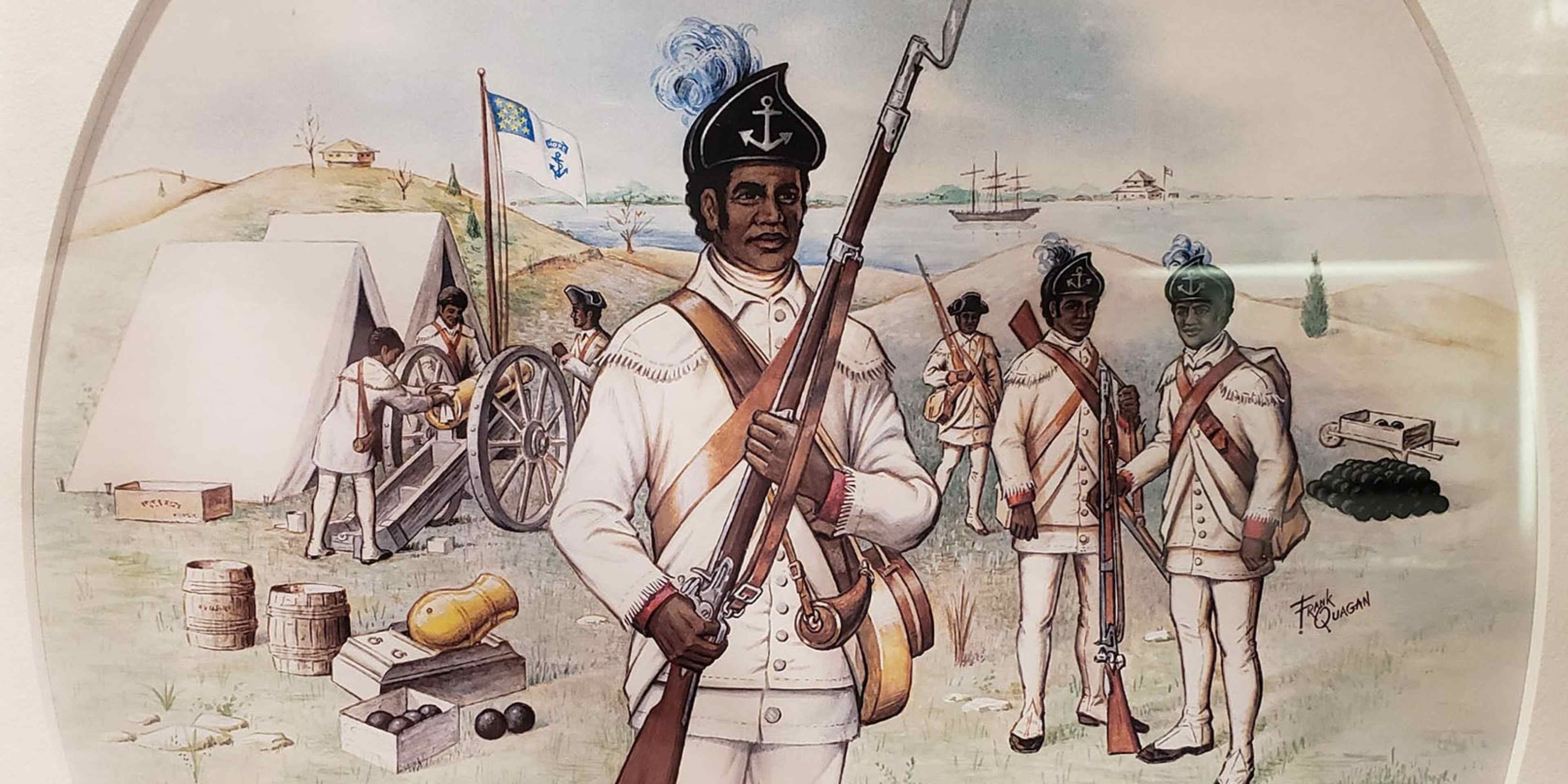
Historical Background: Rhode Island’s Unique Dilemma
To understand the creation of this regiment, one must look at the unique sociopolitical landscape of Rhode Island during the late 18th century. Though established on principles of religious freedom and tolerance by the colony’s founder Roger Williams, Rhode Island had ironically become heavily involved in the transatlantic slave trade by the eve of the Revolution. It was the smallest of the colonies, with a population of under 60,000 people. When the Continental Congress mandated troop recruitment quotas for each state based on its population, Rhode Island was tasked with filling two entire battalions. Because the state’s white population was small and recruitment bounties of land and money failed to attract enough white volunteers, military and civil leaders had to look elsewhere to meet their quotas.
The Catalyst: Lord Dunmore’s Proclamation and Washington’s Pivot
For General George Washington, a wealthy Virginian slaveholder, the prospect of arming Black men was initially deeply troubling. He, along with many Southern delegates in Congress, feared that putting weapons into the hands of enslaved people would incite widespread slave rebellions across the South and alienate critical Southern support. However, the British forced Washington’s hand. In 1775, Lord Dunmore, the royal governor of Virginia, issued a bold proclamation declaring martial law and promising freedom to any enslaved person who abandoned their rebel masters to fight for the British Crown. This move infuriated American slaveholders and inspired an estimated 20,000 enslaved people to flee to British lines, eager to win their freedom.
Fearing that Dunmore’s forces would grow like a ‘snowball in rolling,’ Washington realized that the Patriots could not afford to let the British monopolize this massive pool of manpower. Under immense pressure, Washington reversed his initial ban and permitted the enlistment of free Black men. Yet, as the war dragged on and the troop deficit worsened, the enlistment of free Black men was still not enough. More radical measures were required.
The Slave Enlistment Act of 1778: Freedom for Service
In early 1778, General James Mitchell Varnum, a trusted officer and attorney from Rhode Island, proposed a revolutionary solution to Washington: recruit enslaved men, free Black men, and Indigenous Narragansett men into a dedicated battalion. Washington forwarded the proposal to the Rhode Island General Assembly without explicitly endorsing or opposing it. Recognizing the desperation of the war effort, the assembly took the historic step of passing the Slave Enlistment Act of 1778 in February of that year.
The act stipulated that any enslaved person accepted into the 1st Rhode Island Regiment would be ‘immediately discharged from the service of his master or mistress, and be absolutely free, as though he had never been encumbered with any kind of servitude or slavery.’ To appease slaveholders, the state promised to compensate owners up to $400 in colonial currency for each enslaved man who enlisted. This act was a stunning departure from the prevailing norms in the original 13 colonies, where human bondage was heavily protected. Despite propaganda spread by disgruntled slaveholders claiming that Black soldiers would be used as front-line cannon fodder or sold back into slavery in the West Indies if captured, more than 130 enslaved men eagerly joined the regiment within the first few months.
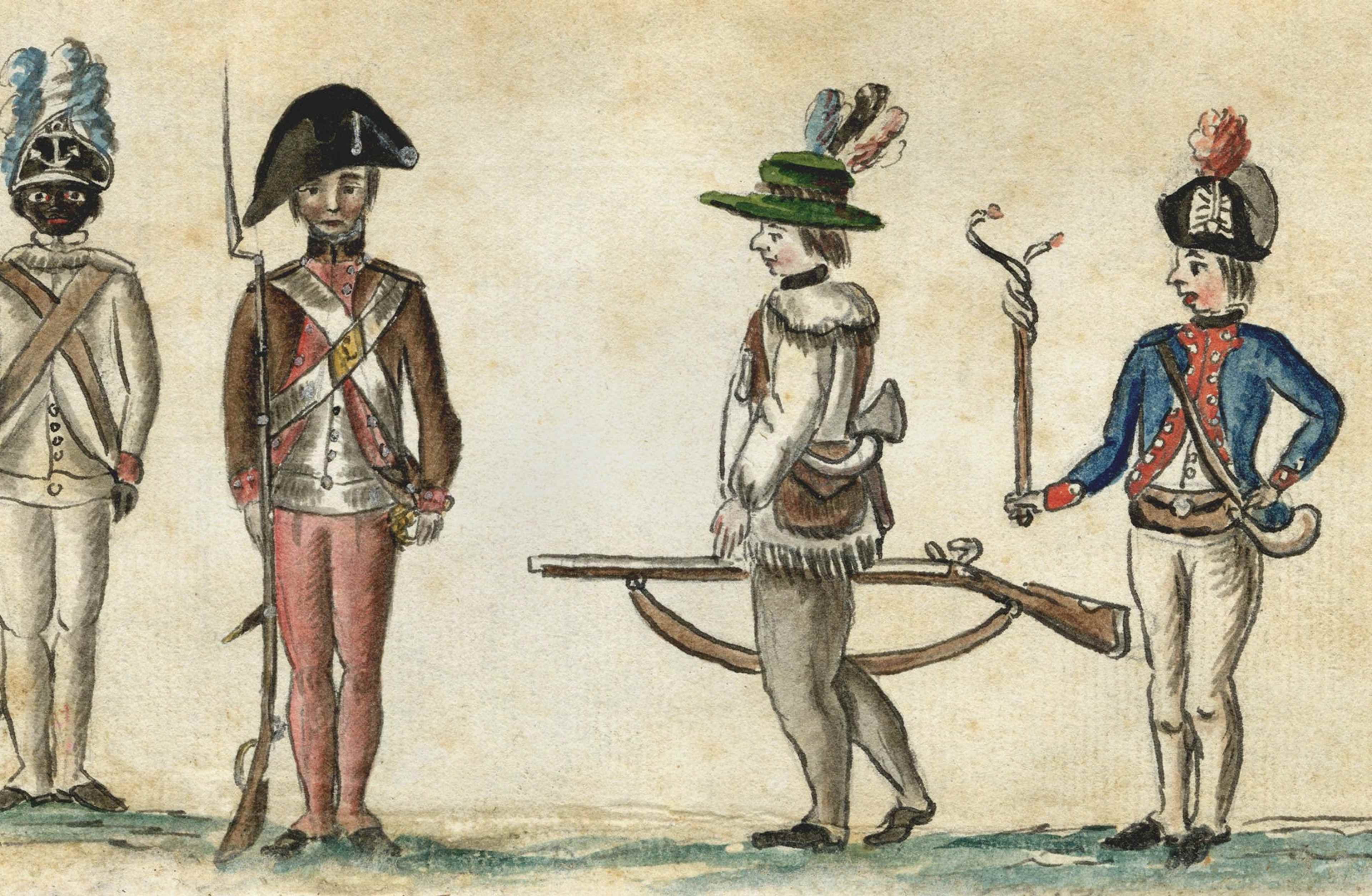
Key Events Timeline of the 1st Rhode Island Regiment
- 1775: The regiment is initially established as part of the Rhode Island Army of Observation, serving as a traditional, segregated white militia unit.
- November 1775: Lord Dunmore issues his proclamation, prompting Washington to reconsider his ban on Black enlistment.
- Winter 1777–1778: The Continental Army suffers devastating losses at Valley Forge, highlighting the desperate need for fresh recruits.
- February 1778: The Rhode Island General Assembly passes the Slave Enlistment Act, officially opening recruitment to enslaved and Indigenous men.
- August 29, 1778: The Regiment experiences its first major trial by fire at the Battle of Rhode Island on Aquidneck Island.
- May 1781: The regiment is ambushed at the Battle of Croton River in New York, where their beloved commander, Colonel Christopher Greene, is killed.
- October 1781: The integrated regiment participates in the Siege of Yorktown, contributing to the decisive defeat of the British forces.
- 1783: The regiment is formally disbanded at the end of the war.
Major Turning Point: The Battle of Rhode Island
The true test of the 1st Rhode Island Regiment came on August 29, 1778, at the Battle of Rhode Island on Aquidneck Island in Narragansett Bay. Tasked with guarding the right wing of the Continental Army’s defensive position, the regiment found itself directly in the path of three furious assaults by highly trained Hessian mercenaries fighting for the British. Despite being outnumbered and facing seasoned professional soldiers, the Black and Indigenous men of the 1st Rhode Island stood their ground with extraordinary resolve.
They repelled all three Hessian charges, inflicting heavy casualties and securing the Continental Army’s retreat. Major General John Sullivan praised their performance, noting that the regiment had earned a significant share of the honors of the day. This battle proved beyond a shadow of a doubt that Black soldiers possessed the courage, discipline, and tactical capability to match any European force on the battlefield, paving the way for further Black enlistment throughout the Continental Army.
Prominent Figures of the Regiment
Several individuals played pivotal roles in the legacy of the 1st Rhode Island Regiment:
- General James Mitchell Varnum: The brilliant military strategist and lawyer who recognized the untapped potential of Black and Indigenous recruits and successfully advocated for the formation of the regiment.
- Colonel Christopher Greene: The white commanding officer who led the regiment with great respect and dedication. He trained his soldiers rigorously and refused to treat them as inferior. When he was ambushed and killed by Loyalist forces in 1781, his Black soldiers fought fiercely to defend his body, with many dying by his side.
- Guy Watson: An enslaved man who gained his freedom by enlisting in the regiment and went on to fight bravely at both the Battle of Rhode Island and the Siege of Yorktown, surviving the war to live as a free citizen.
Lesser-Known Historical Facts
The history of the 1st Rhode Island Regiment is filled with fascinating, lesser-known narratives that highlight the complex nature of the conflict:
- Washington’s Own Enslaved Worker Fought for the British: While Washington was organizing a racially integrated force to fight for American independence, one of his own enslaved workers, Henry Washington, escaped Mount Vernon in 1776 to join Lord Dunmore’s Ethiopian Regiment, fighting for his own personal freedom under the British flag.
- A Cruelly Short Window of Opportunity: The Slave Enlistment Act was so controversial among Rhode Island’s wealthy elite that the legislature repealed it just six months after its passage. Consequently, the vast majority of enslaved men who gained their freedom through the regiment did so during this brief window; subsequent recruits had to be free men.
- Fighting to the Death for Their Commander: At the Battle of Croton River in New York, Loyalist troops targeted Colonel Christopher Greene. His Black soldiers defended him with legendary loyalty, refusing to surrender and placing their bodies between him and the attackers until they were cut down.
Long-Term Impact on America & Why It Matters Today
The legacy of the 1st Rhode Island Regiment is a vital chapter in early colonial American history because it exposes the profound paradox of the American Revolution: a war fought under the banner of universal liberty and equality, yet supported by a society heavily reliant on human slavery. The brave men of this regiment fought for a freedom that their country denied to their families and communities. By proving their military prowess, they challenged the racist assumptions of their era and laid a foundational precedent for the future integration of the United States Armed Forces—a goal that would not be fully realized until President Harry Truman signed Executive Order 9981 in 1948.
Today, the story of the 1st Rhode Island Regiment reminds us that the struggle for American democracy has always been shaped, defended, and pushed forward by those who had to fight the hardest to enjoy its promises. They were not merely passive observers of history; they were active authors of American liberty.
People Also Ask (FAQ)
Did the enslaved soldiers of the 1st Rhode Island Regiment actually get their freedom?
Yes. Enslaved men who enlisted under the Slave Enlistment Act of 1778 were granted immediate, absolute freedom upon their enlistment. However, after the war, many faced severe economic hardship, and some struggled for years to secure the military pensions they had rightfully earned.
Was the 1st Rhode Island Regiment completely segregated?
No. While the rank-and-file soldiers were predominantly Black and Indigenous, the officers were exclusively white. Additionally, after the repeal of the Slave Enlistment Act in late 1778, the unit slowly integrated white recruits to maintain its numbers, making it one of the few integrated units in the Continental Army.
Why did the Rhode Island legislature repeal the Slave Enlistment Act so quickly?
The act was repealed due to intense political pressure from wealthy landowners and slaveholders who complained that compensating owners for their lost labor was draining the state’s treasury and that arming enslaved people set a dangerous precedent for the institution of slavery.
Conclusion
The 1st Rhode Island Regiment remains one of the most remarkable and heroic chapters of the American Revolutionary War. Born out of desperation in the freezing encampments of Valley Forge, these soldiers rose above the prejudices of their time to deliver critical victories for the Continental Army. Their valor at the Battle of Rhode Island and their ultimate sacrifice at Yorktown did more than just help win a war; they forced a young nation to confront its deepest contradictions. Their story is a powerful testament to the enduring human quest for freedom and equality.


1 comment