In the spring of 1774, the British Parliament made a fateful miscalculation that would forever alter the course of global history. Believing they could easily crush the burgeoning spirit of rebellion in Massachusetts, British lawmakers passed a series of punitive measures known formally as the Coercive Acts. Intended to isolate Boston and force the colony into submission, these aggressive laws instead accomplished the exact opposite: they galvanized a fractured group of provinces into a unified, revolutionary force. The passage of these acts, which the colonists quickly dubbed the Intolerable Acts, served as the ultimate catalyst that pushed America past the point of reconciliation and directly onto the path of the Revolutionary War. Understanding this historical flashpoint reveals how a struggle over taxes and local governance transformed into a monumental war for national independence.
Historical Background: The Boiling Point of Colonial Defiance
To understand why the British government resorted to such extreme measures, one must look back at the aftermath of the French and Indian War (1754–1763). Though victorious, Great Britain was left saddled with an astronomical national debt. King George III and his parliament believed that since the war had protected the American colonies, the colonists should help pay for it. This logic birthed a series of controversial taxation measures, including the Stamp Act of 1765 and the Townshend Acts of 1767. The colonists, however, fiercely resisted, rallying around the cry of “No taxation without representation.” They argued that because they had no voice in the British Parliament, any taxes imposed upon them were an unconstitutional violation of their rights as English subjects.
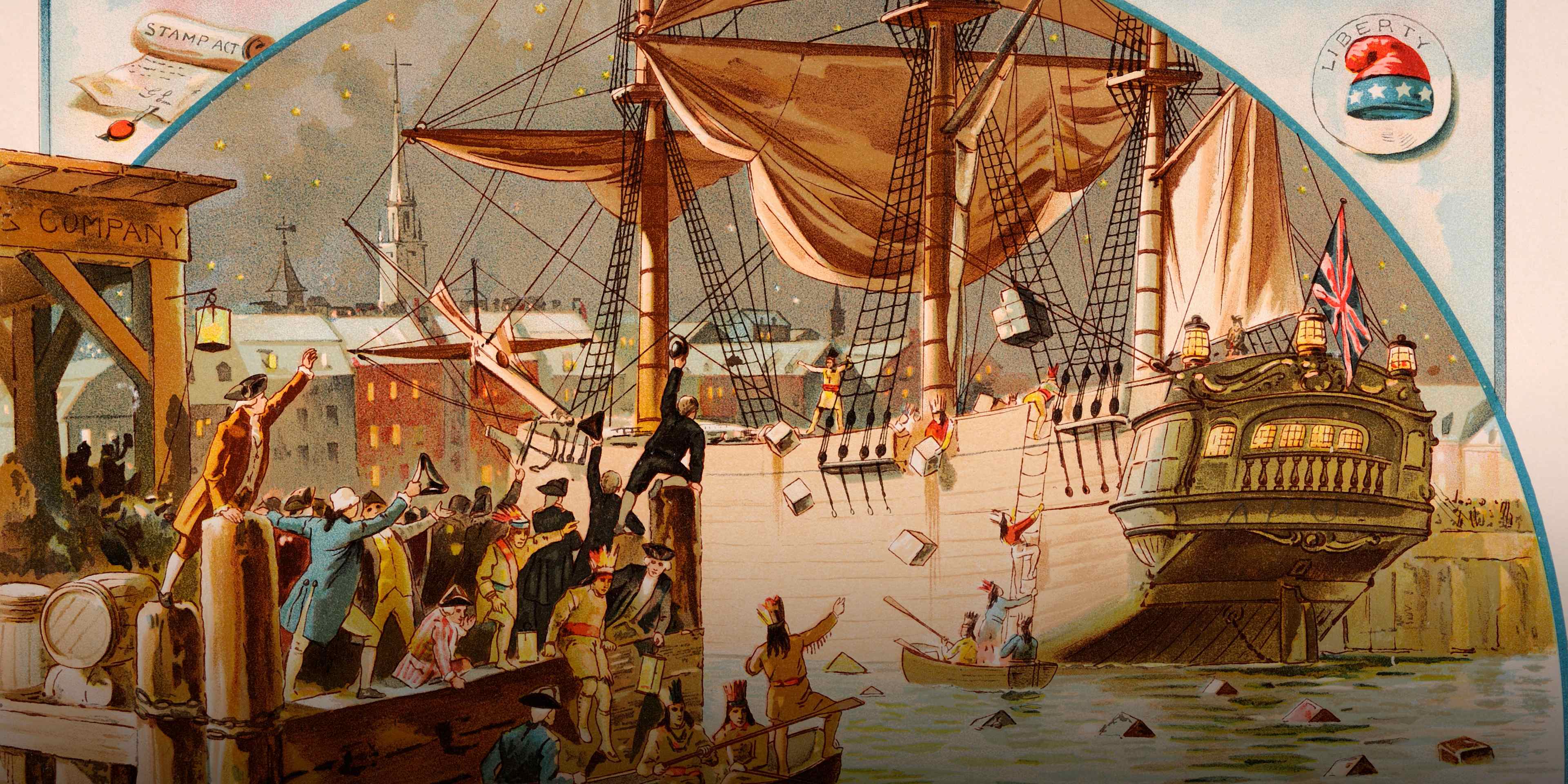
By the early 1770s, Boston had become the undisputed epicenter of colonial resistance. The tension reached a boiling point on December 16, 1773, when members of the Sons of Liberty disguised themselves and boarded three East India Company ships. In what became known as the Boston Tea Party, they dumped 342 chests of tea into the Boston Harbor to protest the Tea Act of 1773. This act of economic sabotage infuriated British officials, who viewed it not as a political protest, but as an act of open rebellion and destruction of private property. The British government decided that Massachusetts must be punished, and an example had to be made of Boston.
What Were the Coercive Acts? A Detailed Breakdown
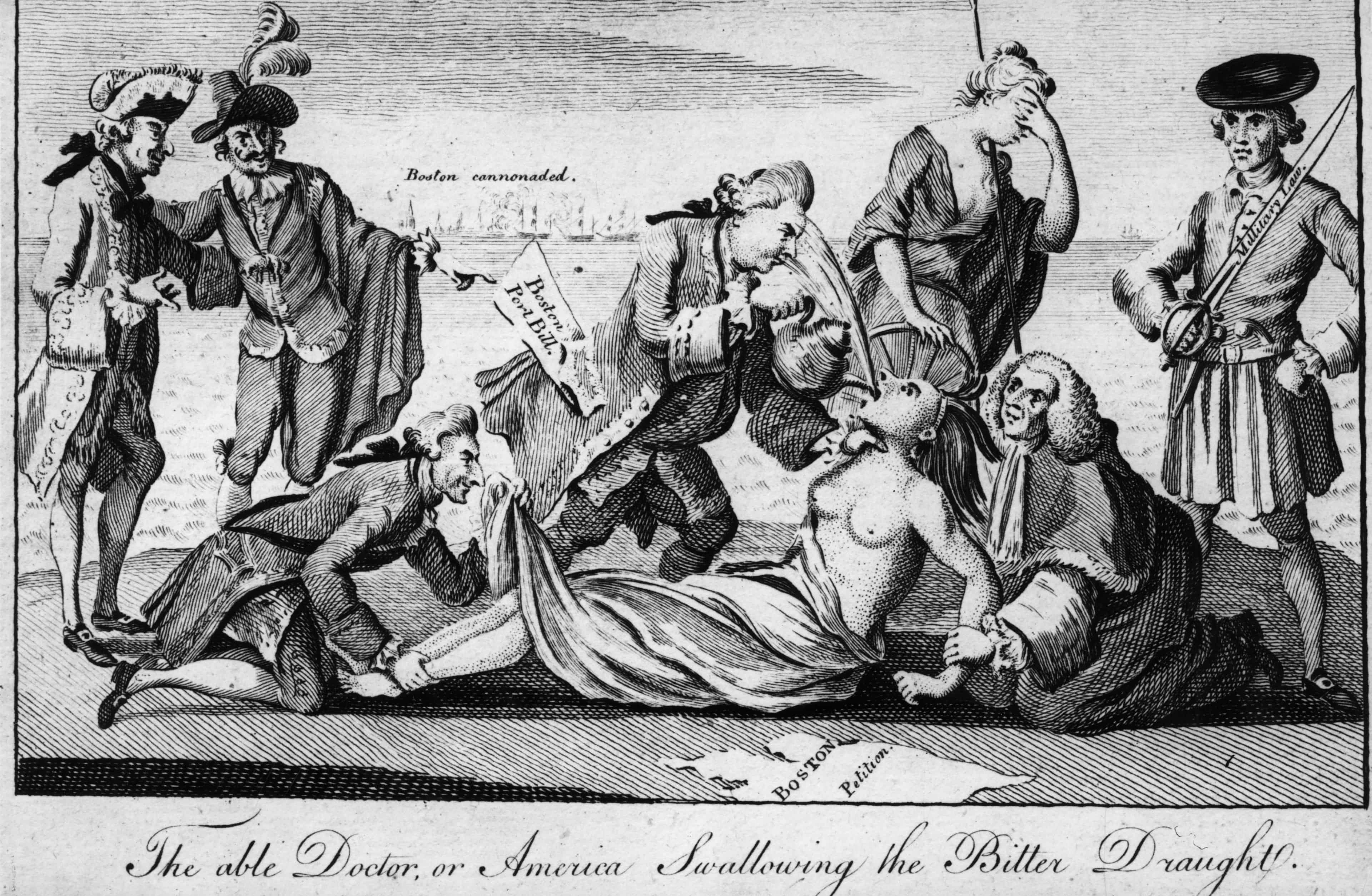
In early 1774, Parliament swiftly drafted and passed four distinct acts specifically designed to coerce the colonists into obedience. A fifth law, passed around the same time, was grouped together with them by angry colonists. Together, these five acts formed the legislative backbone of the crisis:
- The Boston Port Act (March 31, 1774): This measure closed the Port of Boston, stopping all commercial shipping until the East India Company was fully compensated for the destroyed tea and the King was satisfied that order had been restored. This effectively strangled Boston’s economy, which relied heavily on maritime trade.
- The Massachusetts Government Act (May 20, 1774): This law unilaterally revoked the colony’s 1691 charter, stripping Massachusetts of its democratic self-governance. It placed the colony under the direct control of a military governor, General Thomas Gage. Local town meetings—which were highly democratic and crucial to how colonial towns governed themselves—were restricted to just one meeting per year unless specifically approved by the royal governor.
- The Administration of Justice Act (May 20, 1774): This act allowed British officials and soldiers accused of committing capital crimes in the colonies to have their trials moved to other colonies or even back to Great Britain. Colonists saw this as a free pass for British troops to commit violence against citizens without fearing local justice, famously branding it the “Murder Act.”
- The Quartering Act (June 2, 1774): This updated previous quartering laws, granting colonial governors the authority to house British soldiers in unoccupied buildings, barns, and empty warehouses if local barracks were insufficient. It ensured a heavy, visible military occupation directly within the city of Boston.
- The Quebec Act (June 22, 1774): Though not technically part of the punitive Coercive Acts, this administrative law was passed concurrently. It extended the boundaries of the Province of Quebec south to the Ohio River, effectively blocking the western land claims of colonies like Virginia and Pennsylvania, while also guaranteeing the free practice of the Catholic faith. To the Protestant, land-hungry colonists of the thirteen colonies, this felt like an intentional insult and a threat to their religious and territorial ambitions.
Timeline of Escalation: From Protest to Armed Conflict
The transition from legislative punishment to open warfare occurred rapidly over a span of less than two years. The chronological progression of these events demonstrates how quickly the situation spiraled out of London’s control:
- December 16, 1773: The Boston Tea Party takes place.
- March–June 1774: Parliament passes the Coercive Acts and the Quebec Act.
- September 5, 1774: In response to the acts, delegates from twelve of the 13 colonies meet in Philadelphia for the First Continental Congress to coordinate a unified response.
- October 1774: The Continental Association is established, enforcing a strict boycott of British goods.
- April 19, 1775: The mounting tensions erupt into armed conflict at the Battles of Lexington and Concord, initiating the Revolutionary War.
- July 4, 1776: The colonies officially declare their independence from Great Britain.
Key Players in the Clash of Wills
The drama of the Coercive Acts was driven by powerful historical figures whose stubbornness, ambition, and ideals shaped the revolutionary era:
King George III and Lord North
King George III and his Prime Minister, Lord North, believed that maintaining absolute parliamentary supremacy over the colonies was vital to the survival of the British Empire. They viewed the Coercive Acts as a necessary show of strength. Lord North famously argued that the colonists would back down once they realized Britain was serious about enforcing its laws.
Samuel Adams and the Sons of Liberty
In Boston, radical leaders like Samuel Adams utilized the Coercive Acts as a powerful propaganda tool. Through newspapers, pamphlets, and committees of correspondence, they painted the British government as a tyrannical entity intent on enslaving free British citizens in America. They organized relief efforts for Boston, transforming the city’s economic suffering into a rallying cry for liberty.
George Washington
Even moderate colonists who initially disapproved of the Boston Tea Party, such as George Washington, were deeply alarmed by the severity of the Coercive Acts. Washington recognized that if Parliament could arbitrarily strip Massachusetts of its charter and close its ports, it could do the same to Virginia. This realization pushed Washington toward radical resistance, eventually laying the groundwork for Washington’s eventual leadership of the Continental Army.
Major Turning Points: How Punishment Backfired
The primary objective of the Coercive Acts was to isolate Massachusetts and force it to yield, thereby discouraging other colonies from resisting royal authority. However, this strategy backfired spectacularly. Instead of abandoning Boston, the other colonies rushed to its aid. Food, supplies, and monetary donations poured into the blockaded city from as far south as Georgia and the Carolinas. This unprecedented display of intercolonial solidarity bridged long-standing cultural, economic, and geographic divides.
The ultimate turning point came with the convening of the First Continental Congress in September 1774. For the first time, leaders from across the continent met to discuss a collective defense against British tyranny. They drafted the Declaration of Rights and Grievances, established a continent-wide boycott of British imports, and urged local militias to begin organizing and drilling. By trying to crush one colony, Parliament had inadvertently created a unified American national consciousness.
Long-Term Impact on America’s Founding and Identity
The legacy of the Coercive Acts extends far beyond the battlefields of the Revolutionary War; it deeply influenced the legal and constitutional foundation of the United States. When the Founding Fathers drafted the U.S. Constitution and the Bill of Rights, they specifically designed laws to prevent the types of abuses they had suffered under the Coercive Acts:
- The Third Amendment, which prohibits the forced quartering of soldiers in private homes during peacetime, was a direct reaction to the Quartering Act of 1774.
- The Fifth and Sixth Amendments, guaranteeing the right to a fair, local trial by a jury of one’s peers, were inspired by the intense hatred of the Administration of Justice (or “Murder”) Act, which allowed British officials to escape local justice.
- The emphasis on local state sovereignty and the protection of assembly rights in the First Amendment reflect the colonists’ anger over the suppression of Massachusetts town meetings.
Lesser-Known Facts About the Intolerable Acts
History is often richer in the details than in the broad brushstrokes. Here are some fascinating, lesser-known facts about this pivotal period:
1. The “Murder Act” and the Ghost of the Boston Massacre
When colonists labeled the Administration of Justice Act the “Murder Act,” they were thinking specifically of the 1770 Boston Massacre. During that event, British soldiers had killed five colonists, and their subsequent trial in Boston—defended by John Adams—had been incredibly tense. Colonists believed the new 1774 act was designed to ensure that if British soldiers fired on crowds again, they would be sent home to England, where they would likely receive a hero’s welcome rather than a fair trial.
2. Washington’s Hypocrisy and His Letter on “Slavery”
In a private letter written shortly before the First Continental Congress, George Washington expressed his deep outrage over the Coercive Acts, writing that the British government would “make us as tame, and abject Slaves, as the Blacks we Rule over with such arbitrary Sway.” This stark comparison highlights the profound ideological contradiction of the era: wealthy colonial slaveholders fiercely defending their own political liberties while actively enslaving hundreds of thousands of African Americans.
3. The Quebec Act’s Religious Fearmongering
While the Quebec Act was actually a relatively progressive piece of British legislation that allowed French-Canadian Catholics to practice their religion freely, it was weaponized by anti-Catholic colonial leaders. Protestant ministers throughout New England warned their congregations that the British government was plotting to establish “Popery” in the American West and eliminate Protestantism altogether, adding a powerful layer of religious fervor to the revolutionary cause.
Why the Coercive Acts Still Matter Today
The story of the Coercive Acts is more than a historical footnote; it is a timeless lesson in the dangers of government overreach and the power of civic unity. It demonstrates how a government’s refusal to engage in meaningful dialogue, opting instead for heavy-handed punishment, can alienate its citizens and destroy its own legitimacy. The debates sparked by the Coercive Acts—concerning the balance between national security and personal liberty, the rights of local communities to govern themselves, and the boundaries of executive power—remain active and critical discussions in modern democratic societies.
People Also Ask
Why did the British pass the Coercive Acts?
The British Parliament passed the Coercive Acts of 1774 primarily to punish the colony of Massachusetts, and specifically the city of Boston, for the destruction of private property during the Boston Tea Party, and to reassert British legislative authority over the American colonies.
What did the colonists call the Coercive Acts?
The colonists referred to the Coercive Acts, along with the Quebec Act, as the “Intolerable Acts” because they believed the punitive laws stripped them of their fundamental constitutional rights as English subjects and were too harsh to be tolerated.
How did the Coercive Acts unite the colonies?
Instead of isolating Massachusetts as Britain intended, the Coercive Acts alarmed the other twelve colonies. They realized that if Parliament could suspend the charter and close the ports of one colony, it could do the same to any of them. This shared threat prompted them to send food and supplies to Boston and organize the First Continental Congress to form a unified resistance.
Conclusion
Ultimately, the Coercive Acts of 1774 achieved the exact opposite of what the British government intended. Designed to break the spirit of Massachusetts, they instead forged a robust, continental alliance that paved the way for a new nation. By closing ports, dismantling local governments, and occupying colonial towns with military force, Great Britain convinced a diverse and often divided group of colonists that their only path to true liberty was through complete independence. The “Intolerable” laws of 1774 did not save the British Empire; they ignited the American Revolution.


