Historical Background: The Life of Elizabeth Griscom
Born on January 1, 1752, in Gloucester City, New Jersey, Elizabeth “Betsy” Griscom was the eighth of seventeen children born to Rebecca and Samuel Griscom. Her family belonged to the Society of Friends, or Quakers, a religious group known for its strict adherence to plainness, pacifism, and community-focused lifestyle. Her father was a skilled house carpenter, establishing a multi-generational legacy of craftsmanship. Betsy attended a Quaker school where she learned reading, writing, and needlework—a vital skill that would define her career and historical legacy.
Upon completing her basic education, Betsy was apprenticed to William Webster, a prominent Philadelphia upholsterer. It was in Webster’s bustling workshop that she mastered the intricate art of sewing mattresses, chair covers, and window blinds. This rigorous vocational training transformed her into a highly capable artisan, preparing her for the competitive economic landscape of Philadelphia.
Key Events Timeline
To fully grasp Betsy’s journey, we must examine the key milestones that shaped her personal life and professional career:
- 1752: Elizabeth Griscom is born in New Jersey on New Year’s Day.
- 1773: Betsy elopes with John Ross, resulting in her expulsion from the Quaker community. They establish their own upholstery shop.
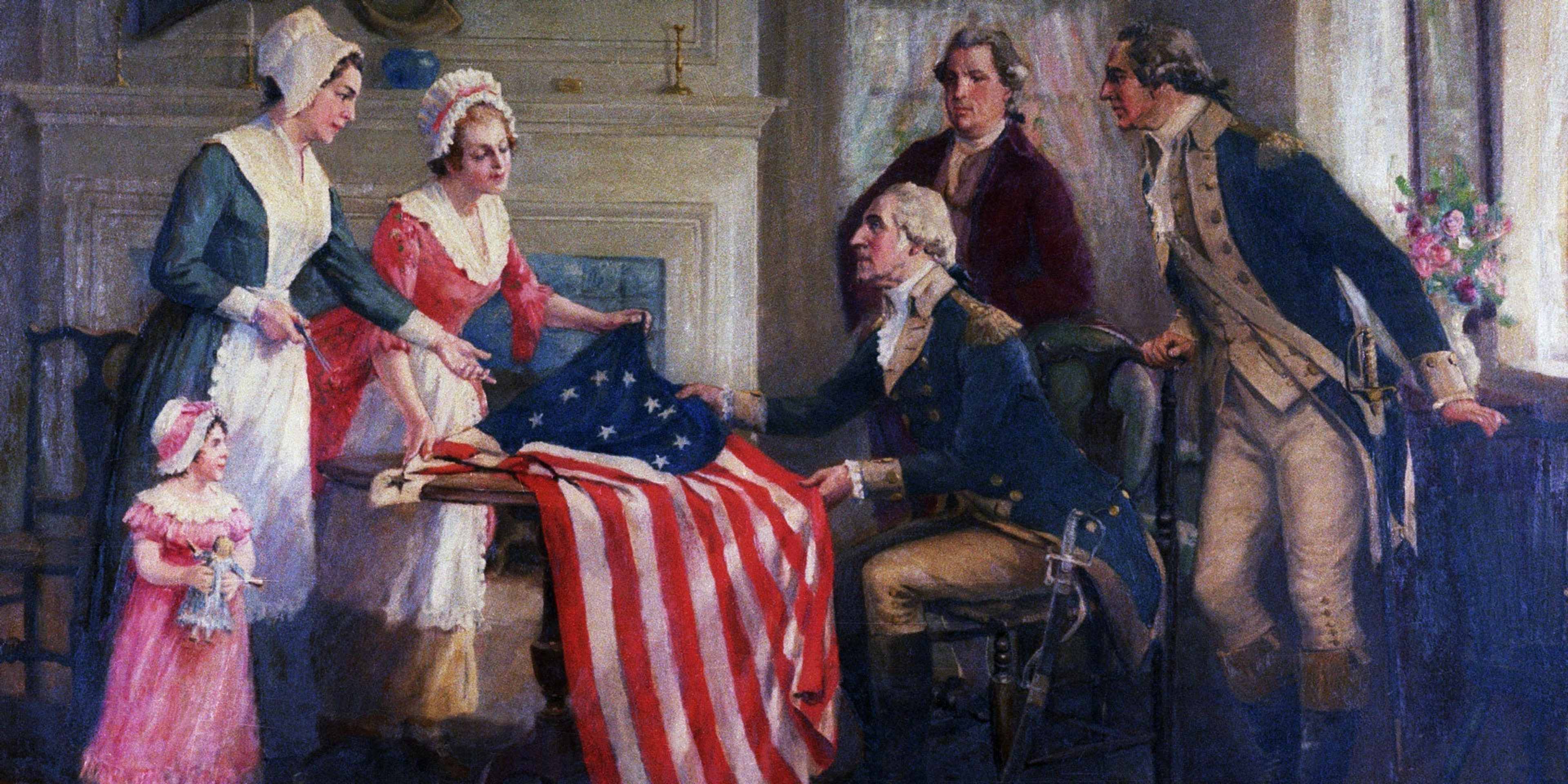
- 1776: John Ross tragically dies. Legend states Betsy is visited by George Washington, George Ross, and Robert Morris to design the national flag.
- 1777: Betsy marries her second husband, Joseph Ashburn, a sailor. In June of this year, the Continental Congress officially adopts the flag design.
- 1782: Joseph Ashburn dies in a British prison after being captured as a privateer.
- 1783: Betsy marries John Claypoole, her third husband. The Treaty of Paris is signed, ending the Revolutionary War.
- 1810-1811: Betsy and her daughters continue their successful business, manufacturing large garrison flags for the U.S. government.
- 1836: Betsy Ross dies in Philadelphia at the age of 84.
- 1870: Her grandson, William Canby, publicly presents the story of Betsy Ross designing the flag, sparking the national legend.
Important Figures and Their Historical Impact
Several critical figures intersected with Betsy’s life, playing roles in either her real-world livelihood or her posthumous legend:
- George Washington: As the Commander-in-Chief of the Continental Army (which is a popular topic when researching who commanded the Continental Army before Washington), Washington is the central figure in the flag legend, allegedly presenting the rough sketch to Betsy in her upholstery shop.
- John Ross: Betsy’s first husband, whose Anglican faith led to her exile from her family’s church. His early death left Betsy a young widow operating an upholstery business alone amidst a brewing revolution.
- William Canby: Betsy’s grandson, who catalyzed her national fame in 1870 by presenting a paper to the Historical Society of Pennsylvania, claiming his grandmother designed and made the first American flag.
Causes, Context, and the Realities of Revolutionary Philadelphia
The American Revolution was not just fought on battlefields; it was fought in the workshops, ports, and homes of colonies like Pennsylvania. During the 1770s, Philadelphia was a hotbed of political radicalism and the intellectual heart of the rebellion. While men organized militias and debated independence, working-class women kept the local economy afloat. The trade blockades and shortages forced local artisans to adapt quickly.
For Betsy Ross, the geopolitical conflict was intimately personal. Her upholstery business was directly affected by the scarcity of fabrics. When her husband died, she had to pivot from domestic upholstery to military support, finding a market in sewing flags, uniforms, and ship standards for the Pennsylvania State Navy Board. This was a common survival strategy for colonial widows who lacked traditional safety nets.
Major Turning Points: Fact vs. Fiction in the Flag Legend
The defining turning point in the memory of Betsy Ross occurred not in 1776, but in 1870. For nearly a century, the story of the first flag was largely undocumented. At the time of the Revolution, flags were primarily utilitarian military markers, not revered national relics. However, as the 1876 Centennial approached, a war-weary United States sought unifying, romantic symbols of its founding.
When William Canby presented his grandmother’s story, it met a deep societal need for female representation in Revolutionary history. The legend claimed that General George Washington, accompanied by George Ross and Robert Morris, walked into Betsy’s shop with a draft of a flag featuring thirteen stripes and thirteen six-pointed stars. According to the tale, Betsy suggested changing the stars to five-pointed ones because they were easier to cut out with a single snip of the scissors.
Historically, there is no contemporaneous evidence to prove this meeting occurred. Records show that other seamstresses, such as Margaret Manning, Cornelia Bridges, and Rebecca Young, were also paid to make flags during this period. However, the story captured the public’s imagination, cementing Betsy Ross as the ultimate symbol of maternal, domestic patriotism.
Long-Term Impact on America and the National Narrative
The enduring legacy of Betsy Ross shaped how Americans view the gendered contributions to the founding of the nation. For generations, school curricula highlighted Betsy Ross as the primary female hero of the Revolution, emphasizing a peaceful, domestic act of creation rather than the violent realities of war. This narrative provided a safe, highly digestible form of female patriotism during the late 19th and early 20th centuries.
Furthermore, the legacy contributed to the visual culture of the United States. Today, the “Betsy Ross Flag”—featuring thirteen stars arranged in a circle representing the 13 colonies—remains an iconic symbol of American heritage, frequently displayed during national holidays and historical commemorations. It highlights the power of historical memory and how nations construct identity through shared myths.
Lesser-Known Facts About Betsy Ross
- Expelled for Love: Betsy was raised in a strict Quaker family. When she chose to marry John Ross, an Anglican, she defied her community’s rules against interfaith marriage and was formally “read out” or expelled from the Quaker meeting.
- A Thrice-Widowed Businesswoman: Betsy was married three times and outlived all three of her husbands, two of whom died due to war-related causes. Despite these immense personal tragedies, she successfully maintained her upholstery business for decades.
- The Single-Snip Star: While the Washington meeting is likely a myth, Betsy’s practical sewing trick—folding fabric to cut a perfect five-pointed star with a single snip—is a genuine upholstery technique of the era, showcasing her high level of technical skill.
Why Betsy Ross Still Matters Today
In modern historical discussions, Betsy Ross serves as an entry point into critical conversations about historical accuracy versus national mythology. Her story encourages students of history to ask: Why do we remember certain stories, and what purpose do they serve? It also reminds us of the thousands of unnamed women, working-class artisans, and marginalized groups who physically built the nation. While we look at the 13 colonies map and celebrate the political founders, the real story of Betsy Ross lies in her resilience as an independent female entrepreneur in early America.
People Also Ask (FAQ)
Did Betsy Ross actually design the first American flag?
There is no historical evidence or official documentation proving that Betsy Ross designed or sewed the very first American flag. The story was introduced by her grandson, William Canby, in 1870, nearly a century after the alleged event occurred. However, she was a documented flagmaker who sewed standards for the Pennsylvania Navy during the war.
Why did Betsy Ross change the stars to five points?
According to family legend, George Washington’s original design featured six-pointed stars. Betsy allegedly suggested five-pointed stars because they were more symmetrical and could be easily cut from fabric with a single, efficient snip of her shears, saving valuable time and material.
What happened to Betsy Ross’s husbands?
Betsy was widowed three times. Her first husband, John Ross, died in 1776, possibly of illness. Her second husband, Joseph Ashburn, was captured at sea and died in a British prison in 1782. Her third husband, John Claypoole, suffered from long-term health issues stemming from his time in a British prison and passed away in 1817 after a long illness.
Conclusion
Whether she sat down with George Washington or simply worked tirelessly in her Philadelphia shop to support her family and her country, Betsy Ross remains a monumental figure in American history. Her life story reflects the hard work, economic grit, and quiet patriotism of working-class women during the American Revolution. By separating the historical myth from the documented reality, we do not diminish her legacy; instead, we enrich it, honoring a true American artisan who helped stitch together the fabric of a new nation.


