The Tea Act of 1773 stands as one of the most consequential pieces of legislation in the history of the British Empire, serving as the definitive catalyst that ignited the American Revolutionary War. Passed by the British Parliament on May 10, 1773, this act was not designed as a direct revenue tax on the American colonists. Instead, it was an intricate corporate bailout and a strategic political maneuver intended to rescue the floundering East India Company from bankruptcy while subtly forcing the colonists to accept Parliament’s right to tax them. By granting the East India Company a virtual monopoly on the tea trade in America, the British government unwittingly set off a powder keg of resentment. This legislation unified disparate colonial merchants, radical patriots, and ordinary citizens under a shared banner of resistance, eventually leading to the legendary Boston Tea Party and the birth of a new nation.
Historical Background: Debt, Empire, and the Search for Revenue
The roots of the Tea Act of 1773 trace back to the end of the Seven Years’ War in 1763. While Great Britain emerged from the conflict as the dominant global superpower, defeating the French and dramatically expanding its territory in North America, the victory came at an astronomical financial cost. The British national debt had skyrocketed to unprecedented levels, leaving the government in London desperate for new revenue streams. Parliament naturally turned its gaze across the Atlantic, viewing the American colonies as an untapped source of wealth that had benefited immensely from British military protection but paid very little in taxes.
In 1765, Parliament passed the Stamp Act, introducing the first direct, internal tax on the colonists. The backlash was immediate and intense. Colonists argued that because they had no elected representatives in the British Parliament, any tax levied upon them without their consent violated their fundamental constitutional rights as Englishmen. The rallying cry of “no taxation without representation” echoed across the Atlantic. Confronted with widespread boycotts, physical intimidation of tax collectors, and economic paralysis, Parliament repealed the Stamp Act in 1766, but refused to surrender the principle of its ultimate legislative authority.
Seeking a different approach, Chancellor of the Exchequer Charles Townshend introduced the Townshend Revenue Act of 1767. This legislation placed import duties on essential colonial imports, including glass, lead, paint, paper, and, most notably, tea. The revenue from these duties was earmarked to pay the salaries of royal governors, effectively stripping colonial assemblies of their crucial power of the purse. The response was another round of fierce boycotts and organized resistance. The passage of the Tea Act and subsequent protests proved to be a unifying force among the 13 colonies, transforming disparate settlements into a single, cohesive political entity. Realizing the impracticality of enforcing these duties, Parliament repealed all the Townshend duties in 1770—except for the tax on tea, which was retained as a symbolic assertion of imperial power.
What Was the Tea Act of 1773? (The Core Catalysts)
By the early 1770s, a fragile calm had settled over the colonies. While many colonial patriots maintained a principled boycott of British tea, many others quietly resumed drinking it. However, a massive portion of the market was dominated by smuggled Dutch tea, which was significantly cheaper because it bypassed British customs. This widespread smuggling operation dealt a severe blow to the British East India Company, a massive corporate conglomerate that served as the backbone of the British imperial economy. The company was on the brink of financial collapse, holding millions of pounds of unsold tea rotting in its London warehouses.
To prevent this economic catastrophe, Prime Minister Lord North introduced the Tea Act of 1773. The act granted the East India Company the exclusive right to ship its tea directly to the colonies without first landing the cargo in England, where it would normally face heavy taxes. Additionally, the company was authorized to select its own consignment agents to sell the tea directly to colonial consumers, completely bypassing local merchants. While the three-pence Townshend tax on imported tea remained in place, the elimination of English duties meant that the East India Company could now sell high-quality tea in America at a price lower than even the smuggled Dutch tea.
Parliament believed that the colonists would gladly accept the Tea Act because it made their favorite beverage cheaper. However, this assumption was a grave miscalculation. Colonial leaders and merchants immediately recognized the act as a double-edged sword. First, by allowing a corporate monopoly to bypass local middlemen, the act threatened to ruin independent colonial merchants. Second, and more importantly, the act was viewed as a political “Trojan horse” designed to seduce the colonists into paying the tea tax, thereby establishing a legal precedent for Parliament’s unchecked authority to tax the colonies.

Timeline of Pivotal Events: From Parliament to Harbor
- May 10, 1773: The British Parliament passes the Tea Act, granting the East India Company a monopoly and tax exemptions on tea shipped to the American colonies.
- September 1773: The East India Company dispatches several cargo ships loaded with over 600,000 pounds of tea to the major colonial ports of Boston, New York, Philadelphia, and Charleston.
- October 1773: Public protests erupt throughout the colonies. Patriot groups, including the Sons of Liberty, use public pressure and physical threats to force the designated tea consignees in Philadelphia and New York to resign.
- November 28, 1773: The tea ship Dartmouth arrives in Boston Harbor. Under British law, the ship had twenty days to unload its cargo and pay the duty, or face confiscation by customs officials.
- December 2–15, 1773: Two more tea ships, the Eleanor and the Beaver, dock in Boston. Royal Governor Thomas Hutchinson stubbornly refuses to allow the ships to return to England without paying the tax, while the colonists refuse to allow the cargo to be unloaded.
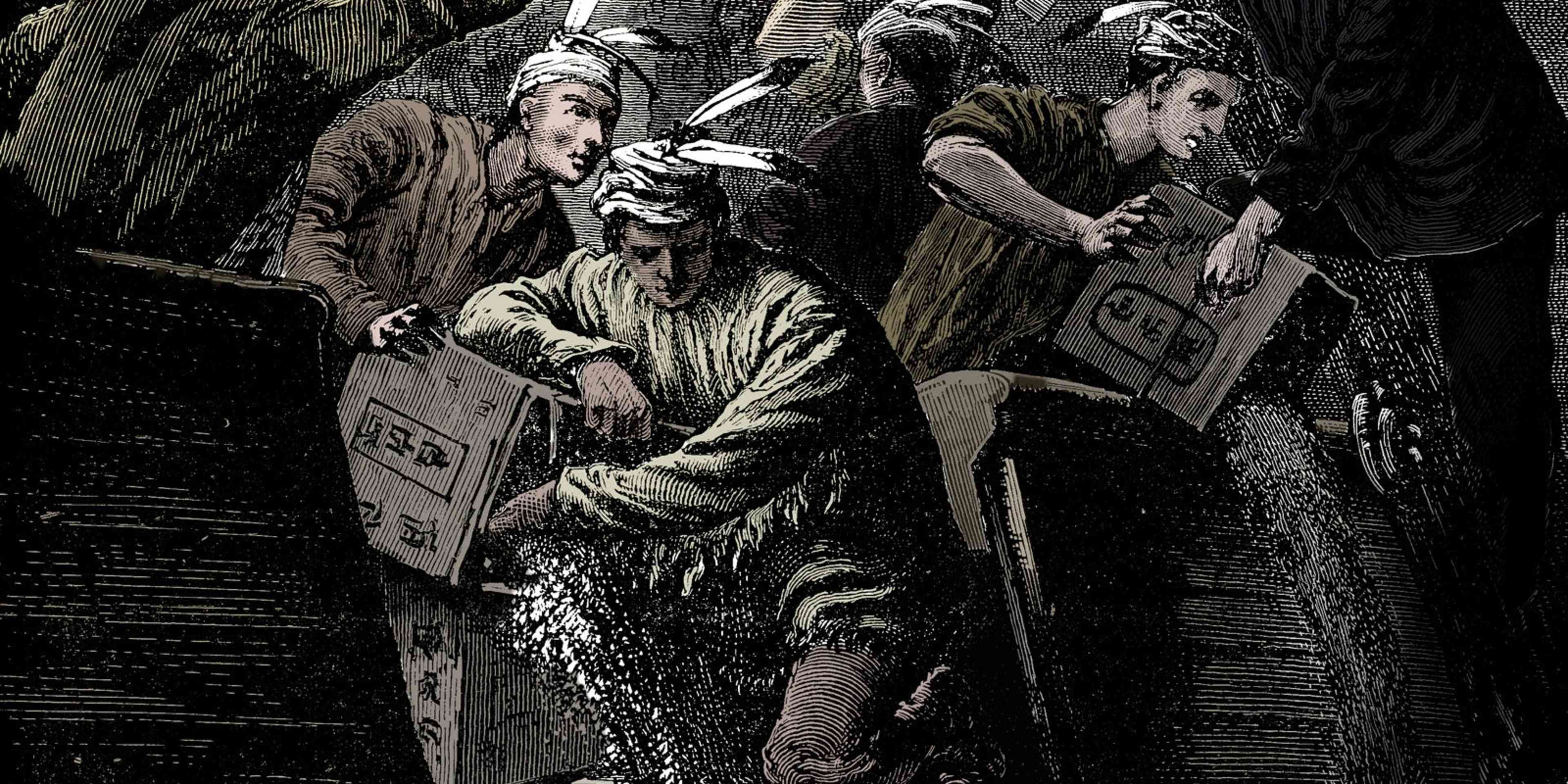
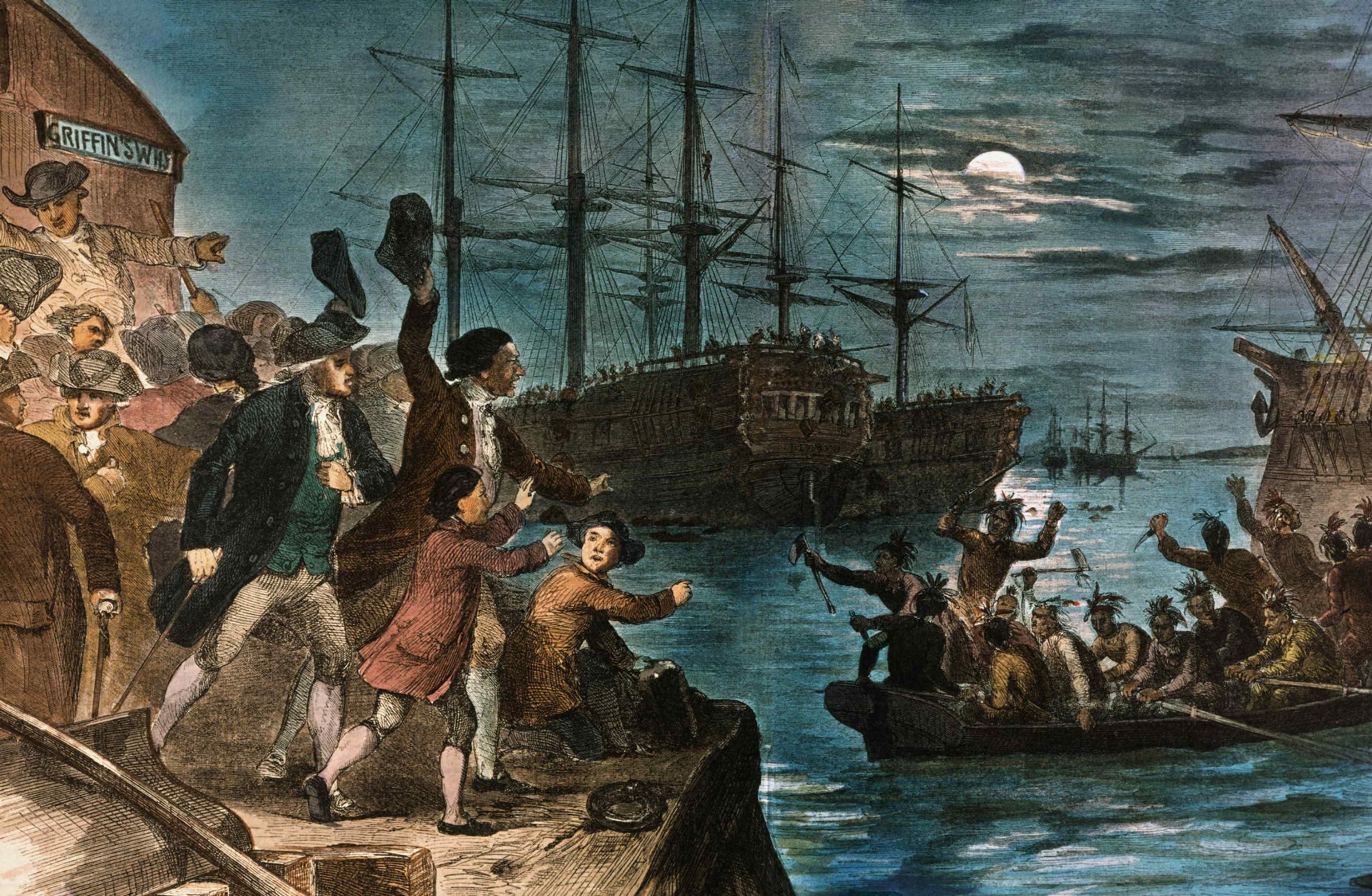
- December 16, 1773: Thousands of citizens gather at the Old South Meeting House. When Governor Hutchinson issues his final refusal to let the ships depart, a well-organized group of men, some loosely disguised as Mohawk warriors, march to Griffin’s Wharf. Over the course of three hours, they systematically board the three ships and dump 342 chests of tea into the harbor in an act of defiance known as the Boston Tea Party.
- March–June 1774: Outraged by the destruction of property, Parliament retaliates by passing the Coercive Acts (referred to in America as the Intolerable Acts), which close Boston Harbor, suspend the Massachusetts colonial charter, and place the colony under military rule.
Key Figures and Their Lasting Legacies
The drama surrounding the Tea Act was driven by a cast of complex historical actors whose decisions altered the course of human history:
- Lord North (Frederick North): The British Prime Minister who championed the Tea Act. His stubborn insistence on asserting parliamentary supremacy and bailing out the East India Company backfired spectacularly, driving the colonies toward rebellion.
- Samuel Adams: A brilliant political organizer and leader of the Boston Patriots. Adams masterfully mobilized public opinion, using the Tea Act to unite working-class citizens, wealthy merchants, and radical activists against British overreach.
- Governor Thomas Hutchinson: The royal governor of Massachusetts. Hutchinson’s uncompromising stance and refusal to compromise with the Boston town meeting directly precipitated the Boston Tea Party. His actions ultimately led to his replacement by military General Thomas Gage.
- John Hancock: A wealthy Boston merchant and prominent smuggler. Hancock’s financial interests were directly threatened by the East India Company’s monopoly, making him a powerful financial backer of the patriotic resistance.
Major Turning Points and the Path to Revolution
The passage of the Tea Act and the subsequent Boston Tea Party marked a point of no return in British-colonial relations. Prior to 1773, colonial protests were primarily economic and focused on specific legislative grievances. However, the harsh British response to the Boston Tea Party transformed a localized dispute over trade into a profound constitutional crisis. The resistance was particularly fierce in urban maritime centers, demonstrating how early colonial towns shaped the course of U.S. history through organized civil disobedience.
The Coercive Acts of 1774 were intended to isolate and punish Massachusetts, forcing the colony into submission. Instead, the punitive measures had the opposite effect. Neighboring colonies rushed to send food, supplies, and political support to blockaded Boston. To coordinate their response, twelve of the colonies sent representatives to Philadelphia in September 1774, convening the First Continental Congress. This historic assembly represented the first steps toward a unified colonial government, setting the stage for the Declaration of Independence in 1776.
Lesser-Known Facts About the Tea Act and the Boston Tea Party
While the story of the Boston Tea Party is widely taught, several fascinating details are often overlooked in standard history books:
- The Disguises Were Highly Symbolic: The men who boarded the tea ships wore blankets and soot on their faces to represent Mohawk Native Americans. This was not a serious attempt to shift blame to indigenous peoples, but rather a performative symbol of American identity and self-determination, distinguishing themselves from British subjects who accepted the crown’s authority.
- The Financial Toll Was Astounding: The 342 chests dumped into Boston Harbor contained over 92,000 pounds of tea. In today’s currency, the destroyed cargo would be valued at over $1 million. The harbor reputedly smelled of rotting tea for weeks after the event.
- It Sparked an American Coffee Culture: Prior to the Tea Act, colonists consumed vast quantities of tea. In the wake of the protests, drinking tea became associated with British tyranny, prompting a massive patriotic shift toward coffee consumption—a cultural preference that persists in the United States to this day.
Why the Tea Act Still Matters Today
The history of the Tea Act of 1773 remains deeply relevant in modern political and economic discourse. At its core, the Tea Act represents one of the earliest recorded examples of a government-backed corporate bailout of a monopoly deemed “too big to fail.” The resulting public outrage highlights the eternal tension between corporate influence, government taxation, and the consent of the governed. Furthermore, the legacy of the Tea Act reminds us of the power of grassroots movements and civil disobedience to challenge systemic injustice and reshape the destiny of nations.
To fully comprehend the deep social and economic divisions during this era, exploring some of the fascinating facts about the 13 colonies reveals a society already teetering on the edge of transformation, paving the way for the democratic institutions we cherish today.
People Also Ask
Was the Tea Act a new tax on the colonists?
No, the Tea Act of 1773 did not impose any new taxes on the American colonists. The three-pence Townshend tax on tea had already been in place since 1767. The Tea Act actually lowered the price of British tea by allowing the East India Company to bypass English duties and ship directly to the colonies.
Why did the colonists protest the Tea Act if it made tea cheaper?
The colonists protested because the act granted a corporate monopoly to the East India Company, which threatened to drive local colonial merchants out of business. More importantly, the colonists viewed the cheaper tea as a political bribe designed to make them accept Parliament’s right to levy taxes on them without representation.
What were the direct consequences of the Tea Act?
The direct consequences of the Tea Act included the Boston Tea Party, where colonists destroyed over 92,000 pounds of British tea. In response, the British Parliament passed the punitive Coercive (Intolerable) Acts of 1774, which closed Boston Harbor, escalated tensions, and ultimately led to the outbreak of the American Revolutionary War in 1775.
Conclusion: The Legacy of Colonial Resistance
The Tea Act of 1773 was a watershed moment in the American struggle for independence. What began as an imperial economic policy to rescue a struggling British corporation rapidly devolved into an ideological battleground over representation, liberty, and corporate overreach. By pushing the colonists past the point of reconciliation, the Tea Act forced them to unite and envision a future free from colonial rule, establishing a legacy of liberty and self-governance that continues to define the American spirit today.


