The epic narrative of early European settlement in North America is often dominated by the enduring legacies of Jamestown and Plymouth. However, decades before these iconic English outposts were established, the Atlantic coastline and Gulf regions were littered with the ruins of earlier, catastrophic colonial ventures. These failed North American colonies serve as a stark reminder of the extreme fragility of early European colonization. Driven by fierce imperial rivalries, unrealistic expectations of geography, and an insatiable lust for gold, early explorers routinely underestimated both the unforgiving American wilderness and the highly sophisticated, sovereign indigenous nations who already controlled the land. By examining these lost and abandoned outposts, we uncover a richer, more complex history of early America—one defined not by seamless conquest, but by devastating epidemics, mutinies, environmental disasters, and powerful indigenous resistance that continuously pushed European empires to their limits.
The Geopolitical Backdrop: A Race Fuelled by Illusion
During the sixteenth and early seventeenth centuries, European monarchs were consumed by the spectacular wealth Spain had extracted from the Aztec and Inca empires. Driven by intense jealousy and the desire to build global empires, Spain, France, and England launched numerous expeditions to North America. Their primary motivation was simple: find a Northwest Passage to Asia, discover mountains of gold and silver, and claim vast territories before their rivals did. However, North America was not a vacant wilderness awaiting conquest. It was a densely populated continent with sophisticated indigenous chiefdoms, established trade routes, and complex socio-political systems. The collision of European imperial arrogance with the ecological realities of the continent and the sovereign defense of native lands resulted in a series of dramatic, often lethal colonial failures.
A Chronology of Collapse: Key Events Timeline
- 1526 – Spanish magistrate Lucas Vázquez de Ayllón establishes San Miguel de Gualdape on the South Carolina or Georgia coast. The colony collapses within months due to starvation, disease, and the first recorded slave rebellion in North America.
- 1559 – Tristán de Luna y Arellano lands in Pensacola, Florida with 1,500 colonists. A massive hurricane destroys their fleet just weeks later, triggering a slow-motion collapse of the settlement by 1561.
- 1570 – Spanish Jesuit missionaries establish the Ajacán Mission in Virginia. The mission is destroyed in February 1571 by Powhatan warriors led by Paquiquineo, a native guide they had previously kidnapped and baptized.
- 1585–1590 – Sir Walter Raleigh’s English Roanoke expeditions end in tragedy; the civilian colony established in 1587 vanishes entirely, leaving only the cryptic word ‘Croatoan’ behind.
- 1598 – French Marquis de La Roche establishes a penal colony on remote Sable Island with 70 convicts. Abandoned and starved, only 11 survivors remain by 1603.
- 1604 – Pierre Dugua and Samuel de Champlain attempt a French settlement on Saint Croix Island. A brutal winter and scurvy kill nearly half the colonists, forcing them to relocate in 1605.
- 1607 – The Plymouth Company founds the Popham Colony in Maine. Plagued by a bitter winter and the death of their leader, the remaining settlers abandon the fort in 1608 to return to England.
The 7 Failed Colonies: In-Depth Chronicles of Survival and Collapse
1. San Miguel de Gualdape (1526): The Birth of Resistance
In September 1526, Spanish official Lucas Vázquez de Ayllón arrived on the southern Atlantic coast with six ships, 600 colonists, and approximately 100 enslaved Africans. It was intended to be a grand agricultural settlement, but disaster struck immediately. Their flagship ran aground and sank, swallowing the bulk of their food supplies. To make matters worse, their chief indigenous guide and interpreter, Francisco de Chicora, deserted them immediately upon arrival, escaping back to his people. Forced to establish their town—named San Miguel de Gualdape—during an unusually cold autumn, the settlers quickly succumbed to dysentery, malaria, and starvation. In October, Ayllón himself died. Sensing Spanish vulnerability, the enslaved Africans staged a historic uprising in November 1526, burning down a Spanish home, killing their captor, and escaping into the woods to live among the local Guale people. Left with no food, no leadership, and a hostile environment, the remaining 150 Spanish survivors abandoned the site and sailed back to Hispaniola, leaving behind the first successful multi-ethnic Maroon alliance in North American history.
2. Pensacola Bay (1559): Ruined by a Tempest
Decades before St. Augustine was founded, Spanish conquistador Tristán de Luna y Arellano set out from Mexico in 1559 with an ambitious force of 1,500 soldiers, Catholic priests, Aztec warriors, and colonists to settle Pensacola Bay, Florida. This massive expedition was designed to secure a deep-water port and clear an overland road to the Atlantic coast. However, just weeks after landing, a catastrophic 24-hour hurricane tore through the bay, sinking seven of Luna’s ships and destroying nearly all their food and equipment. With provisions gone, Luna was forced to lead the starving colonists inland to search for food at the indigenous town of Coosa. Deeply resentful of the grueling march, physical illness, and the lack of gold, the soldiers and colonists staged a series of mutinies against Luna. By 1561, the expedition was completely dismantled, and the survivors were evacuated back to Mexico, convincing Spain that the Gulf Coast was far too dangerous to colonize.
3. The Ajacán Mission (1570): The Reclaimed Identity
In 1570, eight Spanish Jesuit missionaries led by Father Juan Bautista de Segura established a humble mission on the Chesapeake Bay, Virginia. Unlike other Spanish conquests, this expedition carried no soldiers, relying entirely on the protection of a Powhatan man named Paquiquineo. Captured by Spanish sailors nine years prior, Paquiquineo had been taken to Spain and Mexico, baptized as ‘Don Luís de Velasco,’ and educated in the Catholic faith. He promised to guide the Jesuits and help convert his people. However, upon landing in his ancestral home, Paquiquineo immediately shed his Spanish identity, rejoined his family, and reclaimed his native culture. When the desperate and starving Jesuits traveled into the forest to beg him for help, Paquiquineo led a Powhatan warrior force that ambushed and killed the missionaries in February 1571, sparing only a young Spanish altar boy. The event halted Spanish colonial ambitions in the Chesapeake, leaving the region open for eventual English exploration.
4. The “Lost Colony” of Roanoke (1585–1590): America’s Great Mystery
The most famous of all failed settlements, Roanoke Island, was established under the charter of Sir Walter Raleigh. After a failed military outpost in 1585, a second civilian expedition of 115 men, women, and children landed in 1587 under the leadership of Governor John White. Among them was White’s granddaughter, Virginia Dare, the first English child born in the Americas. Facing immediate food shortages and hostile relations with local tribes (incited by previous English violence), White was persuaded to return to England for urgent supplies. However, the outbreak of the Anglo-Spanish War and the attack of the Spanish Armada trapped White in England for three years. When he finally returned in 1590, the settlement was empty. The only clue left behind was the word ‘Croatoan’ carved into a wooden post. Historians believe the desperate colonists likely integrated with the local Croatoan (Hatteras) tribe to survive, rather than suffering a mass slaughter.
5. Sable Island Penal Settlement (1598–1603): The Sandbar of Chaos
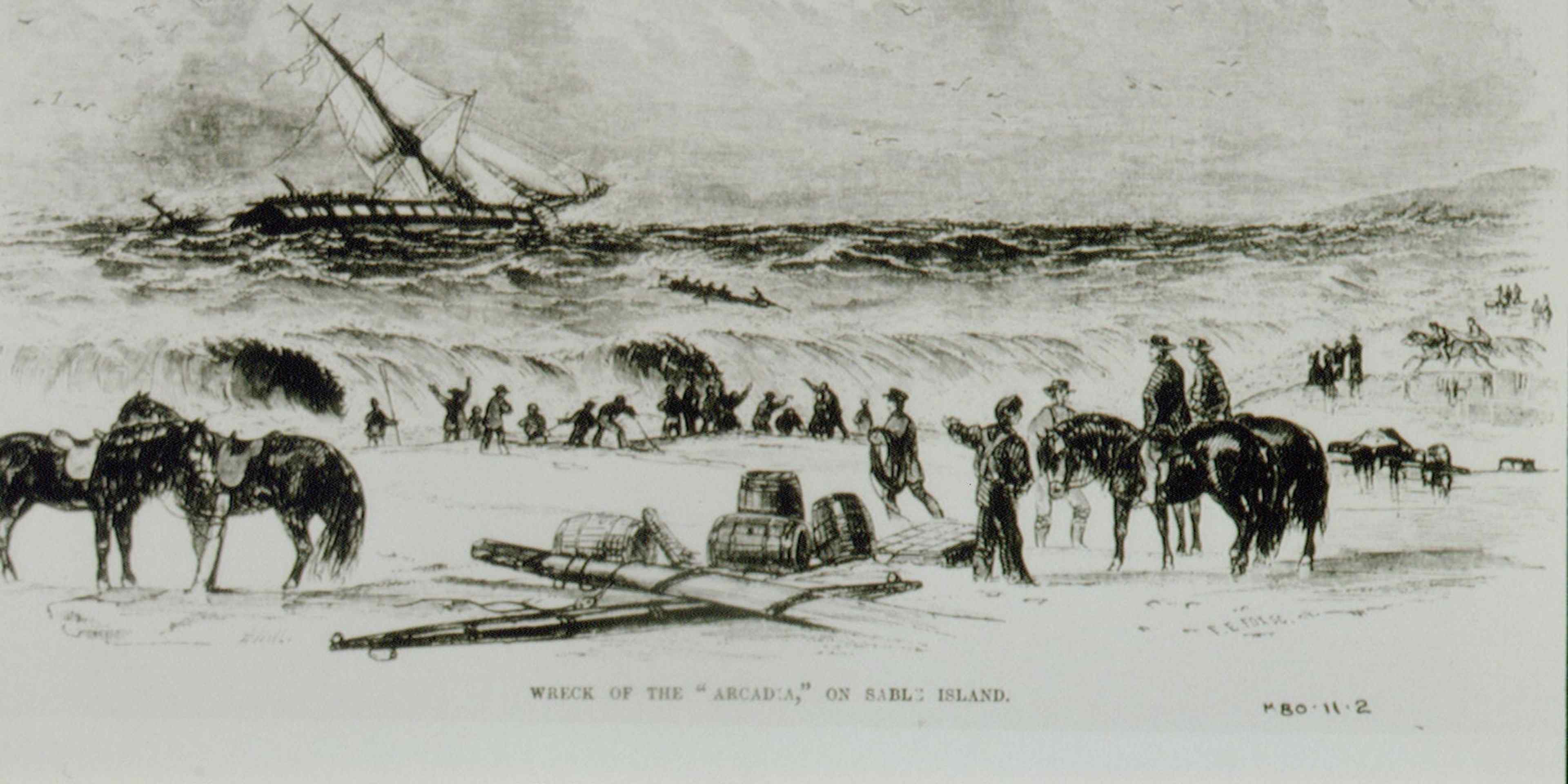
In 1598, the French Crown attempted an unusual colonization strategy. Troilus de La Roche de Mesgouez, Marquis de La Roche, established a settlement on Sable Island, a remote, crescent-shaped sandbar 300 kilometers off the coast of Nova Scotia. Notorious as the ‘Graveyard of the Atlantic’ due to its shifting sandbars and thick fogs, the island was uninhabited. Lacking willing volunteers, La Roche recruited 70 convicts, beggars, and vagabonds, giving them a choice between execution or colonial labor. The settlement was designed to exploit the local fur trade and fisheries, but La Roche failed to establish a reliable supply line. Left entirely to their own devices, the convicts mutinied, murdered their guards, and devolved into violent factional warfare. To survive, they lived in mud huts, hunted wild cattle, and wore heavy seal hides. When a French rescue ship finally arrived in 1603, only 11 men remained alive.
6. Saint Croix Island (1604–1605): The Frozen Scurvy Trap
French merchants Pierre Dugua, Sieur de Mons, and the famous cartographer Samuel de Champlain led an expedition of 79 men to Saint Croix Island in 1604, located in the Saint Croix River near the modern Maine-Canada border. The island seemed highly defensible against rival European ships, but the leaders completely misjudged the severity of the northern climate. When winter arrived, the river froze solid, isolating the island from the mainland and cutting off access to fresh water, game, and firewood. Devastated by extreme cold and a massive outbreak of scurvy, 35 of the 79 settlers died before spring. Recognizing the island was a death trap, Champlain and Dugua ordered the settlement moved across the Bay of Fundy to Port Royal (Nova Scotia) in August 1605, abandoning Saint Croix forever.
7. The Popham Colony (1607–1608): Maine’s Abandoned Stronghold
While the Virginia Company was founding Jamestown in 1607, a sister company established the Popham Colony at the mouth of the Kennebec River in Maine. Led by George Popham and Raleigh Gilbert, the 120 colonists successfully constructed Fort St. George, a chapel, houses, and a 30-ton pinnace named ‘The Virginia of Sagadahoc’—the first English ocean-going vessel built in North America. Despite their industrious start, a bitterly cold winter froze their supplies and dampened their spirits, prompting half the colonists to return to England in late 1607. In early 1508, George Popham died, leaving the young and headstrong Raleigh Gilbert in command. In September 1608, a ship arrived with news that Gilbert had inherited his family’s massive ancestral estate in England. Eager to claim his fortune, Gilbert decided to return home, and the remaining 45 colonists chose to abandon the fort and sail back with him, leaving New England unsettled by the English for another twelve years.
Important Figures and Their Historical Legacy
- Lucas Vázquez de Ayllón – A wealthy Spanish explorer whose failure at San Miguel de Gualdape demonstrated that raw physical force and enslavement were unsustainable foundations for permanent agricultural colonies.
- Paquiquineo (Don Luís) – A Powhatan noble who successfully navigated the complex European world, reclaimed his native heritage, and effectively defended his ancestral territory against early spiritual and physical encroachment.
- Samuel de Champlain – A brilliant cartographer whose painful experience during the winter at Saint Croix Island directly taught the French the ecological realities of Canada, paving the way for the successful founding of Quebec in 1608.
- Raleigh Gilbert – A headstrong English nobleman whose personal inheritance priorities instantly dismantled the Popham Colony, highlighting how early colonial ventures were deeply vulnerable to the private interests of their leaders.
Analysis of Causes and Turning Points
Why did these early attempts fail so spectacularly? The primary catalyst was a profound clash of ecological and geographical ignorance. Early European explorers operated under the illusion that North American climates mirrored those of Europe at the same latitudes. They arrived too late in the season to plant crops, relied on fragile supply lines across the Atlantic, and failed to adapt to brutal winter conditions. Furthermore, their colonial mindset was exploitative; rather than focusing on farming, they sought gold, silver, or quick furs. This brought them into direct, often violent conflict with highly organized indigenous groups who refused to be subjugated. The major turning point in American colonial history occurred when subsequent colonizers realized that survival required continuous agricultural development, stable family structures, and realistic diplomatic engagement with native powers rather than reliance on quick mineral wealth.
Long-Term Impact on America
The failure of these seven colonies profoundly altered the course of American history. First, it delayed European dominance, allowing indigenous confederacies (such as the Powhatan Confederacy in Virginia) to consolidate their strength and influence before the next wave of invaders arrived. Second, the catastrophic losses at places like Roanoke and San Miguel forced European nations to abandon individual-led conquistador models in favor of heavily financed joint-stock companies, which possessed the massive capital required to sustain colonies through multiple years of hardship. Finally, the 1526 rebellion at San Miguel de Gualdape established an early, powerful legacy of African resistance and Afro-Indigenous maroonage in North America, showing that the struggle against slavery began the moment the institution arrived on the continent.
Lesser-Known Facts About the Failed Settlements
- The Aztec Conquistadors of Pensacola – Tristán de Luna’s 1559 expedition actually included a contingent of Christianized Aztec warriors from Mexico, who traveled to Florida to assist the Spanish in conquering and settling the region.
- The Wild Horses of Sable Island – The famous wild horses that roam the protected dunes of Sable Island today are believed to be the feral descendants of the livestock left behind by the Marquis de La Roche’s ill-fated convict colony.
- The First American Ship – The pinnace built by the Popham colonists, ‘The Virginia of Sagadahoc,’ was so exceptionally well-crafted that it crossed the Atlantic Ocean multiple times, later serving as a vital supply ship for the Jamestown colony.
People Also Ask
What was the very first failed European colony in the continental United States?
The first documented European settlement in the continental United States was San Miguel de Gualdape, founded by Spanish explorer Lucas Vázquez de Ayllón in September 1526. It collapsed after only three months due to disease, starvation, and a historic slave rebellion.
Why did the Roanoke Colony fail?
The exact fate of the Roanoke Colony remains a mystery, but historians believe it failed primarily due to severe food shortages, delayed supply ships from England caused by the Anglo-Spanish War, and escalating tensions with local indigenous tribes. The remaining colonists likely integrated with the nearby Croatoan tribe to survive.
Did any of the failed colonies leave lasting legacies?
Yes, many did. For example, the French abandonment of Saint Croix Island led directly to the successful settlement of Port Royal and the establishment of Acadia. Similarly, the construction of the ship ‘The Virginia’ at Popham proved that American timber was highly suited for shipbuilding, launching a major colonial industry.
Conclusion
The ruins of early North American colonies are not merely historical footnotes; they are the crucible in which the modern continent was forged. These seven failed settlements highlight the severe costs of European imperial greed, the unyielding power of the natural environment, and the persistent agency of the continent’s original indigenous inhabitants. By remembering these lost colonies, we appreciate that the European colonization of North America was never an inevitable success, but rather a chaotic, desperate struggle marked by profound lessons that still echo in our understanding of American history today.


