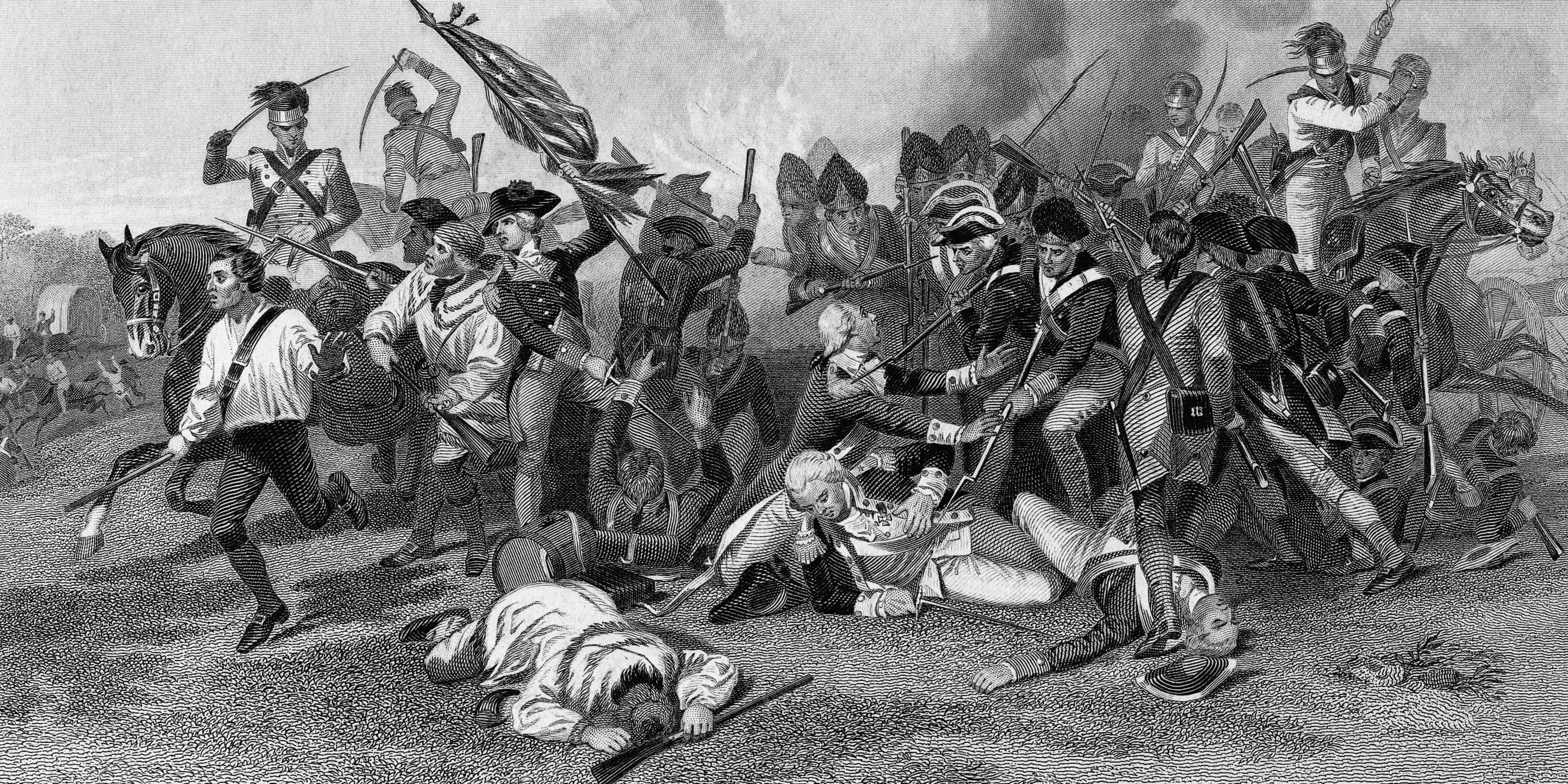
The Battle of Camden, fought on the sweltering morning of August 16, 1780, stands as one of the most devastating and humiliating defeats suffered by the Continental Army during the American Revolutionary War. Occurring in the dense backcountry of South Carolina, this pivotal engagement pitted the self-proclaimed hero of Saratoga, Major General Horatio Gates, against the aggressive and highly capable British Lieutenant General Charles Cornwallis. The encounter was not merely a tactical failure; it was a comprehensive routing of American forces that threw the Southern Campaign into total disarray, shattered reputations, and fundamentally altered the military command structure of the young United States. In the wider scope of early American history, the catastrophe at Camden exposed critical vulnerabilities in the organization of the patriot forces, particularly the dangerous reliance on untrained militia against seasoned British regulars. Understanding the tragedy of Camden provides vital insight into how the American forces eventually learned from their profound failures to secure victory in the South.
Historical Background: The War Shifts to the Southern Colonies
In the first several years of the Revolutionary War, the primary military campaigns were concentrated in the northern states. However, by late 1778, the war in the North had reached a grueling stalemate. Seeking a path to decisive victory, British leadership formulated the “Southern Strategy.” This strategic pivot was based on the premise that the southern provinces possessed a large, latent population of Loyalists who would readily rally to the Crown if supported by British regulars. The strategy began with remarkable success, starting with the capture of Savannah in December 1778, followed by the catastrophic Fall of Charleston in May 1780, where Benjamin Lincoln was forced to surrender over 5,000 Patriot troops. To consolidate control over the South Carolina backcountry and suppress local partisan resistance, British forces established crucial supply outposts. The absolute linchpin of this interior defense was Camden, a critical transportation and communication hub located roughly 125 miles northwest of Charleston. The control of Camden meant control over the flow of troops and provisions across the region, making it the primary objective for any American attempt to liberate the South. At the heart of this confrontation was the struggle for control over the Southern theater, which had become the central focus of British operations as they sought to fracture the unity of the 13 colonies.
The Road to Camden: Causes, Context, and Logistical Failures
To salvage the desperate situation in the South, the Continental Congress bypassed General George Washington’s preference for Nathanael Greene and appointed Major General Horatio Gates to lead the Southern Department. Gates, renowned for his victory at Saratoga, arrived in North Carolina in July 1780 with grand plans to replicate his northern triumph. He quickly set his sights on Camden, determined to capture the British garrison before Cornwallis could reinforce it. However, Gates made several fatal assumptions and ignored the logistical realities of marching an army through barren, war-torn terrain. Rejecting advice to take a longer, friendlier route through counties rich in provisions, Gates insisted on a direct route through Tory-infested territory. During this grueling march, the Patriot troops suffered from an extreme lack of food. Starving soldiers resorted to consuming green corn, unripe peaches, and even using hair powder from their gear to thicken their watery soup. To make matters worse, Gates ordered a ration of molasses to be distributed on the eve of the battle, believing it would boost morale. Instead, the combination of molasses and raw cornmeal induced severe, debilitating outbreaks of dysentery among his troops. On the night of August 15, as Gates ordered a surprise night march to attack Camden, hundreds of his men were physically incapacitated, constantly breaking ranks due to illness. When Gates calculated his battle-ready forces, he estimated he had over 4,000 men. In truth, only about 3,000 soldiers were well enough to stand in the field, more than half of whom were completely untrained state militia.
Chronological Timeline of the Battle
- May 12, 1780: The British successfully besiege and capture Charleston, South Carolina, wiping out the main Continental force in the South.
- July 25, 1780: Major General Horatio Gates officially takes command of the Southern Army in North Carolina.
- July 27, 1780: Gates begins his rapid, ill-advised march directly south toward Camden.
- August 13, 1780: The American forces arrive at Rugeley’s Mills, approximately 12 miles north of Camden. Meanwhile, Lord Cornwallis secretly arrives at Camden to assume command of the British forces.
- August 15, 1780 (10:00 PM): Both armies coincidentally begin a night march along the same road, heading directly toward each other in the dark.
- August 16, 1780 (2:00 AM): The vanguard units of both armies clash in a brief skirmish north of Camden. Both sides fall back and prepare to deploy for battle at dawn.
- August 16, 1780 (Dawn): The Battle of Camden begins. The British charge the American left flank, causing the militia to panic and flee. The American right flank under Baron de Kalb stands and fights heroically before being overwhelmed.
- August 16, 1780 (Mid-morning): The American lines completely collapse, resulting in a disastrous rout. Gates flees north on horseback.
- April 25, 1781: The second major clash at Camden, the Battle of Hobkirk’s Hill, occurs. Though technically a British tactical victory, it forces them to abandon Camden shortly after.
Key Historical Figures and Their Legacies
The Battle of Camden featured some of the most prominent, and in some cases notorious, figures of the American Revolutionary War. Each played a defining role that would permanently shape their legacies:
- Major General Horatio Gates: Once celebrated as a legendary military strategist, Gates’ reputation was permanently tarnished at Camden. His overconfidence, logistical negligence, and ignominious flight from the battlefield ruined his career. This catastrophic loss reignited intense political debates within Continental Congress over military leadership and echoed earlier questions regarding who commanded the Continental Army in its foundational stages. Following Camden, Gates was stripped of his command and faced a congressional inquiry.
- Lieutenant General Charles Cornwallis: The ruthless and aggressive British commander proved his tactical superiority at Camden. By exploiting Gates’ weak deployment and striking with discipline, Cornwallis cemented British control over South Carolina, setting the stage for his subsequent, fateful invasion of North Carolina and Virginia.
- Major General Baron Johann de Kalb: A highly respected German-born soldier of fortune who volunteered to fight for American independence, De Kalb was the true hero of Camden. While Gates fled, De Kalb held the right flank with his Maryland and Delaware Continentals, refusing to retreat. He fought hand-to-hand until he was shot and bayoneted eleven times. He succumbed to his wounds three days later, respected by friend and foe alike.
- Major General Nathanael Greene: Following Gates’ removal, George Washington appointed Greene to command the Southern Department. Greene’s brilliant, non-traditional strategy of war of attrition would eventually wear down Cornwallis and undo all the gains the British made at Camden.
The Fatal Turning Points of the Battle
As dawn broke on August 16, the two armies deployed in the narrow clearing surrounded by swampy pine forests. Gates made a critical, tactical error in his troop deployment: he placed his inexperienced, undisciplined Virginia and North Carolina militia on his left flank, directly opposing the cream of the British army—disciplined regulars and Highlanders under Lieutenant Colonel James Webster. On the American right flank, Gates placed the veteran Maryland and Delaware Continentals under Baron de Kalb. When the battle commenced, the British regulars launched a fierce, aggressive bayonet charge against the American left. The militia, many of whom had never faced a bayonet and did not even possess bayonets of their own to defend themselves, panicked instantly. Terrified by the advancing wall of steel, they threw down their loaded muskets and fled into the woods without firing a single shot. The entire left half of the American line dissolved in minutes, leaving the right flank completely exposed. Despite being surrounded and heavily outnumbered, Baron de Kalb and his brave Continentals launched counterattacks and fought with savage determination. However, without support, they were eventually encircled by Cornwallis’ cavalry under Banister Tarleton. De Kalb fell mortally wounded, and the remaining American resistance collapsed into a frantic, chaotic retreat.
Long-Term Impact on the American Revolution
The defeat at Camden was a staggering blow to the American cause, leaving the South virtually defenseless and Cornwallis in absolute command of South Carolina. Over 900 Patriots were killed, and another 1,000 were taken prisoner, representing the near-total destruction of the Southern Continental Army. The British also captured massive amounts of military equipment, including artillery, muskets, and ammunition. However, this profound tragedy served as a vital catalyst for reform. Congress abandoned its political interference in military appointments, allowing George Washington to choose the next commander. Washington selected his most trusted strategist, Nathanael Greene. Greene understood that he could not defeat the British in a direct, conventional battle. Instead, he divided his forces, utilized local partisan leaders like Francis Marion and Thomas Sumter, and engaged in a highly effective guerrilla campaign. Greene’s strategic retreat drew Cornwallis far from his supply bases, exhausting the British forces and setting up the conditions for Cornwallis’ eventual entrapment and surrender at Yorktown in October 1781. Thus, the devastating failure at Camden forced the United States to adopt the very strategies that would ultimately win the war.
Lesser-Known Facts and Fascinating Anecdotes
The history of Camden is filled with surprising details that highlight the harsh and bizarre realities of 18th-century warfare:
- The Molasses and Green Peach Disaster: The severe dysentery that plagued the American army was entirely self-inflicted by Gates’ rushed culinary choices. Troops actually tried using hair powder from their military kits to thicken their soup, which, when mixed with green peaches and molasses, proved to be a toxic gastrointestinal disaster on the night of the march.
- Gates’ Great Escape on a Famous Horse: When the militia broke, General Gates did not stay to rally his remaining Continentals. Instead, he mounted a celebrated, fast racehorse named “Son of York” and fled the field. Gates rode an astonishing 60 miles to Charlotte, North Carolina, in just one day, leaving his shattered army behind. This act of apparent cowardice permanently destroyed his public standing.
- The Geography of the Backcountry: The rugged geography of South Carolina, which can be visualized alongside the other state boundaries on the 13 colonies map, turned out to be a logistical nightmare for Gates’ depleted forces, who struggled to navigate the unfamiliar, swampy terrain in the pitch black of night.
Why the Battle of Camden Still Matters Today
The Battle of Camden remains a highly studied military engagement, offering critical lessons that transcend the 18th century. It is a textbook study in the absolute necessity of logistics, supply chain management, and troop morale; Gates’ failure to feed and care for his men directly compromised their physical ability to fight. Furthermore, Camden underscores the vital difference between nominal numbers and actual operational capability. Gates believed he had a massive numerical advantage, but his failure to account for illness and lack of training led to disaster. Today, the Camden Battlefield is meticulously preserved, serving as an active archaeological site where historians continue to uncover the remains of fallen soldiers, providing a solemn, tangible link to the sacrifices made for American independence.
People Also Ask
Who won the Battle of Camden?
The British Army, led by Lieutenant General Charles Cornwallis, won a decisive and lopsided victory over the American forces led by Major General Horatio Gates on August 16, 1780.
Why was the Battle of Camden a disaster for the Patriots?
The battle was a disaster due to severe food poisoning and dysentery among the Patriot troops, Gates’ poor tactical deployment of inexperienced militia against elite British regulars, and the lack of bayonets among the militia, which caused them to flee almost immediately.
What was the geographic significance of Camden?
Camden was a vital transportation and communications crossroads in the South Carolina backcountry, serving as the primary British supply depot. Controlling Camden was essential for dominating the southern interior.
Who replaced Horatio Gates after the Battle of Camden?
Following his embarrassing defeat and flight from the battlefield, General Horatio Gates was removed from command and replaced by Major General Nathanael Greene, who successfully turned the tide of the war in the South.
Conclusion
The Battle of Camden remains a somber but essential chapter in the narrative of the American Revolution. It represents the absolute nadir of the Patriot cause in the South—a disaster born of overconfidence, poor planning, and terrible logistics. Yet, from the ashes of Camden, a more resilient, strategically sound American military effort arose. The sacrifice of heroes like Baron de Kalb and the ultimate replacement of Gates by Nathanael Greene marked the true turning point of the Southern Campaign. Ultimately, the lessons learned at Camden paved the hard-fought road to Yorktown, proving that even the most devastating defeats can lay the foundation for eventual, lasting victory.


