On a humid June afternoon in 1752, a middle-aged man and his son walked out into a rain-swept field in Philadelphia, carrying a silk kite, a length of hemp twine, a silk ribbon, and a simple metal key. That man was Benjamin Franklin, and his daring attempt to extract fire from the heavens remains one of the most iconic images in world history. But Benjamin Franklin’s electricity experiments were far more than a curious hobby; they were a revolutionary breakthrough that shattered European assumptions about American intellectual inferiority and directly paved the way for the birth of a new nation. By proving that lightning was an electrical force, Franklin transformed from a successful colonial printer into an international scientific superstar—an esteemed status that he would later use to charm the French court and secure the vital alliance that saved the American Revolution.
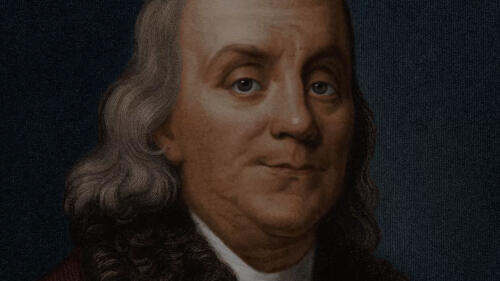
Historical Background: The Spark of the American Enlightenment
In the mid-18th century, British North America was largely viewed by European elites as an untamed provincial wilderness, devoid of high culture or scientific sophistication. Against this backdrop, Benjamin Franklin emerged as a towering figure of the transatlantic Enlightenment. After building a lucrative printing empire in Philadelphia and publishing the widely popular Poor Richard’s Almanac, Franklin took a remarkably unconventional step: in 1748, at the age of 42, he retired from active business. Backed by his comfortable wealth, he declared himself a “gentleman of leisure” to devote his remaining decades to public service, community improvement, and what he termed “philosophical amusements”.
At the time, electricity was little more than a parlor trick—a mysterious, invisible fluid used to generate static sparks for the entertainment of wealthy aristocrats. Franklin, driven by relentless curiosity and a commitment to practical science, began investigating these phenomena in earnest in 1746. Armed with simple tools and a passion for observation, he set out to demystify this natural force, ultimately connecting the physical world of physics with the sociopolitical destiny of America.
Key Events Timeline: The Journey of a Revolutionary Scientist
To understand how Franklin’s scientific endeavors intertwined with his political achievements, it is essential to trace his life chronologically:
- 1706: Born in Boston, Massachusetts, into a modest family of soap and candle makers.
- 1732–1758: Franklin writes and publishes Poor Richard’s Almanac, establishing his financial independence and literary fame.
- 1746: Franklin witnesses an electrical demonstration in Boston, sparking his lifelong obsession with electrical science.
- 1748: He retires from printing, dedicating his life to civic organization and scientific experimentation.
- 1751: Franklin’s letters on electricity are published in London as Experiments and Observations on Electricity, becoming an instant international bestseller.
- May 10, 1752: In Marly-la-Ville, France, scientist Thomas-François Dalibard successfully tests Franklin’s “sentry-box” proposal, drawing electrical sparks from a storm cloud using an insulated iron rod.
- June 1752: Unaware of the French success, Franklin conducts his famous kite experiment in Philadelphia, proving the electrical nature of lightning.
- 1753: Franklin invents the lightning rod and receives the prestigious Copley Medal from the Royal Society of London.
- 1776: Franklin travels to France as a commissioner to solicit French aid for the newly declared United States.
- 1778: Capitalizing on his scientific fame, Franklin negotiates the Treaty of Alliance with France, securing critical military and financial support.
- 1783: Franklin co-signs the Treaty of Paris, officially ending the Revolutionary War.
- 1787: At age 81, he serves as a senior statesman at the Constitutional Convention, helping to forge the framework of American democracy.
- 1790: Franklin passes away in Philadelphia at age 84, mourned worldwide as a scientist of nature and a liberator of humanity.
The Science of Lightning: Proving the Sky’s Electric Nature
Before Franklin’s experiments, lightning was viewed with superstitious dread, often interpreted as the literal wrath of God striking down sinners. Franklin suspected otherwise. He noticed that electrical sparks in his lab shared striking similarities with lightning: both emitted a bright light, moved in quick, jagged patterns, generated a sharp crack, and could ignite materials.
To prove his theory, Franklin designed a method to draw electrical charges from a storm cloud. Although his proposed “sentry-box” experiment was first completed in France, Franklin wanted a more portable method. Thus, he constructed his famous kite made of silk to withstand the rain, attached a sharp iron wire to the top to act as a conductor, and tied a metal key near his hand, insulated by a dry silk ribbon. When a thunderstorm swept over Philadelphia, Franklin flew the kite. As the hemp twine became wet from rain, it conducted the electrical charge from the clouds down to the key. When Franklin brushed his knuckle against the key, a bright spark jumped, confirming his hypothesis that lightning is indeed static electricity.
Importantly, Franklin was not just an experimenter; he was a brilliant theorist who gave us the vocabulary of modern electronics. He rejected the prevailing theory that electricity consisted of two different fluids, proposing instead that it was a single fluid that flowed from high concentration to low. In doing so, he coined terms we still use daily, including positive, negative, charge, conductor, and battery.
How Scientific Fame Saved the American Revolution
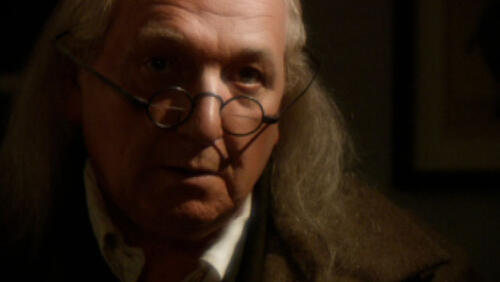
Franklin’s scientific accomplishments did not exist in a vacuum; they were his greatest diplomatic assets. When the Continental Congress dispatched Franklin to Paris in late 1776, they sent a man who was already a household name in Europe. French intellectual society, deeply immersed in the Age of Enlightenment, viewed Franklin as the embodiment of the “noble savage”—a rustic, brilliant philosopher who had mastered the laws of nature without the corrupting influence of European court culture.
The French public was obsessed with “Doctor Franklin”. His image appeared on everything from snuffboxes and rings to medallions. Women styled their hair in a high, curly coiffure called coiffure à la Franklin to mimic his famous fur cap. This massive cultural popularity gave Franklin unprecedented access to French high society and the royal court of King Louis XVI. While other diplomats struggled to gain an audience, Franklin used his wit, intellect, and scientific prestige to charm French policymakers.
Ultimately, this scientific celebrity status allowed Franklin to negotiate the crucial Treaty of Alliance in 1778. Without French gunpowder, soldiers, and naval fleets, the ragtag Continental Army would have likely succumbed to British forces. Indeed, there are many ways the French helped win the American Revolution, but none of them would have been realized without the magnetic diplomatic influence of America’s first world-class scientist.
Civic Genius and the Power of Unity
Franklin’s passion for improvement was not restricted to the laboratory. Long before he was harnessing electricity, he was pioneering methods to unite the fractured colonies. Decades prior to the Revolution, he understood that the colonies could not survive as isolated entities. This realization led him to create the famous “Join, or Die” cartoon, which stands as a monumental historical milestone. Understanding how Benjamin Franklin’s viral political cartoon united the 13 colonies illustrates his early mastery of public relations and media—skills that proved just as vital as his scientific prowess when coordinating the revolutionary war effort.
Key to his civic impact, Franklin was also one of the key Founding Fathers whose finances shaped the American Revolution. Having built a substantial fortune through his printing business and publications, Franklin routinely used his personal credit and wealth to fund public works, secure loans for the nascent government, and establish foundational civic institutions such as America’s first subscription library, its first public hospital, and the volunteer fire departments of Philadelphia.
Lesser-Known Facts About Benjamin Franklin
While the story of the kite and key is legendary, several fascinating details about Franklin’s scientific endeavors are often omitted from history textbooks:
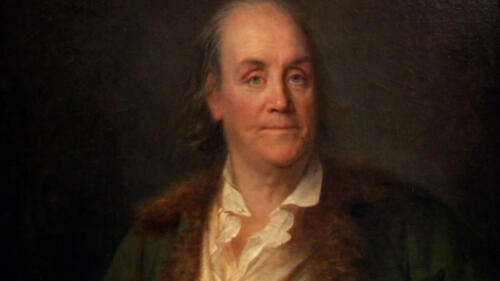
- He Didn’t Discover Electricity: A common misconception is that Franklin discovered electricity itself. In reality, static electricity had been known for centuries. Franklin’s true breakthrough was proving that lightning was electrical and discovering how to harness and ground its immense power.
- He Nearly Electrocuted Himself: Franklin’s experiments were incredibly dangerous. While trying to treat a paralyzed man with electrical shocks, and on another occasion while attempting to electrocute a holiday turkey, Franklin accidentally shocked himself. He described the feeling as a “universal blow throughout my whole body” that left him severely shaken.
- An Invention for the Public Good: Franklin refused to patent any of his inventions, including the lightning rod and the Franklin stove. He believed that scientific advancements belonged to the public, writing: “As we enjoy great advantages from the inventions of others, we should be glad of an opportunity to serve others by any invention of ours.”
Why Franklin’s Legacy Matters Today
Today, we live in a world fully powered by the very force Franklin sought to understand. From the power grids that light our cities to the rechargeable batteries in our smartphones, the modern world is built on the foundations of electrical science that Franklin helped lay.
Beyond technology, Franklin represents a vital democratic ideal: the intersection of science, reason, and public service. He demonstrated that a healthy society requires leaders who value empirical evidence, education, and practical problem-solving. In an era marked by complex global challenges, Franklin’s legacy serves as a powerful reminder that curiosity, civic responsibility, and scientific literacy are not just intellectual pursuits—they are the essential cornerstones of a free and prosperous democracy.
People Also Ask
Did Benjamin Franklin actually fly a kite in a thunderstorm?
Yes. Although some historical skeptics have questioned the event, primary sources and Franklin’s own detailed correspondence from 1752 confirm that he and his son, William, performed the experiment in a field in Philadelphia. Franklin was extremely cautious and stood under a shed to avoid getting the silk ribbon wet, which protected him from being directly struck and killed by lightning.
What did the lightning rod do?
The lightning rod was a revolutionary invention designed to protect wooden buildings from devastating fires caused by lightning strikes. By placing a pointed metal rod at the highest point of a building and connecting it to a wire running deep into the ground, the rod safely intercepted the electrical charge from storm clouds and routed it harmlessly into the earth.
How did Franklin’s scientific reputation help him in France?
In 18th-century France, science was highly revered. Because of his publications on electricity, Franklin was celebrated as an Enlightenment genius on par with Isaac Newton. This celebrity status opened doors to the French royal court, giving him the political leverage needed to secure France’s military alliance during the Revolutionary War.
Conclusion
Benjamin Franklin’s journey from a humble printer’s apprentice to a global icon of science and diplomacy is a testament to the power of curiosity and civic dedication. By daring to capture the spark of the heavens, he did more than just illuminate the laws of physics—he lit the path toward American independence. His unique ability to merge scientific genius with political pragmatism secured the foreign aid necessary to win the American Revolution, forever cementing his place as one of the most remarkable and multi-faceted Founding Fathers in history.


