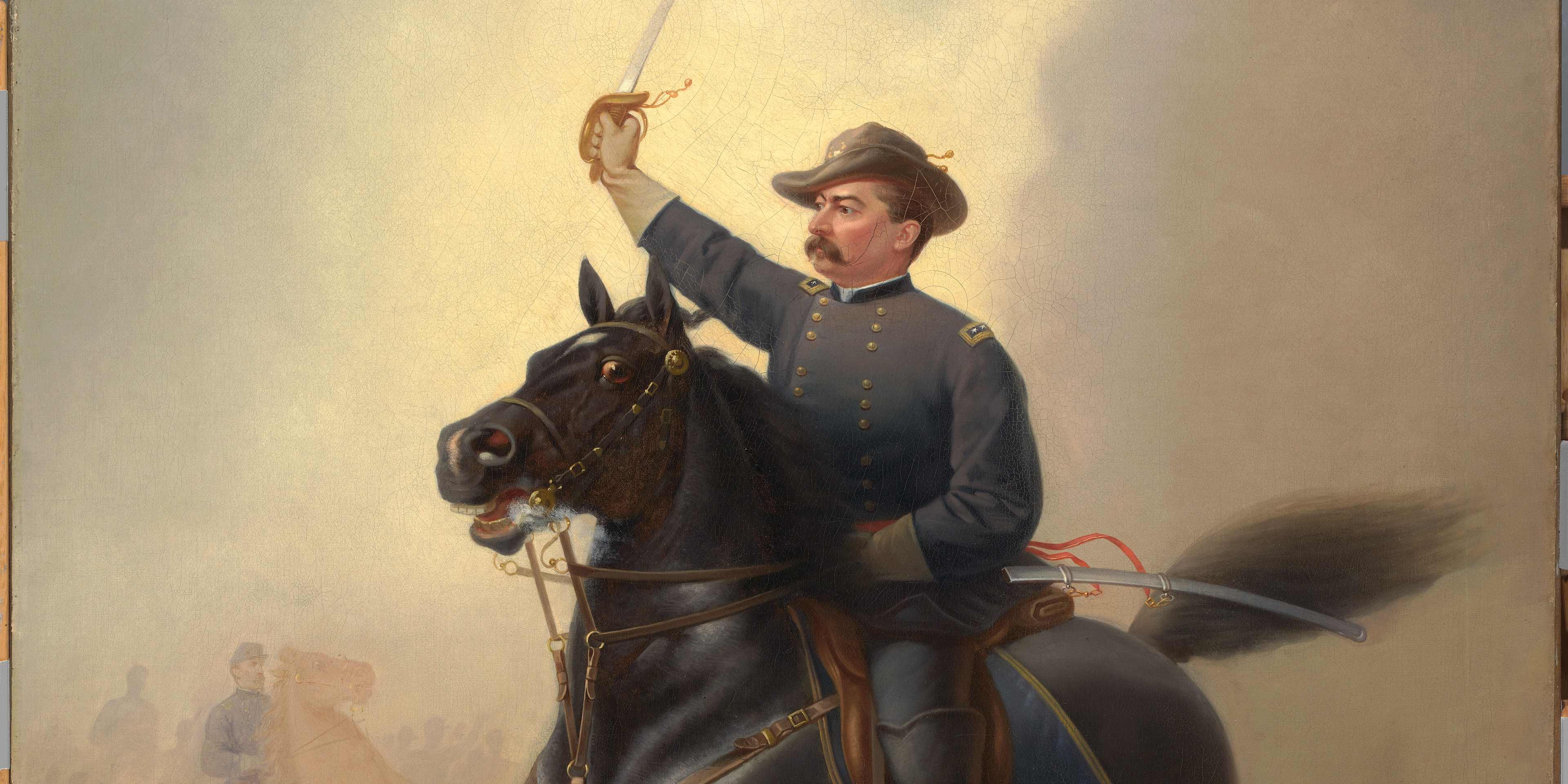
The American Civil War produced many legendary commanders, but few possessed the relentless aggression and tactical brilliance of General Philip Henry Sheridan. Rising from humble immigrant roots to become a favored commander of Ulysses S. Grant, Sheridan redefined cavalry warfare and pioneered total war strategies that crippled the Confederacy’s ability to fight. His decisive actions in the Shenandoah Valley and during the Appomattox Campaign were instrumental in forcing General Robert E. Lee’s surrender. However, Sheridan’s legacy remains highly complex, marked by both military genius and the controversial, brutal execution of scorched-earth tactics that devastated civilian resources and deeply impacted Native American tribes in the post-war era.
The Origins and Early Military Career of Philip Sheridan
Born on March 6, 1831, to Irish immigrant parents, Philip Sheridan’s early life was defined by modest beginnings in Somerset, Ohio. Though Sheridan claimed Albany, New York, as his birthplace, some historians speculate he may have been born at sea during his parents’ emigration from Ireland. In his youth, Sheridan worked as a clerk in a local dry goods store, but his imagination was captured by news of the Mexican-American War. Eager for adventure, he secured an appointment to the U.S. Military Academy at West Point in 1848.
Sheridan’s path to command was nearly derailed by his hot temper. In 1851, he was suspended for a year after threatening a cadet sergeant with a bayonet following a perceived insult. Despite this setback, he returned to graduate in 1853, ranking near the bottom of his class but showing promise in riding and tactics. He spent the next several years on the American frontier, serving in Texas, California, and the Pacific Northwest, where he gained initial experience in combat and negotiations with various American Indian tribes.
A Rising Star in the Union Army
When the Civil War erupted in 1861, Sheridan remained loyal to the Union. Initially assigned to administrative and quartermaster duties, his energetic performance soon caught the attention of his superiors. In May 1862, he was given command of the 2nd Michigan Cavalry, where he quickly proved his mettle in raids and minor skirmishes. By the end of 1862, he had risen from captain to major general of volunteers, commanding a division in the Army of the Cumberland.
Sheridan’s tactical prowess shone brightly at the Battle of Chickamauga and the Battle of Chattanooga in late 1863. During the counterattack at Chattanooga, his division famously stormed up Missionary Ridge without official orders, breaking the Confederate line and forcing General Braxton Bragg to retreat. This aggressive display deeply impressed General Ulysses S. Grant, who was soon appointed general-in-chief of all Union forces. Recognizing Sheridan’s fierce drive, Grant selected him to command the Cavalry Corps of the Army of the Potomac in early 1864, cementing a partnership that would reshape the war. To understand how this relationship influenced the grand strategy of the Union, explore the key reasons Ulysses S. Grant was one of America’s most brilliant military leaders.
The Shenandoah Valley Campaign of 1864: Scorched Earth and ‘The Burning’
In mid-1864, General Robert E. Lee sent General Jubal Early to raid Maryland and threaten Washington, D.C., utilizing the highly fertile Shenandoah Valley as both a secure highway and a crucial food source. Grant responded by giving Sheridan command of the newly formed Army of the Shenandoah. Sheridan’s mission was twofold: defeat Early’s forces and systematically lay waste to the agricultural abundance of the valley to deprive the Confederacy of supplies.
The resulting operations became some of the most famous and destructive of the war, mirroring the pivotal Shenandoah Valley campaigns that had previously defined the region. Between September and October 1864, Sheridan’s army executed ‘The Burning,’ systematically destroying crops, barns, mills, and livestock. At the Battle of Cedar Creek on October 19, 1864, Jubal Early launched a surprise attack while Sheridan was away. Riding furiously from Winchester, Virginia, Sheridan rallied his retreating men in a dramatic counterattack that crushed Early’s army. This victory secured the valley for the Union, crippled the South’s food supply, and provided a massive political boost that helped ensure President Abraham Lincoln’s reelection in November 1864.
Five Forks and the End of the Confederacy
In March 1865, Sheridan rejoined Grant’s forces besieging Petersburg, Virginia. Eager to break the stalemate, Grant ordered Sheridan to cut Lee’s last remaining supply line, the Southside Railroad. Sheridan clashed with Confederate General George Pickett at the Battle of Five Forks on April 1, 1865. Utilizing a combined force of cavalry and infantry, Sheridan completely overwhelmed Pickett’s defenses, taking thousands of prisoners and severing the rail line.
With his supply line shattered, Lee was forced to abandon Petersburg and Richmond, retreating westward in a desperate bid to escape. Sheridan’s fast-moving cavalry relentlessly pursued and harassed the retreating Confederates, blocking their escape routes at Appomattox Court House. Recognizing that further resistance was futile, Lee surrendered to Grant on April 9, 1865, effectively ending the major operations of the Civil War.
Post-War Era: Reconstruction and the Indian Wars
Following the Confederate surrender, Sheridan was appointed military governor of the Fifth Military District, overseeing Louisiana and Texas during the early stages of Reconstruction. Known for his uncompromising stance, Sheridan vigorously enforced the civil rights of newly freed African Americans and removed former Confederates from public office. However, his harsh administrative style drew criticism, prompting President Andrew Johnson to transfer him to the Department of the Missouri in late 1867. You can read more about how these turbulent times influenced federal policy in the overview of Reconstruction policies enacted after the war.
In the West, Sheridan was tasked with pacifying Native American tribes on the Great Plains. Applying the same total war strategies he used in the Shenandoah Valley, Sheridan organized winter campaigns, targeting tribal encampments when resources were scarce and mobility was limited. This brutal strategy, notably carried out by subordinates like George Armstrong Custer, devastated Native communities, disrupted their traditional migratory lifeways, and led to the systematic destruction of the American bison herds—a vital economic resource for the Plains tribes. While Sheridan’s tactics successfully forced many tribes onto reservations, they remain a painful and highly controversial chapter in American history, representing the harsh cost of Western expansion on indigenous populations.
The Unexpected Conservationist: Saving Yellowstone
While his military record is marked by conflict, Sheridan played a surprisingly vital role in the birth of the American environmental conservation movement. Following the official establishment of Yellowstone National Park in 1872, the area faced rampant threats from poachers, coal miners, and railroad developers. Recognizing the park’s ecological and cultural value, Sheridan used his military authority to protect it.
He advocated for expanding the park’s boundaries, funded scientific expeditions, and deployed the U.S. Cavalry to patrol the region, successfully curbing illegal hunting and logging. His protective efforts laid the groundwork for the modern National Park Service. Today, Mount Sheridan, a prominent peak towering over 10,000 feet within Yellowstone, stands as a monument to his conservation legacy.
Timeline of Key Events in Philip Sheridan’s Life
- March 6, 1831: Born to Irish immigrant parents, eventually settling in Somerset, Ohio.
- 1848: Enters the United States Military Academy at West Point.
- 1853: Graduates from West Point after a one-year suspension for fighting.
- May 1862: Appointed Colonel of the 2nd Michigan Cavalry, marking his first major combat command.
- December 1862: Promoted to Major General of Volunteers following outstanding leadership.
- March 1864: Selected by General Ulysses S. Grant to command the Cavalry Corps of the Army of the Potomac.
- Autumn 1864: Conducts the devastating Shenandoah Valley Campaign, culminating in the Battle of Cedar Creek.
- April 1, 1865: Defeats Confederate forces at the Battle of Five Forks, forcing the evacuation of Richmond.
- 1867: Appointed Military Governor of Louisiana and Texas during Reconstruction, before being transferred to the West.
- 1883: Succeeds William Tecumseh Sherman as General-in-Chief of the U.S. Army.
- August 5, 1888: Passes away at age 57 in Nonquitt, Massachusetts.
Important Figures and Their Historical Impact
- Philip Henry Sheridan: Union General whose aggressive tactical leadership and total war doctrines helped secure victory in the Civil War. He later influenced Western expansion and early environmental conservation.
- Ulysses S. Grant: General-in-Chief of the Union Army and 18th U.S. President. Grant’s strategic trust in Sheridan allowed for the execution of key campaigns that crippled the Confederacy.
- Jubal Early: Confederate Lieutenant General whose defeat in the Shenandoah Valley by Sheridan ended the South’s ability to threaten Washington, D.C.
- George Armstrong Custer: Cavalry commander who served closely under Sheridan during the Civil War and the subsequent Indian Wars, executing Sheridan’s aggressive policies in the West.
Lesser-Known Facts About Philip Sheridan
1. A Temper that Almost Cost Him His Career: During his time at West Point, Sheridan became so enraged by an insult from cadet sergeant William R. Terrill that he lunged at him with a bayonet. The resulting fistfight the next day led to a one-year suspension, delaying his graduation but failing to permanently break his military spirit.
2. Immortalized in Poetry: Sheridan’s dramatic 20-mile ride from Winchester to Cedar Creek to rally his routed troops was celebrated in the highly popular patriotic poem ‘Sheridan’s Ride’ by Thomas Buchanan Read, turning the general into a legendary national hero during the late 19th century.
3. A Paradoxical Conservation Legacy: Though Sheridan actively supported the destruction of bison herds during the Indian Wars to undermine Plains Indian resistance, he later became one of the key figures who advocated for the protection of the remaining bison populations inside Yellowstone National Park, showcasing a complex evolution in his views on wildlife conservation.
Why General Sheridan’s Legacy Still Matters Today
Philip Sheridan’s life and career serve as a powerful lens through which to examine the dualities of American history. On one hand, his rapid maneuvers and logistical mastery helped preserve the United States during its darkest hour, demonstrating the efficacy of modern military strategy. On the other hand, his involvement in the scorched-earth campaign of the Shenandoah Valley and the brutal Indian Wars raises deep ethical questions about the nature of total war and its devastating, long-lasting consequences for civilian populations and indigenous heritages. Today, as we weigh his military triumphs against his role in Western expansion and environmental preservation, Sheridan remains a crucial figure for understanding the complex building blocks of modern America.
People Also Ask (FAQ)
What was Philip Sheridan’s most famous quote?
While often associated with the infamous, derogatory phrase ‘The only good Indian is a dead Indian,’ Sheridan himself denied ever making this statement. Nonetheless, the quote reflected the harsh, uncompromising military policies he implemented on the American frontier.
How did Philip Sheridan change the role of cavalry in the Civil War?
Before Sheridan, Union cavalry was often relegated to scouting and defensive screening. Sheridan transformed the cavalry into an offensive, hard-hitting force capable of independent strategic raids, infantry-style combat, and massive logistical destruction.
Why is Mount Sheridan named after him?
Mount Sheridan, located in Yellowstone National Park, was named in honor of General Sheridan due to his extensive military and administrative efforts to protect the park from commercial exploitation, poaching, and destruction in the late 19th century.
Conclusion: The Enduring Impact of a Civil War Icon
General Philip Henry Sheridan remains one of the most dynamic, effective, and controversial leaders in American military history. His aggressive spirit and relentless pursuit of victory helped heal a fractured nation, while his post-war actions illustrated the complex, often tragic cost of national expansion. By examining both his battlefield triumphs and his intricate socio-environmental legacies, we gain a deeper, more nuanced appreciation of the events and figures that shaped the American landscape.


