The American Revolution is often romanticized as a gritty, self-reliant struggle of colonial minutemen rising up against the mighty British Empire. However, the raw historical reality reveals that the dream of American independence would have likely withered on the vine without the massive influx of French support in the American Revolution. Far from a mere secondary ally, France provided the critical financial, military, intellectual, and naval backbone that transformed a desperate colonial rebellion into a global war that Great Britain could no longer sustain. From the philosophical spark of the Enlightenment to the thunderous naval guns at the Battle of the Chesapeake, French resources, soldiers, and strategic maneuvers fundamentally reshaped the trajectory of the war. Understanding this deep alliance is not only key to grasping how the United States defeated the global superpower of the 18th century, but also how the fledgling nation established its early international legitimacy.
The Geopolitical Stage: Why France Backed the Revolution
To understand the depth of the Franco-American alliance, one must look back to the conclusion of the Seven Years’ War in 1763. The Treaty of Paris of that year had stripped France of its extensive North American territories, including Canada, leaving the French crown deeply humiliated and eager for revenge against Great Britain. When tensions boiled over in the early 1770s within the British colonies, France’s foreign minister, the clever Comte de Vergennes, saw a golden opportunity. By backing the American rebels, France could weaken its primary European rival, disrupt the British mercantilist empire, and potentially reclaim some of its lost global influence. This geopolitical calculation turned what might have otherwise been a localized colonial insurrection into a multifaceted, international conflict. In the early stages of the rebellion, as the early leaders of the Continental Army struggled to organize an effective fighting force, France watched closely, waiting for the perfect moment to strike.
Timeline of French Intervention (1775-1783)
The collaborative effort between the American colonies and the Kingdom of France developed in several distinct stages over nearly a decade:
- December 1775: Secret meeting at Carpenters’ Hall in Philadelphia between Benjamin Franklin and secret French envoy Julien-Alexandre de Bonvouloir.
- May 1776: Louis XVI authorizes one million livres’ worth of munitions and supplies to be sent to the Americans through a dummy corporation, Roderigue Hortalez and Company.
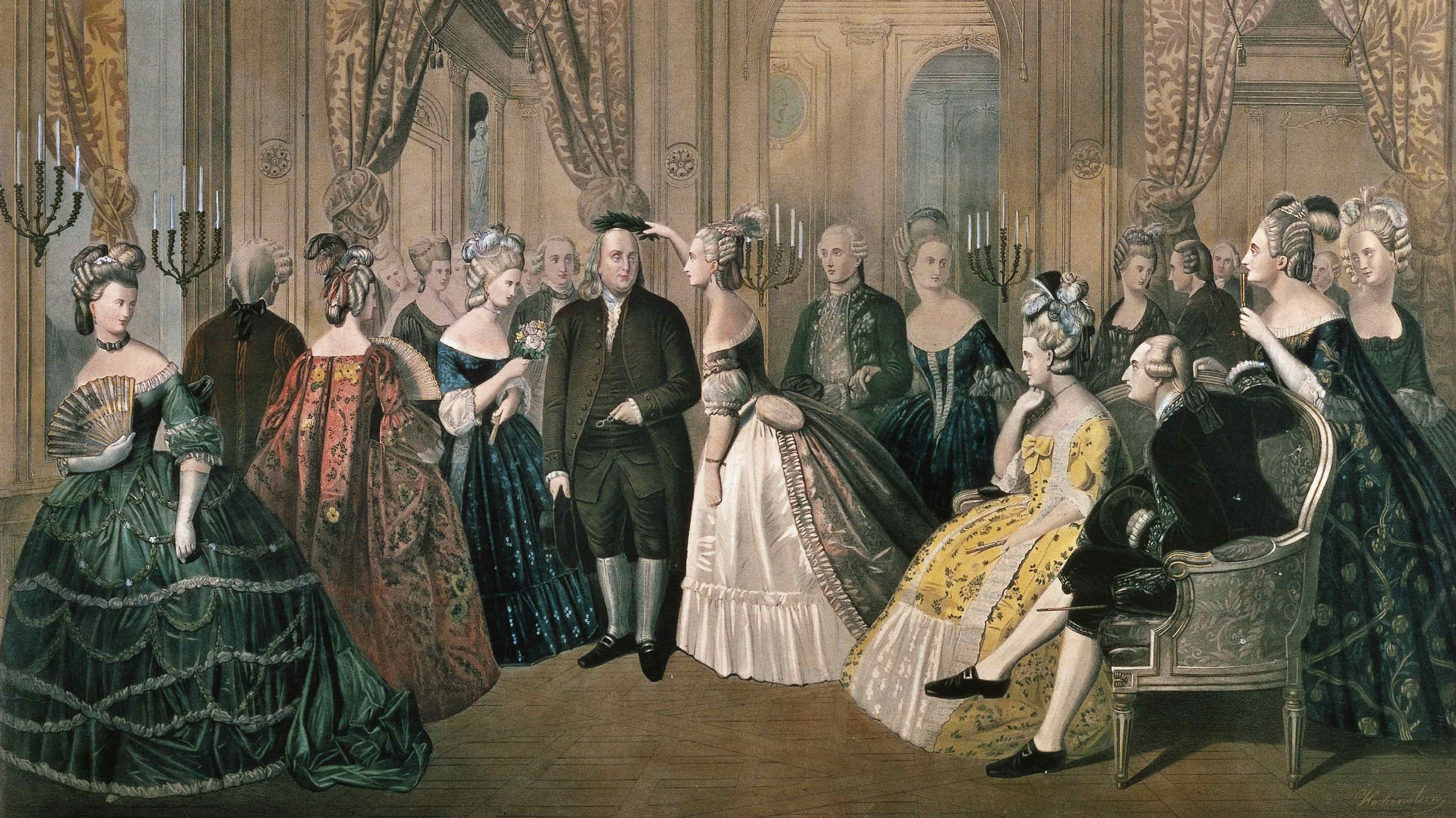
- December 1776: Benjamin Franklin arrives in Paris, immediately becoming a sensation and lobbying the French court for open assistance.
- October 1777: The American victory at the Battle of Saratoga proves to France that the Continental Army is capable of winning major field engagements.
- February 1778: France and the United States sign the Treaty of Amity and Commerce and the Treaty of Alliance, officially bringing France into the war.
- July 1780: A French expeditionary force of 5,500 soldiers, commanded by the Comte de Rochambeau, lands in Newport, Rhode Island.
- September 1781: The French navy under Admiral de Grasse wins the Battle of the Chesapeake, cutting off British General Cornwallis from naval escape or reinforcement.
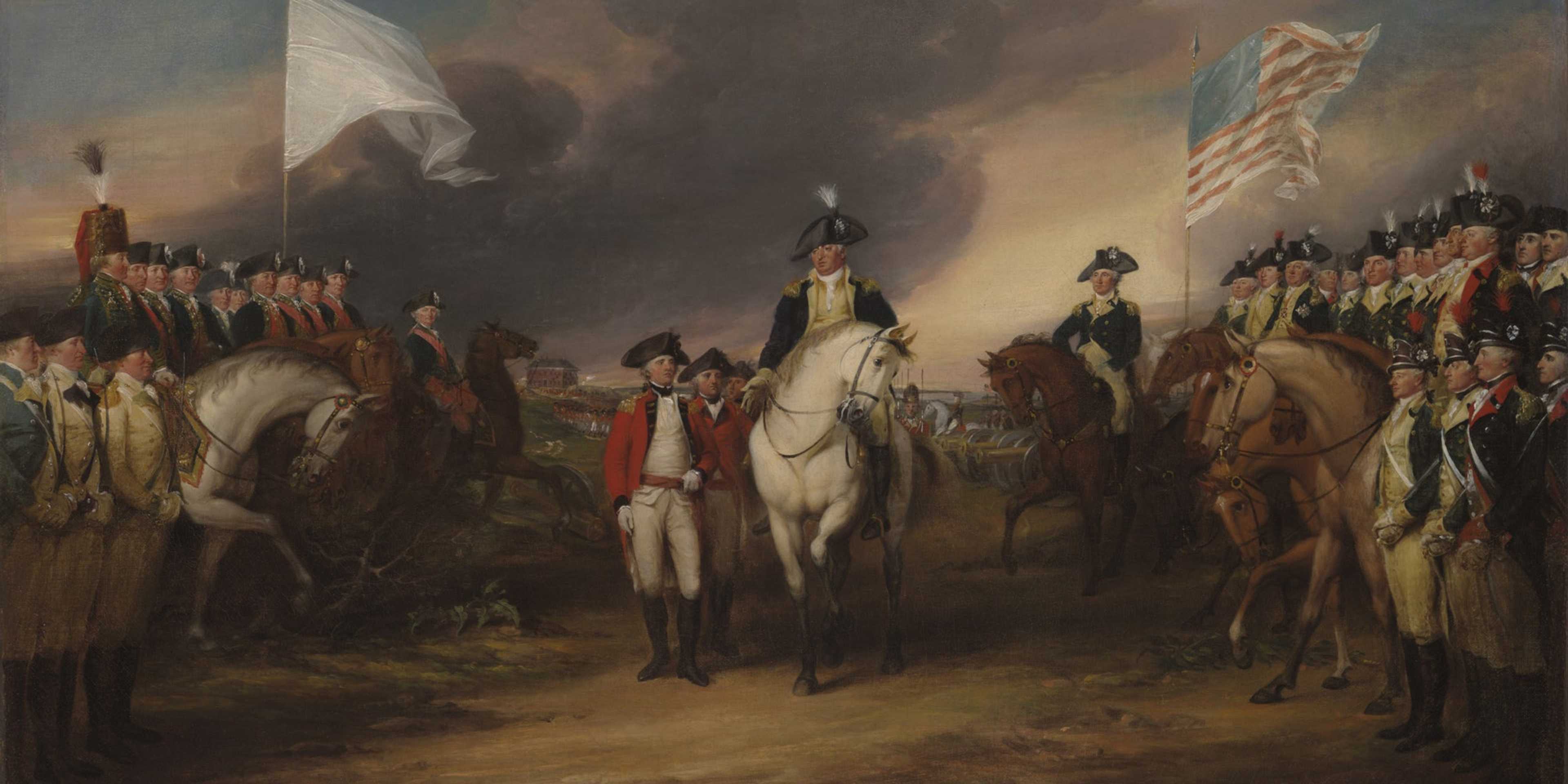
- October 1781: The joint forces of Washington, Rochambeau, and Lafayette secure the British surrender at Yorktown.
- September 1783: The Treaty of Paris is signed, formally recognizing the independent United States of America.
Five Critical Ways the French Secured American Victory
1. The Philosophical Blueprint for Freedom
Long before French gunpowder crossed the Atlantic, French ideas crossed the ocean, profoundly shaping the intellectual framework of the American founding fathers. The intellectual movement known as the Enlightenment found its epicenter in Paris. Thinkers like Jean-Jacques Rousseau challenged traditional notions of absolute monarchy, arguing that sovereignty belongs to the people and that laws must serve the general will. This concept deeply influenced Thomas Jefferson as he drafted the Declaration of Independence. Furthermore, the Baron de Montesquieu introduced the concept of the separation of powers to prevent tyranny, a foundational pillar that the framers of the U.S. Constitution adopted to balance the new federal government. Amidst the struggles of the foundational facts about the 13 colonies, these philosophical principles gave the colonists a sophisticated legal and moral vocabulary to justify their dramatic break from the British crown.
2. Covert Aid and Mass Financial Infusions
Wars cannot be fought on rhetoric alone; they require massive capital. From the very beginning of the conflict, the continental forces faced severe shortages of arms, uniforms, and ammunition. Recognizing the strategic value of keeping the rebellion alive, the French court quietly approved massive loans and direct military aid. Orchestrated by French playwright Pierre-Augustin Caron de Beaumarchais, a massive network of secret shipping ran British blockades to deliver essential goods. Historians estimate that during the pivotal Battle of Saratoga in 1777, nearly 90 percent of all American troops were armed with French-manufactured muskets and completely relied on French gunpowder. Ultimately, France poured roughly 1.3 billion livres into the American cause, a staggering financial sum that pushed the French treasury to the brink of bankruptcy but successfully kept Washington’s army clothed, fed, and armed through the darkest winters of the revolution.
3. Outstanding Military Leadership and Land Forces
While the Marquis de Lafayette is the most famous volunteer to join Washington’s ranks, his arrival was merely the vanguard of a highly professional French military intervention. In 1780, the Comte de Rochambeau arrived with thousands of veteran, highly disciplined French soldiers. Unlike mercenary forces, these troops integrated seamlessly with the Continental Army, bringing vital expertise in siege warfare, engineering, and artillery tactics. Rochambeau worked hand-in-hand with George Washington, providing seasoned strategic advice while diplomatically deferring to Washington’s supreme command. This cooperative military dynamic proved crucial in planning the complex land maneuvers that trapped the British forces in Virginia.
4. Naval Superiority and the Caribbean Theater
The British army depended heavily on its global naval superiority to resupply its forces and move troops at will along the eastern seaboard. The entry of the French Navy, under commanders like the Comte de Grasse, completely shattered this British advantage. Furthermore, the naval war was not restricted to the North American coast; the role of the Caribbean in the Revolutionary War drew vital British naval assets away from Virginia and New York to protect lucrative sugar islands. This strategic diversion culminated in the crucial Battle of the Chesapeake in September 1781. Admiral de Grasse successfully drove off the British fleet, preventing them from rescuing General Charles Cornwallis’s besieged army at Yorktown and sealing the fate of the British war effort.
5. Diplomatic Legitimacy and Global Alliances
Without the formal recognition of a major European power, the American revolutionaries risked being viewed globally as illegitimate rebels or treasonous subjects. The signing of the formal treaties in 1778 shattered this isolation. France’s open alliance with the United States paved the way for other European powers, such as Spain and the Dutch Republic, to enter the fray against Great Britain. This globalized the conflict, forcing the British military to defend its global possessions from the Caribbean to the Mediterranean and India, making the subjugation of the American colonies an unaffordable luxury. When the final negotiations began, French diplomats, including Vergennes, stood shoulder-to-shoulder with American commissioners to secure the incredibly favorable terms of the 1783 Treaty of Paris.
Fascinating and Lesser-Known Facts
- A Playwright Ran the Secret Aid: Pierre-Augustin Caron de Beaumarchais, the famous French playwright who wrote The Barber of Seville and The Marriage of Figaro, was the mastermind behind the dummy company that smuggled French arms and gunpowder to George Washington’s troops before France officially entered the war.
- French Soldiers from the Caribbean: Hundreds of the French troops who fought alongside American forces at the Siege of Savannah and Yorktown were free men of color from Saint-Domingue (modern-day Haiti), bringing invaluable combat experience and a diverse perspective to the battlefield.
- The Sovereignty of the Seas: When Admiral de Grasse sailed to the Chesapeake to block Cornwallis, he did so by raising immediate cash in Havana, Cuba, with the help of Spanish colonial citizens who donated their personal silver and gold to fund the French fleet’s operations.
Why the Franco-American Alliance Matters Today
The relationship forged in the fires of the Revolutionary War laid the foundation for what remains one of America’s oldest and most enduring international alliances. The geopolitical cooperation demonstrated during the war established the precedent for modern diplomatic coalitions, highlighting that even the most powerful nations rely on deep-seated international partnerships to secure their sovereign goals. Today, the shared values of liberty, democracy, and human rights—first conceptualized by Enlightenment philosophers and validated on the battlefields of Yorktown—continue to serve as the bedrock for modern democratic institutions worldwide.
People Also Ask
How much money did France give to the American Revolution?
France provided approximately 1.3 billion livres in loans, direct aid, and military expenditures. This massive sum was vital to keeping the Continental Army functional but heavily strained France’s own economy, contributing to the financial crisis that eventually triggered the French Revolution in 1789.
Could the Americans have won the Revolutionary War without France?
Most modern historians agree that an American victory would have been virtually impossible without France. The French provided the vast majority of the colonists’ gunpowder, crucial financial loans, experienced military engineers, disciplined land troops, and the essential naval power required to defeat the Royal Navy.
Who was the most famous French figure in the American Revolution?
The Marquis de Lafayette is the most famous French figure. He volunteered to fight for the American cause at just 19 years old, became a close surrogate son and trusted general to George Washington, and lobbied tirelessly for increased French military support.
Conclusion
In retrospect, the American Revolution was as much a triumph of international diplomacy and global warfare as it was a localized battle for colonial independence. By providing philosophical inspiration, covert logistics, substantial financial lifelines, elite land forces, and decisive naval dominance, France served as the indispensable partner in the birth of the United States. As we look back at the iconic depictions of the surrender at Yorktown, the shared flags of America and France remind us that the light of American liberty was lit, fueled, and defended by a profound global partnership.


1 comment