The Battle of Guilford Courthouse, fought on March 15, 1781, stands as one of the most critical and strategically decisive engagements of the American Revolutionary War. While technically classified as a tactical British victory, this fierce clash in the backcountry of North Carolina ultimately shattered the Crown’s hopes of subduing the southern colonies. By inflicting catastrophic, irreplaceable casualties on the British forces, the battle broke the momentum of the British Southern Campaign and forced their ambitious commander, Lieutenant General Charles Cornwallis, to abandon his hard-won gains. The events that unfolded on this bloody spring day set in motion a sequence of strategic shifts that led Cornwallis directly to his final, fateful surrender at Yorktown just seven months later. To understand how a nominal defeat on the battlefield transformed into a triumph for the cause of American independence, one must look deep into the mud, musketry, and brilliant tactical maneuvering of Guilford Courthouse.
The Crucible of the Southern Campaign: Historical Background
For the first three years of the American Revolutionary War, the conflict primarily raged across the Northern colonies. However, following the entry of France into the war as an American ally in 1778, the British military command was forced to reassess its global strategy. Believing that a strong undercurrent of Loyalist sentiment existed in the South, the British launched their “Southern Strategy”. The plan was simple yet ambitious: conquer the southern colonies, recruit thousands of local Loyalists to secure the territory, and then march northward to crush the rebellion once and for all.
Initially, this strategy yielded devastating success for the Crown. British forces seized Savannah, Georgia, in late 1778 and captured the vital port of Charleston, South Carolina, in May 1780, taking thousands of Continental soldiers prisoner. The American military presence in the South was nearly obliterated. Following a disastrous American defeat at the Battle of Camden under General Horatio Gates, George Washington stepped in to restructure the leadership of the Southern Department of the Continental Army. For those interested in how the military command evolved during the early years of the conflict, it is worth looking at who commanded the Continental Army before Washington took full control of the revolutionary effort.
In December 1780, Washington appointed Major General Nathanael Greene as the new commander of the Southern Army. Confronted by a superior British force under Lord Charles Cornwallis, Greene knew he could not risk a direct, open-field battle. Instead, he devised a brilliant and unconventional plan: he divided his small, ill-equipped army to force Cornwallis to chase them across the rough terrain of the Carolinas, buying precious time to recruit, retrain, and rebuild his forces.
Causes and Context: The Geopolitics of the Southern Colonies
The geopolitical landscape of the South was a volatile powder keg. Unlike the relatively unified resistance in parts of New England, the Southern backcountry was deeply divided. Neighbors fought neighbors in a brutal, localized civil war between Patriots and Loyalists. To visualize this divided landscape, examining the original 13 colonies map helps clarify how North Carolina acted as a geographic buffer and a vital recruiting ground for both sides.
The British relied heavily on the assumption that loyal subjects would flock to their banners. However, aggressive British pacification tactics, combined with brutal raids by officers like Lieutenant Colonel Banastre Tarleton, alienated many neutral colonists. This socio-political friction, combined with the geographical vastness of the region, made sustaining a long supply line nearly impossible for Cornwallis. These structural dynamics are central to understanding the broader 13 colonies facts that defined how regional differences shaped the revolutionary struggle.
Key Events Timeline: The Road to Guilford Courthouse
The battle was not an isolated event but the climax of months of intense, exhausting maneuvers across the Carolinas. Here is how the campaign progressed:
- October 7, 1780: Patriot militia units win a decisive victory over Loyalist forces at the Battle of Kings Mountain, halting the British advance into North Carolina.
- December 1780: General Nathanael Greene takes command of the Southern Continental Army and divides his forces.
- January 17, 1781: Brigadier General Daniel Morgan inflicts a crushing defeat on Banastre Tarleton’s forces at the Battle of Cowpens, South Carolina.
- January–February 1781: The famous “Race to the Dan.” Cornwallis, furious over the defeat at Cowpens, burns his own baggage train to speed up his pursuit of Greene’s army. Greene successfully escapes across the swollen Dan River into Virginia, leaving Cornwallis’s exhausted troops empty-handed.
- Early March 1781: Reinforced with fresh militia and Continentals, Greene recrosses the Dan River into North Carolina, ready to confront Cornwallis.
- March 14, 1781: Greene establishes his defensive encampment around the rural settlement of Guilford Courthouse.
- March 15, 1781: The Battle of Guilford Courthouse commences.
The Battle of Guilford Courthouse: A Tactical Breakdown
On the morning of March 15, 1781, Cornwallis’s force of approximately 1,900 highly trained British regulars marched toward Guilford Courthouse. Waiting for them were Greene’s 4,400 to 4,500 troops. Though Greene outnumbered the British more than two to one, over half of his force consisted of inexperienced local militia.
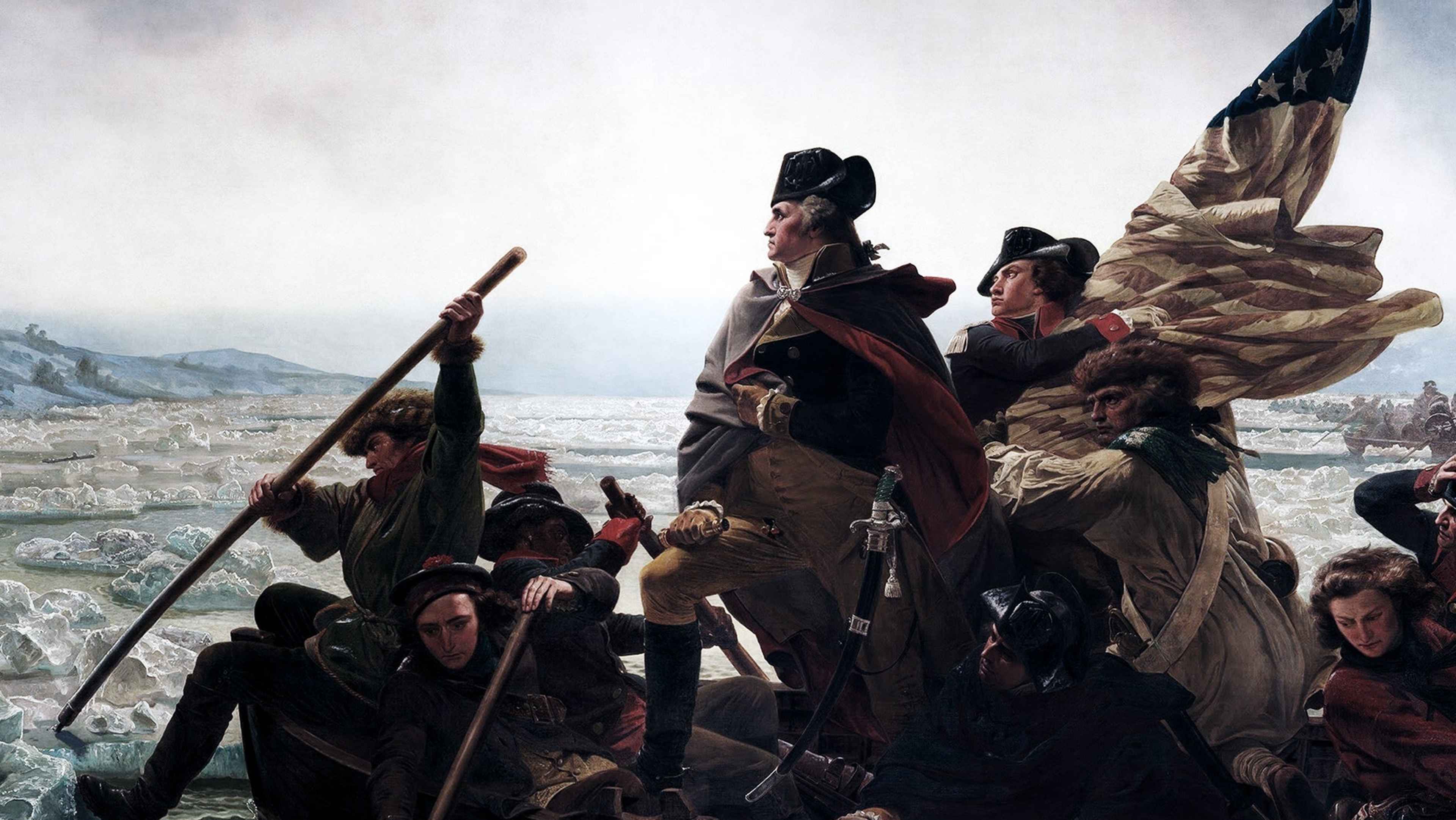
Drawing direct inspiration from Daniel Morgan’s successful tactics at Cowpens, Greene deployed his army in three distinct lines of defense, a strategy known as defense in depth:
The First Line: The North Carolina Militia
Positioned behind a rail fence facing an open field, the North Carolina militia was ordered to fire two quick volleys at the advancing British before retreating. When the British army surged forward, the militia delivered a devastating volley, cutting down dozens of Redcoats. However, the sight of bayonet-wielding British regulars charging through the smoke panicked many of the militiamen, who fled into the surrounding woods.
The Second Line: The Virginia Militia
Located about 300 yards behind the first line in dense woods, the Virginia militia offered far stiffer resistance. Utilizing the thick tree cover, they engaged the British in fierce, close-quarters skirmishing, inflicting heavy casualties and forcing Cornwallis’s men to fight for every inch of ground.
The Third Line: The Continental Regulars
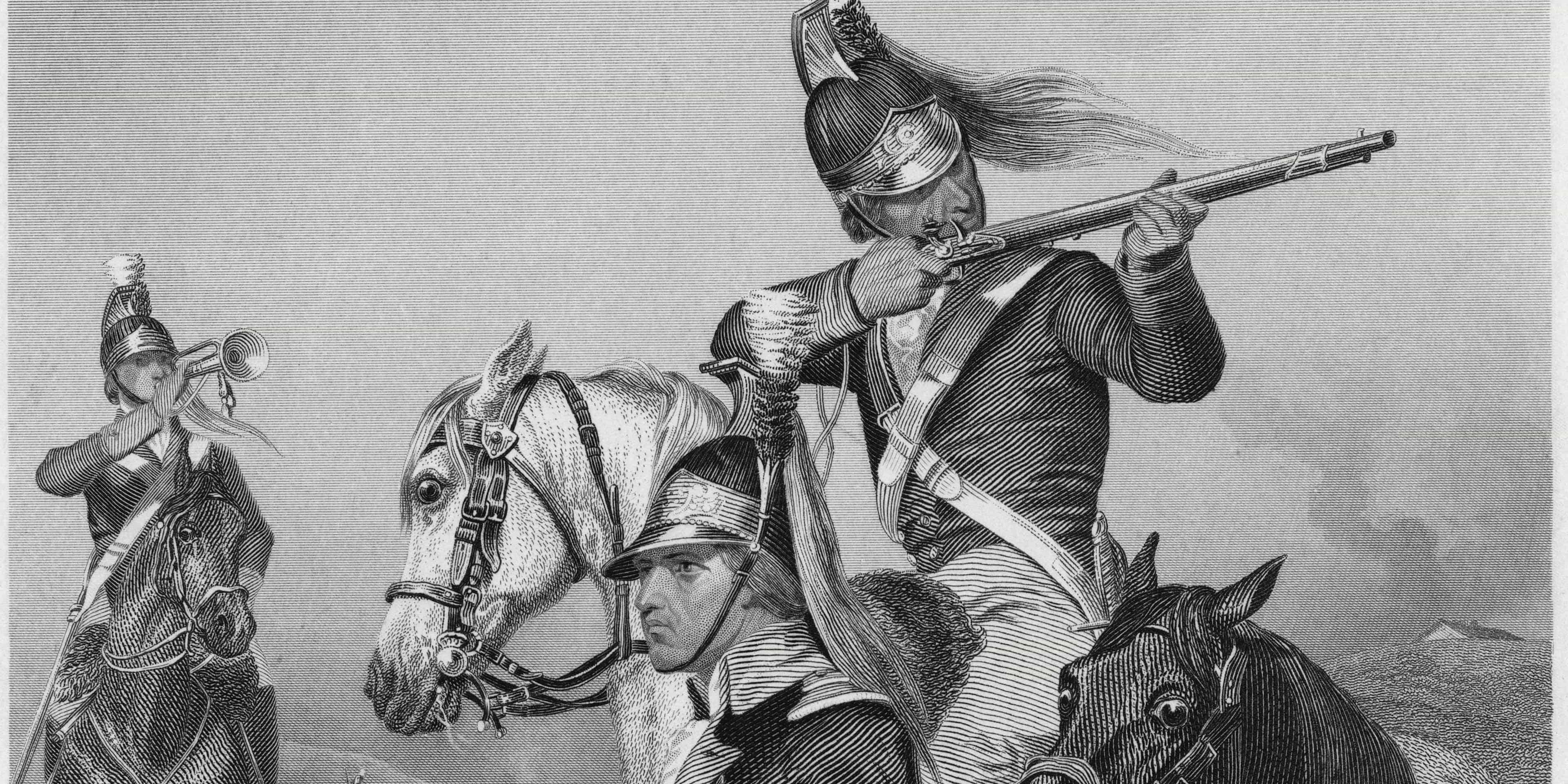
The final line, positioned on a hill near the courthouse, consisted of seasoned Continental regulars from Maryland and Virginia. Here, the battle reached its bloody climax. As British forces broke through the woods, they were met by a devastating counterattack from the 1st Maryland Regiment and a fierce cavalry charge led by Lieutenant Colonel William Washington. Amidst the chaotic hand-to-hand combat, Cornwallis took a desperate and controversial gamble: he ordered his artillery to fire grapeshot directly into the melee, killing his own men along with the Americans to halt the Continental advance.
Recognizing the danger of having his army surrounded or destroyed, Greene made the disciplined decision to order a tactical retreat, leaving the battlefield to the British but keeping his army largely intact.
Important Figures and Their Lasting Impact
Several key leaders shaped the outcome and historical legacy of the Battle of Guilford Courthouse:
- Major General Nathanael Greene: His brilliant use of the defense in depth and strategic withdrawal preserved the Continental Army. His philosophy—“We fight, get beat, rise, and fight again”—defined the American strategy in the South.
- Lieutenant General Charles Cornwallis: Known for his aggressive tactics, Cornwallis won the field but lost the war at Guilford Courthouse. The severe reduction of his forces crippled his operational capabilities.
- Brigadier General Daniel Morgan: Though not physically present at Guilford Courthouse due to severe illness, his innovative tactical concepts directly enabled Greene’s defense-in-depth layout.
- Peter Francisco: Known as the “Virginia Giant,” this 6-foot-6-inch soldier became a legendary figure of the battle, single-handedly slaying several British guardsmen with his massive broadsword despite sustaining severe wounds.
Major Turning Points of the Battle
The turning points of the Battle of Guilford Courthouse were defined by desperate decisions and the heavy toll of combat:
- Cornwallis’s Grapeshot Order: Firing artillery into his own troops during the third-line melee was a shocking, ruthless move that successfully broke the American momentum but cost many British lives.
- Greene’s Disciplined Retreat: Rather than risking his entire army in a fight to the death, Greene’s organized withdrawal kept the American force viable and ready to fight another day.
Long-Term Impact on America: Paving the Way to Yorktown
Though Cornwallis held the field at the end of the day, his victory was a classic Pyrrhic victory—a win achieved at such a devastating cost that it was tantamount to a defeat. The British suffered over 500 casualties, representing more than 25 percent of their entire force. British statesman Charles James Fox famously remarked to Parliament, “Another such victory would ruin the British army.”
Unable to pursue Greene and lacking the resources to occupy North Carolina, Cornwallis abandoned the Carolinas entirely. He marched his battered army to the coast at Wilmington to regroup, and subsequently decided to take his campaign into Virginia. This fateful decision led him straight to the Yorktown peninsula. In October 1781, surrounded by George Washington’s forces and a French fleet, Cornwallis surrendered, effectively securing American independence.
Lesser-Known Facts About the Battle
- A Clerical Error: The town of Gilford, New Hampshire, was founded by a veteran of the battle and named in its honor. However, due to a clerical error in the spelling, the town’s name was officially registered with an “i” instead of an “u”.
- The Desperate Sacrifice: Cornwallis’s decision to fire artillery into his own men was highly criticized even within British military circles, reflecting the sheer desperation of the British high command in the face of the fierce American counteroffensive.
- A General Sidelined: Following his surrender at Yorktown, Cornwallis refused to attend the formal surrender ceremony, claiming to be sick, and sent his deputy, Brigadier General Charles O’Hara, to surrender his sword.
Why It Still Matters Today
The Battle of Guilford Courthouse remains a masterclass in military strategy, demonstrating that winning individual battles does not guarantee winning a war. It highlights the importance of strategic resilience, showing how a series of tactical retreats can ultimately achieve a grand strategic victory. Today, the Guilford Courthouse National Military Park in Greensboro, North Carolina, preserves this historic landscape. It serves as a reminder of the sacrifices made by ordinary militia and regular soldiers to forge a new nation, preserving the memory of a battle that broke the back of the British Crown.
People Also Ask
Who won the Battle of Guilford Courthouse?
Tactically, the British army under Lieutenant General Charles Cornwallis won the battle because they retained control of the field after General Nathanael Greene ordered an American retreat. However, it was a strategic victory for the Americans, as the British suffered devastating losses they could not replace.
What was the significance of the Battle of Guilford Courthouse?
The battle was the strategic turning point of the Southern Campaign. It severely weakened the British army, forcing Cornwallis to abandon his campaign in the Carolinas and march to Virginia, where he was ultimately cornered and forced to surrender at Yorktown.
How many casualties were suffered at Guilford Courthouse?
The British suffered approximately 532 casualties (around 28% of their force), including 93 killed and 413 wounded. The Americans suffered around 300 casualties (79 killed and 185 wounded), though many militia members also dispersed and returned home after the engagement.
Conclusion
The Battle of Guilford Courthouse proves that in the theater of war, endurance, adaptability, and long-term vision are far more valuable than short-term conquest. General Nathanael Greene’s strategic brilliance and the raw courage of the American troops turned a tactical withdrawal into the cornerstone of ultimate victory. By crippling Cornwallis’s army, Guilford Courthouse broke the British will to fight in the South and lit the path directly to Yorktown, securing the birth of a free and independent United States.


