In December 1776, the flame of the American Revolution was on the verge of being permanently extinguished. Following a series of disastrous defeats during the New York campaign, the Continental Army had been reduced to a shivering, demoralized force retreating across New Jersey. With enlistments set to expire at the year’s end and British forces confident of an imminent victory, General George Washington knew that only a dramatic, high-stakes gamble could save the young nation. This desperate necessity birthed the legendary campaign known as the Battles of Trenton and Princeton. By leading his troops across the icy, treacherous Delaware River on Christmas night, Washington executed a brilliant offensive that stunned the British Empire, revived the revolutionary spirit, and secured his legacy as an exceptional military leader. These critical engagements did more than just capture hostile outposts; they completely reversed the psychological tide of the war, transforming a sequence of humiliating retreats into a march toward eventual independence.
Historical Background: A Revolution on the Brink
The late autumn of 1776 represented the lowest point of the Revolutionary War for the American patriots. Having declared independence in July, the colonists quickly faced the overwhelming military might of Great Britain. General William Howe unleashed a massive offensive that drove Washington’s forces out of Long Island, Manhattan, and Westchester County. The Continental Army suffered heavy casualties and was forced into a desperate retreat through New Jersey, eventually crossing the Delaware River into the relative safety of Pennsylvania.
As winter set in, the army was in a pitiable state. Soldiers lacked proper clothing, blankets, and even shoes, leaving bloody footprints in the snow. To make matters worse, the civilian population’s confidence in the rebellion was rapidly eroding, and the enlistment contracts of most of Washington’s soldiers were scheduled to expire on December 31, 1776. If Washington did not act swiftly, the army would effectively dissolve itself in a matter of days, ending the American experiment before it had truly begun.
Causes and Context: Why the Gamble Was Vital
Several sociopolitical and military factors forced George Washington to undertake such an incredibly risky operation. First and foremost was the critical enlistment crisis. Washington needed a victory to convince his soldiers to reenlist and to inspire new recruits to join the ranks. Second, the British had established a series of winter outposts across New Jersey, assuming the Americans were too beaten and cold to launch an offensive. This overconfidence left the British and their Hessian allies vulnerable to a sudden, unexpected strike.
To understand the broader strategic context of the war, one can look at how Washington mastered the art of brilliant military retreats, keeping his army intact to fight another day. However, by late December, Washington realized that retreating was no longer enough; he had to attack. Armed with the inspiring words of Thomas Paine’s newly published pamphlet, The American Crisis—which famously declared, “These are the times that try men’s souls”—the Continental Army prepared to strike back.
Key Events Timeline: The Ten Crucial Days
The campaign that saved the American Revolution unfolded over a breathless ten-day period. Below is the chronological breakdown of these world-changing events:
- December 25, 1776 (Night): General Washington leads 2,400 soldiers across the ice-choked Delaware River in a severe winter storm of sleet and snow.
- December 26, 1776 (Morning): The Continental Army marches nine miles to Trenton, New Jersey, launching a surprise attack and defeating the Hessian garrison.
- December 27–30, 1776: Washington recrosses the Delaware into Pennsylvania with his prisoners, then crosses back into New Jersey to establish a defensive position.
- January 2, 1777: The Battle of Assunpink Creek (Second Battle of Trenton). Washington’s forces successfully hold off repeated British assaults led by Lord Charles Cornwallis.
- January 2–3, 1777 (Night): Washington executes a stealthy flank march, leaving deceptive campfires burning to slip past Cornwallis’s army.
- January 3, 1777 (Morning): The Continental Army attacks and defeats the British garrison at Princeton, securing another vital victory.
The Battles Detailed: Trenton and Princeton
The Surprise at Trenton (December 26, 1776)
The plan for the Battle of Trenton was incredibly complex, relying on a coordinated crossing of the Delaware River by three separate columns. However, due to the severe winter storm and heavy ice floes, only Washington’s main force of 2,400 men successfully made the passage. Delayed by several hours, the army did not complete the crossing until 3:00 AM on December 26, meaning the planned dawn attack would have to take place in broad daylight.
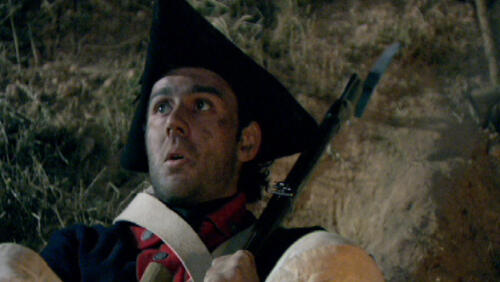
Despite the delay, the march to Trenton was a triumph of sheer willpower. Upon reaching the town, Washington’s forces split into two columns, completely surrounding the unsuspecting garrison of Hessian mercenaries under the command of Colonel Johann Rall. The Hessians, exhausted from guard duty and struggling through the storm, were completely blindsided. The battle lasted less than an hour. The Continental Army captured nearly 900 prisoners, large quantities of weapons, and desperately needed food supplies, while suffering only a handful of casualties.
Historians often point to these maneuvers as a masterclass in deception, illustrating how George Washington used spies to win the American Revolution by feeding misleading information to the enemy. Through local intelligence and scouting, Washington knew exactly where the Hessian sentries were placed and that the garrison’s guard would be lowered after Christmas celebrations.
The Bold Night March and Victory at Princeton (January 3, 1777)
Stunned by the loss of Trenton, British General Charles Cornwallis rushed south with 8,000 veteran troops to confront Washington. On January 2, 1777, Cornwallis pinned the American army against the Assunpink Creek near Trenton. Believing he had Washington cornered, Cornwallis famously decided to “bag the old fox” the next morning.
Washington, however, had other plans. In one of the most brilliant tactical decisions of the war, he left a small detachment to keep the campfires burning and make digging noises, mimicking an army preparing for defense. Under the cover of darkness, the main Continental Army muffled their wagon wheels with rags and marched east and north around the British flank toward Princeton. At dawn on January 3, American forces encountered a British brigade under Lieutenant Colonel Charles Mawhood. After initial British success mortally wounded American Brigadier General Hugh Mercer, Washington personally rode into the thick of the battle, rallying his retreating men and leading a victorious charge that broke the British lines. Cornwallis awoke to find the American camp empty, only to hear the distant rumble of cannons coming from Princeton, far behind his lines.
Important Figures and Their Lasting Impact
The success of the New Jersey campaign was shaped by several key historical actors:
- General George Washington: His bold leadership during this campaign silenced his critics, restored the confidence of the Continental Congress, and established his reputation as a brilliant military strategist.
- Brigadier General Hugh Mercer: A close friend of Washington, Mercer fought bravely at Princeton but was mortally wounded. His tragic death served as a powerful rallying cry for the patriot cause.
- Colonel Johann Rall: The Hessian commander at Trenton who ignored warnings of an American advance, leading to the collapse of his garrison and his own death during the battle.
- General Charles Cornwallis: The formidable British commander who was thoroughly outmaneuvered by Washington’s stealthy night march, forcing a British retreat from central New Jersey.
- Lieutenant James Monroe: A young lieutenant who was severely wounded while leading a charge against Hessian artillery at Trenton; he survived to eventually become the fifth President of the United States.
Major Turning Points and Long-Term Impact
The Battles of Trenton and Princeton were the ultimate turning points of the American Revolutionary War. Before these victories, the revolution was widely seen as a failing rebellion. After them, it became a viable fight for independence. These victories had profound, long-term consequences:
- Rebuilding the Army: Inspired by the victories, thousands of soldiers agreed to extend their enlistments, and fresh volunteers rushed to join the Continental ranks in the spring of 1777.
- Securing Foreign Support: The twin victories demonstrated to European powers, particularly France, that the United States had the military capability and leadership to win the war, paving the way for the critical Franco-American alliance.
- Strategic British Retreat: The defeats forced General Howe to withdraw his forces from most of New Jersey, protecting the fertile countryside from British occupation and securing food supplies for the American cause.
These hard-won winter victories sustained the army’s spirit, preparing them for future trials such as the brutal winter endured by starving soldiers at Valley Forge just a year later.
Lesser-Known Facts about Trenton and Princeton
- The Frozen March: The weather during the march to Trenton was so severe that two American soldiers actually froze to death during the nine-mile trek, highlighting the unimaginable physical hardships the patriots endured.
- Muffled Wheels: To keep their midnight march to Princeton a complete secret, Washington ordered his soldiers to wrap the wheels of their artillery carriages and wagons in thick rags to dull the sound against the frozen roads.
- A Doctor’s Timely Intervention: During the Battle of Trenton, James Monroe was shot in the shoulder, severing an artery. He would have bled to death on the field if not for the quick action of Dr. John Riker, who stepped forward to clamp the artery and save the future president’s life.
Why It Still Matters Today
The Battles of Trenton and Princeton remain cornerstone moments in the history of military strategy and leadership. They demonstrate the power of resilience, adaptability, and psychological fortitude in the face of seemingly insurmountable odds. In modern civic and military education, Washington’s campaigns during these ten days are studied as prime examples of how strategic audacity and effective intelligence can overcome a superior force. More than just historical milestones, these battles represent the enduring American spirit of perseverance through adversity.
People Also Ask
What was the significance of the Battles of Trenton and Princeton?
The Battles of Trenton and Princeton were significant because they saved the American Revolution from collapse. By defeating professional British and Hessian forces, the victories restored American morale, encouraged soldier reenlistments, and convinced European allies that the United States could win the war.
Who won the Battles of Trenton and Princeton?
The Continental Army, commanded by General George Washington, won both battles, defeating the Hessian garrison at Trenton on December 26, 1776, and British forces at Princeton on January 3, 1777.
Why did George Washington cross the Delaware River?
Washington crossed the Delaware River to launch a surprise attack on the Hessian garrison at Trenton. This bold move was necessary because the Continental Army was facing an enlistment crisis and low morale, requiring a major victory to keep the revolution alive.
Conclusion
The Battles of Trenton and Princeton stand as a testament to the power of daring leadership and unyielding resolve. When the American cause was at its lowest ebb, General George Washington and his ragged soldiers turned the tide of history. By transforming a series of devastating defeats into stunning victories, they proved that the dream of American independence was worth fighting for, securing a legacy of freedom that continues to define the nation today.


