In the crisp autumn of 1777, the fate of the American experiment hung by a fraying thread. Having declared independence just a year prior, the continental forces faced a relentless, highly professional British military machine determined to crush the rebellion. The turning point of this desperate struggle occurred in the forests of upstate New York during the legendary Battle of Saratoga. Fought in two distinct engagements over eighteen days, this monumental conflict shattered British plans to sever New England from the rest of the 13 colonies, secured a vital alliance with France, and proved to the world that the nascent United States could stand against the mightiest empire on Earth. Understanding the tactical maneuvers, political rivalries, and tragic sacrifices of Saratoga is key to understanding how a group of determined rebels transformed a desperate colonial uprising into a world-shaping triumph.
Historical Background and Strategic Context
To comprehend the magnitude of Saratoga, one must examine the ambitious British strategy of 1777. General John Burgoyne, an aristocratic playwright turned military commander, proposed a daring “divide-and-conquer” plan. By marching a massive army south from Canada via Lake Champlain, Burgoyne aimed to capture Albany, New York, and seize control of the Hudson River Valley. This movement was meant to coordinate with two other British forces: Colonel Barry St. Leger marching east from Lake Ontario, and General William Howe moving north from New York City. Had this three-pronged offensive succeeded, New England—the hotbed of the rebellion—would have been completely isolated.
However, the plan quickly unraveled. In a series of critical missteps, General Howe chose instead to capture Philadelphia, leaving Burgoyne to press south alone. Meanwhile, St. Leger’s western advance was halted at Fort Stanwix, thanks in large part to the resistance of Patriot militia and their crucial Oneida allies. This left Burgoyne’s force of roughly 8,000 Redcoats and German mercenaries isolated in the dense New York wilderness, heading directly toward a heavily fortified American position at Bemis Heights.
To counter this threat, the Continental Congress and General George Washington frantically organized the Northern Department. Before Washington solidified absolute control over the military landscape, the question of who commanded the Continental Army and its regional branches had sparked fierce debate among colonial politicians. At Saratoga, command fell to Major General Horatio Gates, a cautious and highly bureaucratic leader, who was supported by the fiery, aggressive Major General Benedict Arnold and the brilliant Polish engineer Colonel Thaddeus Kosciuszko.
A Tragic Civil War Within Native Nations
It is also essential to recognize the complex, tragic role of Native American nations during this campaign. The Mohawk Valley and surrounding woodlands were the ancestral homelands of the Haudenosaunee (Iroquois) Confederacy. For centuries, the Confederacy had maintained a powerful, unified front. However, the American Revolution forced these nations into a painful civil war. While the Mohawk, Seneca, and Cayuga allied with the British in hopes of protecting their lands from colonial encroachment, the Oneida and Tuscarora nations chose to support the Patriots. Under leaders like Chief Han Yerry (Tewahangarahken) and his courageous wife, Tyonajanegen, Oneida warriors and Stockbridge-Mohican scouts served as invaluable guides, spies, and combatants for the Continental Army, playing a vital role in slowing Burgoyne’s advance through the wilderness.
A Chronological Breakdown of the Battles
The Battle of Saratoga was not a single, continuous engagement, but rather two major battles fought nearly three weeks apart, punctuated by intense maneuvering and escalating tension.
September 19, 1777: The Battle of Freeman’s Farm (First Saratoga)
The opposing armies first clashed on the abandoned farm of John Freeman, a loyalist settler. Burgoyne attempted a three-column advance to flank the American fortifications on Bemis Heights. Sensing the danger, Benedict Arnold urged Gates to launch an aggressive counterattack. Gates reluctantly allowed Colonel Daniel Morgan’s riflemen and light infantry to advance. Morgan’s elite sharpshooters, utilizing advanced rifle technology and guerrilla tactics, decimated the British officers. Fierce hand-to-hand fighting ensued, and the field changed hands multiple times. The tactical stalemate was broken only when German reinforcements under General Friedrich Adolf Riedesel arrived to bolster the faltering British line, forcing the Americans to withdraw to Bemis Heights. Though technically a British victory, the Redcoats suffered over 600 casualties—double the American losses—severely crippling Burgoyne’s offensive capabilities.
The Intermission: A War of Attrition (September 20 – October 6)
Following Freeman’s Farm, Burgoyne chose to entrench his position and wait for help from New York City, which would never arrive. Meanwhile, the American camp grew daily as thousands of passionate New England militia flocked to Gates’ camp, swelling their ranks to over 13,000 men. Within the American command, however, a bitter feud erupted. Gates, jealous of Arnold’s battlefield acclaim and frustrated by his aggressive demands, officially relieved Arnold of command, confining him to his tent.
October 7, 1777: The Battle of Bemis Heights (Second Saratoga)
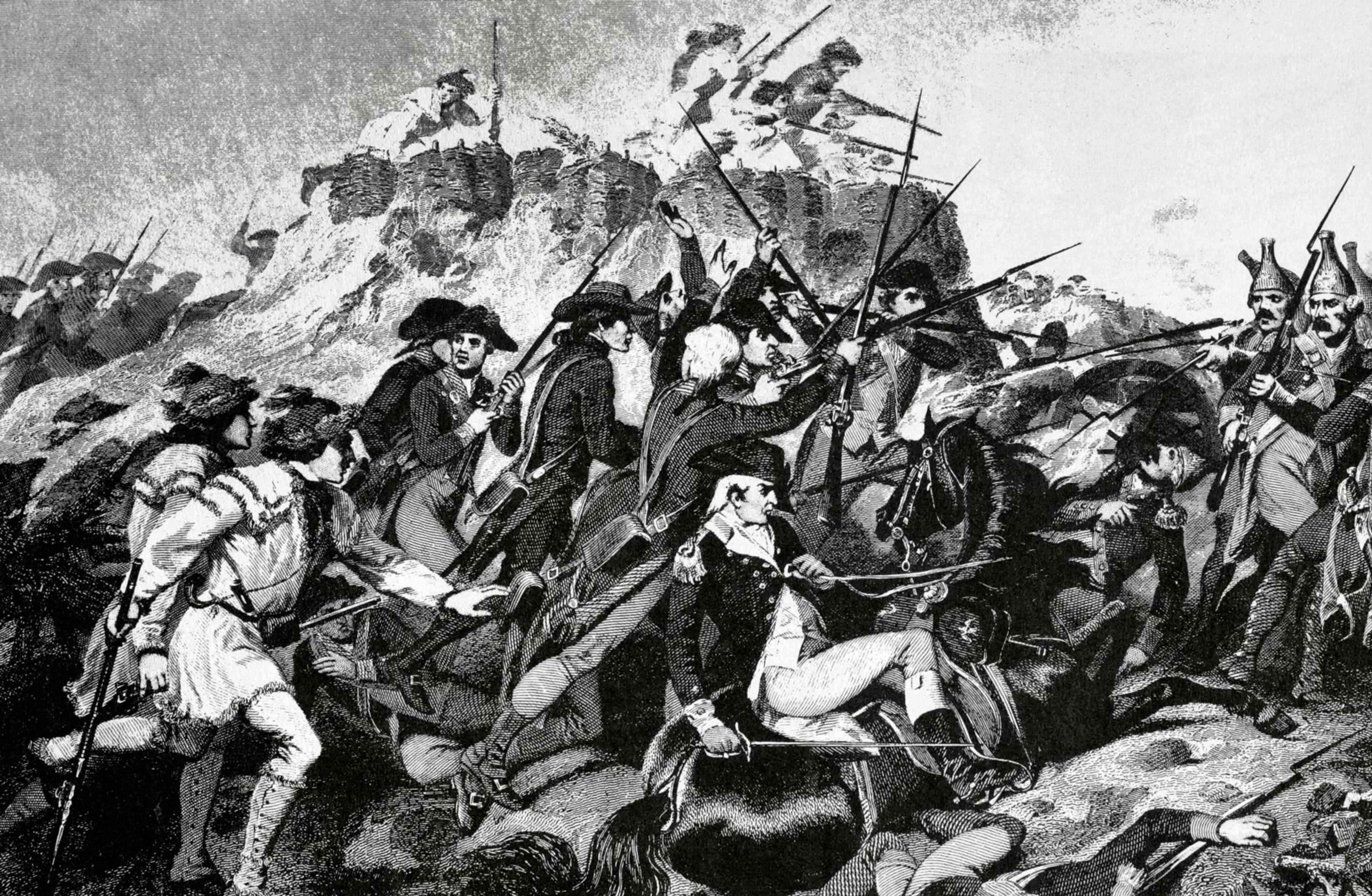
Faced with dwindling food supplies and no sign of reinforcements, Burgoyne launched a desperate reconnaissance-in-force against the American left flank in the wooded heights of Bemis. The Americans quickly discovered the movement and launched a ferocious counter-offensive. Seeing his men falter, Benedict Arnold defied Gates’ direct orders, mounted his horse, and galloped directly into the thick of the battle. Arnold’s sheer charisma and daring inspired the Continental troops, who successfully overran the critical British defensive positions at Breymann’s Redoubt. During this final assault, Arnold was shot in the same leg he had previously wounded during the Siege of Quebec, but his actions had secured a stunning, decisive victory.
October 17, 1777: The British Surrender at Schuylerville
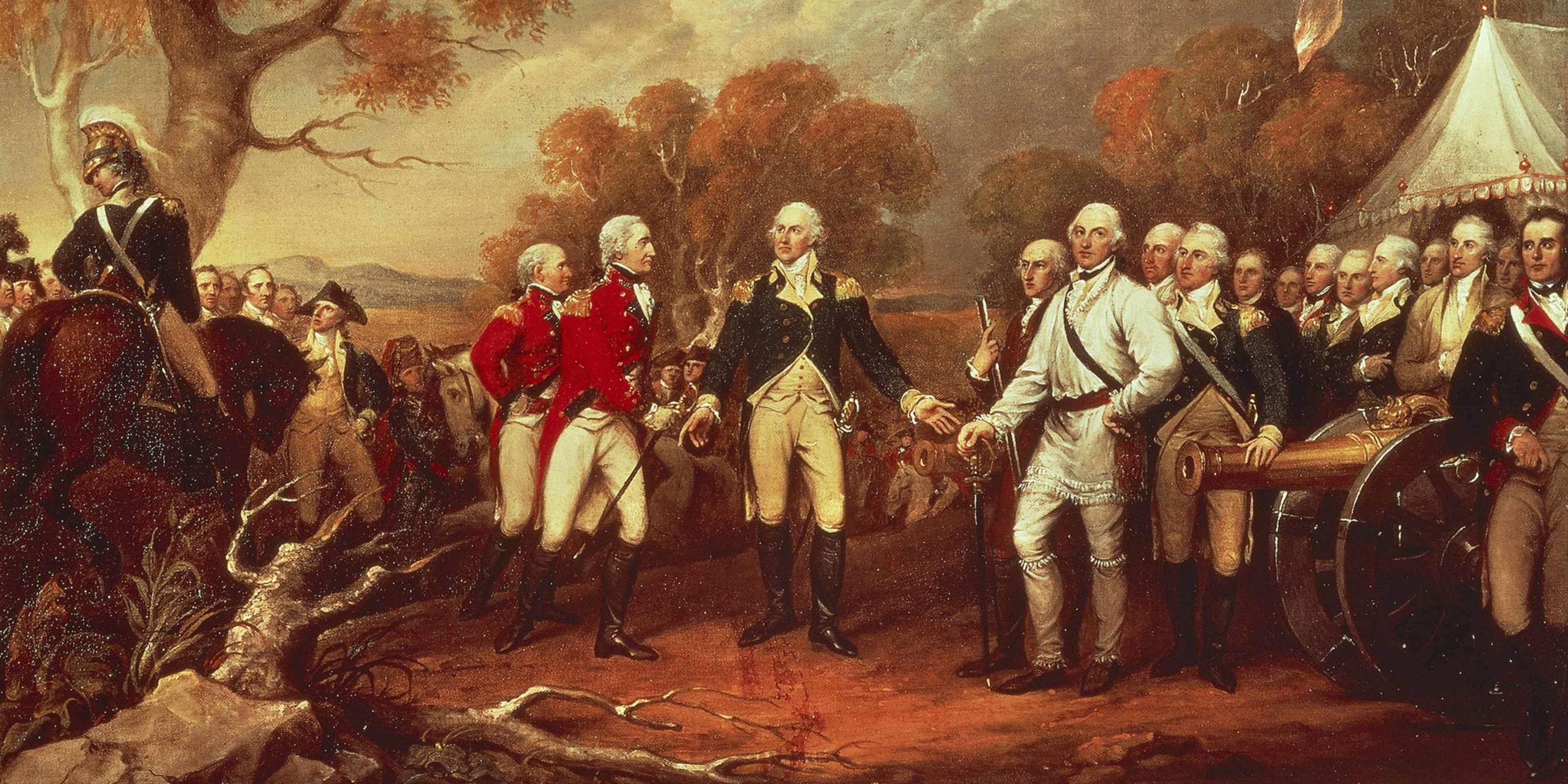
Beaten, bleeding, and heavily outnumbered, the remnants of Burgoyne’s army retreated north to Saratoga (modern-day Schuylerville). Within days, Gates’ rapidly expanding army completely surrounded them. Out of options, Burgoyne agreed to the “Convention of Saratoga,” surrendering nearly 6,000 British and German soldiers to the victorious Patriots. This marked the first time in history that an entire British field army had surrendered to colonial rebels.
Prominent Figures of Saratoga
The campaign featured a fascinating cast of characters whose lives, achievements, and tragedies shaped the trajectory of the war:
- General John Burgoyne: Known as “Gentleman Johnny,” Burgoyne was a charismatic and sophisticated commander, but his rigid adherence to European-style warfare and severe underestimation of the North American terrain and American fighting spirit led to his downfall.
- General Horatio Gates: The cautious “Granny Gates” took the official credit for the victory. While his careful defense of Bemis Heights was strategically sound, his political maneuvering and personal rivalry with Washington and Arnold complicated his legacy.
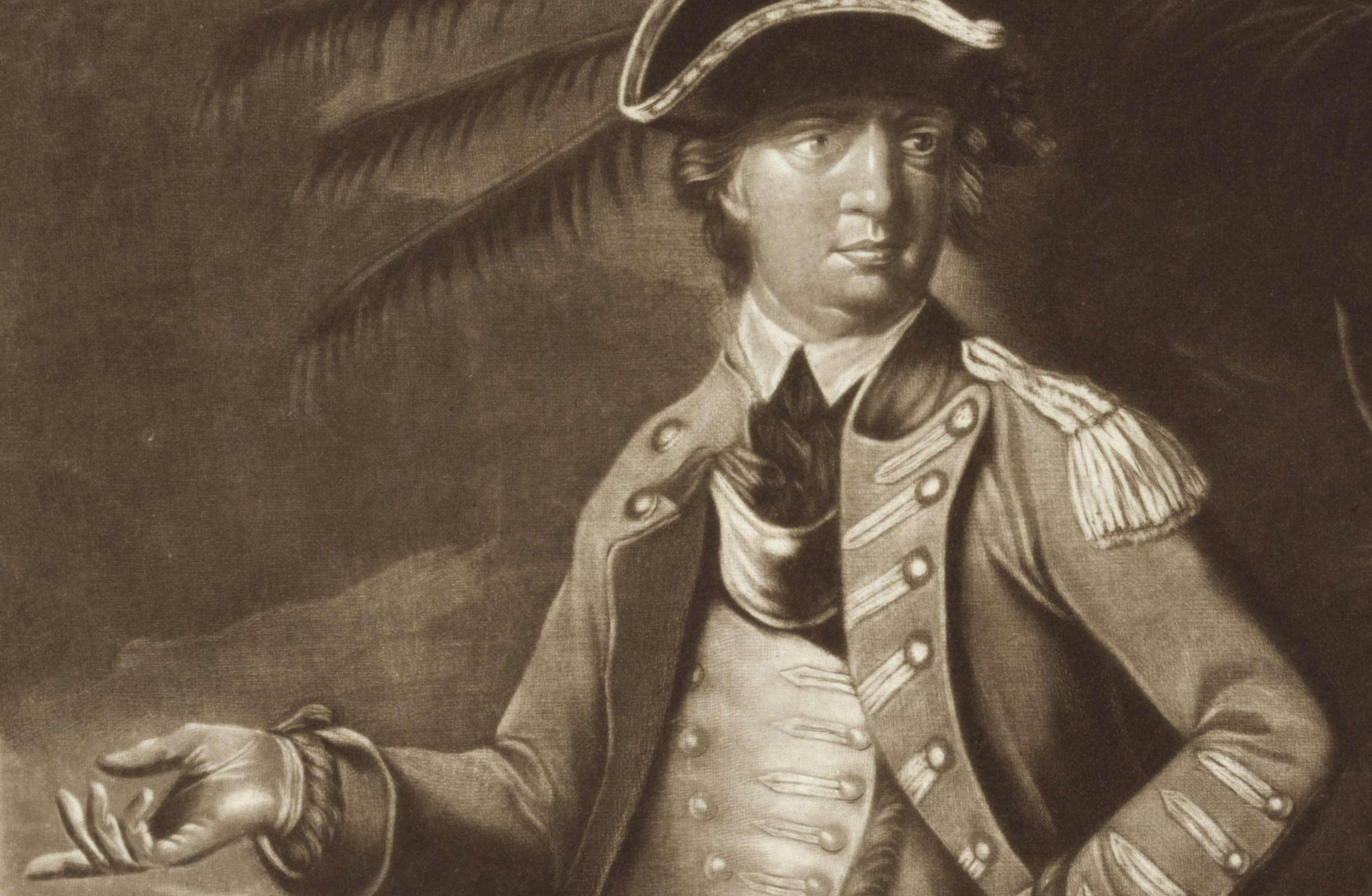
- Major General Benedict Arnold: Saratoga represents the peak of Arnold’s patriotism and military genius. His battlefield heroics were instrumental to the victory. However, the lack of official recognition, combined with severe financial troubles and personal resentment, eventually drove him to commit infamous treason.
- Colonel Thaddeus Kosciuszko: A brilliant Polish military engineer and champion of liberty, Kosciuszko’s masterfully designed field fortifications on Bemis Heights made the American positions virtually impregnable, saving countless Patriot lives.
- Chief Han Yerry: A respected Oneida leader who, along with his wife Tyonajanegen, fought heroically alongside the Americans, exemplifying the deep commitment and heavy sacrifice of indigenous allies who hoped to secure a sovereign future.
Why Saratoga Was the True Turning Point
The victory at Saratoga had profound, immediate, and long-lasting consequences that transformed the American War of Independence into a global conflict. Prior to October 1777, the European powers viewed the American rebellion as a minor colonial spat that would likely be crushed by the British Crown. Seeking to secure support, Benjamin Franklin had spent months in Paris pleading for a formal alliance, but French King Louis XVI was hesitant to back an army that looked like it was losing.
The surrender of an entire British army changed everything. It proved beyond a doubt that the Americans possessed the military capability, organization, and grit to defeat Great Britain. Upon hearing the news, the French government immediately recognized the United States as an independent nation and signed the historic Treaty of Alliance in early 1778. Soon after, Spain and the Dutch Republic joined the fray, forcing Britain to wage a multi-theater global war. The French navy, treasury, and professional soldiers would ultimately prove indispensable, culminating in the final victory at Yorktown.
Furthermore, learning about 13 facts about the 13 colonies and their struggle for unity reveals how Saratoga acted as a powerful psychological adhesive, boosting Patriot morale at a time of extreme hardship and proving that a united coalition could indeed defend their sovereign rights.
Lesser-Known Facts about Saratoga
- The Birth of Thanksgiving: To celebrate this monumental victory, the Continental Congress declared December 18, 1777, as a national day “for solemn Thanksgiving and praise.” This marked the very first official holiday observance of its kind in United States history.
- The Monument to an Unnamed Boot: Located at Saratoga National Historical Park is one of the most unusual monuments in the world: the Boot Monument. It features a single military boot and a major general’s epaulet, dedicated to “the most brilliant soldier of the Continental Army” who was wounded at Saratoga. It honors Benedict Arnold’s heroic leg wound while intentionally leaving his name entirely off the stone, forever capturing his dual legacy as hero and traitor.
- The Tragic “Convention Army”: Under the surrender terms, Burgoyne’s men were supposed to be marched to Boston and shipped back to England on the promise they would not fight in America again. However, the Continental Congress, fearing they would simply be used to free up other troops, reneged on the agreement. The captive soldiers, known as the “Convention Army,” were marched from colony to colony for years, suffering high rates of desertion and disease.
Why the Battle of Saratoga Matters Today
Saratoga is more than a chapter in a history book; it is a profound study of human resilience, the power of strategic alliances, and the complex nature of legacy. The battle reminds us that the birth of American democracy was not inevitable, but rather the result of a diverse coalition of local militias, regular soldiers, international volunteers like Kosciuszko, and brave indigenous allies like the Oneida. In an age of global challenges, the lessons of Saratoga underscore the timeless value of international cooperation and the enduring spirit of self-determination.
People Also Ask
Why is the Battle of Saratoga called the turning point of the American Revolution?
It is called the turning point because the decisive American victory convinced France that the United States could win the war. This led to the signing of the Treaty of Alliance in 1778, which brought vital French naval, financial, and military support to the Patriot cause.
What were the two separate battles of Saratoga?
The Battle of Saratoga consisted of the Battle of Freeman’s Farm on September 19, 1777, and the Battle of Bemis Heights on October 7, 1777.
What was Benedict Arnold’s role in the Battle of Saratoga?
Despite being stripped of command by General Gates, Benedict Arnold defied orders and led a brilliant, decisive charge during the Battle of Bemis Heights, overrunning key British defenses. His actions were critical to the American victory, though he suffered a severe leg wound during the assault.
Which Native American tribes fought at Saratoga?
The Oneida and Tuscarora nations of the Haudenosaunee Confederacy, along with Stockbridge-Mohican scouts, allied with the Americans and provided critical scouting and combat support. Conversely, other members of the Confederacy, such as the Mohawk and Seneca, allied with the British.
Conclusion
The Battle of Saratoga stands as a towering testament to the power of perseverance, tactical brilliance, and the fragile nature of history. Through the combined efforts of cautious commanders, fiery field generals, international allies, and unsung indigenous warriors, a ragtag coalition of colonial rebels achieved the impossible. By defeating a world superpower in the wilderness of New York, they did not just win a battle—they secured the alliances and the confidence necessary to build a new nation founded on the principles of liberty and self-governance.


