The Revolutionary War is often remembered through the legendary deeds of iconic generals and elite statesmen who shaped the birth of the United States. However, the true backbone of the struggle for independence was the common soldier, whose raw, harrowing, and deeply personal experiences are epitomized by Joseph Plumb Martin. Enlisting in the Connecticut state militia in the summer of 1776 at the tender age of fifteen, Martin went on to serve nearly seven years in General George Washington’s Continental Army. Decades later, as an elderly man of seventy, he published a vivid first-hand account of his wartime experiences, originally titled “A Narrative of Some of the Adventures, Dangers and Sufferings of a Revolutionary Soldier.” Rediscovered more than a century later, his extraordinary memoir provides an unparalleled, bottom-up perspective of the conflict that forged a nation, capturing the extreme hunger, freezing winters, and unwavering perseverance of those who fought on the front lines of liberty.
The Life of a Teenaged Patriot: Historical Background of Joseph Plumb Martin
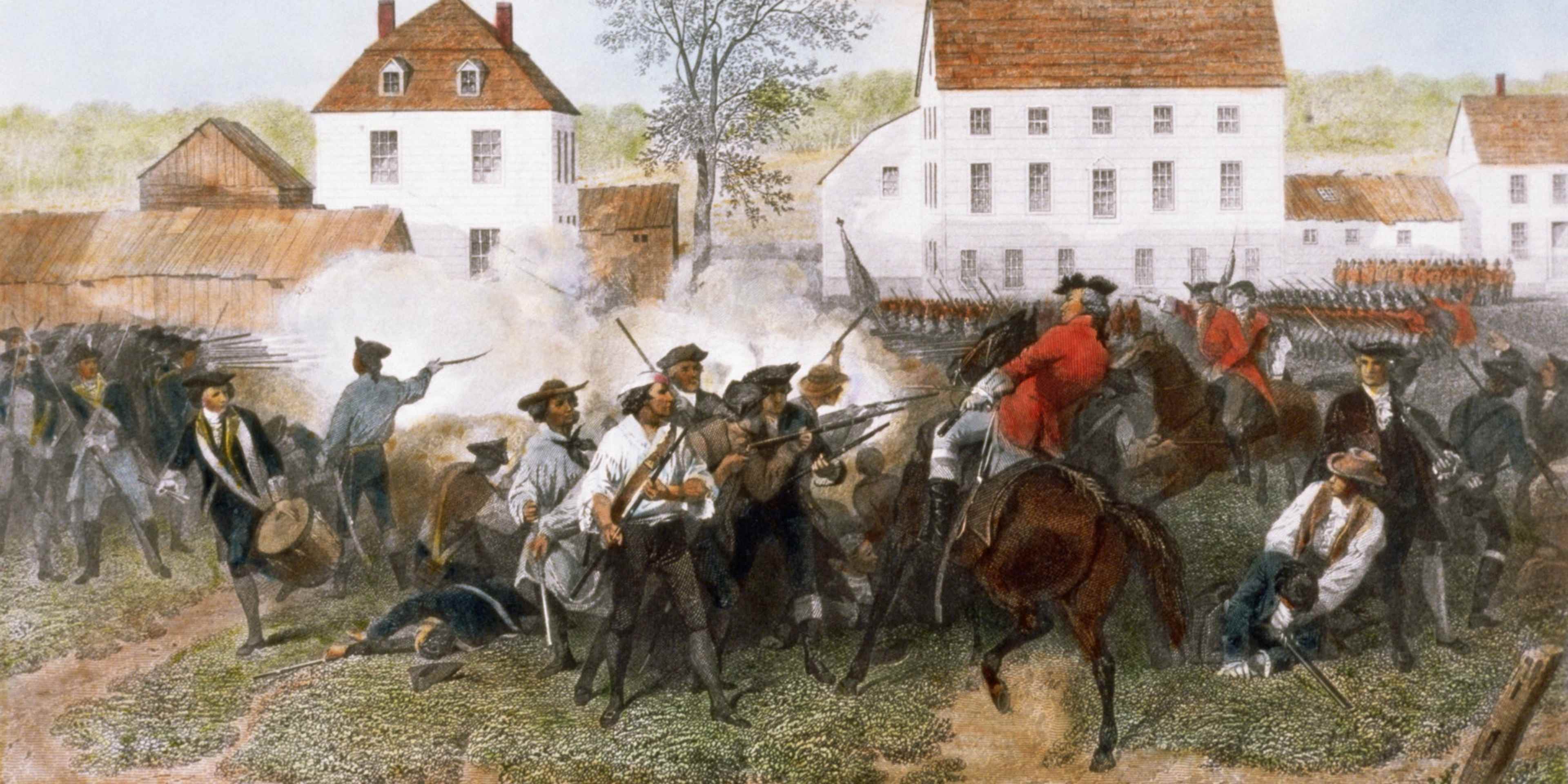
Born on November 21, 1760, in western Massachusetts, Joseph Plumb Martin was the son of a pastor. At the age of seven, he was sent to live with his affluent grandparents on their farm in Milford, Connecticut. Growing up during a period of escalating political tension and revolutionary fervor, the young boy was captivated by the patriotic cause. When the Battles of Lexington and Concord ignited the Revolutionary War in the spring of 1775, Martin’s desire to join the fight grew irresistible. However, at just fourteen, he was too young to enlist without his grandfather’s permission.
By June 1776, recruiters for the local Connecticut militia offered a shortened six-month enlistment. This opportunity proved too tempting for Martin to pass up. Despite his grandparents’ initial objections, the fifteen-year-old stepped forward and signed his name to the mobilization papers. Martin was quickly swept up in the defense of New York, witnessing the disastrous American defeats at the Battle of Brooklyn, Kip’s Bay, and White Plains. Although his first enlistment expired in December 1776, his passion for the cause remained undiminished. On April 12, 1777, he officially enlisted for the duration of the war in the 8th Connecticut Regiment of the Continental Army under Colonel John Chandler. At this critical juncture, the Continental Army was still a developing military force; many soldiers debated the military’s command structure, reflecting on who commanded the Continental Army before Washington took formal charge. Martin would remain in active service until the army finally disbanded in 1783, transitioning from a naive boy into a hardened veteran.
Chronological Timeline: From a Green Recruit to a Seasoned Veteran
To understand the depth of Martin’s service, we can trace his journey through the following chronological milestones of the American Revolution:
- November 1760: Born in Becket, Massachusetts, later raised by his grandparents in Connecticut.
- June 1776: Enlisted in the Connecticut state militia at the age of fifteen for a six-month stint.
- Late 1776: Participated in the desperate defense of New York, fighting at Brooklyn, Kip’s Bay, and White Plains.
- April 1777: Re-enlisted for the duration of the war in the 8th Connecticut Regiment of the Continental Army.
- Fall 1777: Endured the brutal siege of Fort Mifflin on Mud Island, Pennsylvania, holding off British naval forces.
- Winter 1777–1778: Survived the legendary and devastating winter encampment at Valley Forge.
- June 1778: Fought at the Battle of Monmouth, one of the largest artillery duels of the war.
- Winter 1779–1780: Endured the even harsher winter encampment at Morristown, New Jersey, experiencing extreme hunger and witnessing a brief army mutiny.
- Summer 1780: Promoted to the rank of Sergeant in the newly established Corps of Sappers and Miners.
- October 1781: Participated in the Siege of Yorktown and witnessed the surrender of British General Lord Cornwallis.
- 1783: Received an honorable discharge, settling in Maine.
- 1818: Granted a needy veteran’s pension by the federal government.
- 1830: Published his memoir anonymously, which went largely unnoticed at the time.
- May 1850: Passed away at the age of eighty-nine in Stockton Springs, Maine.
In the Ranks: Causes, Context, and the Brutal Realities of Soldier Life
The Revolutionary War involved approximately 200,000 men who served in either local state militias or the Continental Army. To understand why young men like Martin volunteered, one must examine the socio-economic reality of late-eighteenth-century America. Recruiters heavily targeted the lower rungs of society, including young laborers, apprentices, and impoverished farmhands who saw military service as an escape, a source of steady income, or a path to social mobility. They represented the diverse spirit of the thirteen colonies, uniting under a shared, albeit fragile, dream of self-governance.
For the average soldier, daily life was defined not by glorious battles, but by grinding survival. Rations were consistently scarce, clothing was often reduced to rags, and shoes were a luxury. Soldiers frequently marched barefoot through snow and mud, leaving bloody footprints behind them. Sickness, including smallpox and typhus, was far more lethal than British musket balls. Sinking morale and delayed pay created an atmosphere of constant tension, testing the limits of human endurance.
Pivotal Turning Points: Surviving the Crucial Moments of the Revolution
The Siege of Fort Mifflin (1777)
One of the most intense bombardments of the entire war occurred at Fort Mifflin on the Delaware River. Martin and his regiment were tasked with holding this strategic outpost to prevent British supply ships from reaching occupied Philadelphia. Under relentless cannon fire, the garrison held on tenaciously. Though the fort was eventually evacuated, their stubborn resistance delayed the British, allowing General Washington to safely withdraw his main force into winter quarters at Valley Forge.
The Trial of Valley Forge (1777–1778)
Upon arriving at Valley Forge, Martin described the atmosphere as exceptionally grim. He famously wrote about the appalling prospect of building log huts while weak, starved, and virtually naked. Yet, despite the catastrophic lack of food—with some soldiers reduced to eating improvised “firecakes” made of flour and water—Martin noted that the spirit of perseverance remained strong. It was during this brutal winter that the Continental Army was transformed into a disciplined, professional fighting force under the rigorous training of Baron von Steuben.
The Morristown Mutiny (1780)
The winter at Morristown, New Jersey, was historically colder than Valley Forge, pushing the soldiers past their breaking point. Starvation drove some regiments to mutiny. Martin’s writings captured this tension, noting that the soldiers had borne hardships as long as human nature could endure. Fortunately, negotiations and emergency provisions defused the crisis, and Martin remained loyal to the cause.
The Siege of Yorktown (1781)
Having been promoted to Sergeant in the elite Corps of Sappers and Miners, Martin was responsible for digging the trenches (saps) and placing explosives (mines) close to the British lines at Yorktown, Virginia. This dangerous work placed him at the focal point of the war’s final major campaign. Martin witnessed the historic surrender of Lord Cornwallis in October 1781, a moment that effectively secured American independence.
Important Figures in Martin’s Military Journey
- Joseph Plumb Martin: The central figure and chronicler. His sharp wit, keen observation, and raw honesty turned a standard military record into a literary and historical masterpiece.
- General George Washington: The revered Commander-in-Chief. While Martin deeply respected Washington, his memoir did not shy away from criticizing the high command’s failure to properly feed and clothe the troops.
- Colonel John Chandler: The commander of the 8th Connecticut Regiment, who provided leadership during some of the most challenging campaigns in Pennsylvania and New Jersey.
- General Lord Cornwallis: The British commander whose surrender at Yorktown marked the climax of Martin’s military service and the symbolic end of the war.
Lesser-Known Facts About Joseph Plumb Martin and His Memoir
While Martin’s narrative is celebrated today, several intriguing aspects of his life and book remain lesser-known to the general public:
A Commercial Failure: When Martin published his memoir in 1830 at the age of seventy, he did so anonymously to maintain humility. Unfortunately, the book sold poorly and was largely forgotten. It was only in the mid-twentieth century that a copy was rediscovered, leading to its republication as “Private Yankee Doodle” in 1962, finally granting Martin the posthumous fame he deserved.
A Teenager at War: Martin was only fifteen years old when he joined the militia, and only sixteen when he signed up for the Continental Army. His transition from a boy clutching a musket to a battle-tested sergeant encapsulates the rapid loss of innocence experienced by an entire generation of young patriots.
Survival and Material Culture: In his memoirs, Martin frequently detailed the resourcefulness required to survive, including how soldiers modified and utilized everyday objects of colonial America to make improvised tools, patch their clothing, and cook meager meals over open campfires.
The Long-Term Impact on America and Why It Still Matters Today
Joseph Plumb Martin’s writings fundamentally altered how historians analyze the American Revolution. For generations, historical accounts focused almost exclusively on the decisions of generals and politicians. Martin’s narrative democratized American history by proving that the revolution was won not just by brilliant strategy, but by the sheer, stubborn endurance of the common soldier. It shifted the historiographical focus from elite history to social history, giving a voice to the voiceless.
Today, Martin’s story remains deeply relevant as we continue to debate the treatment of military veterans, the psychological toll of warfare, and the true cost of national freedom. His words remind us that the liberties enjoyed today were paid for by young, ordinary citizens who chose to persevere through the dark, cold nights of an uncertain revolution.
People Also Ask
Why did Joseph Plumb Martin write his book?
Joseph Plumb Martin wrote his memoir in his old age to document the lived experiences of the common Revolutionary War soldier, ensuring that the extreme hardships, starvation, and sacrifices of the rank-and-file troops were not forgotten by future generations.
What is the book “Private Yankee Doodle” about?
“Private Yankee Doodle” is the modern republished title of Joseph Plumb Martin’s 1830 memoir. It provides a detailed, firsthand look at the daily struggles, battles, and survival of a soldier in General George Washington’s Continental Army.
What battles did Joseph Plumb Martin fight in?
During his seven years of service, Martin fought in several major engagements, including the Battle of Brooklyn (Long Island), the Landing at Kip’s Bay, the Battle of White Plains, the Siege of Fort Mifflin, the Battle of Monmouth, and the historic Siege of Yorktown.
Conclusion: The Enduring Legacy of Private Yankee Doodle
Ultimately, Joseph Plumb Martin’s legacy is not defined by military rank or political influence, but by his power as a storyteller. Through his eyes, we see the American Revolution stripped of its romanticized mythology and revealed in its raw, human reality. Martin’s extraordinary diary serves as an enduring monument to the ordinary men who suffered, fought, and survived to build a new nation. He remains the quintessential voice of the American soldier, reminding us that history is ultimately made by those who have the courage to endure.


